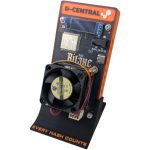
Why Bitcoin Miners Are the Best Space Heaters Ever Made
Every electric space heater on the market does exactly one thing: it converts electricity into heat. A 1,500W ceramic heater pulls 1,500 watts from your outlet and produces 1,500 watts of heat. That is all it does. The electricity enters, becomes warmth, and your utility company sends you a bill. The heat is the only product. The money is gone.
Now consider a Bitcoin miner. A 1,500W ASIC miner pulls 1,500 watts from your outlet and produces 1,500 watts of heat — the exact same amount as that ceramic heater. But it also produces Bitcoin. Every hash computed, every share submitted, every satoshi earned is a byproduct of the same electricity you were going to burn on heating anyway. The heat output is identical. The electricity cost is identical. But one device gives you money back.
This is not a gimmick. It is the first law of thermodynamics applied with some intelligence. Every watt of electricity that enters any electrical device exits as heat. Your laptop, your toaster, your light bulbs, your ASIC miner — 100% of the electrical energy is converted to thermal energy. The laws of physics do not care whether the electricity passed through a resistive coil or a billion SHA-256 computations on its way to becoming heat. The conversion rate is the same: 1W = 3.412 BTU/hr. Always.
D-Central Technologies pioneered the concept of purpose-built Bitcoin space heaters for home miners. Since 2016, we have been taking institutional-grade ASIC mining hardware and hacking it into dual-purpose machines that heat your home while earning Bitcoin. Our Space Heater Editions are not science experiments — they are real products used by real Canadians to offset real heating costs through real Canadian winters. We have shipped thousands of units, refined the enclosure designs through multiple iterations (see our assembly and maintenance guide), and built the only comprehensive knowledge base on the subject.
This guide is the definitive resource for choosing the right Bitcoin miner for your space heating needs. Whether you want a plug-and-play D-Central Space Heater Edition, a DIY build using your own hardware, or something in between, we will walk you through every factor that matters: heat output, noise, electrical requirements, mining revenue, room sizing, and cost. By the end, you will know exactly which miner belongs in your living room, bedroom, office, or workshop.
Home miners and heating-conscious homeowners in North America (especially Canada) who want to replace or supplement traditional electric space heaters with Bitcoin mining hardware. Beginners through intermediate miners. No prior mining experience required. If you are completely new to Bitcoin mining, read our How to Mine Bitcoin at Home guide first for fundamentals.
The Thermodynamics: Why a Miner IS a Space Heater
Before we compare specific miners, you need to understand why this works — and why it is not too good to be true. The physics are airtight.
The First Law of Thermodynamics
Energy cannot be created or destroyed — only converted from one form to another. When electricity flows through a resistor (a traditional space heater’s heating element), the electrical energy is converted to thermal energy. When electricity flows through an ASIC chip performing SHA-256 computations, the electrical energy is also converted to thermal energy. The chip gets hot. The heat dissipates into the room. The total thermal output is identical in both cases, because 100% of the input electrical energy becomes heat.
There is no exception to this law. There is no scenario where a 1,000W device produces less than 1,000W of heat. The number printed on the spec sheet is the number that enters your room as warmth. A 1,350W Antminer S9 produces exactly the same heat as a 1,350W oil-filled radiator. The difference is that the S9 also generates approximately 14 TH/s of SHA-256 hashrate and earns you satoshis around the clock.
The BTU Conversion
Heat output in North America is measured in BTU/hr (British Thermal Units per hour). The conversion from watts to BTU/hr is a fixed constant:
BTU/hr = Watts x 3.412

Examples:
  800W BitChimney      = 2,730 BTU/hr
  1,350W Antminer S9   = 4,606 BTU/hr
  2,500W Antminer S17  = 8,530 BTU/hr
  3,250W Antminer S19  = 11,089 BTU/hr

Room Sizing Rule of Thumb:
  Well-insulated room:  ~20 BTU per sq ft
  Average insulation:   ~25-30 BTU per sq ft
  Poor insulation:      ~35+ BTU per sq ft
The Economic Argument
Here is the calculation that makes this entire category compelling. In Quebec, where D-Central is headquartered, the average residential electricity rate is approximately $0.073/kWh. A standard 1,500W electric space heater running 12 hours per day during a 6-month heating season (October through March) costs:
1.5 kW x 12 hrs x 180 days x $0.073 = $236.52 per season
A 1,350W Antminer S9 running the same 12 hours per day during the same 6-month season costs:
1.35 kW x 12 hrs x 180 days x $0.073 = $213.19 per season
But the S9 also earns Bitcoin. The exact amount depends on network difficulty and BTC price, but the mining revenue offsets a portion — sometimes all — of the electricity cost. During heating season, your effective heating cost drops to near zero or even becomes negative. You were going to spend that money on heating regardless. The Bitcoin miner just gives some of it back.
The economics flip during summer. When you do not need heating, a mining heater adds unwanted heat to your living space and may increase air conditioning costs. Smart operators run their mining heaters only during heating season (roughly October through April in most of Canada), store them during summer, or move them to a ventilated space like a garage where the heat can escape. Some miners run them year-round in basements or dedicated rooms with exhaust ducting. The seasonal approach gives you the best of both worlds: free heating in winter, no waste heat in summer.
Key Selection Criteria: How to Choose Your Mining Heater
Not every Bitcoin miner makes a good space heater. Some are too loud. Some draw too much power for residential circuits. Some produce more heat than you need. The right miner for your space depends on six factors.
1. Heat Output (BTU/hr)
This is the primary metric. You need enough BTU/hr to heat your room, but not so much that you turn it into a sauna. The rule of thumb for a well-insulated room in a cold climate like Canada is approximately 20-30 BTU per square foot. A 200 sq ft bedroom needs roughly 4,000-6,000 BTU/hr. Match the miner’s wattage to the room’s heating demand.
2. Noise Level
Stock ASIC miners are extraordinarily loud — 75-85 dB, comparable to a vacuum cleaner or lawn mower. That is unacceptable for a living space. Space heater builds use aftermarket silent fans (Noctua, Arctic) and custom firmware to reduce noise to 40-55 dB — comparable to a refrigerator or quiet conversation. Noise tolerance varies by person and by room. A home office can handle more noise than a bedroom. Consider your personal threshold carefully.
3. Electrical Requirements
The biggest practical constraint for most home miners. Standard North American outlets provide 120V at 15A, giving you a maximum continuous load of 1,440W (after the NEC/CEC 80% rule). If your chosen miner draws more than that, you need either a 20A circuit, a 240V circuit, or firmware that can underclock the miner to fit. This single factor eliminates most modern ASICs from 120V consideration. For complete details, read our Space Heater Electrical Requirements Guide.
4. Mining Revenue
More efficient miners (lower J/TH — joules per terahash) earn more Bitcoin per watt consumed. A newer-generation miner like the S19 produces far more hashrate per watt than an S9, which means more mining revenue for the same amount of heat. However, newer miners also cost more to purchase. The question is whether the increased revenue justifies the higher upfront cost, especially when you are only running the unit during heating season.
5. Acquisition Cost
Older miners like the S9 can be acquired for under $100 USD on the secondary market. Newer models like the S19 or S21 cost significantly more. Since a space heater miner may only run 6-7 months per year, the payback period is longer than for a full-time mining operation. Budget matters — and sometimes the cheapest miner that fits your room and circuit is the right answer.
6. Form Factor and Enclosure
A bare ASIC miner sitting on your living room floor is not a space heater — it is a liability. Proper space heater builds require enclosures that direct hot exhaust air into the room, manage noise with silent fans, protect the hardware from dust and pets, and look presentable. D-Central sells purpose-built enclosures, but DIY builders need to account for enclosure design in their plans.
A Bitcoin space heater is a real electrical appliance drawing hundreds or thousands of watts continuously. It requires proper electrical circuits, clearance from combustibles, and a non-flammable surface. Never run a bare ASIC miner without an enclosure in a living space — the stock fans are dangerously loud, exposed components are a shock hazard, and undirected hot exhaust creates uneven heating. Read our Space Heater Assembly & Maintenance Guide and Electrical Requirements Guide before any installation.
D-Central Space Heater Editions: Complete Comparison
D-Central’s Space Heater Editions are the simplest path to a Bitcoin mining heater. We take tested, quality-checked ASIC hardware, install it in custom 3D-printed enclosures with premium silent fans and matched power supplies, and ship it ready to plug in and mine. No soldering, no firmware flashing, no fan modifications. Connect power, connect Ethernet, set your mining pool, and start hashing.
Here is the full comparison of our three Space Heater Edition models.
D-Central Space Heater Editions — Full Comparison
| Model | S9 Space Heater | S17 Space Heater | BitChimney |
|---|---|---|---|
| ASIC Platform | Antminer S9 | Antminer S17 | Antminer L3+ |
| Algorithm | SHA-256 (Bitcoin) | SHA-256 (Bitcoin) | Scrypt (Litecoin/Dogecoin) |
| Hashrate | ~14 TH/s (stock) ~4-8 TH/s (underclocked) | ~40-50 TH/s (underclocked) | ~500 MH/s |
| Power Consumption | ~1,350W (stock) ~750-1,100W (underclocked) | ~2,000-2,500W (underclocked) | ~800W |
| Heat Output | ~4,606 BTU/hr (stock) ~2,559-3,753 BTU/hr (underclocked) | ~6,824-8,530 BTU/hr | ~2,730 BTU/hr |
| Runs on 120V? | Yes (underclocked to ~1,100W or less) | No — requires 240V | Yes — runs on standard 120V outlet |
| Minimum Circuit | 15A/120V (underclocked) or 15A/240V | 20A/240V dedicated | 15A/120V (can share circuit) |
| Power Supply | APW3++ (Silent) | APW9 (Silent) | APW3++ (Silent) |
| Noise Level (with silent fans) | ~45-50 dB | ~50-55 dB | ~40-45 dB |
| Enclosure Design | 3D-printed box, directed exhaust | 3D-printed XL box, directed exhaust | 3D-printed chimney convection |
| Cooling Fans | 1-2x 140mm (Noctua/Arctic) | 4x 120mm (Arctic P12/Noctua) | 4x 120mm (Gelid Gale/Arctic) |
| Recommended Room Size | 150-250 sq ft | 250-400 sq ft | 100-150 sq ft |
| Ideal Placement | Bedroom, home office, workshop | Living room, basement, large office | Small office, bedroom, den |
| Weight | ~9 kg | ~12.7 kg | ~7 kg |
| Price Range (CAD) | $235-$340 | $530-$780 | $540-$725 |
| Best For | Budget-conscious, 120V users, beginners | Large rooms, maximum offset, serious miners | Quiet rooms, 120V-only, Scrypt mining |
Bitcoin Space Heater — S9 Edition
D-Central’s most popular space heater. A refurbished Antminer S9 in a custom 3D-printed enclosure with silent Noctua fans and a matched APW3 PSU. Plug-and-play Bitcoin mining heat at 1,350W. Runs on 120V with underclocking or 240V at stock settings. The best value entry point for dual-purpose mining.
S9 Space Heater Edition — The Workhorse
The Antminer S9 is the most proven platform for Bitcoin space heaters, and for good reason. It has been in production since 2016, meaning the global supply of used and refurbished units is massive, parts are cheap, and the hardware is battle-tested. The S9 draws approximately 1,350W at stock, which translates to 4,606 BTU/hr — enough to heat a well-insulated 200 sq ft room. With custom firmware like Braiins OS+, you can underclock it to 750-1,100W to fit a standard 120V/15A outlet, sacrificing some hashrate but gaining compatibility with any household circuit.
The S9 is a SHA-256 miner, meaning it mines Bitcoin directly. Its hashrate of ~14 TH/s at stock (less when underclocked) is modest by today’s standards, but remember: you are not competing with industrial farms for profitability. You are displacing a heating cost that you were going to pay anyway. Every satoshi earned is pure bonus.
Choose the S9 Space Heater when: You have a standard 120V outlet (with underclocking), need moderate heat for a bedroom or home office, want the lowest acquisition cost, and value simplicity and proven reliability.
S17 Space Heater Edition — The Powerhouse
The Antminer S17 represents a significant step up in both heat output and mining efficiency. Underclocked to a comfortable 2,000-2,500W, it produces 6,824-8,530 BTU/hr while delivering 40-50 TH/s of hashrate. That is roughly 3-4x the hashrate of the S9 for about 1.5-2x the power draw, which means significantly better mining revenue per watt of heat produced.
The tradeoff: the S17 requires 240V power. At 2,000W+, it exceeds the 1,440W continuous limit of a 120V/15A circuit and even pushes the limits of a 120V/20A circuit. You need a dedicated 240V outlet — the kind used for dryers, stoves, or EV chargers. If you already have a 240V outlet available, or you are willing to have an electrician install one, the S17 is the superior choice for larger spaces. The heat output can comfortably warm a living room, large basement den, or open-concept home office.
Choose the S17 Space Heater when: You have 240V power available, need to heat a large room (250+ sq ft), want better mining efficiency (more sats per watt), and do not mind the higher acquisition cost.
BitChimney — The Quiet Achiever
The BitChimney is D-Central’s most compact and quietest space heater option. Built around an Antminer L3+ running the Scrypt algorithm, it draws only ~800W and produces ~2,730 BTU/hr of heat. The chimney-style convection enclosure design is distinctive — heat rises naturally through a vertical channel, creating gentle, consistent airflow without aggressive fan noise. The result is a unit that runs at approximately 40-45 dB — quiet enough for a bedroom.
The BitChimney mines Scrypt (Litecoin and Dogecoin), not SHA-256 (Bitcoin). For Bitcoin maximalists, this is a philosophical consideration. However, you can convert Litecoin/Dogecoin mining rewards to Bitcoin through automatic exchange services or by mining to a pool that pays out in BTC. The practical difference for a space heater user is minimal — you are earning cryptocurrency while heating your room either way.
The biggest advantage of the BitChimney is its 120V compatibility. At 800W, it draws only about 6.7A at 120V — well within the capacity of a standard 15A circuit with plenty of headroom. You can even share the circuit with other moderate loads. No electrician needed, no 240V outlet required.
Choose the BitChimney when: You prioritize quiet operation, only have 120V power, need gentle heat for a small room, or want the simplest possible plug-and-play experience.
The BitChimney
D-Central’s quietest space heater. A compact chimney-convection design running an L3+ at only 800W. Runs on any standard 120V outlet. Scrypt mining (Litecoin/Dogecoin) with auto-convert to BTC available. Ideal for bedrooms, small offices, and noise-sensitive environments.
DIY Options: Choosing Miners for Self-Built Space Heaters
Not everyone wants a plug-and-play solution. If you already own ASIC hardware, enjoy building things, or want to customize your setup beyond what D-Central’s pre-built editions offer, you can build your own Bitcoin space heater. D-Central sells DIY enclosure kits for the S9 and S17/T17 platforms, and the enclosure designs are open-source for anyone with a 3D printer.
The key to a successful DIY space heater build is choosing the right miner for the job. Here is what to evaluate.
What Makes a Good DIY Space Heater Miner?
- Appropriate wattage for your circuit. The miner must fit within your available electrical capacity, either at stock power or underclocked with custom firmware. If you only have 120V, you are limited to roughly 1,400W continuous.
- Underclocking support. Custom firmware (Braiins OS+, VNish, LuxOS) lets you reduce power consumption on supported models. Not all miners are supported. Check firmware compatibility before purchasing hardware for a space heater build.
- Fan replaceability. Stock ASIC fans are 75-85 dB — absolutely unacceptable for a living space. The miner must support replacement with quieter aftermarket fans (Noctua, Arctic, Gelid). Most Antminers and Whatsminer models use standard fan connectors, but verify before purchasing.
- Enclosure compatibility. D-Central sells DIY cases for the S9 and S17/T17 platforms. For other miners, you will need to design or source your own enclosure. The enclosure must direct hot exhaust air into the room, contain noise, and provide adequate airflow.
- Parts availability. Older, more popular models (S9, S17, S19) have abundant replacement parts — fans, hashboards, control boards, power supplies. Obscure or discontinued models may leave you stranded when something fails.
Best Miners for DIY Space Heater Builds
| Miner | Antminer S9 | Antminer S17 | Antminer S19 | Antminer L3+ | Whatsminer M30S |
|---|---|---|---|---|---|
| DIY Suitability | Excellent | Excellent | Good | Excellent | Moderate |
| Stock Wattage | 1,350W | 2,500W | 3,250W | 800W | 3,400W |
| Underclocked Range | 750-1,100W | 1,200-2,000W | 1,500-2,500W | N/A (already low) | 1,800-2,500W |
| Custom Firmware | Braiins OS+, VNish | VNish, Braiins OS+ | Braiins OS+, VNish, LuxOS | Limited options | VNish |
| Fan Replacement | Easy (2x 120mm) | Easy (4x 120mm) | Easy (4x 120mm) | Easy (2x 120mm) | Moderate (proprietary connector) |
| D-Central DIY Case | Available | Available (XL) | Coming soon | BitChimney design | Custom needed |
| Parts Availability | Abundant | Good | Abundant | Abundant | Moderate |
| Acquisition Cost | $50-$100 USD | $100-$200 USD | $200-$500 USD | $30-$80 USD | $200-$400 USD |
When sourcing miners for a DIY space heater build, buy from a reputable dealer who tests every unit before shipping — not from random marketplace sellers offering “untested” or “as-is” miners. D-Central sells tested, refurbished Antminers with 90-day warranties. A dead hashboard or flaky control board turns your space heater project into a repair project. Spend the extra money on verified hardware.
Best Miners for Small Rooms (Under 200 sq ft)
Small rooms — a bedroom, home office, den, or study — need between 2,000 and 5,000 BTU/hr of heat depending on insulation quality, window count, and climate zone. In this range, you want moderate wattage, quiet operation, and 120V compatibility. Overshoot the heat output and you will cook yourself out of the room.
Tier 1: BitChimney (~800W / ~2,730 BTU/hr)
The BitChimney is purpose-built for small spaces. At ~800W, it provides gentle, consistent heat appropriate for a 100-150 sq ft room. The chimney convection design distributes warmth evenly without blasting hot air from a single direction. Noise at ~40-45 dB is unobtrusive enough for a bedroom where you sleep. It plugs into any standard 120V outlet with room to spare on the circuit. For a small, well-insulated space, the BitChimney is the ideal match.
Tier 2: S9 Space Heater, Underclocked (~750-1,100W / ~2,559-3,753 BTU/hr)
An S9 underclocked to 750-1,100W using Braiins OS+ provides a tunable heat source for small rooms. At the low end (750W), it is comparable to the BitChimney in heat output. At 1,100W, it handles a 200 sq ft room with decent insulation. The advantage over the BitChimney: it mines SHA-256 (Bitcoin) instead of Scrypt, and it costs less. The disadvantage: even with silent fans, the S9 in an enclosure runs about 45-50 dB — slightly louder than the BitChimney.
Tier 3: Bitaxe / Open-Source Solo Miners (~5-25W / ~17-85 BTU/hr)
Let us be honest: a Bitaxe is not going to heat your room. A Bitaxe Supra draws about 5-15W and produces roughly 17-51 BTU/hr of heat — barely enough to warm your hands if you cup them around it. But it is worth mentioning because some people in very mild climates or very small spaces (a closet-sized office, a van, a tiny house) want any additional warmth they can get. A Bitaxe Hex with 6 ASIC chips runs closer to 15-25W and produces a tiny amount of perceptible warmth in a very small, enclosed space. The real purpose of a Bitaxe is solo mining — the lottery shot at a full block reward. The heat is just a trivial bonus.
Small Room Recommendations Summary
| Room Size | Under 100 sq ft | 100-150 sq ft | 150-200 sq ft |
|---|---|---|---|
| Recommended Miner | BitChimney | BitChimney or S9 (underclocked low) | S9 (underclocked to ~1,000-1,100W) |
| Target BTU/hr | 2,000-3,000 | 2,500-4,000 | 3,500-5,000 |
| Target Wattage | 600-900W | 750-1,200W | 1,000-1,350W |
| 120V Compatible? | Yes | Yes | Yes |
| Noise Level | 40-45 dB | 40-50 dB | 45-50 dB |
Best Miners for Medium Rooms (200-400 sq ft)
Medium rooms — living rooms, master bedrooms, large home offices, basement dens — need between 5,000 and 10,000 BTU/hr. This is where the S9 at stock power and the S17 in underclocked configurations shine. You have more room to absorb both heat and noise, and the increased wattage means significantly better mining revenue.
Tier 1: S9 Space Heater at Stock (~1,350W / ~4,606 BTU/hr)
Running the S9 at full stock power — 1,350W — provides about 4,606 BTU/hr. This is the sweet spot for a 200-250 sq ft room with average insulation. At stock, the S9 requires either a 240V circuit or a 120V/20A circuit (since 1,350W is within the 1,920W continuous limit of a 20A breaker after the 80% rule, but exceeds the 1,440W limit of a 15A breaker for most practical purposes when including PSU overhead). For most 120V installations, underclocking to ~1,100W is the safer approach. On 240V, the S9 runs comfortably at stock with minimal current draw (~5.6A).
Tier 2: S17 Space Heater, Underclocked (~2,000W / ~6,824 BTU/hr)
The S17 underclocked to ~2,000W produces approximately 6,824 BTU/hr — enough for a 250-350 sq ft room. At this power level, it delivers roughly 40-50 TH/s of SHA-256 hashrate with substantially better efficiency (J/TH) than the S9. The mining revenue is meaningfully higher while providing proportionally more heat. The S17 at 2,000W requires a 240V/15A dedicated circuit — it draws about 8.3A at 240V, well within a standard 15A 240V breaker.
Tier 3: Multiple S9 Units (~2,700W / ~9,212 BTU/hr)
For rooms in the 300-400 sq ft range, consider running two S9 Space Heaters — one on each side of the room. Two underclocked S9s at ~1,100W each provide ~7,506 BTU/hr total with better heat distribution than a single, more powerful unit. Each runs on its own 120V/15A circuit (they must be on separate circuits — never plug two miners into the same circuit). This approach gives you redundancy: if one unit goes down for maintenance, the other keeps heating.
Running multiple smaller miners instead of one large miner gives you granular control over heat output. Too warm? Shut one down. Need more heat during a cold snap? Turn them both up. This modular approach also protects against downtime — a single miner failure does not leave you without heat. Each miner must be on its own dedicated electrical circuit. See our Electrical Requirements Guide for circuit planning with multiple units.
Best Miners for Large Rooms (400+ sq ft)
Large rooms, open basements, workshops, and garages need serious heat — 10,000+ BTU/hr. This is where higher-wattage miners and multi-miner setups come into their own. You are firmly in 240V territory here, and noise is less of a concern in spaces like basements and workshops where there is more ambient noise and physical distance from sleeping areas.
Tier 1: S17 Space Heater at Full Power (~2,500W / ~8,530 BTU/hr)
The S17 running at its full space heater configuration of ~2,500W delivers approximately 8,530 BTU/hr. For a 400 sq ft room with average insulation, this might be sufficient as a primary heat source or a strong supplement to your existing heating system. On 240V, the S17 at 2,500W draws about 10.4A — a 15A/240V circuit handles it comfortably.
Tier 2: S19-Based Setups (~2,800-3,250W / ~9,554-11,089 BTU/hr)
The Antminer S19 series at stock power draws 2,800-3,250W, producing 9,554-11,089 BTU/hr. This is serious heating capacity for a large room, workshop, or basement. The S19 is significantly more efficient than the S9 and S17 generations — meaning you earn substantially more Bitcoin for the same heat output. However, the S19 requires a dedicated 240V/20A circuit at minimum, and the APW12 power supply only accepts 200-240V input (no 120V option at stock).
D-Central offers custom S19 space heater solutions, but these are larger, heavier units that require more careful installation and dedicated electrical infrastructure. They are best suited for basements, workshops, garages, and dedicated mining rooms where the noise (even with aftermarket fans) and heat can be managed effectively.
Tier 3: Multiple Unit Configurations
For very large spaces (500+ sq ft, open basements, garages), the optimal approach is often multiple mid-range miners distributed throughout the space. Two S17 Space Heaters positioned at opposite ends of a basement provide ~17,000 BTU/hr with excellent heat distribution, or a combination of one S17 and two S9s allows fine-grained control. Each unit on its own dedicated circuit, each independently configurable for power and hashrate.
Large Room Recommendations Summary
| Room Size | 400-500 sq ft | 500-700 sq ft | 700+ sq ft |
|---|---|---|---|
| Recommended Setup | S17 at full power or S19 underclocked | S19 at stock or 2x S17 | Multiple miners (2-3 units distributed) |
| Target BTU/hr | 8,000-12,000 | 12,000-17,000 | 17,000+ |
| Target Wattage | 2,500-3,500W | 3,500-5,000W | 5,000W+ |
| Voltage Required | 240V | 240V | 240V (multiple circuits) |
| Min Circuits | 1x 15A/240V or 1x 20A/240V | 1x 20A/240V or 2x 15A/240V | 2-3 dedicated circuits |
Best Miners for 120V Outlets
If you do not have 240V power available — and you do not want to pay an electrician to install a dedicated circuit — your miner selection is constrained by the 1,440W continuous limit on a standard 15A/120V circuit (or 1,920W on a 20A circuit). This eliminates most modern ASICs at stock settings, but there are several excellent options.
For a comprehensive treatment of this topic, read our dedicated 120V Bitcoin Mining Guide.
120V-Compatible Space Heater Options — Ranked
| Rank | #1 | #2 | #3 | #4 |
|---|---|---|---|---|
| Miner | BitChimney (L3+) | S9 (underclocked) | S19 (heavily underclocked) | Bitaxe Hex |
| Power Draw | ~800W | 750-1,100W | 1,000-1,400W | ~15-25W |
| Current @ 120V | 6.7A | 6.3-9.2A | 8.3-11.7A | <1A |
| Fits 15A Circuit? | Yes (with headroom) | Yes (underclocked) | Tight — 20A preferred | Yes (USB power) |
| Heat Output | 2,730 BTU/hr | 2,559-3,753 BTU/hr | 3,412-4,777 BTU/hr | 51-85 BTU/hr |
| Practical as Heater? | Yes | Yes | Yes | No (negligible heat) |
| Setup Complexity | Plug-and-play | Firmware needed (Braiins OS+) | Advanced firmware config | Plug-and-play (USB/WiFi) |
| 120V Ease Rating | 10/10 | 8/10 | 5/10 | 10/10 |
The BitChimney wins the 120V category hands down. At 800W, it sits comfortably on a standard 15A circuit with over 600W of headroom — enough to share the circuit with a lamp, a monitor, or a small fan. No underclocking, no custom firmware, no electrical anxiety. The underclocked S9 is the runner-up — excellent on 120V when tuned down to 750-1,100W via Braiins OS+, but requires firmware configuration that adds a layer of complexity.
The S19 can technically be underclocked to fit a 120V/20A circuit using advanced firmware configurations like LuxOS with PSU bypass, but this is expert-level territory and not recommended for beginners. The Bitaxe is included for completeness, but at 15-25W it produces negligible heat and serves a different purpose entirely (solo mining for the lottery block).
The NEC (National Electrical Code) and CEC (Canadian Electrical Code) mandate that continuous loads — anything running more than 3 hours — must not exceed 80% of the circuit breaker’s rated capacity. A Bitcoin miner runs 24/7. That is the textbook definition of a continuous load. On a 15A/120V circuit, your hard limit is 1,440W. On a 20A/120V circuit, it is 1,920W. Do not push these limits. Measure actual draw with a Kill-A-Watt meter after installation.
Best Miners for Noise-Sensitive Environments
Noise is the number one complaint about ASIC miners in living spaces. Stock fans on an Antminer S9 produce 75+ dB — louder than a vacuum cleaner. That is not livable. D-Central’s Space Heater Editions replace stock fans with premium aftermarket units and use custom enclosures that dampen noise, but noise levels still vary significantly between models.
Here is a noise ranking of all space heater options, from quietest to loudest, using D-Central’s Space Heater Edition configurations with silent fans.
Space Heater Noise Ranking (Quietest to Loudest)
| Rank | #1 Quietest | #2 | #3 | #4 | #5 |
|---|---|---|---|---|---|
| Miner / Config | BitChimney | S9 (underclocked) | S9 (stock) | S17 (underclocked) | S19-based builds |
| Noise (w/ silent fans) | ~40-45 dB | ~42-48 dB | ~45-50 dB | ~50-55 dB | ~52-58 dB |
| Noise Comparison | Quiet library / Refrigerator | Quiet office | Moderate conversation | Dishwasher | Shower / Bathroom fan |
| Bedroom Suitable? | Yes | Yes (most people) | Maybe (light sleepers may notice) | No (too loud for sleep) | No |
| Home Office Suitable? | Yes | Yes | Yes | Yes | Marginal |
| Living Room Suitable? | Yes | Yes | Yes | Yes (with TV/music) | Marginal |
Noise Reduction Tips
- Fan quality matters enormously. The difference between generic fans and premium Noctua iPPC-3000 or Arctic P14 Max fans is 15-20 dB. D-Central’s Space Heater Editions come pre-installed with premium fans. If you are building DIY, do not cheap out here.
- Underclocking reduces noise. Lower power draw means less heat to dissipate, which means fans can spin slower. An S9 at 750W is noticeably quieter than an S9 at 1,350W, even with the same fans.
- Enclosure design matters. A proper enclosure dampens noise and directs airflow. A bare miner sitting on a desk is louder than the same miner in D-Central’s 3D-printed case.
- Vibration isolation helps. Place the unit on a rubber mat or vibration-dampening pads to prevent buzzing and resonance transfer to furniture or floors.
- Distance is your friend. Moving the unit 2-3 meters away from your desk or bed makes a measurable perceived difference. Heat still disperses into the room regardless of position.
For an in-depth treatment of ASIC noise management techniques, read our ASIC Noise Reduction Guide.
Profitability Analysis: Mining Revenue vs. Heat Output
The financial case for a Bitcoin mining space heater rests on one principle: you were going to pay for the heat anyway. Any mining revenue earned while the heater runs is a direct reduction in your effective heating cost. But not all miners produce equal revenue for equal heat. Efficiency — measured in J/TH (joules per terahash) — determines how much hashrate (and therefore how much Bitcoin) you get for each watt of electricity consumed.
Mining Efficiency Comparison
Space Heater Miner Efficiency Comparison
| Miner | S9 | S17 | S19 | S19 XP | BitChimney (L3+) |
|---|---|---|---|---|---|
| Algorithm | SHA-256 | SHA-256 | SHA-256 | SHA-256 | Scrypt |
| Hashrate | 14 TH/s | 53 TH/s | 95 TH/s | 140 TH/s | 500 MH/s |
| Power (stock) | 1,350W | 2,500W | 3,250W | 3,010W | 800W |
| Efficiency | 96.4 J/TH | 47.2 J/TH | 34.2 J/TH | 21.5 J/TH | N/A (Scrypt) |
| Relative Revenue per Watt | 1x (baseline) | ~2x | ~2.8x | ~4.5x | Scrypt revenue (separate calculation) |
| Acquisition Cost | $50-$100 | $100-$200 | $200-$500 | $800-$1,500 | $30-$80 (L3+ only) |
Seasonal Economics: The Heating Season Advantage
The economics of a mining space heater depend heavily on when and how you operate it. Here is the framework for thinking about profitability.
During heating season (roughly October through April in most of Canada — 6-7 months):
- Electricity cost of mining = electricity cost of heating = $0 net additional cost
- Mining revenue = 100% profit (since you were paying for heat anyway)
- Effective electricity cost for mining: $0.00/kWh
During shoulder season (September, May — months where you need occasional heat):
- Run the miner on cold days, off on warm days
- Partial offset — some mining revenue at zero effective cost, some at full electricity cost
During summer (June through August):
- Mining revenue must exceed electricity cost on its own merits — no heating offset
- Unwanted heat may increase cooling costs
- Most space heater operators shut down or move units to ventilated areas during summer
Canada’s long, cold winters are a Bitcoin mining superpower. In Quebec, Ontario, Manitoba, and the Prairie provinces, heating season runs 7+ months per year. That is 7 months of effectively free electricity for mining. Combined with some of the lowest electricity rates in North America (Quebec’s residential rate averages $0.073/kWh), Canadian home miners have a structural advantage in the space heater category. This is why D-Central is headquartered in Laval, QC — and why our customers are disproportionately Canadian.
Which Miner Offers the Best ROI for Space Heating?
If your goal is to maximize mining revenue per unit of heat, the answer is clear: newer, more efficient miners produce more Bitcoin per watt. An S19 XP at 21.5 J/TH earns roughly 4.5x more Bitcoin per watt than an S9 at 96.4 J/TH, while producing the exact same amount of heat per watt.
However, the S19 XP costs 10-30x more to purchase. When you factor in the seasonal nature of space heater operation (only running 6-7 months per year), the payback period on expensive hardware stretches out considerably. The S9 wins on time to payback because its acquisition cost is so low that even modest mining revenue recovers the investment within one heating season.
The practical recommendation for most people:
- Budget-focused / First-time: S9 Space Heater. Lowest acquisition cost, proven platform, fast payback.
- Revenue-focused / Experienced: S17 or S19-based setup. Higher upfront cost, but substantially more mining revenue per watt of heat.
- Simplicity-focused: BitChimney. Moderate cost, easiest setup, quietest operation.
Comprehensive Miner Comparison Table
This is the master reference table. Every miner evaluated for space heater suitability, rated across all criteria. Use this to make your final decision.
Complete Space Heater Miner Comparison — All Models
| Miner | Bitaxe Supra | Bitaxe Hex | NerdAxe | Antminer L3+ | BitChimney | Antminer S9 | S9 Space Heater | Antminer T17 | Antminer S17 | S17 Space Heater | Antminer S19 | Antminer S19 XP |
|---|---|---|---|---|---|---|---|---|---|---|---|---|
| Algorithm | SHA-256 | SHA-256 | SHA-256 | Scrypt | Scrypt | SHA-256 | SHA-256 | SHA-256 | SHA-256 | SHA-256 | SHA-256 | SHA-256 |
| Wattage | 5-15W | 15-25W | ~12W | 800W | 800W | 1,350W | 750-1,350W | 2,200W | 2,500W | 2,000-2,500W | 3,250W | 3,010W |
| Heat (BTU/hr) | 17-51 | 51-85 | ~41 | 2,730 | 2,730 | 4,606 | 2,559-4,606 | 7,506 | 8,530 | 6,824-8,530 | 11,089 | 10,271 |
| 120V Compatible? | Yes (USB) | Yes (USB) | Yes (USB) | Yes | Yes | Underclocked only | Yes (underclocked) | 240V only | 240V only | 240V only | 240V only | 240V only |
| Noise (silent config) | ~20 dB | ~25 dB | ~20 dB | ~55-60 dB* | ~40-45 dB | ~55-65 dB* | ~45-50 dB | ~55-65 dB* | ~55-65 dB* | ~50-55 dB | ~55-65 dB* | ~55-65 dB* |
| Room Size (sq ft) | N/A | N/A | N/A | 100-150 | 100-150 | 150-250 | 150-250 | 250-400 | 300-450 | 250-400 | 400-600 | 350-550 |
| D-Central Space Heater? | No | No | No | BitChimney | Yes | DIY case available | Yes | XL DIY case fits | XL DIY case available | Yes | Custom builds | Custom builds |
| Space Heater Rating | 1/10 | 1/10 | 1/10 | 6/10 | 9/10 | 5/10 | 9/10 | 6/10 | 6/10 | 9/10 | 7/10 | 7/10 |
* Noise for bare miners with aftermarket fan replacement but no enclosure. D-Central Space Heater Editions include noise-dampening enclosures that reduce levels by an additional 10-15 dB.
The pattern is clear. The D-Central Space Heater Editions (S9, S17, and BitChimney) score highest because they are purpose-built for this exact application — enclosure, fans, PSU, and firmware all optimized for dual-purpose mining and heating. Bare miners can be made to work, but require significant DIY effort to match the noise, safety, and usability of a dedicated space heater build.
Quick Decision Guide
Still not sure which miner is right for your space? Walk through these questions.
Question 1: What voltage do you have available?
- 120V only (standard outlet): Your options are BitChimney, S9 Space Heater (underclocked), or a heavily underclocked S19. Go to Question 2.
- 240V available: All options are on the table. Go to Question 3.
- Willing to install 240V: Have an electrician install a dedicated 240V circuit (~$200-$500 depending on panel distance). This opens up the S17 and S19 options. Go to Question 3.
Question 2 (120V users): How big is your room?
- Under 150 sq ft: BitChimney. Done.
- 150-250 sq ft: S9 Space Heater (underclocked to ~1,000-1,100W).
- Over 250 sq ft: You need either 240V power or multiple 120V miners on separate circuits.
Question 3 (240V users): How big is your room?
- Under 250 sq ft: S9 Space Heater at stock. Simple, proven, affordable.
- 250-400 sq ft: S17 Space Heater. More heat, better efficiency, higher revenue.
- Over 400 sq ft: S19-based setup or multiple units distributed through the space.
Question 4: How noise-sensitive is the space?
- Bedroom (sleeping): BitChimney only. Nothing else is quiet enough for sleeping within 3 meters.
- Home office (working): BitChimney or S9 Space Heater. Both are manageable for focused work.
- Living room (with TV/music): Any D-Central Space Heater Edition. Background media masks the fan noise.
- Basement / Workshop: Anything goes. Noise is less of a factor in utility spaces.
Question 5: What is your budget?
- Under $350 CAD: S9 Space Heater Edition ($235-$340). Best value in the lineup.
- $350-$750 CAD: BitChimney ($540-$725) or S17 Space Heater ($530-$780).
- $750+ CAD: S17 Space Heater at the top end, or explore S19-based custom builds.
- DIY on a budget: Used S9 ($50-$100) + DIY case ($150) + Noctua fans ($40-$60) + APW3 PSU ($30-$50) = ~$270-$360 all-in for a complete DIY S9 space heater.
Installation and Placement Considerations
Choosing the right miner is only half the equation. Where and how you install it determines whether your experience is great or frustrating.
Placement Rules
- Hard, flat, non-combustible surface. Tile, concrete, hardwood floor, metal shelf. Never carpet, rugs, or fabric surfaces. The exhaust air reaches 50-70 degrees C (122-158 degrees F).
- 1 meter (3 feet) clearance from combustible materials on all sides — curtains, bedding, clothing, paper, furniture.
- Unobstructed intake and exhaust. Never block the vents. Never place the unit in a tight alcove or closet without adequate airflow.
- Ethernet reach. The miner needs a wired Ethernet connection to your router. Plan your placement around Ethernet cable routing (or use a WiFi bridge — D-Central offers Vonets WiFi bridges as an accessory).
- Dedicated circuit access. The outlet must be on a circuit that can handle the continuous load. No extension cords. No power strips for the miner itself (surge protector is acceptable).
Heat Distribution Tips
- Exhaust direction matters. D-Central’s enclosures direct hot air forward and upward. Point the exhaust toward the center of the room, not at a wall.
- Use a ceiling fan. Running a ceiling fan on low (set to push air downward in winter) helps circulate the miner’s heat throughout the room instead of letting it pool near the ceiling.
- Floor-level placement is best. Hot air rises. Placing the unit on the floor or a low shelf lets the heat naturally distribute upward through the room.
- Corner placement works well. A corner position lets heat radiate along two walls and into the room center.
Some home miners integrate their mining heater into their home’s HVAC ducting system, pulling the miner’s hot exhaust into the return air duct. This distributes the heat throughout the entire house via the existing forced-air system. This is an advanced DIY project that requires careful engineering and should not block normal HVAC operation. If you are considering this approach, consult with both an HVAC technician and an electrician before proceeding. The Space Heater Assembly Guide covers the basics of heat ducting.
What to Avoid: Miners That Make Poor Space Heaters
Not every Bitcoin miner is a good candidate for space heater duty. Here are the categories to avoid.
Too Powerful for Residential Use
The Antminer S21 (~3,500W), Whatsminer M50S+ (~3,400W), and similar current-generation ASICs produce enormous heat — over 11,000 BTU/hr — but they require substantial 240V circuits, generate significant noise even with aftermarket fans, and cost $2,000+ to acquire. Unless you are heating a very large space (600+ sq ft) and have the electrical infrastructure to support them, these are overkill for residential space heating. They belong in dedicated mining rooms, not living rooms.
No Custom Firmware Support
Some miners lack support for custom firmware (Braiins OS+, VNish, LuxOS), which means you cannot underclock them to reduce power draw and noise. Without underclocking capability, you are stuck with the stock power level — which may be too high for your circuit or your room. The Whatsminer M30S series, for example, has more limited firmware options than Antminer models. Before buying hardware for a space heater build, verify that your chosen firmware supports the model.
Proprietary or Rare Parts
Avoid miners with proprietary fan connectors, unusual form factors, or discontinued parts. If a fan fails in January and you cannot get a replacement for weeks, your space heater is dead during the coldest part of the year. Stick with popular models (Antminer S9, S17, S19 series) where replacement fans, hashboards, control boards, and PSUs are readily available from D-Central and other suppliers.
Untested or Damaged Miners
The secondary market is flooded with “as-is” and “untested” miners at tempting prices. Resist the temptation. A miner with a dead hashboard produces less heat than expected, earns less Bitcoin, and may have underlying electrical issues that create safety hazards in a residential space heater application. Buy from a reputable dealer who tests every unit. D-Central tests and refurbishes every miner we sell, with a 90-day warranty.
Frequently Asked Questions
Is a Bitcoin miner really as effective as a regular space heater?
Yes, at the same wattage they are physically identical in heat output. A 1,000W Bitcoin miner produces exactly the same 3,412 BTU/hr of heat as a 1,000W ceramic space heater. This is not a claim — it is the first law of thermodynamics. 100% of electrical energy is converted to thermal energy in both devices. The only difference is that the miner also produces Bitcoin. The heat is a fundamental physical byproduct of computation, not an optional feature.
How much Bitcoin will I earn with a mining space heater?
Mining revenue depends on current network difficulty, Bitcoin price, and your miner’s hashrate and efficiency. These factors change daily. As a rough benchmark: an S9 at 14 TH/s earns a small amount of satoshis per day, while an S17 at 50 TH/s earns proportionally more. The key insight for space heater operators is that during heating season, your effective electricity cost is zero (because you were paying for heat anyway), which means 100% of mining revenue is profit. Use an online mining calculator with current difficulty data for up-to-date estimates.
Can I run a Bitcoin space heater on a standard 120V outlet?
Yes, but your options are limited. The BitChimney at ~800W runs comfortably on any 15A/120V circuit. The S9 Space Heater can run on 120V when underclocked to ~1,100W or less via Braiins OS+ firmware. The S17 and S19 require 240V power. See our 120V Bitcoin Mining Guide for complete details on what runs on standard household outlets.
How loud are Bitcoin mining space heaters?
D-Central’s Space Heater Editions use premium aftermarket fans (Noctua, Arctic) and custom noise-dampening enclosures. The BitChimney runs at approximately 40-45 dB (comparable to a quiet refrigerator). The S9 Space Heater runs at 45-50 dB (quiet office background noise). The S17 Space Heater is the loudest at 50-55 dB (comparable to a dishwasher). For comparison, a stock Antminer S9 without modifications runs at 75+ dB. The enclosure and fan upgrades make an enormous difference. See our ASIC Noise Reduction Guide for detailed noise management techniques.
What happens in summer when I do not need heating?
Most space heater operators shut down their miners during summer months (June through August) to avoid adding unwanted heat to their living space. Some miners move the unit to a ventilated area like a garage, shed, or basement with exhaust ducting and continue mining year-round. Others sell the mined Bitcoin accumulated during winter to cover summer electricity costs. The seasonal approach is the most popular: mine and heat from October through April, store the miner from May through September.
Is it safe to run a Bitcoin miner as a space heater 24/7?
Yes, when properly installed. ASIC miners are designed for 24/7 operation — they run continuously in data centers around the world. D-Central’s Space Heater Editions are built with safety in mind: proper electrical connections, insulated enclosures, quality fans, and tested hardware. The safety requirements are the same as any high-wattage electrical appliance: dedicated circuit, appropriate wire gauge, no extension cords, clearance from combustibles, and a non-flammable surface. Read our Electrical Requirements Guide for complete safety specifications.
Can I use a Bitcoin space heater as my only heat source?
For a single room, yes — if the miner’s BTU output matches the room’s heating demand. A 1,350W S9 Space Heater producing ~4,600 BTU/hr can serve as the primary heat source for a well-insulated 200 sq ft room. For larger rooms or whole-house heating, you would need multiple units or higher-wattage miners. Most users treat their mining heater as the primary heat source for one or two rooms and keep their existing central heating system as backup. Never rely solely on a mining heater without a backup heat source — if the miner goes down for maintenance or repair, you need an alternative.
What is the difference between the BitChimney and the S9 Space Heater?
The BitChimney uses an Antminer L3+ running the Scrypt algorithm (mines Litecoin/Dogecoin) at ~800W. The S9 Space Heater uses an Antminer S9 running SHA-256 (mines Bitcoin directly) at ~1,350W stock or 750-1,100W underclocked. The BitChimney is quieter, draws less power, and has a unique chimney convection design. The S9 is cheaper, mines Bitcoin directly, and provides more heat. Both run on 120V. Choose the BitChimney for quiet operation and small rooms; choose the S9 for more heat, direct Bitcoin mining, and lower cost.
Do I need a 240V outlet for a Bitcoin space heater?
Not necessarily. The BitChimney and the underclocked S9 Space Heater both run on standard 120V/15A circuits. Only the S17 Space Heater and S19-based builds require 240V. If you want the heat output and mining efficiency of the S17 or S19, you will need an electrician to install a dedicated 240V circuit (typically $200-$500 depending on your panel’s proximity to the installation location). For most beginners, starting with a 120V-compatible model (BitChimney or S9) is the recommended approach.
How long does a Bitcoin mining space heater last?
ASIC miners are industrial equipment designed for years of continuous operation. The Antminer S9, which debuted in 2016, still runs reliably in mining operations around the world a decade later. In a space heater application where the unit runs only during heating season (6-7 months per year) and operates at reduced power (underclocked), the hardware stress is lower than in a 24/7 data center deployment. With proper maintenance — fan cleaning every 3-6 months, thermal paste replacement every 1-2 years, and firmware updates — a well-maintained mining space heater should last 5-10+ years. D-Central offers repair services for when components eventually need replacement.
Can I build my own Bitcoin space heater instead of buying a D-Central unit?
Absolutely. D-Central sells DIY case kits for the S9 and S17/T17 platforms, and the enclosure designs are open-source (free to download and 3D print yourself). You supply the miner, PSU, and fans. The DIY approach costs less than a pre-built unit but requires more effort: sourcing and testing the miner, flashing custom firmware, replacing stock fans, assembling the enclosure, and configuring mining pool settings. If you enjoy tinkering and have some technical comfort, DIY is rewarding. If you want plug-and-play simplicity, buy a D-Central Space Heater Edition. See our Assembly & Maintenance Guide for full DIY instructions.
What mining pool should I use with a space heater miner?
For the decentralization mission that D-Central stands for, we recommend pools that support network health: Ocean (non-custodial, transparent block template construction), Braiins Pool (formerly Slush Pool — the original Bitcoin mining pool), or solo mining via CK Pool or Solo CK if you want a shot at the full block reward. Avoid mega-pools that concentrate too much hashrate. The space heater’s hashrate is modest, so pool selection has a small impact on daily revenue — but a large impact on Bitcoin’s decentralization. Every hash counts.
Why D-Central for Bitcoin Space Heaters
D-Central Technologies did not jump on the Bitcoin space heater trend. We created it.
Since 2016, we have been building, testing, and refining purpose-built Bitcoin mining heaters from our workshop in Laval, Quebec. We designed the enclosures, selected the fans, matched the power supplies, wrote the firmware configurations, calculated the BTU outputs, and shipped the units — all from Canada, for Canadian (and global) home miners. When other companies were focused exclusively on industrial-scale mining, D-Central was asking a different question: what if we could take institutional mining technology and hack it for the home? What if the heat that every miner produces could actually serve a purpose?
That question led to D-Central’s Space Heater Editions — and to an entirely new category of Bitcoin mining product that dozens of competitors have since attempted to copy.
Here is what sets D-Central apart in the space heater category:
- Pioneer and inventor. We created the first commercially available Bitcoin space heater products. The enclosure designs, the fan selections, the firmware configurations — this is original D-Central engineering, not a copy of someone else’s work.
- Full-service support. When your space heater needs a new fan, a hashboard repair, a firmware update, or troubleshooting help, D-Central is here. We repair what we sell. Our ASIC repair team has serviced 2,500+ miners and counting.
- Canadian company, Canadian support. Based in Laval, QC with phone support at 1-855-753-9997. We understand Canadian electrical codes, Canadian climate, and Canadian electricity rates — because we live them.
- Open-source enclosure designs. Our DIY case designs are free to download and 3D print. We believe in open hardware, just like the Bitaxe project. If you want to build it yourself, we give you the blueprints.
- Tested and warrantied hardware. Every Space Heater Edition ships with a refurbished, fully tested miner, matched PSU, and premium fans. 90-day warranty included.
- Complete ecosystem. Miners, enclosures, parts, accessories, repair services, hosting, consulting, and the most comprehensive knowledge base in the industry. Whatever you need for your mining heater journey, D-Central has it.
You are heating your home anyway. You might as well mine Bitcoin while you do it.
Bitcoin Space Heaters — Full Collection
Explore D-Central’s complete lineup of Bitcoin mining space heaters: S9 Space Heater Edition, S17 Space Heater Edition, BitChimney, DIY cases, and accessories. Every unit tested and warrantied. Ships from Canada to worldwide.
Related Guides
- Bitcoin Space Heater Assembly & Maintenance Guide — Step-by-step assembly, configuration, and maintenance for all D-Central Space Heater Editions
- Space Heater Electrical Requirements & Safety Guide — Circuit sizing, 120V vs 240V, wire gauge, breaker requirements, and safety checklist
- BitChimney Installation Guide — Dedicated setup and configuration guide for the BitChimney
- 120V Bitcoin Mining Guide — Everything that runs on a standard North American household outlet
- ASIC Noise Reduction Guide — Fan upgrades, enclosures, underclocking, and vibration dampening techniques
- Antminer Undervolting & Underclocking Guide — Reduce power consumption with custom firmware
- Braiins OS+ Setup Guide — Install and configure Braiins OS+ for autotuning and power management
Is a Bitcoin miner really as effective as a regular space heater?
Yes, at the same wattage they are physically identical in heat output. A 1,000W Bitcoin miner produces exactly the same 3,412 BTU/hr of heat as a 1,000W ceramic space heater. This is not a claim — it is the first law of thermodynamics. 100% of electrical energy is converted to thermal energy in both devices. The only difference is that the miner also produces Bitcoin. The heat is a fundamental physical byproduct of computation, not an optional feature.
How much Bitcoin will I earn with a mining space heater?
Mining revenue depends on current network difficulty, Bitcoin price, and your miner’s hashrate and efficiency. These factors change daily. As a rough benchmark: an S9 at 14 TH/s earns a small amount of satoshis per day, while an S17 at 50 TH/s earns proportionally more. The key insight for space heater operators is that during heating season, your effective electricity cost is zero (because you were paying for heat anyway), which means 100% of mining revenue is profit. Use an online mining…
Can I run a Bitcoin space heater on a standard 120V outlet?
Yes, but your options are limited. The BitChimney at ~800W runs comfortably on any 15A/120V circuit. The S9 Space Heater can run on 120V when underclocked to ~1,100W or less via Braiins OS+ firmware. The S17 and S19 require 240V power. See our 120V Bitcoin Mining Guide for complete details on what runs on standard household outlets.
How loud are Bitcoin mining space heaters?
D-Central’s Space Heater Editions use premium aftermarket fans (Noctua, Arctic) and custom noise-dampening enclosures. The BitChimney runs at approximately 40-45 dB (comparable to a quiet refrigerator). The S9 Space Heater runs at 45-50 dB (quiet office background noise). The S17 Space Heater is the loudest at 50-55 dB (comparable to a dishwasher). For comparison, a stock Antminer S9 without modifications runs at 75+ dB. The enclosure and fan upgrades make an enormous difference. See our…
What happens in summer when I do not need heating?
Most space heater operators shut down their miners during summer months (June through August) to avoid adding unwanted heat to their living space. Some miners move the unit to a ventilated area like a garage, shed, or basement with exhaust ducting and continue mining year-round. Others sell the mined Bitcoin accumulated during winter to cover summer electricity costs. The seasonal approach is the most popular: mine and heat from October through April, store the miner from May through September.
Is it safe to run a Bitcoin miner as a space heater 24/7?
Yes, when properly installed. ASIC miners are designed for 24/7 operation — they run continuously in data centers around the world. D-Central’s Space Heater Editions are built with safety in mind: proper electrical connections, insulated enclosures, quality fans, and tested hardware. The safety requirements are the same as any high-wattage electrical appliance: dedicated circuit, appropriate wire gauge, no extension cords, clearance from combustibles, and a non-flammable surface. Read our…
Can I use a Bitcoin space heater as my only heat source?
For a single room, yes — if the miner’s BTU output matches the room’s heating demand. A 1,350W S9 Space Heater producing ~4,600 BTU/hr can serve as the primary heat source for a well-insulated 200 sq ft room. For larger rooms or whole-house heating, you would need multiple units or higher-wattage miners. Most users treat their mining heater as the primary heat source for one or two rooms and keep their existing central heating system as backup. Never rely solely on a mining heater without…
What is the difference between the BitChimney and the S9 Space Heater?
The BitChimney uses an Antminer L3+ running the Scrypt algorithm (mines Litecoin/Dogecoin) at ~800W. The S9 Space Heater uses an Antminer S9 running SHA-256 (mines Bitcoin directly) at ~1,350W stock or 750-1,100W underclocked. The BitChimney is quieter, draws less power, and has a unique chimney convection design. The S9 is cheaper, mines Bitcoin directly, and provides more heat. Both run on 120V. Choose the BitChimney for quiet operation and small rooms; choose the S9 for more heat, direct…
Do I need a 240V outlet for a Bitcoin space heater?
Not necessarily. The BitChimney and the underclocked S9 Space Heater both run on standard 120V/15A circuits. Only the S17 Space Heater and S19-based builds require 240V. If you want the heat output and mining efficiency of the S17 or S19, you will need an electrician to install a dedicated 240V circuit (typically $200-$500 depending on your panel’s proximity to the installation location). For most beginners, starting with a 120V-compatible model (BitChimney or S9) is the recommended approach.
How long does a Bitcoin mining space heater last?
ASIC miners are industrial equipment designed for years of continuous operation. The Antminer S9, which debuted in 2016, still runs reliably in mining operations around the world a decade later. In a space heater application where the unit runs only during heating season (6-7 months per year) and operates at reduced power (underclocked), the hardware stress is lower than in a 24/7 data center deployment. With proper maintenance — fan cleaning every 3-6 months, thermal paste replacement…
Can I build my own Bitcoin space heater instead of buying a D-Central unit?
Absolutely. D-Central sells DIY case kits for the S9 and S17/T17 platforms, and the enclosure designs are open-source (free to download and 3D print yourself). You supply the miner, PSU, and fans. The DIY approach costs less than a pre-built unit but requires more effort: sourcing and testing the miner, flashing custom firmware, replacing stock fans, assembling the enclosure, and configuring mining pool settings. If you enjoy tinkering and have some technical comfort, DIY is rewarding. If…
What mining pool should I use with a space heater miner?
For the decentralization mission that D-Central stands for, we recommend pools that support network health: Ocean (non-custodial, transparent block template construction), Braiins Pool (formerly Slush Pool — the original Bitcoin mining pool), or solo mining via CK Pool or Solo CK if you want a shot at the full block reward. Avoid mega-pools that concentrate too much hashrate. The space heater’s hashrate is modest, so pool selection has a small impact on daily revenue — but a large impact…