
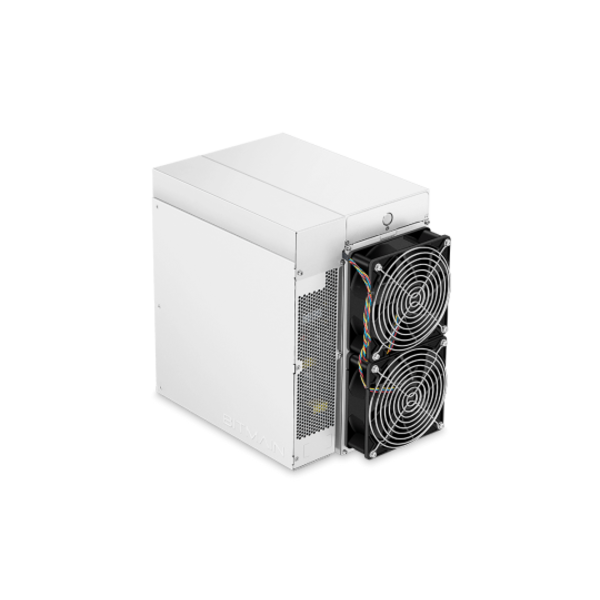
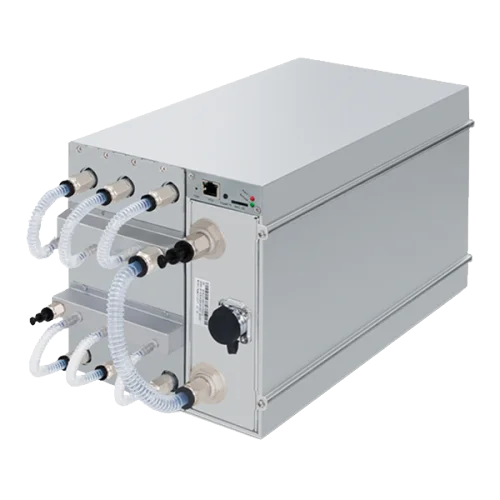
Antminer D7 vs Bitmain Antminer S21+ Hyd
Side-by-side specs, profitability, and home mining comparison.
Quick verdict
For most buyers the Bitmain Antminer S21+ Hyd is the stronger pick — it leads on 5 of 6 head-to-head factors. The Antminer D7 runs 1,286.0 GH/s; the Bitmain Antminer S21+ Hyd runs 319.0 TH/s.
Specs verified against the D-Central Mining Bible \xc2\xb7 June 2026
Specifications Comparison
| Antminer D7 | Specification | Bitmain Antminer S21+ Hyd |
|---|---|---|
| 1,286.0 GH/s | Taux de hachage | 319.0 TH/s |
| 3,148 W | Consommation électrique | 4,785 W |
| 2,447.9 J/TH | Efficiency | 15.0 J/TH |
| 70 dB | Niveau de bruit | 50 dB |
| 14.4 kg | Weight | 17.5 kg |
| 10,741 BTU/hr | BTU Output | 16,326 BTU/hr |
| 13/100 | Home Mining Score | 32/100 |
| — | Release Year | — |
| X11 | Algorithme | SHA-256 |
| Bitmain | Manufacturer | Bitmain |
Profitability Comparison
Antminer D7
Bitmain Antminer S21+ Hyd
Based on BTC price of $65,936 and current network difficulty as of Jun 17, 2026. Actual results vary.
Verdict
Run the numbers across every spec and the Bitmain Antminer S21+ Hyd edges it: 5 of 6 factors go its way (efficacité, hashrate, score de minage domestique, niveau sonore, rapport qualité-prix). The standout gap is 24706% more hashrate (1.3 vs 319.0 TH/s) in the Bitmain Antminer S21+ Hyd's favour. The Antminer D7 claws back ground on consommation électrique. Cross-check the spec deltas and operating-cost table above against your own electricity rate before deciding.
Spec Deltas
Stripped to the numbers, this is how far apart the Antminer D7 and Bitmain Antminer S21+ Hyd sit on each measurable spec:
- Bitmain Antminer S21+ Hyd 24706% more hashrate (1.3 vs 319.0 TH/s)
- Antminer D7 34% better power draw (3,148 vs 4,785 W)
- Bitmain Antminer S21+ Hyd 99% better efficacité (2,447.9 vs 15.0 J/TH)
- Bitmain Antminer S21+ Hyd 29% better noise (70.0 vs 50.0 dB)
- Antminer D7 18% better weight (14.4 vs 17.5 kg)
- Bitmain Antminer S21+ Hyd 52% more heat output (10,741 vs 16,326 BTU/hr)
- Bitmain Antminer S21+ Hyd 146% more score de minage domestique (13.0 vs 32.0)
Cost & ROI Over Time
Hardware cost is only half the story — here is how each miner's upfront price plays out against cumulative profit at a $0.10/kWh rate.
| Antminer D7 | Metric | Bitmain Antminer S21+ Hyd |
|---|---|---|
| $2,500 | Upfront cost (MSRP) | $2,499 |
| -$7.51 | Daily net profit | -$0.90 |
| -$5,242 | Net after 1 year | -$2,828 |
| -$7,984 | Net after 2 years | -$3,156 |
| -$10,726 | Net after 3 years | -$3,485 |
| Does not pay back at current rates (negative daily profit) | Payback period | Does not pay back at current rates (negative daily profit) |
Projections assume continuous operation, a flat $0.10/kWh rate, and no hardware degradation, pool fees, or BTC price change. Real-world ROI varies.
Best For...
Best for Profitability
TieBoth miners produce similar daily profit.
Best for Home Mining
Bitmain Antminer S21+ HydScore: 32/100. 50 dB noise level.
Best for Efficiency
Bitmain Antminer S21+ Hyd15.0 J/TH — lower electricity cost per terahash.
Foire aux questions
Antminer D7 vs Bitmain Antminer S21+ Hyd: which one earns more per day?
At the current BTC price and a $0.10/kWh electricity rate, the Bitmain Antminer S21+ Hyd is more profitable at $-0.90/day compared to $-7.51/day for the Antminer D7. Profitability depends heavily on your electricity rate — use the selector above to calculate with your actual costs.
Is the Antminer D7 or the Bitmain Antminer S21+ Hyd better for noise-sensitive spaces?
The Bitmain Antminer S21+ Hyd is quieter at 50 dB compared to the Antminer D7 at 70 dB. For home mining, lower noise levels make a significant difference in livability.
Antminer D7 vs Bitmain Antminer S21+ Hyd: which fits a residential setup better?
The Bitmain Antminer S21+ Hyd scores 32/100 on our Home Mining Score (vs 13/100 for the Antminer D7). This composite score factors in noise, power requirements, heat output, size, and setup ease — all critical for residential mining.
Antminer D7 vs Bitmain Antminer S21+ Hyd: how much does the efficiency gap matter?
The Antminer D7 runs at 2,447.9 J/TH while the Bitmain Antminer S21+ Hyd runs at 15.0 J/TH — a difference of 2,432.9 J/TH. Lower efficiency means less electricity per terahash of mining power, directly reducing operating costs. In relative terms that is 99% better efficacité (2,447.9 vs 15.0 J/TH).