

Elphapex DG 1 (11GH)
Réponse rapide
The Elphapex DG 1 (11GH) is a Scrypt miner rated about 11 GH/s at roughly 3,420 W. An industrial-class unit — loud and power-hungry, best suited to a dedicated mining space, not living areas.
Professional-Grade Miner
This miner draws 3,420W and produces 75 dB of noise — it is designed for dedicated mining environments, not living spaces. Professional-grade miners deliver the highest hashrate and revenue per unit but require proper infrastructure: a 240V circuit, adequate ventilation or exhaust ducting, and a space where noise is not a concern (garage, basement, warehouse, or outdoor enclosure).
For home miners looking for a quieter alternative, consider our Bitcoin Space Heater builds or explore open-source miners like the Bitaxe that are purpose-built for residential environments.
Heater-Class Miner
At 3,420W, this miner outputs approximately 11669 BTU/hr of heat — equivalent to a standard electric space heater. Every watt consumed by an ASIC miner is converted to heat with 100% efficiency, making it a space heater that also mines Bitcoin.
During heating season, miner heat can offset part of the heat a room would otherwise need from another electric heater. The economics depend on your electricity rate, room heat demand, BTC price, network difficulty, and noise constraints.
Calculateur de rentabilité
| Period | Revenue | Electricity Cost | Profit |
|---|---|---|---|
| Daily | $0.00 | $5.75 | $-5.75 |
| Weekly | $0.00 | $40.22 | $-40.22 |
| Monthly | $0.01 | $172.37 | $-172.36 |
| Yearly | $0.12 | $2,097.14 | $-2,097.02 |
Heating offset estimates the value of heat replacing an electric space heater during heating season (~6 months/year in Canada). Actual savings depend on your heating setup and climate.
Where to Buy the Elphapex DG 1 (11GH)
D-Central Technologies is a Bitcoin-only company. For this miner, check out our trusted partner retailers below.
ASIC Miner Market
United StatesWide selection of new and used ASIC miners. US-based shipping.
MagasinerMinersDeals
United StatesCompetitive prices on new ASIC miners with coupon codes.
MagasinerPartner links may earn D-Central a commission at no extra cost to you. Have you considered Bitcoin mining instead? Explore Bitcoin miners →
Full Specifications
| Model | Elphapex DG 1 (11GH) |
|---|---|
| Model Number | DG 1 (11GH) |
| Manufacturer | Elphapex |
| Algorithme | Scrypt |
| Coins Mined | Litecoin (LTC), Dogecoin (DOGE) |
| Taux de hachage | 11 GH/s |
| Consommation électrique | 3,420 W |
| Efficiency | 310.91 J/GH |
| Niveau de bruit | 75 dB |
| Dimensions | 369.3*196*287mm |
| Weight | 16.1 |
| BTU Output | 11669 BTU/hr |
| Equivalent Heater | Equal to a 3,420W space heater |
| Daily Power Cost | $5.75/day |
| Monthly Power Cost | $172.37/mo |
| Circuit Requirement | 240V circuit required |
| Release Date | 2024-03-01 |
| MSRP | $950.00 |
| État | Active |
Home Mining Assessment
The Elphapex DG 1 is an air-cooled Scrypt ASIC miner that delivers roughly 11 GH/s (11,000 MH/s) at about 3,420 W, merge-mining Litecoin and Dogecoin from a single hashing effort. Released in March 2024, it arrived as the most efficient air-cooled Scrypt machine on the market, undercutting Bitmain’s long-dominant Antminer L7.
Chip and hashboard architecture
The DG 1 is the device that broke Bitmain’s monopoly on Scrypt mining hardware. Where the Antminer L3+ and L7 run Bitmain’s BM1485 and BM1489 silicon, the DG 1 is built on Elphapex’s own proprietary Scrypt ASICs. Elphapex does not publish a public datasheet for that chip, so we describe its architecture qualitatively rather than quote core counts or a process node we cannot verify. What follows is grounded in how every Scrypt ASIC has to be built, and in our bench experience with the L-series boards the DG 1 competes against.
Scrypt is a deliberately memory-hard algorithm. Litecoin’s parameters (N=1024, r=1, p=1) force each hashing core to allocate a 128 KB SRAM scratchpad per nonce attempt. That single fact dictates the whole layout of a Scrypt miner. Because most of each die is consumed by SRAM rather than hashing logic, a Scrypt chip carries far fewer cores than a SHA-256 chip of the same era — Bitmain’s BM1485, for reference, has only 12 Scrypt cores versus 114 SHA-256 cores on the contemporaneous BM1387. The DG 1 follows the same physics: a large population of relatively low-core-count ASICs spread across multiple hashboards, each chip wired into a UART daisy-chain so the control board can address the whole string in sequence.
Power on those boards is delivered through series-connected voltage domains, the standard arrangement on high-density Scrypt hardware. A group of chips shares each domain, and regulation happens per domain, not per individual chip — there is no such thing as per-chip voltage trim on these machines. On Bitmain’s reference designs the domain spread must stay within roughly ±0.05 V; a domain that drifts outside that band points to a failing chip or regulator. The practical consequence for any owner is the same across the category: a single dead chip pulls down its entire domain and, depending on the topology, can break the daisy-chain for every chip downstream of it. That is why these miners fail « a whole board at a time » rather than gracefully.
Real-world power and efficiency
The DG 1’s nameplate is roughly 11 GH/s at 3,420 W. As always, plan your facility around the wall, not the sticker: expect the unit to draw a little above nameplate once PSU conversion losses, fan ramp, and a warm intake are accounted for, and budget a 240 V circuit with real headroom rather than running a ~3.4 kW load against a breaker’s ceiling.
Efficiency is where the DG 1 earned its reputation, and where the older description of this page was simply wrong. Measured the right way, the DG 1 lands near 0.31 J/MH (about 311 J/GH). That is more efficient than the Antminer L7’s ~0.36 J/MH — the DG 1 produces about 16% more hashrate at the same wall power. Calling it a « legacy » or « space-heater-only » miner misreads the metric: this was a flagship-class efficiency leader for air-cooled Scrypt at launch.
One clarification that trips up a lot of buyers: you will see this machine’s efficiency quoted as a huge « J/TH » number. Scrypt hashrate is conventionally measured in MH/s and GH/s, never TH/s, so dividing watts by a fraction of a terahash produces a misleadingly enormous figure. It is a unit artifact, not a sign the miner is inefficient. The honest, comparable number is the J/MH figure above.
| Specification | Elphapex DG 1 | Antminer L7 (Bitmain) | Antminer L9 (Bitmain) |
|---|---|---|---|
| Algorithm | Scrypt (LTC + DOGE) | Scrypt (LTC + DOGE) | Scrypt (LTC + DOGE) |
| Hashrate | ~11,000 MH/s | ~9,500 MH/s | ~16,000 MH/s |
| Power (wall, nominal) | ~3,420 W | ~3,425 W | ~3,450 W |
| Efficiency | ~0.31 J/MH | ~0.36 J/MH | ~0.21 J/MH |
| Cooling | Air | Air | Air |
| Silicon | Elphapex proprietary | Bitmain BM1489 | Bitmain (next-gen Scrypt) |
| Released | Mar 2024 | 2021 | 2024 |
On tuning headroom: like the L7/L9 platforms, Scrypt miners expose a curve of wattage-to-hashrate operating points rather than a single fixed setting. Underclocking trades hashrate for better efficiency and lower noise; pushing harder buys hashrate at a steep efficiency penalty. For worked examples of how a Scrypt miner’s J/MH moves as you slide along that curve, see our ASIC power profiles database, and always confirm any target profile against your actual ambient and voltage before committing to it.
Firmware compatibility
The DG 1 ships with Elphapex’s stock firmware and web dashboard, which handles pool configuration, monitoring, and the built-in operating modes. Stock is also the practical reality here, and we will be honest about why: the mature third-party firmware ecosystem — the custom builds that mining hackers reach for to unlock finer autotuning and richer telemetry — grew up around Bitmain’s L7/L9 hardware, not Elphapex’s. Those builds are compiled for specific Bitmain control boards and silicon; they do not transfer to the DG 1’s proprietary platform. If aftermarket firmware flexibility is a hard requirement for your operation, that gap is a genuine consideration when choosing between the DG 1 and an L-series machine.
It is worth understanding what custom firmware actually does on a Scrypt miner so you can judge whether you are missing it: a good autotuner does not load a table of « preset » overclocks, it calculates frequency and voltage targets per board at runtime based on measured temperature and error rates, and walks them toward a goal. That runtime, closed-loop behaviour is the value — and on the DG 1 you are relying on Elphapex’s stock implementation of it. D-Central’s own firmware work centres on Bitmain platforms, so we do not claim a DCENT_OS image for Elphapex hardware; where we can help a DG 1 owner is on the bench, not the bootloader.
Common faults and troubleshooting
Scrypt flagships run hard, hot, and continuously, and the DG 1 fails along the same lines as every dense air-cooled ASIC:
- Dead or missing hashboard. The dashboard reports a board with zero or sharply reduced chips. Because the chips sit in a series daisy-chain, one broken chip or open domain can take the rest of the string offline — the symptom looks board-wide even when the root cause is a single component.
- Thermal throttling and over-temp shutdowns. A clogged heatsink, dust-loaded intake, or hot room pushes junction temperatures into the protection band and the miner drops hashrate or cuts out. Air-cooled Scrypt boards are especially sensitive because the cores run a memory-heavy workload.
- Fan failures. At ~75 dB the DG 1 leans on high-RPM fans; a failed or lying tachometer triggers a protective shutdown even when the board itself is healthy.
- PSU faults. A ~3.4 kW supply under constant load is a wear item. Random reboots, a unit that will not power up, or boards that drop under load frequently trace back to the PSU rather than the hashboards.
- Voltage-domain imbalance. A domain reading outside the expected band is the classic fingerprint of a marginal chip or regulator and is the first thing to measure when a board underperforms instead of failing outright.
Work the problem methodically rather than swapping parts at random. Our ASIC fault finder walks symptoms back to likely causes, and our error-code library decodes the specific status messages a miner throws so you are not guessing at what a code means.
Repair and longevity
A Scrypt miner is not disposable. The chips that fail are individually inexpensive, and the boards are repairable by anyone with the right gear and the patience to do chip-level work. D-Central has run an in-house ASIC repair bench in Laval since 2016, and the same diagnostic discipline we apply to Bitmain L-series boards applies to Scrypt hardware generally: trace the broken link in the daisy-chain, measure each voltage domain against its neighbours, reball or replace the offending chip, and verify the whole string re-enumerates before the board goes back in service. Fans and PSUs are straightforward service items that extend a unit’s life for a fraction of replacement cost. If your DG 1 has thrown a board or quit entirely, talk to us through our ASIC repair service before you write it off.
Who the DG 1 is for
This is a single-purpose machine: it mines Scrypt, which on the public chains means Litecoin with Dogecoin merge-mined alongside it at no extra power cost (both chains share the Scrypt proof-of-work, and Dogecoin’s auxiliary-proof-of-work mechanism lets one set of hashes settle both). If you are committed to the LTC/DOGE niche and have proper 240 V power and a tolerant location for the noise and heat, the DG 1 is one of the strongest air-cooled options of its generation. It is not a living-room machine and not a starter unit — at ~3.4 kW and ~75 dB it belongs in a dedicated space, a garage, or a hosted facility, not next to a desk. Buyers cross-shopping Scrypt hardware should weigh it directly against the Antminer L7 and L9; browse and compare current Scrypt machines in our ASIC miner database, and reach out if you want a straight answer on which fits your power and budget.
Where the DG 1 sits in the Scrypt generation
Credit where it is due: Bitmain defined modern Scrypt mining with the L3+ and then the L7, and those machines set the bar the DG 1 was measured against. What Elphapex did in March 2024 was meaningful — the DG 1 became the anchor of an entire DG product line (joined later by higher-hashrate and home-oriented variants) and delivered better air-cooled efficiency than the incumbent L7, which is precisely why it took real Scrypt market share. Bitmain answered with the Antminer L9, a next-generation Scrypt machine that pushed efficiency down to roughly 0.21 J/MH and reclaimed the top of the curve. That back-and-forth is healthy: the DG 1 is the unit that turned Scrypt mining from a one-vendor market into a competitive one. It remains a capable, repairable, efficiency-respectable miner for anyone whose plan is built around Litecoin and Dogecoin.
Broken miner? Get a real quote.
Tell us the symptom and get an instant repair-tier estimate ($95 / $145 / $195 CAD). Mail-in from across Canada, bench in Laval, Quebec.
Send it to D-Central — start a repair →Related Miners
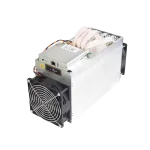
Bitmain Antminer L3++ (580Mh)
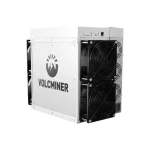
VOLCMINER D1 Pro
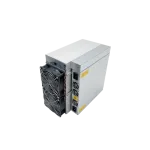
Bitmain Antminer L7 (9.16Gh)
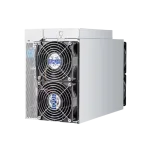
Elphapex DG1 Lite
Comparer le Elphapex DG 1 (11GH)
Foire aux questions
What are the current mining economics for the Elphapex DG 1 (11GH)?
At $0.07/kWh, the Elphapex DG 1 (11GH) currently shows an estimated daily net cost of $5.75 before pool fees and hardware cost. Lower electricity rates, network changes, BTC price changes, or useful heat recovery can change the result.
Can I mine Bitcoin at home with the Elphapex DG 1 (11GH)?
The Elphapex DG 1 (11GH) has a home mining score of 8/100. With 75 dB noise and 3,420W power draw, it may require a dedicated space like a garage, basement, or outdoor enclosure. Consider noise insulation and proper ventilation.
Can the Elphapex DG 1 (11GH) heat my home?
The Elphapex DG 1 (11GH) outputs approximately 11669 BTU/hr of heat. For reference, a typical space heater produces 5,000-5,500 BTU/hr. All electrical energy consumed by the miner is converted to heat, making it 100% efficient as a heater. D-Central offers Bitcoin Space Heater builds designed specifically for home heating integration.
What power supply does the Elphapex DG 1 (11GH) need?
The Elphapex DG 1 (11GH) draws 3,420W of power. You need a power supply rated for at least 3,762W with appropriate voltage (200-240V AC). D-Central stocks compatible power supplies in our shop. Always use a quality PSU from a reputable manufacturer to protect the miner and wiring.