
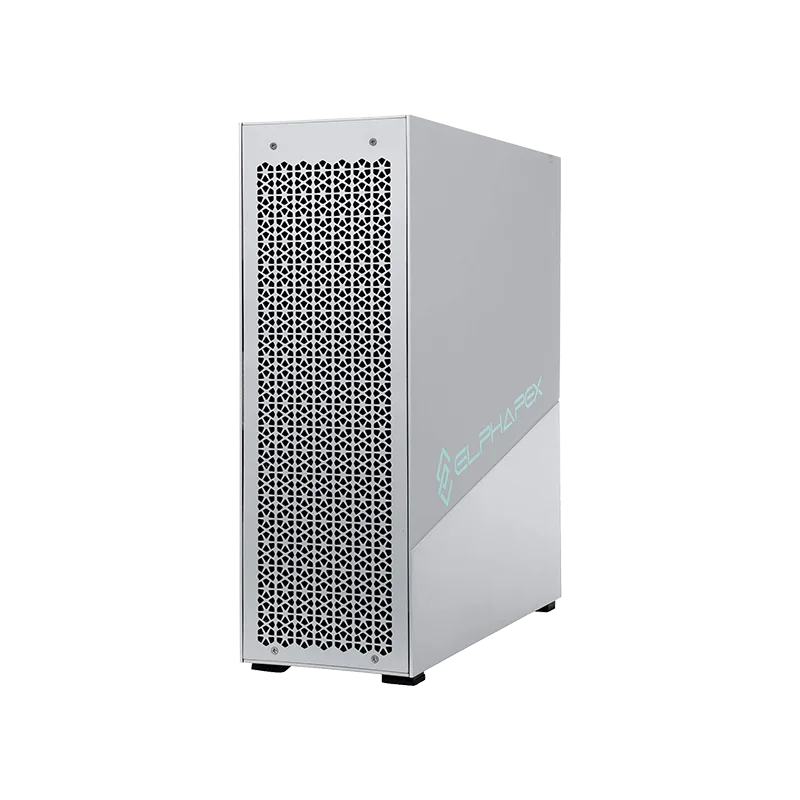
Elphapex DG Home 1
Home-friendly Scrypt miner at 2.1 GH/s and 630W. Mines Litecoin and Dogecoin. Quieter than industrial units but still above home-friendly noise threshold.
Réponse rapide
The Elphapex DG Home 1 is a Scrypt miner rated about 2100 MH/s at roughly 630 W, built on the Custom ASIC ASIC. Runnable at home with proper airflow and noise control; best in a dedicated space.
Heater-Class Miner
At 630W, this miner outputs approximately 2149.6 BTU/hr of heat — equivalent to a standard electric space heater. Every watt consumed by an ASIC miner is converted to heat with 100% efficiency, making it a space heater that also mines Bitcoin.
During heating season, miner heat can offset part of the heat a room would otherwise need from another electric heater. The economics depend on your electricity rate, room heat demand, BTC price, network difficulty, and noise constraints.
Calculateur de rentabilité
| Period | Revenue | Electricity Cost | Profit |
|---|---|---|---|
| Daily | $0.00 | $1.06 | $-1.06 |
| Weekly | $0.00 | $7.41 | $-7.41 |
| Monthly | $0.00 | $31.75 | $-31.75 |
| Yearly | $0.02 | $386.32 | $-386.29 |
Heating offset estimates the value of heat replacing an electric space heater during heating season (~6 months/year in Canada). Actual savings depend on your heating setup and climate.
Where to Buy the Elphapex DG Home 1
D-Central Technologies is a Bitcoin-only company. For this miner, check out our trusted partner retailers below.
ASIC Miner Market
United StatesWide selection of new and used ASIC miners. US-based shipping.
MagasinerMinersDeals
United StatesCompetitive prices on new ASIC miners with coupon codes.
MagasinerPartner links may earn D-Central a commission at no extra cost to you. Have you considered Bitcoin mining instead? Explore Bitcoin miners →
Full Specifications
| Model | Elphapex DG Home 1 |
|---|---|
| Model Number | DG Home 1 |
| Manufacturer | Elphapex |
| Algorithme | Scrypt |
| Coins Mined | Litecoin (LTC), Dogecoin (DOGE) |
| Taux de hachage | 2100 MH/s |
| Consommation électrique | 630 W |
| Efficiency | 0.3 J/MH |
| Niveau de bruit | 45 dB |
| Chip Model | Custom ASIC |
| Cooling | Air |
| Voltage Range | 100-240V AC |
| Operating Temperature | 5-65°C |
| Dimensions | 410x370x135 |
| Weight | 10.3 |
| Interface | Ethernet |
| BTU Output | 2149.6 BTU/hr |
| Equivalent Heater | Small personal heater (2,150 BTU/hr) |
| Daily Power Cost | $1.06/day |
| Monthly Power Cost | $31.75/mo |
| Circuit Requirement | Standard 120V 15A |
| Release Date | 2024-12-01 |
| MSRP | $2,500.00 |
| État | Active |
Home Mining Assessment
Home-friendly Scrypt miner at 2.1 GH/s and 630W. Mines Litecoin and Dogecoin. Quieter than industrial units but still above home-friendly noise threshold.
The Elphapex DG Home 1 is a Scrypt ASIC built for residential mining: about 2,100 MH/s (2.1 GH/s) of merge-mined Litecoin and Dogecoin hashrate at roughly 630 W from the wall, or about 0.30 J/MH. It fits a standard 120 V outlet, runs near 45 dB, and puts modern-generation Scrypt efficiency in a footprint most industrial Litecoin miners can’t bring into a home.
Chip and hashboard architecture
Scrypt is a memory-hard proof-of-work: every hashing core has to fill and read back a large scratchpad of fast on-die SRAM for each nonce. That memory requirement is exactly what made Litecoin and Dogecoin resistant to early SHA-256 Bitcoin hardware, and it is why Scrypt ASIC dies are large, run warm, and have historically trailed Bitcoin chips on process node. The DG Home 1 is driven by Elphapex’s own proprietary Scrypt ASIC. Elphapex does not publish a chip SKU or a per-board die count, and we won’t guess at numbers we can’t verify against silicon — but we can be precise about the parts of this machine that are common to the whole Scrypt family.
The chips on a Scrypt hashboard are wired into series-connected voltage domains, and the single most important fact for anyone tuning or repairing one is that voltage is regulated per domain, not per chip. For a documented reference point: Bitmain’s L3+ organizes its 72 BM1485 chips (TSMC 28 nm) into 12 domains of six chips, each domain near 0.80 V for roughly 9.6 V across the string; the later L7 strings hundreds of BM1489 chips (TSMC 7 nm DUV) across its boards on the same series-domain principle. The DG Home follows that electrical model. The practical consequence: a domain is the smallest independently powered unit on the board, so one weak or open chip pulls its entire domain — and that domain’s share of the 2.1 GH/s — offline with it. Control and monitoring run from an onboard controller over Ethernet, with inlet and outlet temperature sensors on the I²C bus feeding the fan and throttle logic, as on every machine in this class.
Real-world power and efficiency
One correction worth making up front, because it shows up on a lot of spec sheets: Scrypt efficiency is measured in joules per megahash (J/MH), not the J/TH used for SHA-256 Bitcoin miners. At 630 W for 2,100 MH/s, the DG Home 1 runs about 0.30 J/MH (roughly 300 J/GH) — and that is a genuinely current-generation figure, not a « legacy » one.
Put it against hardware we’ve measured. Goldshell’s home Scrypt line — the Mini-DOGE, LT5 and LT6 — lands between roughly 0.90 and 1.26 W/MH, so the DG Home is two to four times more efficient per megahash than the home Scrypt miners it actually competes with. It even edges out a stock Bitmain L7 (9,500 MH/s at 3,425 W, about 0.36 J/MH) and trails only the industrial L9 (~0.21 J/MH at 3,300 W) — a machine you would never put in a spare room. The DG Home’s real trick is delivering that efficiency inside a 630 W envelope that fits a normal 120 V / 15 A circuit (about 5.3 A), where an L7 or L9 demands a dedicated 240 V branch and a tolerance for jet-engine noise.
On tuning headroom, be realistic. Big Scrypt machines have wide curves — our catalogue documents 35 L7/L9 power profiles, from an L7 dialed down to 4,800 MH at 1,855 W up to 12,000 MH at 6,000 W — and like all modern ASICs those operating points are calculated by the autotuner at runtime, not fixed presets baked into the chip. A small home unit like the DG Home has far less room to move; its value is steady efficiency at a fixed, wall-friendly draw rather than overclocking for raw hashrate. To see how Scrypt watt-for-hashrate curves actually behave, our ASIC power profiles database lays them out so you can match a machine to your circuit instead of your ambition.
Firmware compatibility
The DG Home 1 ships with Elphapex’s stock firmware — a cgminer-derived stack with a browser-based dashboard for pool configuration, tuning modes, and live monitoring, reached over the Ethernet interface. For anyone running more than one machine, the open-source pyasic fleet library includes a dedicated Elphapex backend, so the DG Home can be discovered, polled, and managed from the same standard tooling as the rest of a mixed-brand farm.
Be honest about the third-party reality, though. The mainstream aftermarket custom-firmware projects grew up around SHA-256 Antminers and Bitmain’s own Scrypt units, not Elphapex hardware, so there is no mature alternative firmware for the DG Home today — stock is effectively the only game. DCENT_OS, D-Central’s open, GPL-3.0 firmware, is likewise focused on Antminer SHA-256 silicon and does not target this Scrypt machine; we would rather say that plainly than promise a port that doesn’t exist. Whatever you run, keep a verified backup of the stock firmware image before you change anything on the unit.
Common faults and troubleshooting
Because the board is built from series voltage domains, the failure modes echo every other Scrypt ASIC we see cross the bench:
- Hashrate short of nameplate / a chain reading low — usually a single failed chip or a cracked solder joint opening a domain. The board keeps running but loses that domain’s slice of the 2.1 GH/s.
- Thermal throttling — Scrypt cores run hot, so clogged fins, a tired fan, or warm intake air will drag sustained hashrate down even when every chip is healthy.
- Bad temperature telemetry — a failing inlet or outlet temp sensor (the I²C LM75A-class parts common across this hardware) can feed the controller wrong data and trigger spurious shutdowns or fan runaway.
- PSU sag / under-power — a marginal supply or an overloaded circuit that can’t hold 630 W when warm shows up as restarts, missing domains, or a unit that won’t reach rated speed.
Work it methodically: confirm the unit enumerates its full chip count, read intake and exhaust temperatures, and reseat the power and signal connectors before condemning a board. Our ASIC fault finder walks the symptom-to-cause path for these states and points you to the specific error messages you’ll see in the Elphapex dashboard.
Repair and longevity
D-Central has run an in-house ASIC repair lab in Laval, Quebec since 2016, and a chip-level fault on a Scrypt board is rarely a reason to scrap it. We diagnose to the component level — isolating the dead domain, reflowing or replacing failed chips, rebuilding power stages, and servicing fans, sensors, and the PSU — because on a series-string board the fault is often one chip out of many, exactly the kind of repair that rewards a real bench over a parts-swap. Two honest caveats apply to a newer, lower-volume platform like the DG Home: Elphapex’s proprietary ASIC means board-level repair can depend on donor parts, and documentation is thinner than for a decade-old Antminer line, so we’re straight with you about what’s economically repairable before you ship anything. If your DG Home has dropped hashrate or won’t boot, our ASIC repair service is the place to start rather than retiring a machine with years of life left in it.
Who the DG Home 1 is for
This is the rare Scrypt ASIC you can realistically run where you live. At ~630 W on a standard outlet and roughly 45 dB, it is far quieter and lower-draw than the ~75 dB, 3,000 W-plus L7/L9 class — though 45 dB is still audible, so a utility room, basement, or garage beats a bedroom. Its ~2,150 BTU/h of waste heat is modest enough to be a welcome winter bonus rather than a furnace, and can be ducted into the room it sits in. It suits a hobbyist who wants Litecoin and Dogecoin exposure — the two coins are merge-mined together, so a single machine earns both at once — without an industrial power bill or noise profile. If your goal is Bitcoin (SHA-256) rather than Scrypt, a low-wattage open-source Bitaxe-class miner is the quieter home entry point; to weigh the DG Home against other current hardware on hashrate, efficiency, and price, browse our ASIC miner catalog and database.
Generational context
For years, Scrypt mining at home meant Goldshell’s small, friendly-but-inefficient boxes, while serious hashrate meant Bitmain’s L7 and then L9 — loud, power-hungry industrial machines. Credit to both: Goldshell proved out the home Scrypt category, and Bitmain’s BM1489-based L7/L9 set the efficiency bar the rest of the field now chases. Elphapex’s DG line, launched in 2024, is a direct challenger to that establishment, and the DG Home 1 is its play for the gap the others left open — near-industrial efficiency in a quiet, 120 V, home-sized package. It sits below Elphapex’s larger DG-series units the way a small Antminer sits below a flagship: the same family, scaled down for people who want to mine in the room they’re standing in.
| Scrypt miner | Hashrate | Wall power | Efficiency | Class |
|---|---|---|---|---|
| Elphapex DG Home 1 | 2,100 MH/s | 630 W | ~0.30 J/MH | Home / quiet |
| Goldshell LT5 | 2,050 MH/s | 2,080 W | ~1.01 J/MH | Home / desktop |
| Goldshell LT6 | 3,350 MH/s | 3,200 W | ~0.96 J/MH | Prosumer |
| Bitmain Antminer L7 | 9,500 MH/s | 3,425 W | ~0.36 J/MH | Industrial |
| Bitmain Antminer L9 | 16,000 MH/s | 3,300 W | ~0.21 J/MH | Industrial |
Elphapex DG Home 1 specifications at a glance
| Specification | Detail |
|---|---|
| Manufacturer | Elphapex |
| Algorithm | Scrypt (Litecoin / Dogecoin, merge-mined) |
| ASIC chip | Proprietary Elphapex Scrypt ASIC (SKU not published) |
| Voltage control | Per series voltage domain (not per chip) |
| Nameplate hashrate | 2,100 MH/s (2.1 GH/s) |
| Wall power | ~630 W |
| Efficiency | ~0.30 J/MH (300 J/GH) |
| Cooling | Air |
| Noise | ~45 dB |
| Input voltage | 100–240 V AC (fits a standard 120 V outlet) |
| Operating temperature | 5–65 °C |
| Heat output | ~2,150 BTU/h |
| Dimensions | 410 × 370 × 135 mm |
| Weight | 10.3 kg |
| Interface | Ethernet |
| Released | December 2024 |
D-Central’s in-house technicians repair, tune, and service the Elphapex DG Home 1. View full specifications, live profitability, and side-by-side comparison data for the DG Home 1 in our comprehensive ASIC miner database.
Broken miner? Get a real quote.
Tell us the symptom and get an instant repair-tier estimate ($95 / $145 / $195 CAD). Mail-in from across Canada, bench in Laval, Quebec.
Send it to D-Central — start a repair →Related Miners
Elphapex DG 1 (11GH)
VOLCMINER D1 (16.2Gh)
Goldshell Mini-DOGE Pro
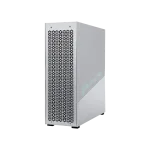
Elphapex DG Home 1
Foire aux questions
What are the current mining economics for the Elphapex DG Home 1?
At $0.07/kWh, the Elphapex DG Home 1 currently shows an estimated daily net cost of $1.06 before pool fees and hardware cost. Lower electricity rates, network changes, BTC price changes, or useful heat recovery can change the result.
Can I mine Bitcoin at home with the Elphapex DG Home 1?
Yes, the Elphapex DG Home 1 scores 70/100 for home mining viability. It produces 45 dB of noise and draws 630W. It is suitable for home environments with appropriate placement considerations.
Can the Elphapex DG Home 1 heat my home?
The Elphapex DG Home 1 outputs approximately 2149.6 BTU/hr of heat. For reference, a typical space heater produces 5,000-5,500 BTU/hr. All electrical energy consumed by the miner is converted to heat, making it 100% efficient as a heater. D-Central offers Bitcoin Space Heater builds designed specifically for home heating integration.
What power supply does the Elphapex DG Home 1 need?
The Elphapex DG Home 1 draws 630W of power. You need a power supply rated for at least 693W with appropriate voltage (100-240V AC). D-Central stocks compatible power supplies in our shop. Always use a quality PSU from a reputable manufacturer to protect the miner and wiring.