Quebec sits on one of the most powerful renewable energy reserves on the planet. Hydro-Quebec operates over 60 hydroelectric generating stations producing roughly 200 TWh of clean electricity per year, making it one of the largest hydro producers in the world. The electricity is cheap, abundant, and green. And yet, Quebec’s political class continues to treat Bitcoin mining as a problem rather than what it actually is: the single most flexible, controllable, and economically productive load any power grid has ever seen.
At D-Central Technologies, we operate our hosting facility in Montreal, Quebec, and we have watched this story unfold since 2016. We have seen the moratoriums, the rate hikes aimed specifically at miners, and the endless hand-wringing about energy consumption. The reality on the ground tells a completely different story. Bitcoin mining is not draining Quebec’s grid. It is the tool Quebec needs to stabilize it, monetize surplus production, and fund the next generation of renewable infrastructure.
This is not speculation. This is thermodynamics, economics, and game theory. Let us break it down.
Quebec’s Energy Surplus Problem
Hydro-Quebec consistently produces more electricity than the province consumes. In many years, the corporation has been forced to sell surplus power to neighboring U.S. states at discounted rates, or simply spill water over the dams because there is no buyer for the energy. This is not a minor inefficiency. We are talking about billions of kilowatt-hours of stranded energy, energy that cost money to generate infrastructure for but produces zero revenue.
| Metric | Value |
|---|---|
| Hydro-Quebec installed capacity | ~37,000 MW |
| Average annual generation | ~200 TWh |
| Typical domestic demand | ~170-180 TWh |
| Annual surplus (variable) | ~20-30 TWh |
| Carbon intensity | <2 g CO2/kWh (among the cleanest in the world) |
The traditional solution to surplus energy is exporting it via interconnections to Ontario, New York, and New England. But export prices are volatile and often below the cost of production during off-peak hours. Bitcoin mining offers something no export contract can: a buyer that is always on, that pays full rate, that consumes locally, and that can shut off in seconds when the grid needs the power back.
Bitcoin Mining as the Ultimate Controllable Load
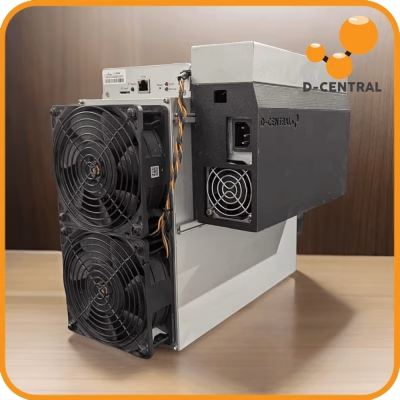
No industrial load in history has been as controllable as Bitcoin mining. A modern ASIC miner, whether it is an Antminer S21 drawing 3,500 watts or a Bitaxe solo miner sipping 15 watts at home, responds to one command: on or off. There is no warm-up period. No production loss from shutting down. No spoiled materials. No workers sent home.
This is what makes Bitcoin mining fundamentally different from every other industrial electricity consumer. An aluminum smelter cannot shut down for two hours during a cold snap without risking catastrophic damage to its pot lines. A data center cannot go offline without violating SLAs and losing customers. But a Bitcoin miner? You flip the switch, the miner stops hashing, the grid gets the power. When the peak passes, you flip it back on. No damage, no loss of capital, no renegotiation.
This characteristic makes Bitcoin mining the perfect candidate for what power engineers call demand response, the practice of adjusting electricity consumption in response to grid conditions. And demand response is not a theoretical concept. It is a critical tool that grid operators worldwide are desperate for, especially as intermittent renewables like wind and solar introduce more volatility into the system.
The Texas Blueprint
Texas has already proven this model works at scale. During Winter Storm Uri in 2021 and subsequent grid emergencies, Bitcoin miners voluntarily curtailed gigawatts of load, providing more grid relief than any other industrial sector. Companies like Riot Platforms have built their entire business model around demand response, earning millions in curtailment credits while still running profitable mining operations during off-peak hours.
Quebec has even better fundamentals than Texas. The electricity is cleaner, cheaper, and more predictable. The cold climate provides natural cooling for mining hardware, reducing operational costs. The political environment, despite its current skepticism, is stable and well-regulated. All that is missing is the political will to treat Bitcoin miners as grid partners rather than grid parasites.
How Bitcoin Mining Funds Renewable Energy Infrastructure
Here is the economic argument that most critics miss entirely. Building new hydroelectric dams is extraordinarily expensive. The La Romaine complex, Hydro-Quebec’s most recent major project, cost over $6.5 billion. These projects take decades to plan, approve, and construct. The biggest financial risk is always the same: will there be enough demand to justify the investment?
Bitcoin mining eliminates that risk. A new dam or wind farm can begin generating revenue on day one by selling power to miners, even before traditional industrial or residential customers materialize. When those conventional customers do arrive, the miners curtail, freeing up the capacity. The renewable project has been de-risked, the infrastructure has been paid for, and the grid is stronger.
This is not hypothetical. This model is already operating in multiple jurisdictions:
| Jurisdiction | Model | Result |
|---|---|---|
| Texas, USA | Demand response + behind-the-meter at wind/solar farms | Miners curtail during peaks, earn grid credits, stabilize ERCOT |
| Norway | Stranded hydro monetization | Remote hydro stations with no transmission earn revenue via mining |
| Paraguay | Itaipu Dam surplus absorption | Mining consumes surplus hydro that was previously wasted or sold below cost |
| Ethiopia | Grand Renaissance Dam load bootstrapping | Mining provides early-stage revenue before industrial demand materializes |
| Quebec, Canada | Potential: surplus hydro + cold climate + low carbon | Currently underutilized due to restrictive policies |
The pattern is clear. Everywhere that policymakers treat Bitcoin mining as a grid asset rather than a liability, the results are the same: more renewable energy gets built, grid stability improves, and local economies benefit.
The Decentralization Imperative
There is a deeper reason why Bitcoin mining in Quebec matters, one that goes beyond economics and grid management. It is about the security of the Bitcoin network itself.
The Bitcoin network currently operates at over 800 EH/s of total hashrate. That hashrate is the immune system of the most important monetary network ever built, a network that processes billions of dollars in transactions daily without any central authority. Every hash matters. Every miner, from a massive industrial facility to a single Bitaxe running on a desk, contributes to the decentralization and censorship resistance of this network.
When mining concentrates in a few jurisdictions, the network becomes vulnerable to regulatory capture, geopolitical pressure, and single points of failure. China proved this in 2021 when a single government decree wiped out over 50% of global hashrate overnight. The network recovered, but the lesson was clear: geographic distribution of hashrate is a security requirement, not a nice-to-have.
Quebec, with its clean energy, stable legal system, and established mining infrastructure, is a natural home for Bitcoin hashrate. Every megawatt of mining that operates in Quebec is a megawatt that strengthens the decentralization of the network. This is not just good for Bitcoin. It is good for anyone who believes that censorship-resistant, permissionless money should exist in the world.
Addressing the Misconceptions Head-On
Let us be direct about the objections, because we have heard them all.
“Bitcoin mining wastes energy.” No. Bitcoin mining converts energy into the most secure settlement network on earth. Energy that would otherwise be spilled over a dam or sold at a loss to New York actually does something productive: it secures a $2+ trillion monetary network. If securing the world’s hardest money is waste, then so is every joule spent on the banking system’s data centers, branch offices, and armored trucks.
“Miners take power away from residents.” The entire point of demand response is that miners give power back when residents need it. A properly integrated mining operation makes the grid more reliable for everyone, not less. Miners consume surplus, curtail during peaks, and pay full commercial rates. They are the ideal utility customer.
“Bitcoin is bad for the environment.” Quebec mining runs on hydroelectricity with a carbon intensity of less than 2 grams of CO2 per kilowatt-hour. That is cleaner than electric vehicle charging in most of Europe. The environmental argument against Bitcoin mining in Quebec requires you to ignore what the electricity is actually made of.
“We should save the power for future industrial customers.” This assumes that power sitting unused in a reservoir generates value. It does not. Power has no shelf life. A megawatt-hour not consumed today is a megawatt-hour that generates zero revenue today. Bitcoin mining monetizes stranded energy immediately while remaining curtailable the instant a higher-priority customer arrives.
What Quebec Should Do Next
The path forward is not complicated. It requires political courage, not technical innovation. The technology already works. The economics already work. Here is what we are advocating for:
- End the punitive rate structure for miners. Charging Bitcoin miners a premium above standard industrial rates is a policy that pushes investment to other jurisdictions while leaving Quebec’s surplus energy unmonetized.
- Formalize demand response agreements. Create standardized contracts where miners commit to curtailing load during grid emergencies in exchange for competitive rates during normal operations. ERCOT in Texas already has a template for this.
- Fast-track permitting for behind-the-meter mining at renewable sites. If a wind farm or small hydro station wants to co-locate a mining operation to monetize its own surplus production, get out of the way and let them do it.
- Treat mining as critical infrastructure, not speculation. Bitcoin mining secures a decentralized monetary network. It is infrastructure, not gambling. Regulate it accordingly.
- Leverage Quebec’s cold climate as a competitive advantage. Market Quebec internationally as a tier-one mining jurisdiction. The cold climate, clean energy, and stable government are assets that most jurisdictions cannot match.
D-Central’s Role in Quebec’s Mining Future
We are not armchair advocates. D-Central Technologies has been in the trenches of Bitcoin mining since 2016. We operate our hosting facility in Montreal, Quebec. We repair ASIC miners from across Canada and beyond. We build custom mining solutions, from Bitcoin Space Heaters that turn mining waste heat into home heating, to custom firmware tuning that optimizes every watt.
Our mission has always been the decentralization of every layer of Bitcoin mining. We believe that mining should not be the exclusive domain of billion-dollar corporations with sweetheart utility deals. Mining should be accessible to individuals, to families monetizing their excess solar or hydro, to small businesses turning waste heat into a competitive advantage. That is what we build for. That is what we fight for.
Quebec has everything it needs to become the Bitcoin mining capital of North America. Clean energy. Cold climate. Technical talent. Stable governance. The only thing standing in the way is outdated thinking. It is time to move past the misconceptions and embrace the reality: Bitcoin mining is not the enemy of Quebec’s energy future. It is the key to unlocking it.
Frequently Asked Questions
Why is Quebec well-suited for Bitcoin mining?
Quebec produces roughly 200 TWh of hydroelectric power annually, often generating 20-30 TWh more than domestic demand. Combined with a cold climate that naturally cools mining hardware and electricity rates among the lowest in North America, Quebec has the ideal conditions for efficient, clean Bitcoin mining operations.
How does Bitcoin mining stabilize the electrical grid?
Bitcoin miners are the most controllable industrial load ever created. They can shut down in seconds during peak demand events, freeing up electricity for residential and critical infrastructure use. When demand drops, they resume instantly. This demand response capability helps grid operators balance supply and demand without building expensive peaking power plants.
Is Bitcoin mining in Quebec bad for the environment?
No. Quebec’s electricity grid has a carbon intensity of less than 2 grams of CO2 per kilowatt-hour, making it one of the cleanest in the world. Bitcoin mining powered by Hydro-Quebec is among the greenest industrial activity possible. Additionally, miners can monetize surplus energy that would otherwise be spilled or exported at a loss, improving the economic case for building more renewable capacity.
What is demand response and how do Bitcoin miners participate?
Demand response is the practice of adjusting electricity consumption in response to grid conditions. Bitcoin miners participate by powering down their ASIC hardware during peak demand periods and ramping back up during off-peak hours or periods of surplus generation. Texas has proven this model at gigawatt scale, with miners earning curtailment credits while providing essential grid stability services.
Can Bitcoin mining help fund new renewable energy projects?
Yes. New hydro dams, wind farms, and solar installations face a common challenge: the capital cost must be justified by future demand. Bitcoin mining provides an immediate, flexible buyer for any new generation capacity. Miners consume the power from day one, generating revenue that de-risks the project. When conventional demand grows, miners curtail to free up capacity for higher-priority customers.
How does D-Central Technologies contribute to Quebec’s mining ecosystem?
D-Central has operated in Quebec since 2016. We run a hosting facility in Montreal, Quebec, provide professional ASIC repair services, build custom mining solutions including Bitcoin Space Heaters for dual-purpose heat and mining, and offer consulting services. We advocate for sensible mining policy and work to make Bitcoin mining accessible to individuals and small operations, not just large corporations.