Quick answer
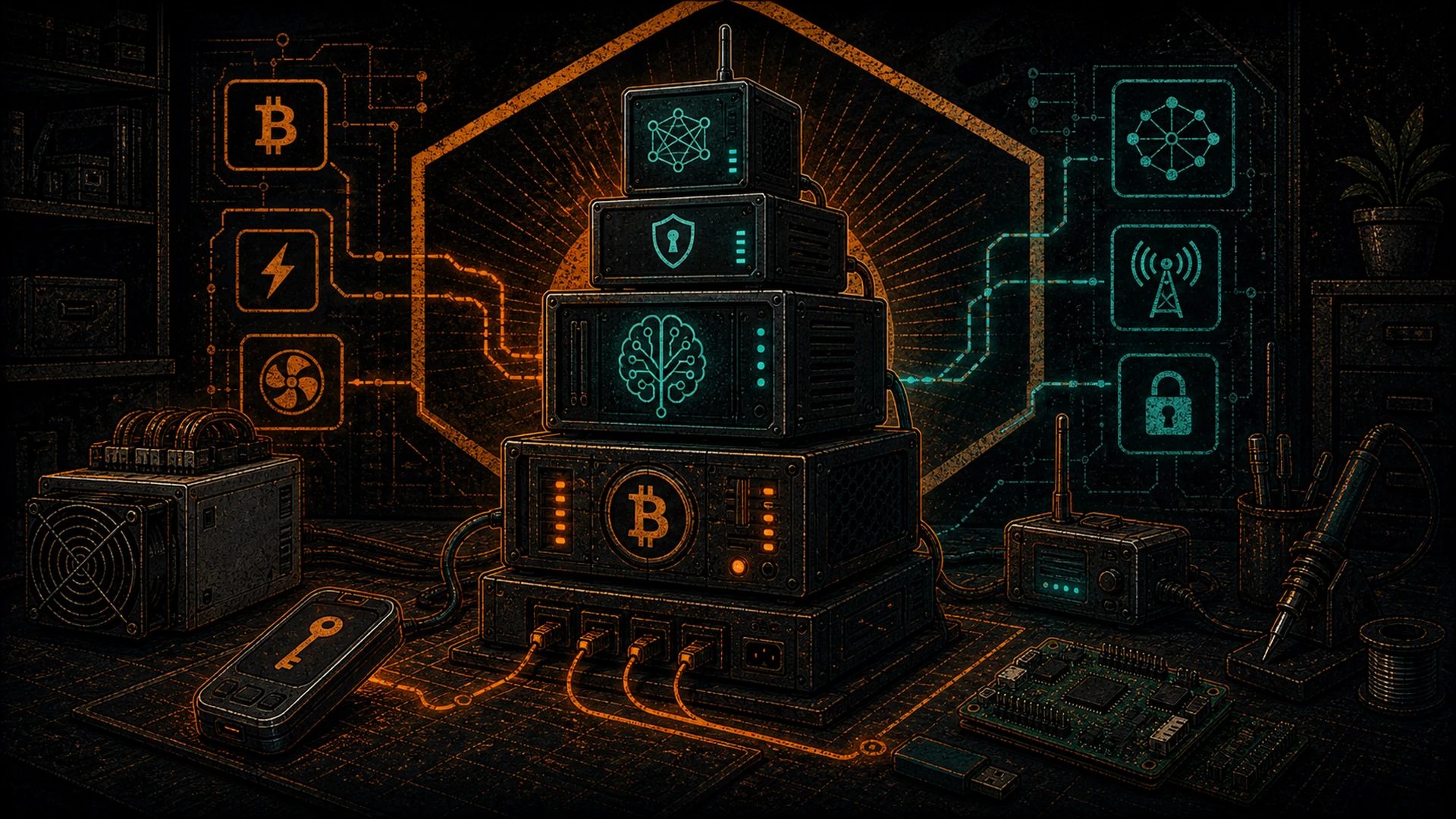
Bitcoin gave us sovereign money, but money is only one leg of the stool — your email, chats, identity, voice assistant, and hardware are still captured. The Pleb's Sovereign Stack is a five-layer worldview where every layer is built, owned, and operable by you: money (Bitcoin), encrypted comms, self-sovereign identity, self-hosted compute, and inspectable hardware. One more layer decentralized.
Bitcoin Alone Isn’t Enough
Satoshi gave us sovereign money. That single invention rewired the economic base layer of the internet, and for a generation of plebs it felt like the fight was almost over. Stack sats, run a node, protect your keys — freedom unlocked. But if the last decade of capture attempts, rails-deplatforming, and surveillance creep has taught us anything, it’s that money is only one leg of the sovereignty stool. Take a hard look at the stack you actually rely on every day: your email sits on Google’s metal, your chats ride WhatsApp servers, your identity lives in a database you don’t control, your voice assistant phones home to OpenAI, and the hardware in your pocket runs a signed bootloader you can’t inspect.
The cypherpunks saw this coming. Eric Hughes wrote in 1993 that “privacy is necessary for an open society in the electronic age,” and that cypherpunks must “write the code” — not wait for institutions to grant privacy as a favor. Julian Assange reminded us that “the universe believes in encryption” because math is cheaper to do than to undo. Bitcoin was one code-weapon. It was never meant to be the only one. A pleb who has a hardware wallet but no encrypted comms, no self-sovereign identity, no self-hosted compute, and no inspectable hardware is still partially captured. The plug can still be pulled.
This is the pleb’s sovereign stack: a full-stack worldview where every layer you touch is built, owned, and operable by you. Not a product you buy. A stance you adopt and a set of tools you assemble — one more layer decentralized, over and over, until there’s nothing left to capture.
The Five Layers
Think of sovereignty the way a miner thinks about a rig — every layer has to work, and a failure in one cascades into the others. Here are the five layers the plebs need.
Layer 1: Money — Bitcoin
This one’s settled. Bitcoin is the sound-money base layer. Your job at this layer is well-trodden: self-custody with a hardware wallet, run your own node so you don’t trust someone else’s view of the chain, use Lightning for everyday payments, and think in sats. If you’re mining, you’re doing double duty here — you’re both securing the network and earning the unit of account without a counterparty issuing you coin. This layer is the most mature in the stack, and the rest of the manifesto assumes you already have it handled.
Layer 2: Comms — Meshtastic, LoRa, and the Off-Grid Mesh
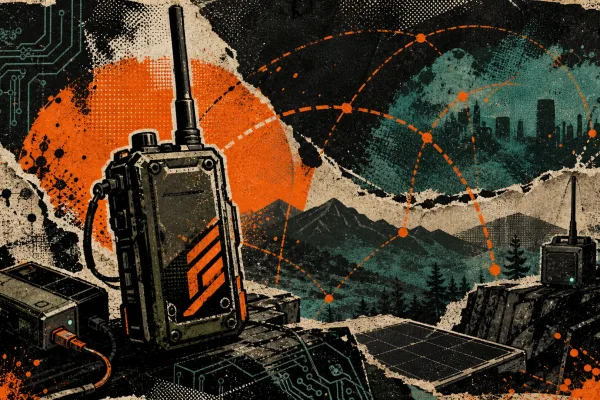
Money without comms is a stranded asset. If the ISP drops, the tower throttles, or the region goes dark, your ability to coordinate, to sign, to broadcast, and to receive instructions collapses. This is the layer where the Meshtastic project — kicked off by Kevin Hester and carried by a global community of contributors — matters most. Meshtastic uses Semtech’s LoRa chirp-spread-spectrum physical layer to build decentralized peer-to-peer mesh networks that need no cell tower, no gateway, no ISP. Hardware is inexpensive and open: Heltec V3, LILYGO T-Beam, and RAK Wireless WisBlock nodes all ship LoRa radios with ESP32 or nRF52 MCUs, and the firmware is MIT-licensed.
The mesh is the second sovereign layer because it’s the answer to the question what happens when the internet dies? And thanks to projects like BTC Mesh (eddieoz and contributors), the answer now includes you can still sign and broadcast Bitcoin transactions. We’ll dig deep into this layer in the Meshtastic getting-started guide.
Layer 3: Identity — Nostr
Your identity online shouldn’t be a rented username on a platform that can delete you. Nostr — “Notes and Other Stuff Transmitted by Relays,” initiated by fiatjaf and rapidly adopted by the Bitcoin community — solves the identity layer with a remarkably simple trick: your identity is a cryptographic keypair, and your messages are signed events relayed through any number of independent relays. No platform. No account. No recovery email. If one relay blocks you, you publish to another. If every relay blocks you, you run your own — and someone who wants to read you subscribes to it.
Nostr isn’t trying to be another social network. It’s trying to be a portable identity and messaging substrate that no one can take from you. Pair it with Lightning zaps and it becomes the first social layer where value and speech share the same rails. Plebs should hold a Nostr keypair the same way they hold a Bitcoin seed: because your ability to be heard, to publish proof-of-life, and to coordinate with other plebs depends on it.
Layer 4: Compute — Self-Hosted AI
A year ago, self-hosting compute meant a NAS and maybe a Pi-Hole. Today, AI has eaten the compute layer, and handing over every prompt to a hosted model means handing over your research, your medical questions, your code, your strategic thinking, and — if you’re not careful — your private keys pasted by mistake into a chat window. The good news: open-weight models (Llama, Mistral, Mixtral, Qwen, DeepSeek, and a growing field of open releases) plus local runtimes (Ollama, llama.cpp, LM Studio, vLLM) have made it practical to run frontier-class inference on a modest rig at home.
We’ve written the companion manifesto for this layer at Sovereign AI for Bitcoiners. Short version: your AI should live behind your firewall, on hardware you own, with weights you can inspect. Pair that with UmbrelOS and a home server, and the compute layer becomes a quiet, powerful co-pilot that never exfiltrates a token.
Layer 5: Hardware — Open Tools and Inspectable Silicon
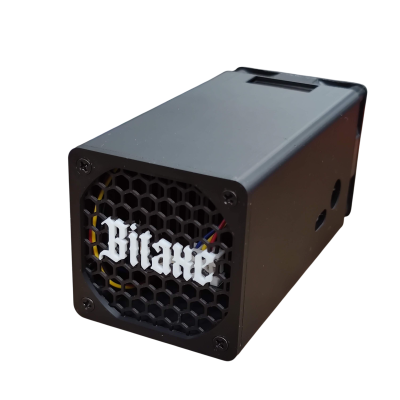
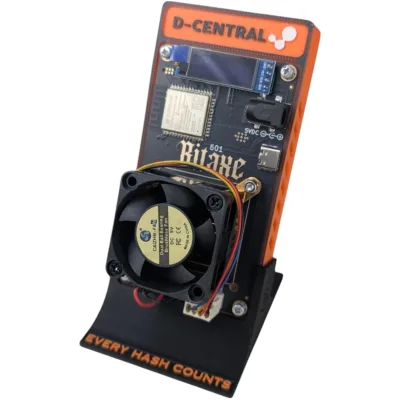
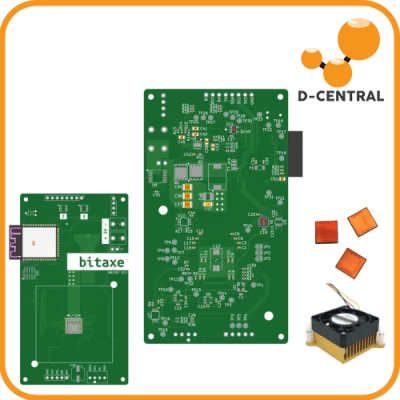
The top four layers only hold if the hardware underneath them is trustworthy. This is the hardest layer, because modern silicon is a black box. But there are bright spots the plebs can lean into. The Flipper Zero is the best-known open multitool — an open-firmware hardware pentest device that exposes RF, NFC, sub-GHz, iButton, and GPIO in a pleb-friendly form factor. The Bitaxe, led by Skot and the Open Source Miners United (OSMU) community, is a single-ASIC open-hardware Bitcoin miner whose schematics, firmware, and PCB files all live on GitHub. Open PSUs, open power monitoring, open FPGA dev boards, and the broader open-hardware movement are expanding this layer every quarter.
The hardware layer isn’t finished. It may never be. But every device you swap from a closed black box to an inspectable one is one more layer decentralized. Future posts will cover the Flipper Zero for Bitcoin miners and a broader open-hardware directory.
What the Plebs Already Have
Give yourselves some credit. The sovereign toolkit is further along than most people realize. A pleb in 2026 can, today, with off-the-shelf parts and open software:
- Self-custody Bitcoin with a hardware wallet and a signed multisig setup.
- Run a full Bitcoin node and Lightning node on a Raspberry Pi 5 or a mini-PC.
- Broadcast and receive off-grid messages over Meshtastic on a $30 Heltec V3.
- Hold a Nostr keypair and publish to a dozen independent relays for free.
- Run a 7B-to-70B-parameter AI model locally on a single GPU or Apple Silicon.
- Mine Bitcoin at home on an open-hardware Bitaxe, or at industrial scale with custom open firmware on commodity ASICs.
- Heat a home, garage, shop, or greenhouse with ASIC-powered hydronic loops and space heaters.
None of that required permission. None of it required a subscription. All of it stacks.
What’s Missing
The gaps are real, and the pleb movement is still closing them:
- Cross-layer integration. The five layers don’t yet talk to each other the way they should. A Nostr event signed on your hardware wallet and relayed over Meshtastic when the ISP drops is technically possible — but it’s not a one-click flow yet.
- Hardware inspectability. Mining ASICs, phone SoCs, and baseband chips remain closed. The community is chipping away, but the black boxes still run the radio and compute you depend on.
- Usable self-hosted AI. Running a model is one thing; wiring it into your email, your notes, your home, and your mining fleet without giving up privacy is still a weekend project, not a toggle.
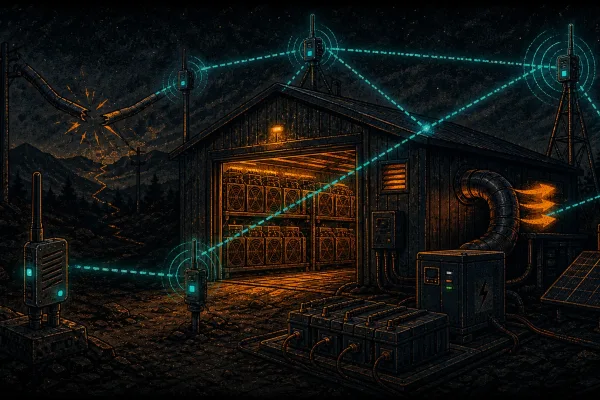
- Resilient mesh density. Meshtastic is fantastic where there are neighbors. In rural stretches, a sovereign pleb still needs solar-powered relay nodes and careful antenna placement to bridge the dead zones.
- Education and onboarding. Most of this stack assumes Linux fluency. The plebs who need it most — in captured jurisdictions, in rural regions, in disaster zones — often need hand-holding the current docs don’t give them.
This manifesto, and the posts that follow, are D-Central’s contribution to closing those gaps.
The D-Central Thesis
D-Central Technologies is a Bitcoin mining company first. We sell miners, we host them, we repair them, and we’ve been doing it for years. But a mining company that only cares about hashrate is a single-layer company, and single-layer companies age badly. Our thesis is that the same plebs who buy a miner from us are the plebs who want to heat their homes with it, run their AI on it, sign their transactions off-grid over it, and eventually flash open firmware onto it. We think the full sovereign stack is the real product, and the miner is just the most visible layer.
That’s why D-Central ships tools and content for every layer of this stack, not just mining:
- Money. Miners, hosting, repair, heating heat-reuse guides — the full mining lifecycle.
- Comms. The /sovereignty/mesh content vertical you’re reading now: Meshtastic guides, LoRa theory, BTC-over-mesh, and off-grid Hashcenter comms.
- Identity. Nostr education for Bitcoiners, upcoming integrations with D-Central services.
- Compute. The /ai/ vertical: 47+ posts on self-hosted inference, model selection, and integration.
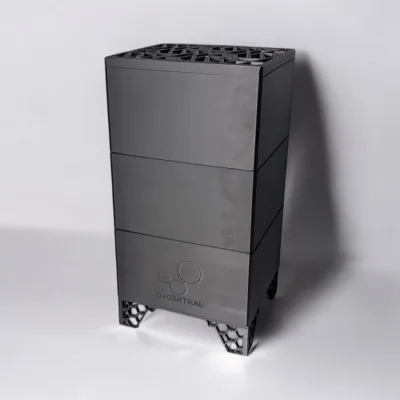
- Hardware. The DCENT product family: DCENT_OS (open-firmware initiative for Antminer-class ASICs) and DCENT_axe (our contribution to the Bitaxe family). They are separate branches with separate hardware and evidence models: DCENT_OS has guarded non-production artifacts for two exact Antminer XIL lanes, while DCENT_axe covers ESP32-S3 board-specific work.
We are not the center of this stack. We didn’t invent any of the layers. Meshtastic is Kevin Hester and the contributor community. LoRa is Semtech. Nostr is fiatjaf. BTC Mesh is eddieoz. Bitaxe is Skot and OSMU. Umbrel is the Umbrel team. The Bitcoin layer goes back to Satoshi and the cypherpunks before him. We stand on the shoulders of every one of these giants, and our job is to make their work accessible to the plebs who buy mining hardware from us, and to ship incremental improvements where we can. That’s the shoulders-of-giants posture, and it’s not going to change.
One More Layer Decentralized
If you take one thing from this manifesto, take the mantra: one more layer decentralized. Not all five at once. Not a weekend rewrite of your digital life. One layer this month. One tool this quarter. One skill this year.
Already run a Bitcoin node? Good. Flash a Heltec V3 with Meshtastic this weekend and put a node on your roof.
Running Meshtastic already? Generate a Nostr keypair and start posting proof-of-life to three relays.
On Nostr already? Spin up Ollama on your gaming rig and move 80% of your ChatGPT habit to a local model.
Running local AI already? Stack an open-hardware Bitaxe on your bookshelf next to the S19 in your garage.
Each move makes the next one easier. Each move reduces a vector of capture. Each move is a bet that the plebs, together, can build the stack the institutions won’t.
The Bitcoin layer was the proof of concept. The rest of the stack is the follow-through. D-Central is shipping the tools and the education we can, and we’ll keep crediting the projects and people who built the pieces we wire together. The plebs take it from there.
Welcome to the /sovereignty/ vertical. Pick a layer and build.