Quebec’s Right to Repair legislation is not just consumer protection law — it is a direct assault on the planned obsolescence machine that dominates the electronics industry. For Bitcoin miners, this legislation validates what D-Central Technologies has practiced since 2016: every piece of mining hardware deserves a second life, a third life, and as many lives as skilled hands can give it.
This is not about compliance. This is about conviction. The Right to Repair is the Bitcoin Mining Hackers’ manifesto written into provincial law.
What Quebec’s Right to Repair Law Actually Does
Quebec’s consumer protection reforms target the practice of planned obsolescence — the deliberate design of products to fail or become unusable after a predetermined period. The legislation enforces several key provisions that directly impact Bitcoin mining hardware:
| Provision | What It Means for Miners |
|---|---|
| Ban on planned obsolescence | Manufacturers cannot deliberately design ASIC miners to fail prematurely or lock out third-party repairs |
| Mandatory parts availability | Replacement parts — hashboards, control boards, fans, PSUs — must remain available for a reasonable period |
| Repairability information | Technical documentation and schematics should be accessible, not locked behind corporate walls |
| Extended warranty protections | Legal guarantees that give consumers more power when hardware fails unexpectedly |
For the Bitcoin mining industry, this legislation is a watershed moment. ASIC miners are complex, expensive machines. An Antminer S19 represents a significant capital investment. When a hashboard fails or a control board glitches, the difference between repair and replacement can be thousands of dollars — and hundreds of kilograms of electronic waste headed to a landfill.
Why Right to Repair Is a Cypherpunk Principle
If you believe in Bitcoin, you believe in sovereignty. Sovereignty over your money. Sovereignty over your transactions. And — this is where most people stop short — sovereignty over your hardware.
The entire ASIC mining industry has historically operated on a model that concentrates power in the hands of manufacturers. Buy the machine, run it until the next generation ships, then dispose and upgrade. It is the antithesis of the cypherpunk ethos that Bitcoin was built on. Planned obsolescence in mining hardware is no different from centralized monetary policy — a few entities deciding when your property becomes worthless.
The Right to Repair flips this script. It says: you own your hardware, and you have the right to keep it running.
D-Central has operated on this principle since day one. Our ASIC repair services cover 38+ specific miner models across Bitmain, MicroBT, Innosilicon, and Canaan hardware. We do not tell you to throw away a miner with a dead hashboard. We diagnose the fault, source the components, and bring the machine back to full hashrate.
This is what it means to be Bitcoin Mining Hackers. We do not accept artificial limitations on hardware lifespan. We crack open the case, trace the fault on the PCB, replace the failed ASIC chip, and put it back to work securing the Bitcoin network.
The Environmental Case: Mining Hardware Does Not Belong in Landfills
Every ASIC miner contains circuit boards loaded with copper, gold, tin, and rare earth elements. When these machines are discarded instead of repaired, those materials enter the waste stream — a massive environmental cost that rarely gets discussed in mining circles.
Consider the lifecycle economics:
| Scenario | Cost | E-Waste Generated |
|---|---|---|
| Replace failed S19 with new unit | $2,000–$5,000+ | ~14 kg of electronics to landfill |
| Repair failed hashboard | $200–$800 | Near zero — only failed components replaced |
| Refurbish older miner (S9) as space heater | $100–$400 | Zero — hardware gets a new purpose entirely |
The math is clear. Repair is not just economically superior — it is the environmentally responsible choice. And in Quebec, where long winters demand serious heating solutions, repurposing mining hardware as Bitcoin space heaters transforms what others call e-waste into a dual-purpose machine that heats your home while mining Bitcoin.
An Antminer S9 running through a Quebec winter is not obsolete. It is a 1,400-watt heater that happens to mine Bitcoin at the same time. Every watt of electricity consumed produces both heat and hashrate. That is not waste — that is engineering elegance.
D-Central’s Repair-First Philosophy in Practice
Since 2016, D-Central has built Canada’s most comprehensive ASIC repair operation. Our repair technicians work on everything from vintage Antminer S9s to current-generation S21 units. Here is what our repair-first approach looks like in practice:
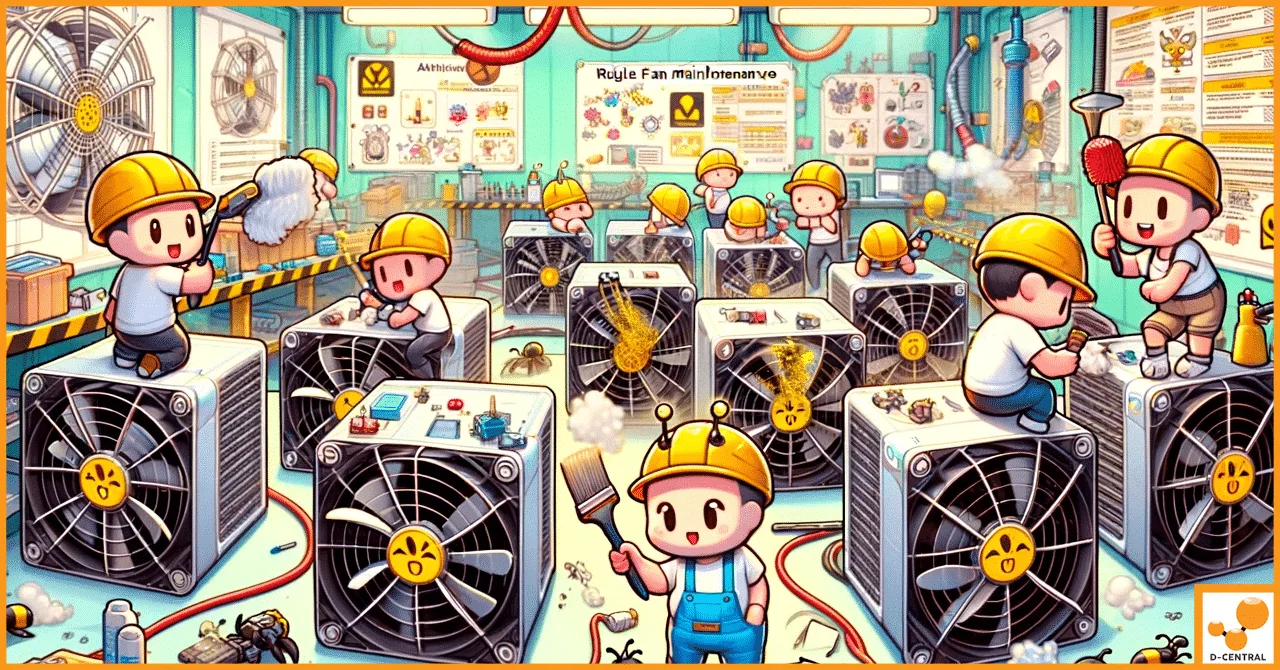
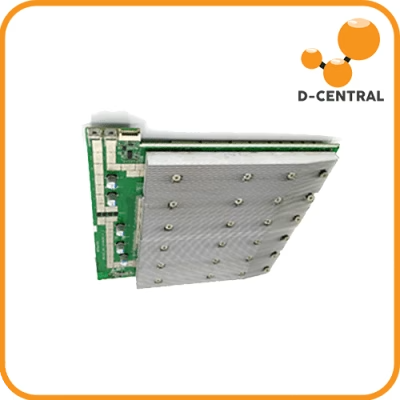
Component-Level Diagnostics: We do not just swap boards. We diagnose failures down to individual ASIC chips, capacitors, and voltage regulators on the hashboard. This level of precision means we can repair boards that most shops would call dead.
Parts Sourcing and Inventory: D-Central maintains inventory of replacement hashboards, control boards, fans, power supplies, and individual components for dozens of miner models. When Quebec’s Right to Repair law demands parts availability, we are already there.
Refurbishment Programs: Older miners that cannot compete at industrial scale still have tremendous value for home miners. We refurbish these machines, optimize their firmware, and give them new life — whether as standalone miners or as the heart of a Bitcoin space heater.
Knowledge Sharing: True to the open-source ethos, we publish repair guides, maintenance tips, and diagnostic walkthroughs. The Right to Repair means nothing if the knowledge to repair is locked away.
Open-Source Hardware: Right to Repair by Design
While the Right to Repair law forces traditional manufacturers to open up, the open-source mining hardware movement builds repairability into the DNA of the product from day one.
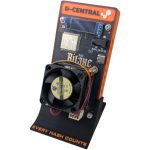
The Bitaxe — the open-source solo miner that D-Central has championed since the beginning — embodies this philosophy completely. Every schematic is public. Every component is documented. Every miner who owns a Bitaxe has the full right and ability to repair, modify, and improve their hardware.
D-Central was a pioneer in the Bitaxe ecosystem, creating the original Bitaxe Mesh Stand and developing leading accessories including custom heatsinks for both the standard Bitaxe (5V barrel jack, not USB-C — the USB-C port is for firmware flashing only) and the Bitaxe Hex (12V XT30 connector). We stock every Bitaxe variant — Supra, Ultra, Hex, Gamma, GT — along with the full Nerd/open-source lineup: NerdAxe, NerdNOS, Nerdminer, and NerdQAxe.
This is what Right to Repair looks like when you do not need legislation to enforce it. Open-source hardware is repairability as a first principle.
What This Means for Canadian Home Miners
Canada — and Quebec in particular — is uniquely positioned to benefit from Right to Repair legislation in the mining sector:
Climate advantage: Quebec winters make dual-purpose mining (heating + hashing) a no-brainer. Repaired and refurbished miners running as space heaters turn an energy expense into productive work on the Bitcoin network.
Hydroelectric power: Quebec’s abundant, affordable hydroelectric energy means even older-generation miners can operate profitably, especially when their heat output displaces electric baseboard heating.
Repair infrastructure: D-Central’s repair facility in Montreal, Quebec means Canadian miners have domestic access to expert-level ASIC repair — no shipping hardware across borders, no customs headaches, no weeks of downtime waiting for international service.
Decentralization of hashrate: Every repaired miner that stays online is another node contributing to the geographic distribution of Bitcoin’s hashrate. With the network running at over 800 EH/s, every home miner matters for decentralization. The current block reward of 3.125 BTC makes even modest hashrate contributions meaningful when viewed through the lens of network security rather than pure profit.
The Bigger Picture: Repair as Resistance
The Right to Repair movement and Bitcoin share a common philosophical root: the rejection of centralized control over the tools people use.
When a manufacturer firmware-locks a miner to prevent third-party repair, they are exercising the same kind of unilateral control that central banks exercise over monetary policy. They are deciding, on your behalf, that your property has reached end-of-life. They are telling you that your only option is to consume more, buy new, discard the old.
Bitcoin rejects that model for money. The Right to Repair rejects it for hardware. D-Central rejects it for the entire mining ecosystem.
We are Bitcoin Mining Hackers. We take institutional-grade technology and hack it into accessible solutions for home miners. We repair what manufacturers say is unrepairable. We refurbish what the industry says is obsolete. We build open-source alternatives that make planned obsolescence irrelevant.
Quebec’s Right to Repair law is not the beginning of our mission — it is legislative recognition that the mission was right all along.
Frequently Asked Questions
What is Quebec’s Right to Repair law and how does it affect Bitcoin miners?
Quebec’s Right to Repair legislation bans planned obsolescence and requires manufacturers to make replacement parts and repair information available to consumers. For Bitcoin miners, this means ASIC manufacturers cannot deliberately design hardware to be unrepairable or lock out third-party repair services. It gives miners the legal backing to repair their own hardware or use independent repair shops like D-Central.
Can old ASIC miners like the Antminer S9 still be useful?
Absolutely. Older miners like the S9, while no longer competitive for pure mining profitability at industrial scale, are excellent candidates for dual-purpose use as Bitcoin space heaters. In cold climates like Quebec, the 1,400 watts of heat output from an S9 directly replaces electric heating while simultaneously mining Bitcoin. D-Central refurbishes these units and offers them as complete space heater solutions.
What types of ASIC repairs does D-Central offer?
D-Central provides component-level repair services for 38+ miner models across all major manufacturers — Bitmain (Antminer), MicroBT (Whatsminer), Innosilicon, and Canaan (Avalon). Our services include hashboard repair, control board diagnostics, fan replacement, power supply testing, and firmware troubleshooting. We diagnose failures down to individual ASIC chips and capacitors rather than simply swapping entire boards.
How does open-source mining hardware support the Right to Repair?
Open-source miners like the Bitaxe publish all schematics, component lists, and design files publicly. This means anyone can repair, modify, or improve the hardware without needing manufacturer permission or proprietary documentation. It is Right to Repair by design rather than by legislation. D-Central stocks the full range of Bitaxe variants and open-source miners, along with all necessary replacement parts and accessories.
Why should I repair my miner instead of replacing it?
Repair is almost always more cost-effective — a hashboard repair typically costs $200–$800 compared to $2,000–$5,000+ for a new unit. Beyond economics, repair dramatically reduces electronic waste. ASIC miners contain valuable materials including copper, gold, and rare earth elements that should not end up in landfills. Repairing also keeps more hashrate distributed across the network, supporting Bitcoin’s decentralization.
Does D-Central buy old or broken mining hardware?
Yes. D-Central purchases used and non-functional ASIC miners for refurbishment. If you have old mining hardware sitting idle, contact us rather than discarding it. We can often repair and refurbish units that appear to be beyond saving, giving them a productive second life either as standalone miners or as the core of a Bitcoin space heater.