
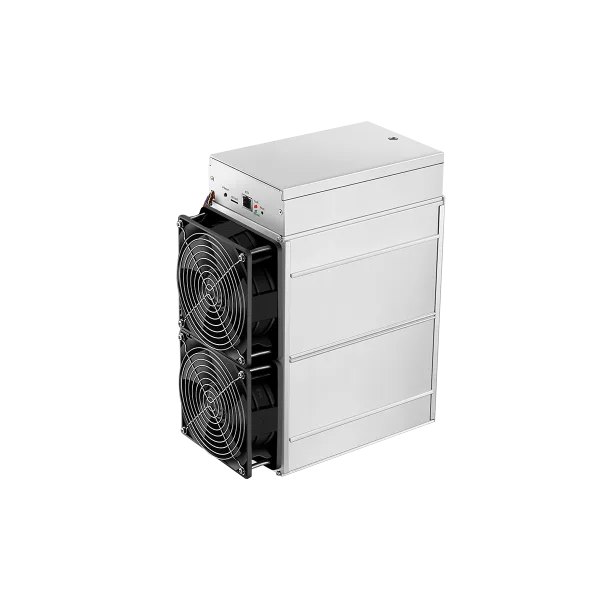
Bitmain Antminer Z11
Quick answer
The Bitmain Antminer Z11 is a Equihash miner rated about 135 Ksol/s at roughly 1,418 W. An industrial-class unit — loud and power-hungry, best suited to a dedicated mining space, not living areas.
Heater-Class Miner
At 1,418W, this miner outputs approximately 4838 BTU/hr of heat — equivalent to a standard electric space heater. Every watt consumed by an ASIC miner is converted to heat with 100% efficiency, making it a space heater that also mines Bitcoin.
During heating season, miner heat can offset part of the heat a room would otherwise need from another electric heater. The economics depend on your electricity rate, room heat demand, BTC price, network difficulty, and noise constraints.
Profitability Calculator
| Period | Revenue | Electricity Cost | Profit |
|---|---|---|---|
| Daily | $4.33 | $2.38 | $1.95 |
| Weekly | $30.29 | $16.68 | $13.62 |
| Monthly | $129.82 | $71.47 | $58.35 |
| Yearly | $1,579.50 | $869.52 | $709.98 |
Heating offset estimates the value of heat replacing an electric space heater during heating season (~6 months/year in Canada). Actual savings depend on your heating setup and climate.
Where to Buy the Bitmain Antminer Z11
D-Central Technologies is a Bitcoin-only company. For this miner, check out our trusted partner retailers below.
ASIC Miner Market
United StatesWide selection of new and used ASIC miners. US-based shipping.
Shop NowPartner links may earn D-Central a commission at no extra cost to you. Have you considered Bitcoin mining instead? Explore Bitcoin miners →
Full Specifications
| Model | Bitmain Antminer Z11 |
|---|---|
| Model Number | Antminer Z11 |
| Manufacturer | Bitmain |
| Algorithm | Equihash |
| Coins Mined | Zcash (ZEC) |
| Hashrate | 135 Ksol/s |
| Power Consumption | 1,418 W |
| Efficiency | 10.5 J/Ksol |
| Dimensions | 134 x 242 x 302mm |
| Weight | 5.4 |
| BTU Output | 4838 BTU/hr |
| Equivalent Heater | Half a standard space heater (4,838 BTU/hr) |
| Daily Power Cost | $2.38/day |
| Monthly Power Cost | $71.47/mo |
| Circuit Requirement | Standard 120V 15A |
| Release Date | 2019-04-01 |
| MSRP | $200.00 |
| Status | Active |
Home Mining Assessment
The Antminer Z11 is Bitmain’s 2019 Equihash ASIC, built to mine Zcash and other Equihash (200,9) coins at roughly 135 ksol/s for a nameplate 1,418 W — about 10.5 joules per ksol/s. It is a historically important machine that is now obsolete for profit, valued today for tinkering, learning and cheap heat rather than mining returns.
What the Z11 actually is
It is easy to misread a Z11 spec sheet, because most ASIC documentation is written for SHA-256 Bitcoin miners. The Z11 is not a Bitcoin miner. It runs the Equihash (200,9) proof-of-work used by Zcash (ZEC) and a family of related coins such as Horizen (ZEN) and Komodo (KMD). That difference matters for every number on the page: its work is measured in solutions per second (Sol/s), not terahashes, so its efficiency is expressed in J/ksol, never J/TH. Any source quoting the Z11 in “J/TH” or comparing it to modern SHA-256 efficiency tiers is applying the wrong yardstick.
Chip and hashboard architecture
Bitmain built the Z11 on the compact, S9-era chassis — the same 134 × 242 × 302 mm, roughly 5.4 kg box that defined the company’s 2017–2019 generation. Inside it carries three hashboards populated with Bitmain’s custom Equihash ASICs.
An honest note on the silicon: unlike the SHA-256 line, where Bitmain’s chip families (the BM13xx series) are well documented down to process node and core count, the company never published a datasheet-grade part number or process node for the Z-series Equihash chip. We do not have verified die-level specifications for it, so we will not invent any. What is verifiable is the system architecture. Equihash is a memory-hard algorithm, so the Z11’s accelerators are paired with on-board memory rather than being the pure combinational-logic engines you find on a SHA-256 hashboard — a fundamentally different design problem that Bitmain solved with a dedicated ASIC.
Control and housekeeping sit on the S9-generation control board lineage, the Xilinx Zynq-7010 (XC7Z010) platform with a dual-core ARM Cortex-A9 clocked at 667 MHz. As on all machines of this era, board voltage is managed per power domain, not per individual chip — there is no per-chip voltage trimming on this hardware.
Key specifications
| Specification | Antminer Z11 |
|---|---|
| Algorithm | Equihash (200,9) |
| Primary coins | Zcash (ZEC), Horizen (ZEN), Komodo (KMD) |
| Hashrate | 135 ksol/s (135,000 Sol/s) |
| Nameplate power | 1,418 W (±10%) |
| Efficiency | ~10.5 J/ksol (10.5 W per ksol/s) |
| Heat output | ~4,838 BTU/h |
| Hashboards | 3 |
| Power supply | Bitmain APW7 (12 V family; 220 V recommended) |
| Control board | S9-era Zynq-7010 / ARM Cortex-A9 @ 667 MHz lineage |
| Dimensions | 134 × 242 × 302 mm |
| Weight | ~5.4 kg |
| Released | 2019 |
Real-world power and efficiency
The 1,418 W figure is Bitmain’s nameplate rating, quoted at the wall with a ±10% tolerance. Actual draw varies with PSU efficiency, ambient temperature and silicon quality, and a healthy unit will usually pull a little more than nameplate once supply losses are counted. The Z11 is fed by the APW7 power supply — the same 12 V Bitmain unit used by the Z9 and the S9-era fleet, rated around 1,800 W and ~95% efficient on a 220 V circuit.
That voltage detail is the single most important practical fact for a Z11 owner: the APW7 is heavily derated on 110 V (roughly 1,000 W) and only delivers full output near 220 V. Running a Z11 at full load on a North American 120 V outlet is not viable — you need a 240 V circuit, the same as any serious ASIC.
Efficiency works out to about 10.5 J/ksol (1,418 W ÷ 135 ksol/s). In its day that was a genuine leap over the earlier Z9, but it sits well above the sub-4 J/ksol of later Equihash hardware. There is essentially no tuning headroom on a Z11: it runs Bitmain’s stock firmware with no autotuner and no community profile ecosystem. (If you are looking for the curated voltage/frequency profiles that make modern Antminers efficient, those live in our ASIC power-profiles database — but they apply to current SHA-256 hardware, not this machine.)
Firmware compatibility
The Z11 ships with — and is effectively limited to — Bitmain’s stock Antminer firmware, a cgminer-derived stack that speaks Stratum V1 to Equihash pools. There is no Stratum V2 story here; native Stratum V2 only exists on BraiinsOS+, and Braiins targets SHA-256 (and some Scrypt) hardware, not the Equihash Z-series.
The honest third-party reality is that the Z11 has no modern aftermarket firmware ecosystem. The well-known third-party stacks — BraiinsOS+, VNish, LuxOS — never supported Equihash Antminers, and Bitmain itself stopped issuing updates for this model years ago. Our own DCENT_OS work likewise centres on current SHA-256 Antminers (the S17/S19/S21 generations), so it does not target the Z11. We would rather tell you that plainly than imply support that does not exist. In practice, you keep a Z11 on its last good stock firmware and treat it as a fixed-function appliance.
Common faults and troubleshooting
A Z11 in 2026 is a six-year-old machine, so most of its problems are the wear-and-age failures typical of S9-era hardware rather than design flaws:
- PSU failures — aging electrolytic capacitors in the APW7 are the most common single point of failure on machines of this vintage.
- Dead or degraded hashboards — chip or domain failures that drop one of the three boards, cutting hashrate by roughly a third.
- Fan failures — bearing wear and dust-clogged blades that trigger fan-speed errors and thermal shutdowns.
- Thermal issues — dried thermal interface material and temperature-sensor faults raising board temps.
- Control-board / NAND corruption — boot failures and units that won’t surface a web UI.
Before pulling anything apart, work the symptoms methodically. Our ASIC fault finder walks you from a symptom (no hashrate, missing board, fan error, won’t boot) to the likely cause, and you can cross-reference specific kernel-log error strings against our error-code library to localise a fault to a board, a domain or the PSU.
Repair and longevity
D-Central has been repairing ASICs in-house in Montréal, Québec since 2016, and the Z-series is squarely within that work. Commercial hashboard testers cover the Z11 alongside 45+ other Antminer models, which means a dead board can be diagnosed, chips can be polled individually, and faults can be localised the same way we service S9 and S19 hardware.
Board-level repair is very much worth it on these units: PSU recapping or replacement, fan swaps, thermal re-pasting, connector and ribbon-cable repair, and control-board work all restore a Z11 to service economically. The one real constraint is chip-level repair — donor Equihash silicon is scarce because the Z11’s ASICs are long out of production, so a board with multiple dead chips is harder to fully recover than a SHA-256 board where replacement chips still flow. If you have a Z11 that has gone dark, our ASIC repair service can tell you honestly whether it is a quick board-level fix or a unit better retired.
Who the Z11 is for
Let’s be straight: in 2026 the Z11 is not a profit machine. Zcash difficulty and the arrival of far more efficient Equihash hardware mean its 10.5 J/ksol economics no longer clear the cost of power on most grids. It launched as a four-figure flagship and now changes hands for a small fraction of that on the secondary market.
It still makes sense in a few honest roles: a learning rig for anyone who wants to understand pool setup, Stratum and ASIC internals without risking expensive hardware; a hobbyist Equihash node for enthusiasts who want to support the Zcash network and accept running at a loss; and a cheap, controllable heat source — its ~4,838 BTU/h of waste heat can warm a workshop or garage on a 240 V circuit. If you are shopping for a machine that actually earns today, browse the current-generation hardware in our miner catalog. And if it is the tinkering itself you enjoy, the modern equivalent of a cheap learning ASIC is an open-source Bitaxe-class Bitcoin miner — low power, fully hackable, and the spiritual successor to “buy a cheap ASIC and learn on it.”
Generational context
The Z11 was the high point of Bitmain’s Equihash line. The company opened the segment with the Z9 mini and Z9 in 2018, stepped up sharply with the Z11 in 2019, and capped it with the much more efficient Z15 in 2020. Manufacturer-published specs trace a steep efficiency curve:
| Model | Year | Hashrate | Power | Efficiency (approx.) |
|---|---|---|---|---|
| Antminer Z9 mini | 2018 | 10 ksol/s | 300 W | ~30 J/ksol |
| Antminer Z9 | 2018 | 42 ksol/s | 970 W | ~23 J/ksol |
| Antminer Z11 | 2019 | 135 ksol/s | 1,418 W | ~10.5 J/ksol |
| Antminer Z15 | 2020 | 420 ksol/s | 1,510 W | ~3.6 J/ksol |
The Z-series also sits at the centre of one of mining’s more interesting debates. Equihash was designed to be memory-hard and “ASIC-resistant,” and the arrival of machines like the Z9 and Z11 forced the Zcash community to confront whether — and how — to respond to specialised hardware. Credit where it is due: Bitmain engineered a working Equihash ASIC against an algorithm specifically built to frustrate one, and the Z11 was a genuinely capable machine for its moment. Today it belongs to mining history more than to a profitable mining floor — but as a piece of that history, and as a still-serviceable lab and heating unit, it remains worth understanding.
Broken miner? Get a real quote.
Tell us the symptom and get an instant repair-tier estimate ($95 / $145 / $195 CAD). Mail-in from across Canada, bench in Montreal, Quebec.
Send it to D-Central — start a repair →Recommended parts and tools
Confirm symptoms against the guide, then route to the exact part, tool, or repair workflow that matches the miner family.
Related Miners
Bitmain Antminer Z15
Innosilicon A9 ZMaster
Bitmain Antminer Z15 Pro
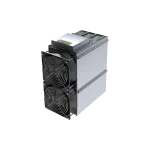
Bitmain Antminer Z9
Frequently Asked Questions
What are the current mining economics for the Bitmain Antminer Z11?
At $0.07/kWh electricity, the Bitmain Antminer Z11 currently shows an estimated $1.95 daily net result before pool fees and hardware cost. Results depend on your electricity rate and Bitcoin network conditions. Use the calculator above with your actual electricity rate.
Can I mine Bitcoin at home with the Bitmain Antminer Z11?
The Bitmain Antminer Z11 has a home mining score of 22/100. With 0 dB noise and 1,418W power draw, it may require a dedicated space like a garage, basement, or outdoor enclosure. Consider noise insulation and proper ventilation.
Can the Bitmain Antminer Z11 heat my home?
The Bitmain Antminer Z11 outputs approximately 4838 BTU/hr of heat. For reference, a typical space heater produces 5,000-5,500 BTU/hr. All electrical energy consumed by the miner is converted to heat, making it 100% efficient as a heater. D-Central offers Bitcoin Space Heater builds designed specifically for home heating integration.
What power supply does the Bitmain Antminer Z11 need?
The Bitmain Antminer Z11 draws 1,418W of power. You need a power supply rated for at least 1,560W with appropriate voltage (200-240V AC). D-Central stocks compatible power supplies in our shop. Always use a quality PSU from a reputable manufacturer to protect the miner and wiring.