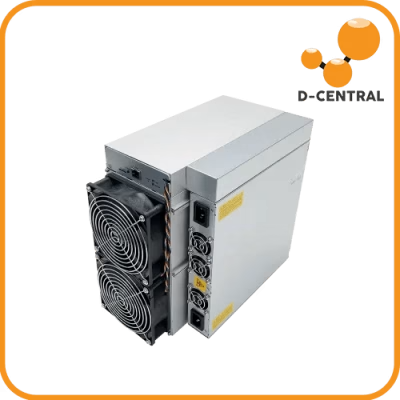
Used Antminers are one of the most underrated tools in the pleb miner’s arsenal. While the mining industry obsesses over the latest generation hardware with its eye-watering price tags, experienced home miners know that pre-owned ASIC miners offer some of the best value propositions in Bitcoin mining today. Whether you are building your first home mining operation or scaling up an existing setup, used Antminers can deliver serious hashrate at a fraction of the cost — and in 2026, with the network exceeding 800 EH/s and difficulty climbing past 110T, every advantage matters.
At D-Central Technologies, we have been in the used miner game since 2016. We are not just resellers — we are Bitcoin Mining Hackers who test, refurbish, and optimize every unit that passes through our Montreal, Quebec workshop. We know these machines inside and out because we repair them, tune them, and even convert them into Bitcoin Space Heaters. This guide breaks down everything you need to know about buying and running used Antminers in 2026.
Why Used Antminers Make Sense in 2026
The economics of Bitcoin mining changed dramatically after the April 2024 halving. The block subsidy dropped to 3.125 BTC, cutting miner revenue in half overnight. At the same time, network hashrate has continued its relentless climb past 800 EH/s, making every terahash more expensive to deploy. In this environment, capital efficiency is everything — and that is where used Antminers shine.
The Capital Efficiency Argument
New-generation ASICs like the Antminer S21 series command premium prices. A used Antminer S19j Pro, by contrast, can be acquired for a fraction of that cost while still delivering respectable hashrate. The math is straightforward: lower acquisition cost means faster breakeven, lower risk, and more capital available for other parts of your operation like power infrastructure, cooling, or additional units.
| Factor | New ASIC (Latest Gen) | Used Antminer (Previous Gen) |
|---|---|---|
| Upfront Cost | $$$$ (Premium pricing) | $ – $$ (60-85% discount) |
| Breakeven Timeline | 12-24+ months | 3-12 months (depending on power costs) |
| Efficiency (J/TH) | 15-20 J/TH | 25-40 J/TH |
| Resale Value Risk | High (depreciates fast) | Low (already depreciated) |
| Dual-Purpose Potential | Limited (too efficient for heat) | Excellent (great heat output for space heating) |
Here is the part most guides overlook: depreciation risk. When you buy a brand-new top-tier miner, its value drops significantly the moment Bitmain or MicroBT announces the next generation. Used miners have already absorbed that depreciation hit. You are buying at or near the floor, which means your capital is better protected.
The Decentralization Imperative
Used Antminers are not just about economics — they are about the mission. Every used miner that ends up in a home miner’s garage or basement instead of a landfill is another node in the decentralized network of hashrate that Bitcoin was designed to foster. Large mining operations constantly cycle out previous-generation hardware. When plebs buy those units and plug them in at home, they are directly contributing to geographic and operational decentralization of the Bitcoin network.
This is the core of what we preach at D-Central: decentralization of every layer of Bitcoin mining. Big institutional farms running the latest hardware in a single jurisdiction is the opposite of what Satoshi envisioned. A thousand home miners running used S19s across Canada, powered by hydro, solar, or surplus energy — that is the Bitcoin network operating as designed.
Which Used Antminer Models Are Worth Buying in 2026
Not every used Antminer is created equal. Some models have aged gracefully, offering solid performance at bargain prices. Others are past their prime and better suited for specific use cases like space heating rather than pure mining. Here is our breakdown of the most relevant used models in 2026.
Tier 1: Best Overall Value
| Model | Hashrate | Power Draw | Efficiency (J/TH) | Best Use Case |
|---|---|---|---|---|
| Antminer S19j Pro | 100-104 TH/s | ~3,050W | ~29.5 J/TH | Home mining + heating |
| Antminer S19 XP | 140 TH/s | ~3,010W | ~21.5 J/TH | Serious home mining |
| Antminer S19k Pro | 120 TH/s | ~2,760W | ~23 J/TH | Efficient home mining |
The S19 generation remains a workhorse in 2026. Units from this family are being cycled out of large farms as S21-class hardware takes over, creating an excellent buyer’s market for home miners. The S19j Pro in particular hits a sweet spot of performance and availability.
Tier 2: Budget-Friendly Workhorses
| Model | Hashrate | Power Draw | Efficiency (J/TH) | Best Use Case |
|---|---|---|---|---|
| Antminer S17+ | 73 TH/s | ~2,920W | ~40 J/TH | Space heating + mining |
| Antminer S19 | 95 TH/s | ~3,250W | ~34.2 J/TH | Home mining + heating |
Tier 3: Best for Space Heating (Mining Is the Bonus)
Older models like the Antminer S9 are no longer competitive as pure mining rigs at most power rates, but they are outstanding candidates for dual-purpose mining. Converting an S9 into a Bitcoin Space Heater turns its “inefficiency” into a feature — the heat output that makes it expensive to mine with becomes free home heating that also earns sats. D-Central builds Space Heater Editions based on the S9, S17, and S19 platforms, and every one of those builds starts with a used Antminer that has been fully refurbished and tested in our workshop.
What to Look for When Buying a Used Antminer
Buying used mining hardware is not like buying a used car, but the principles are similar: know what you are looking at, verify the seller, and understand what you are getting into. Here is what we check on every unit that comes through D-Central’s repair workshop — and what you should check too.
Physical Inspection Checklist
- Fan condition: Fans are the most common point of failure. Listen for bearing noise, check for blade damage, and verify that both intake and exhaust fans spin freely. Replacement fans are affordable, but factor the cost in.
- Hashboard connectors: Inspect the flat cable connectors between hashboards and the control board. Loose, corroded, or damaged connectors are a red flag that suggests rough handling or water damage.
- Heatsink integrity: Look at the heatsinks on each hashboard. Bent or damaged fins reduce cooling efficiency. Check for thermal paste residue or evidence of prior repair work.
- PSU compatibility: Confirm the unit comes with a compatible power supply, or budget for one. The Antminer APW7 through APW12 series cover most S17-S19 models. Make sure the PSU is rated for the miner’s actual draw, not just the minimum.
- Control board: Power up the unit and verify the control board boots, connects to your network, and recognizes all hashboards. A miner showing 2 of 3 hashboards means the third needs diagnosis — which is something D-Central’s ASIC repair team can handle.
Operational Testing
Never buy a used miner sight-unseen from an unknown seller without some form of verification. At minimum, request:
- Screenshot of the miner’s dashboard showing hashrate, fan speeds, temperatures, and chip counts across all hashboards.
- Uptime data demonstrating stable operation over at least 24-48 hours.
- ASIC chip status — ideally 100% of chips reporting. Missing chips mean reduced hashrate and potentially deeper issues.
- Error rates — hardware errors (HW) should be minimal. High HW counts relative to accepted shares indicate degraded chips or thermal problems.
Where to Buy Used Antminers
Your source matters as much as the hardware itself. Here is how the options stack up:
| Source | Pros | Cons |
|---|---|---|
| Specialized Bitcoin Mining Reseller (e.g., D-Central) | Tested, refurbished, warranty, repair support, expert advice | Slight premium over peer-to-peer |
| Peer-to-Peer (Forums, Telegram) | Lowest prices, direct negotiation | No warranty, scam risk, no verification, shipping damage |
| General Marketplaces (eBay, Amazon) | Buyer protection policies | Sellers often lack mining expertise, inconsistent testing, returns are complicated for heavy equipment |
| Liquidation Auctions | Bulk pricing, potential deals | Usually sold as-is, may need significant repair, large minimum quantities |
Buying from a specialized Bitcoin mining company like D-Central gives you the best combination of tested hardware, repair backing, and expert support. We stock used Antminers across multiple generations and every unit goes through our diagnostic process before it ships. If something goes wrong after you receive it, our ASIC repair service has your back — we have been repairing these machines since 2016 with 60+ model-specific repair capabilities.
Setting Up Your Used Antminer at Home
Getting a used Antminer running at home requires more thought than plugging it into a wall outlet. These are industrial machines that have been hacked for home use — which is exactly what Bitcoin Mining Hackers do. Here is the practical setup guide.
Power Requirements
Most S19-class Antminers draw approximately 3,000-3,250W. That means you need a dedicated 240V circuit with adequate amperage. A standard 15A/120V household outlet cannot safely power an ASIC miner — do not even try. You will need:
- A 240V/20A or 240V/30A dedicated circuit depending on the model.
- A compatible Bitmain APW-series PSU or equivalent (the APW7, APW9, APW12 series are most common for S17-S19 models).
- Proper NEMA outlet (typically NEMA 6-20 or L6-30) installed by a licensed electrician.
In Canada, where many of our customers operate, the widespread availability of 240V service and relatively low hydro rates (especially in Quebec) makes home mining with used Antminers particularly attractive.
Noise and Heat Management
An Antminer S19 at full blast produces approximately 75-80 dB — comparable to a vacuum cleaner running continuously. For home deployment, you have several options:
- Dedicated room or garage: Isolate the miner in a space where noise is not an issue. Ensure adequate ventilation.
- Custom enclosure with duct shrouds: D-Central carries universal ASIC shrouds that attach to the miner’s exhaust and direct hot air through ducting — perfect for venting outside or into your home heating system.
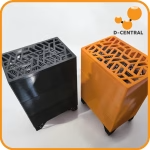
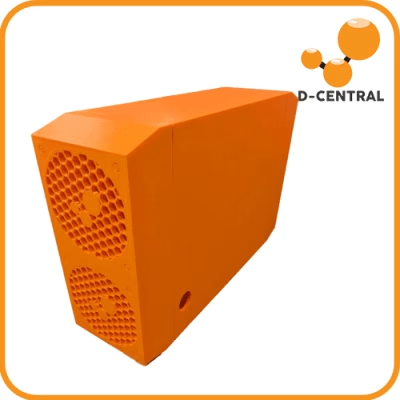
- Bitcoin Space Heater conversion: Our Space Heater Editions integrate noise dampening and heat distribution into a purpose-built enclosure, turning the miner into functional home heating that earns sats.
- Custom firmware for underclocking: Running a miner at reduced power (e.g., 50-70% of rated hashrate) dramatically reduces noise and heat while improving efficiency (J/TH). This is one of the best tricks for home deployment of used miners.
Network and Software Configuration
Once powered up, access your miner’s web interface via its IP address (find it using your router’s DHCP client list or an IP scanner). From there:
- Update firmware — Check for the latest official Bitmain firmware or consider open-source alternatives like Braiins OS+ or VNish for enhanced features and efficiency tuning.
- Configure your pool — Enter your mining pool’s stratum URL, port, and your worker credentials. If you are solo mining, point it at a solo mining pool or run your own node with ckpool.
- Set power targets — If your firmware supports it, configure power limits appropriate for your electrical setup and noise tolerance.
- Monitor temperatures — ASIC chip temps should stay below 80-85C for long-term reliability. Inlet air temperature matters — the cooler your intake air, the better your chips perform.
Maximizing Value: The Dual-Purpose Mining Strategy
This is where the Bitcoin Mining Hacker mindset really pays off. The “waste heat” from an ASIC miner is not waste at all — it is 100% efficient electric heating. Every watt consumed by the miner becomes a watt of heat energy. In a climate like Canada’s, where heating costs consume a significant portion of household budgets for 6-8 months of the year, this is a massive advantage.
How Dual-Purpose Mining Works
The concept is simple: instead of paying your utility company to run an electric space heater that produces zero Bitcoin, you run a Bitcoin miner that produces the exact same heat AND earns sats. The effective cost of your mining operation becomes the difference between what you would have paid for heating anyway and what you pay to run the miner. In many Canadian scenarios, this difference approaches zero — meaning your Bitcoin is essentially free after heating value is accounted for.
D-Central pioneered this concept with our Bitcoin Space Heater line. These are purpose-built enclosures that take used Antminer hardware — S9s, S17s, S19s — and convert them into functional, noise-dampened space heaters that heat your home while mining Bitcoin. It is the ultimate expression of the used Antminer value proposition: hardware that large farms consider obsolete becomes the centerpiece of a home miner’s dual-purpose operation.
Best Models for Dual-Purpose Mining
| Model | Heat Output (BTU/hr) | Rooms Heated | Mining Revenue |
|---|---|---|---|
| Antminer S9 (~1,400W) | ~4,780 BTU/hr | Small room / office | Low (lottery-style sats) |
| Antminer S17 (~2,400W) | ~8,190 BTU/hr | Medium room | Moderate |
| Antminer S19 (~3,250W) | ~11,090 BTU/hr | Large room / open area | Meaningful |
Maintaining Your Used Antminer for Longevity
A well-maintained used Antminer can run for years beyond its initial deployment. The hardware is built for 24/7 operation in demanding environments — with proper care, there is no reason it cannot serve a home miner reliably for an extended period.
Routine Maintenance Schedule
- Monthly: Blow out dust with compressed air, focusing on heatsink fins and fan blades. Check that all fans are spinning at expected RPMs via the dashboard.
- Quarterly: Inspect power cables and connectors for signs of heat discoloration or looseness. Check hashboard performance — all three boards should be reporting expected chip counts and hashrate.
- Annually: Consider a deep clean that involves removing hashboards for thorough dust removal. Check thermal paste condition on chips if you are comfortable disassembling the unit. Replace fans preemptively if they are showing signs of wear (noise increase, RPM fluctuations).
When to Seek Professional Repair
Some issues go beyond routine maintenance. If you encounter any of the following, it is time to reach out to a professional repair service:
- One or more hashboards not detected by the control board
- Significant chip dropout (hashrate notably below spec with high hardware error rates)
- Unusual temperature readings (hot spots on one board while others are normal)
- PSU failure, clicking, or shutdown under load
- Network connectivity issues that persist after standard troubleshooting
D-Central’s ASIC repair service handles all of these scenarios and more. With 60+ model-specific repair pages and experience repairing thousands of units since 2016, we are the Western authority on Antminer repair. We diagnose to the chip level, stock replacement hashboards and control boards, and return units fully tested and ready to mine. For Canadian customers, shipping to our Montreal, Quebec workshop is straightforward, and we serve customers across North America and internationally.
Used Antminers and the Open-Source Mining Ecosystem
If you are drawn to used Antminers for their accessibility and value, you should also explore the open-source mining ecosystem. Devices like the Bitaxe and NerdAxe offer a completely different approach to home mining — ultra-low-power solo miners that chase the lottery of finding a full block with a single ASIC chip. They are not going to compete with an S19 on hashrate, but they embody the same decentralization ethos that makes used Antminers appealing: accessible hardware, running at home, contributing to the Bitcoin network.
Many home miners run both: used Antminers as their primary hashrate workhorses (especially in winter for heating), and Bitaxe units year-round as low-power solo mining lottery tickets. It is a diversified approach to home mining that maximizes both utility and fun. Check out our Bitaxe Hub for the complete guide to every Bitaxe model, accessory, and setup guide.
The Bottom Line: Used Antminers Are a Pleb Mining Power Move
In 2026, with the Bitcoin network at 800+ EH/s, difficulty above 110T, and the block reward at 3.125 BTC, the barrier to entry for mining has never been higher for those buying new top-tier hardware. Used Antminers cut through that barrier. They put real hashrate in the hands of home miners at prices that make the economics work, especially when combined with dual-purpose heating strategies.
The machines that institutional farms are retiring are perfectly capable of mining Bitcoin profitably in a home environment — especially in Canada, where cold climates, hydro power, and the home heating use case create ideal conditions. All they need is someone willing to set them up, maintain them, and run them with conviction. That someone is you. That is what Bitcoin Mining Hackers do.
Browse D-Central’s current inventory of used and refurbished Antminers, or contact our team for personalized recommendations based on your power situation, budget, and goals. Every hash counts.
Frequently Asked Questions
Are used Antminers still profitable for Bitcoin mining in 2026?
Yes, but profitability depends heavily on your electricity cost. At power rates below $0.06/kWh, many used S19-class miners remain profitable as pure mining operations. When you factor in the heating value of the waste heat — especially during Canadian winters — the effective profitability improves dramatically. The key metric is your all-in cost per terahash-hour versus the current Bitcoin mining revenue. Used miners win on capital efficiency: lower purchase price means faster breakeven and less financial risk, even if the per-TH revenue is lower than latest-gen hardware.
What is the best used Antminer model to buy right now?
The Antminer S19j Pro offers the best combination of availability, price, and performance for most home miners in 2026. It delivers around 100 TH/s at roughly 29.5 J/TH efficiency, and units are widely available as large farms upgrade to S21-class hardware. For budget-conscious buyers focused on dual-purpose heating, older models like the S17+ or even the S9 (converted into a Bitcoin Space Heater) can make economic sense when the heating value is factored in.
How long do used Antminers typically last?
With proper maintenance — regular dust cleaning, fan replacement as needed, stable power supply, and adequate cooling — a used Antminer can run for several additional years beyond its initial deployment. The ASIC chips themselves are extremely durable since they have no moving parts. The most common failure points are fans (easy and cheap to replace), power supply units (replaceable), and occasionally hashboard components that may need professional repair. D-Central’s ASIC repair service can diagnose and fix most hashboard-level issues, extending the life of your miner significantly.
Can I use a used Antminer as a space heater?
Absolutely — this is one of the best use cases for used Antminers, and it is a strategy D-Central pioneered with our Bitcoin Space Heater line. Every watt consumed by an ASIC miner is converted to heat energy at 100% efficiency, identical to an electric space heater. An S19 running at 3,250W produces approximately 11,090 BTU/hr of heat. D-Central builds purpose-designed Space Heater Editions that enclose the miner, manage noise, and distribute heat effectively. You can also DIY the setup with shrouds and ducting to channel the exhaust heat where you need it.
Should I buy from D-Central or a random seller on eBay?
Buying from a specialized Bitcoin mining company like D-Central gives you tested and refurbished hardware, repair backing if something goes wrong, and expert support from people who actually mine Bitcoin and repair these machines daily. Random sellers on eBay may offer lower prices, but you have no guarantee the unit has been tested, no specialized repair support, and returns for heavy equipment are logistically painful. D-Central has been doing this since 2016, operates out of Montreal, Quebec, and has repaired thousands of Antminers across every major ASIC platform. The slight premium you pay for a properly vetted unit is insurance against buying someone else’s problem.