Skip to content

Bitcoin accepted at checkout  |  Ships from Laval, QC, Canada  |  Expert support since 2016

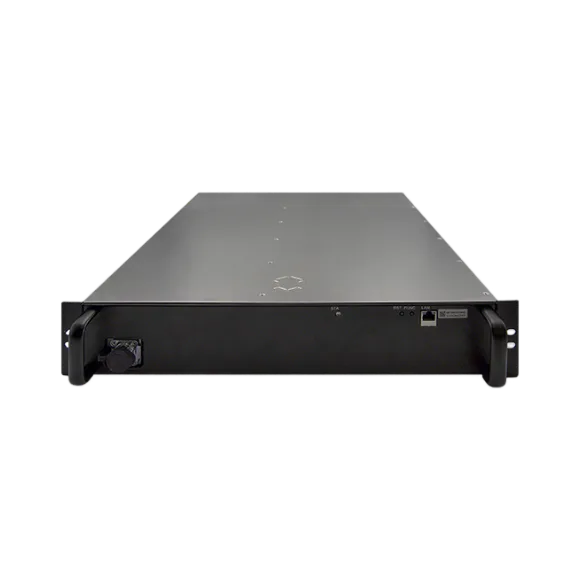
Canaan Avalon A1566HA ASIC miner specifications and profitability image
Active Canaan SHA-256 PRO

Canaan Avalon A1566HA

Hashrate 460 TH/s
Power 8,188 W
Efficiency 17.8 J/TH
Noise 80 dB

Quick answer

The Canaan Avalon A1566HA is a Bitcoin miner rated about 460 TH/s at roughly 8,188 W (about 17.8 J/TH). An industrial-class unit — loud and power-hungry, best suited to a dedicated mining space, not living areas.

Professional-Grade Miner

This miner draws 8,188W and produces 80 dB of noise — it is designed for dedicated mining environments, not living spaces. Professional-grade miners deliver the highest hashrate and revenue per unit but require proper infrastructure: a 240V circuit, adequate ventilation or exhaust ducting, and a space where noise is not a concern (garage, basement, warehouse, or outdoor enclosure).

For home miners looking for a quieter alternative, consider our Bitcoin Space Heater builds or explore open-source miners like the Bitaxe that are purpose-built for residential environments.

Circuit Requirement 240V dedicated circuit

Profitability Calculator

$62,902
Daily BTC Mined --
Breakeven Electricity $0.0741/kWh
Cost to Mine 1 BTC --
Network Hashrate Share --
Break-even Estimate --
Estimated mining profitability by period at current network conditions.
Period Revenue Electricity Cost Profit
Daily $14.56 $13.76 $0.80
Weekly $101.92 $96.29 $5.63
Monthly $436.79 $412.68 $24.11
Yearly $5,314.25 $5,020.88 $293.37

Where to Buy the Canaan Avalon A1566HA

Official

D-Central Technologies

Canada

Bitcoin Mining Hackers since 2016. Ships from Laval, Quebec.

Shop all Bitcoin mining products
Partner

ASIC Miner Market

United States

Wide selection of new and used ASIC miners. US-based shipping.

Shop Now
Partner

MinersDeals

United States

Competitive prices on new ASIC miners with coupon codes.

Shop Now

BT-Miners

United States

Large inventory of ASIC miners. US-based.

Shop Now

Coin Mining Central

United Kingdom

UK-based mining hardware retailer. Ships worldwide.

Shop Now

CryptoMinerBros

United States

Established US retailer with repair services.

Shop Now

Full Specifications

Full technical specifications for this miner.
Model Canaan Avalon A1566HA
Model Number Avalon A1566HA
Manufacturer Canaan
Algorithm SHA-256
Coins Mined Bitcoin (BTC)
Hashrate 460 TH/s
Power Consumption 8,188 W
Efficiency 17.8 J/TH
Noise Level 80 dB
Dimensions 680 x 560 x 200mm
Weight 20
BTU Output 27937 BTU/hr
Equivalent Heater Equal to a 8,188W space heater
Daily Power Cost $13.76/day
Monthly Power Cost $412.68/mo
Circuit Requirement 240V circuit required
Release Date 2025-06-01
MSRP $5,074.00
Status Active

Home Mining Assessment

8 /100
Not Recommended
Noise 80 dB
Very loud - dedicated space required
Heat Output 8,188W / 27937 BTU
High heat - requires ventilation or duct system
Power Draw 8,188W (8.2kW)
240V dedicated circuit required

The Canaan Avalon A1566HA is an air-cooled, SHA-256 industrial Bitcoin miner built on Canaan’s A3197S 5nm-class ASIC and a Kendryte K210 RISC-V control board. Canaan rates it at 460 TH/s drawing roughly 8,188 W, for about 17.8 J/TH — a high-output member of the A15 / A1566 generation. Here is what the silicon, firmware, and field reality actually look like.

Chip and hashboard architecture

The A1566HA’s hashpower comes from the Canaan A3197S ASIC, the company’s current-generation SHA-256 chip fabricated on a TSMC 5nm-class node. The A3197S sits one generation ahead of the A3198S that powers the Avalon A1466 family, and Canaan ships a distinct, forward-incompatible firmware stream for it — internally tagged MM4v2_X3 on the air-cooled hardware revision, with the MM319 software branch (a hydro/hyper-power sibling, the A1566HS, carries the same A3197S silicon on the MM4v2_X3_LC liquid board).

What makes Avalon fundamentally different from an Antminer is the control board. Where Bitmain’s S19/S21 use a Xilinx Zynq SoC with an on-board FPGA, the A1566HA’s brain is a Kendryte K210 — a dual-core 64-bit RISC-V SoC (TSMC 28nm) running bare-metal FreeRTOS, not Linux. The K210 has only ~8 MB of on-chip SRAM and no external DDR, so there is no shell, no SSH, and no general-purpose operating system in the way an S9 has one. Two consequences flow from this design that matter for owners and repair techs alike:

  • No FPGA. The SoC talks to the hashboards directly over SPI (≈1 MHz) using fixed 40-byte packets with a CRC16 checksum. There is no bitstream, no midstate engine, and no UART multiplexer to fail.
  • No PIC microcontroller. Unlike Antminer hashboards, Avalon boards do not carry a per-board PIC for voltage control and identification. Frequency and voltage are commanded straight from the SoC. That removes an entire class of PIC/I2C failures — but it also means there is no PIC EEPROM to read a board’s identity from.

On the hashboard itself, the chips are organised into voltage domains, not individually-trimmed chips. A domain is a cluster of ASICs wired in series across a shared regulated rail, so the domain voltage equals the per-chip core voltage multiplied by the chips in that domain. Anyone who tells you an Avalon offers “per-chip voltage control” is mistaken — control is per-domain, the same principle Bitmain and MicroBT use. Each Avalon board carries the familiar rail set — a variable Vcore, a VTOP reference (~0.75 V) and VDDIO (~1.8 V) — fed by an internal boost stage (12 V in, stepped up internally), and is monitored by two NTC 10K thermistors (TH1/TH2). Canaan has not published the exact chip-per-board count for the A3197S boards, and we do not invent specs we cannot verify; if you need the precise per-board population for a repair, count it on the bench rather than trusting a datasheet that does not exist publicly.

Real-world power and efficiency

At a rated 460 TH/s for 8,188 W, the A1566HA lands near 17.8 J/TH at the wall — squarely in the competitive current-generation band (roughly 13–19 J/TH for modern SHA-256 hardware). That is a real step forward from the previous Avalon air generation: the A3198S-based A1466 line ran closer to 25–30 J/TH on air, so the A3197S move to a finer process node is doing exactly what a die shrink should.

Two honest caveats. First, the nameplate is not the wall draw. Published power figures are measured under controlled conditions; in a warm room with a real PSU and real cabling, expect a few percent more at the plug, and expect efficiency to drift as intake temperature climbs. Second, tuning headroom on a stock Avalon is genuinely limited compared with an Antminer. The K210 firmware exposes a coarse work-mode switch (normal versus performance, set over the CGMiner API with ascset|0,workmode,<0|1>) rather than the fine-grained autotuner curves miners are used to on Bitmain hardware. The underlying frequency/voltage tables that would let you build custom power profiles are AES-encrypted inside the firmware payload, with the key fused into the K210’s OTP eFuse — they are not readable or rewritable in the field. In practice that means the A1566HA is run near its factory operating point, and “undervolting for efficiency” is not the open exercise it is on an S19. For where this model sits against the rest of the fleet, and for the profiles that are documented across the Antminer catalog, see our ASIC power profiles database.

Firmware compatibility — the honest picture

Stock, the A1566HA runs Canaan’s own MM firmware, which is built on a fork of CGMiner. You manage it through a web UI on port 80 (default config-mode address 192.168.168.168) and monitor it through the CGMiner API on port 4028summary, stats, estats and pools give you hashrate, per-chain temperatures, voltages and fan speeds. Monitoring suites that speak the CGMiner protocol, including pyasic, read Avalon over this same transport, so the A1566HA slots into a mixed fleet for dashboards and pool management without trouble.

Third-party firmware is where expectations need a reality check. There is no BraiinsOS+, VNish, LuxOS or ePIC build for any industrial Avalon — that ecosystem grew up around Bitmain’s ARM/Zynq platform and has never been ported to Canaan’s RISC-V controllers. On the K210 line specifically, the encrypted, eFuse-keyed firmware image makes custom builds a hardware-key problem, not just a software one. Credit where it is due: Canaan remains the most open of the big three manufacturers — it publishes CGMiner driver source and, since late 2025, open-sourced its K230 home-miner firmware — but that openness lives on the newer K230 generation (the Nano/Mini/Q home line), not on the K210-based A1566. D-Central’s own firmware research, DCENT_OS, follows the same logic: our practical custom-firmware path starts with the open K230 home hardware before any industrial K210 work, and like all our firmware projects it remains a GPL-3.0 closed beta. For the A1566HA today, the honest guidance is to run it on stock and manage it over the API — not to chase a custom firmware that does not exist.

Common faults and troubleshooting

Avalon industrial units are mechanically simple, and their failure modes are correspondingly predictable:

  • A hashboard or chain drops out. Because work is dispatched over SPI, a board that stops reporting usually points to a chip-domain fault, a cracked solder joint, or a broken link in the series signal chain (CKin/CKout, Din/Dout, Rin/Rout, Cin/Cout) rather than a controller problem.
  • Temperature reads as error or implausible. The two NTC 10K thermistors per board are a common culprit; a failed sensor can throttle or halt an otherwise-healthy board.
  • Fan faults and thermal shutdowns. At ~8.2 kW and ~80 dB this is a high-airflow machine — a degraded fan or a dust-choked intake shows up fast as rising domain temperatures in estats.
  • Power and boost issues. Problems in the internal boost stage or PSU present as a board that won’t initialise or that browns out under load.

Start every diagnosis from the data the miner already gives you: pull estats over the API and look for the chain whose temperatures, voltages or accepted-share count diverge from its neighbours. To work through symptoms methodically — by error signature and by board behaviour — run the unit through our ASIC fault finder, which maps observed faults to likely root causes and next steps.

Repair and longevity

D-Central has been doing board-level ASIC repair in-house in Laval since 2016, and Avalon hardware is squarely in that wheelhouse — we have published maintenance guides for earlier Avalon boards and repair the platform on the bench. The A1566HA’s design actually helps here: with no PIC and no FPGA, fault isolation comes down to the things you can probe directly — voltage domains, the boost stage, the thermistor network and the per-chip signal chain. Typical industrial-Avalon work includes domain-level voltage diagnosis, locating and replacing failed or shorted ASICs, reflow/reball on cracked joints, thermistor and connector replacement, and PSU/boost repair. If your A1566HA has a dead chain or won’t pass self-test, a board-level repair is almost always cheaper than a replacement unit — see our ASIC repair service.

Longevity on these machines is mostly about thermal discipline: keep intake air cool and clean, keep ambient humidity and dust under control, and don’t run a marginal PSU. The A3197S is modern silicon and will run for years if its domains are kept inside their temperature envelope; nearly every premature death we see traces back to airflow, dust, or a power-delivery problem rather than the ASICs themselves.

Who it’s for, and buying

The A1566HA is an industrial machine, full stop. At ~8.2 kW and around 80 dB it is built for a Hashcenter or a properly ventilated dedicated mining room — its home-mining suitability score is low (23/100) for exactly those reasons. The flip side is heat: it rejects roughly 27,937 BTU/h, and that waste heat is genuinely useful if you can duct it — turning load you would otherwise pay to cool into space heating for a workshop or warehouse during cold months.

If you are mining at home, in an apartment, or anywhere noise and a single 240 V circuit are constraints, this is the wrong tool — point yourself at a Bitaxe-class single-chip device or a home-form-factor Avalon instead. We keep a hands-on guide to the small stuff at our Bitaxe hub, and the home-oriented Canaan unit is covered on our Avalon Nano 3 profile. For datacenter-scale deployment, sourcing, and pre-purchase questions about the A1566HA, talk to us through the D-Central catalog — we would rather size the right machine to your power and cooling than sell you the biggest number on a spec sheet.

Generational context

It is worth remembering where this hardware comes from. Canaan’s Avalon project shipped the world’s first Bitcoin ASIC miner in 2013, and the company has iterated its A32xx chip family across more than a decade — from 110nm through 16nm (the Avalon 8/9 era) to today’s 5nm-class parts. The A1566HA represents the current rung of that ladder: the K210-based “Gen 2” integrated-controller platform paired with the A3197S, the successor to the A3198S that powered the A1466. Against its peers, it competes with Bitmain’s S21 series and MicroBT’s WhatsMiner M5x/M6x on efficiency, and its open-CGMiner heritage makes it unusually friendly to fleet tooling even though it lacks a third-party firmware scene. Canaan’s next move — the K230 RISC-V/Linux generation now shipping in its home line — points to where the platform is heading, but for industrial air-cooled deployment in 2025, the A1566HA is Canaan’s mature, efficient flagship.

Avalon A1566HA — specifications and family context

Specification Canaan Avalon A1566HA
Algorithm SHA-256 (Bitcoin / BTC)
Rated hashrate 460 TH/s
Power consumption ~8,188 W
Efficiency ~17.8 J/TH
ASIC chip Canaan A3197S (TSMC 5nm-class)
Control board / SoC Kendryte K210, RISC-V dual-core (FreeRTOS, no FPGA, no PIC)
Hardware / firmware stream MM4v2_X3 / MM319 (air-cooled)
Hashboard comms SPI ~1 MHz, 40-byte packets, CRC16
Cooling Air
Noise level ~80 dB
Heat output ~27,937 BTU/h
Dimensions / weight 680 × 560 × 200 mm / 20 kg
Management Web UI (port 80) + CGMiner API (port 4028); pyasic compatible
Release 2025
Model ASIC Process Cooling Firmware stream
Avalon A1466 (A14x) A3198S ~7nm-refined Air (~25–30 J/TH) MM318
Avalon A1566HA (this page) A3197S 5nm-class Air MM319 (MM4v2_X3)
Avalon A1566HS A3197S 5nm-class Liquid / hyper-power MM319 (MM4v2_X3_LC)

Specifications above are grounded in D-Central’s hardware research and Canaan’s published figures. Where a per-board chip count or factory frequency table is not publicly verifiable, we describe the architecture qualitatively rather than guess. If you spot a discrepancy with your own unit, tell us — accuracy is the whole point.

Broken miner? Get a real quote.

Tell us the symptom and get an instant repair-tier estimate ($95 / $145 / $195 CAD). Mail-in from across Canada, bench in Laval, Quebec.

Send it to D-Central — start a repair →

Frequently Asked Questions

What are the current mining economics for the Canaan Avalon A1566HA?

At $0.07/kWh electricity, the Canaan Avalon A1566HA currently shows an estimated $0.80 daily net result before pool fees and hardware cost. Results depend on your electricity rate and Bitcoin network conditions. Use the calculator above with your actual electricity rate.

Can I mine Bitcoin at home with the Canaan Avalon A1566HA?

The Canaan Avalon A1566HA has a home mining score of 8/100. With 80 dB noise and 8,188W power draw, it may require a dedicated space like a garage, basement, or outdoor enclosure. Consider noise insulation and proper ventilation.

Can the Canaan Avalon A1566HA heat my home?

The Canaan Avalon A1566HA outputs approximately 27937 BTU/hr of heat. For reference, a typical space heater produces 5,000-5,500 BTU/hr. All electrical energy consumed by the miner is converted to heat, making it 100% efficient as a heater. D-Central offers Bitcoin Space Heater builds designed specifically for home heating integration.

What power supply does the Canaan Avalon A1566HA need?

The Canaan Avalon A1566HA draws 8,188W of power. You need a power supply rated for at least 9,007W with appropriate voltage (200-240V AC). D-Central stocks compatible power supplies in our shop. Always use a quality PSU from a reputable manufacturer to protect the miner and wiring.