Skip to content

Bitcoin accepted at checkout  |  Ships from Laval, QC, Canada  |  Expert support since 2016

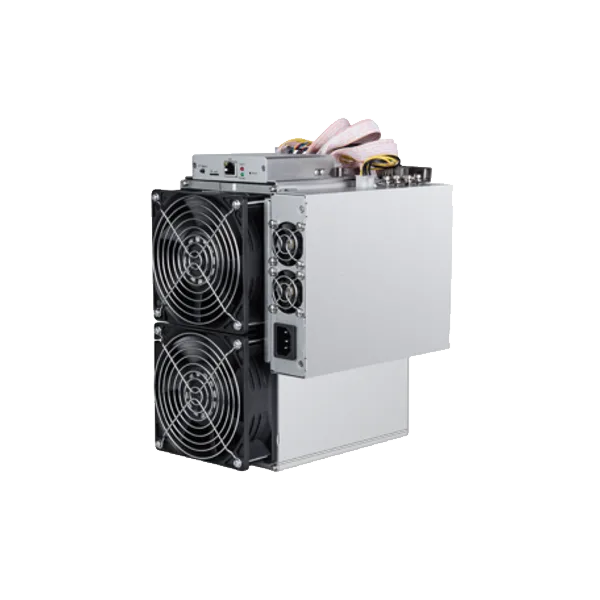
Bitmain Antminer T15 (23Th) ASIC miner specifications and profitability image
Active Bitmain SHA-256 PRO HEATER

Bitmain Antminer T15 (23Th)

Hashrate 23 TH/s
Power 1,541 W
Efficiency 67 J/TH

Quick answer

The Bitmain Antminer T15 (23Th) is a Bitcoin miner rated about 23 TH/s at roughly 1,541 W (about 67 J/TH). An industrial-class unit — loud and power-hungry, best suited to a dedicated mining space, not living areas.

Professional-Grade Miner

This miner draws 1,541W and produces 75+ dB of noise — it is designed for dedicated mining environments, not living spaces. Professional-grade miners deliver the highest hashrate and revenue per unit but require proper infrastructure: a 240V circuit, adequate ventilation or exhaust ducting, and a space where noise is not a concern (garage, basement, warehouse, or outdoor enclosure).

For home miners looking for a quieter alternative, consider our Bitcoin Space Heater builds or explore open-source miners like the Bitaxe that are purpose-built for residential environments.

Circuit Requirement Dedicated 120V 20A

Heater-Class Miner

At 1,541W, this miner outputs approximately 5258 BTU/hr of heat — equivalent to a standard electric space heater. Every watt consumed by an ASIC miner is converted to heat with 100% efficiency, making it a space heater that also mines Bitcoin.

During heating season, miner heat can offset part of the heat a room would otherwise need from another electric heater. The economics depend on your electricity rate, room heat demand, BTC price, network difficulty, and noise constraints.

Heat Output 5258 BTU/hr
Explore Bitcoin Space Heaters →

Profitability Calculator

$63,683
Daily BTC Mined --
Breakeven Electricity $0.0179/kWh
Cost to Mine 1 BTC --
Network Hashrate Share --
Period Revenue Electricity Cost Profit
Daily $0.66 $2.59 $-1.93
Weekly $4.64 $18.12 $-13.48
Monthly $19.88 $77.67 $-57.79
Yearly $241.86 $944.94 $-703.08

Where to Buy the Bitmain Antminer T15 (23Th)

Official

D-Central Technologies

Canada

Bitcoin Mining Hackers since 2016. Ships from Laval, Quebec.

Shop all Bitcoin mining products
Partner

ASIC Miner Market

United States

Wide selection of new and used ASIC miners. US-based shipping.

Shop Now
Partner

MinersDeals

United States

Competitive prices on new ASIC miners with coupon codes.

Shop Now

BT-Miners

United States

Large inventory of ASIC miners. US-based.

Shop Now

Coin Mining Central

United Kingdom

UK-based mining hardware retailer. Ships worldwide.

Shop Now

CryptoMinerBros

United States

Established US retailer with repair services.

Shop Now

Full Specifications

Model Bitmain Antminer T15 (23Th)
Model Number Antminer T15 (23Th)
Manufacturer Bitmain
Algorithm SHA-256
Coins Mined Bitcoin (BTC)
Hashrate 23 TH/s
Power Consumption 1,541 W
Efficiency 67 J/TH
Dimensions 176 x 205 x 279mm
Weight 6.6
BTU Output 5258 BTU/hr
Equivalent Heater Equal to a 1,541W space heater
Daily Power Cost $2.59/day
Monthly Power Cost $77.67/mo
Circuit Requirement Dedicated 120V 20A
Release Date 2018-12-01
Status Active

Home Mining Assessment

11 /100
Not Recommended
Heat Output 1,541W / 5258 BTU
Significant heat - good as a space heater
Power Draw 1,541W (1.5kW)
240V outlet recommended

The Antminer T15 is Bitmain’s value-tier 7nm SHA-256 miner from December 2018, rated at 23 TH/s for 1,541 W (about 67 J/TH). It runs 216 BM1391 chips across three hashboards and, at today’s difficulty, earns its keep as a heat source or a learning rig rather than a profit machine.

Chip and hashboard architecture

The T15 is built on Bitmain’s BM1391, fabricated on the TSMC 7nm DUV process. It is important to understand what the BM1391 actually is: it is not a clean-sheet design but a process-shrink of the proven BM1387 silicon that powered the legendary S9. In every way that matters for tuning and driver behaviour, the BM1391 is a member of the BM1387 family — it reports the same 0x1387 chip ID over the enumeration handshake, carries 114 hashing cores per die, and speaks the same command-header, register and CRC surface as the S9’s chip. Bitmain took mature 16nm silicon, moved it to 7nm, and pocketed the efficiency improvement. That lineage is good news for anyone servicing one of these machines, because the protocol is well understood.

The miner follows the classic Antminer layout: three hashboards (Chain0, Chain1 and Chain2) driven by a single control board, fed by an APW-series power supply and cooled by dual fans. Each hashboard carries 72 BM1391 chips, for 216 chips across the machine. The control board is a Xilinx Zynq system-on-chip running embedded Linux with Bitmain’s cgminer/bmminer fork; its application processor clocks at 667 MHz. It talks to each hashboard over an 18-pin flat ribbon cable that carries 3.3 V, ground, the clock and serial data lines (TX/CI, RX/RO), reset, and the I²C temperature-sensor bus.

Voltage domains, not per-chip control

The 72 chips on each board are organized into 12 voltage domains of six series-wired chips. This is the single most misunderstood point about Antminer power management: Bitmain regulates core voltage per domain, never per individual chip. Because the six chips in a domain sit in series, the domain rail equals the per-chip core voltage multiplied by six. On the T15 each domain runs near 1.65 V, giving a string voltage around 19.8 V that the board’s boost stage develops from the PSU’s 12–15 V input. A small PIC16F1704 microcontroller on each hashboard drives the voltage DAC and holds the board’s EEPROM data — the same voltage-control path used across the wider S9 chip family.

That 1.65 V domain figure is also the key to the T15’s personality. Its better-binned sibling, the S15, runs the identical BM1391 board topology at a gentler 1.53 V per domain and reaches roughly 57 J/TH at 28 TH/s. The T15 uses lower-grade silicon pushed harder, which is why it lands at the higher 67 J/TH despite a lower headline hashrate. In Bitmain’s naming, the “T” was always the value tier: cheaper chips, more voltage, lower efficiency.

Real-world power and efficiency

The nameplate figure is 1,541 W. Expect the figure at the wall to run somewhat higher once you account for PSU conversion losses and warm ambient air, and to climb further if the intake is recirculating its own exhaust. At 67 J/TH the T15 sits firmly in the legacy efficiency tier — for context, a modern S21-class machine does the same work for roughly a quarter of the joules per terahash. There is little tuning headroom to recover: the BM1391 chips already sit near the top of their voltage envelope at 1.65 V per domain, so the realistic move is the opposite direction. Underclocking and undervolting can claw efficiency back toward the high-binned ~57 J/TH the silicon is capable of, but only by giving up hashrate.

Be realistic about tuning support, too. Because almost no third-party firmware ever targeted the S15/T15 generation, you will not find the deep library of vetted autotune presets that exists for later models. Any efficiency gain on a T15 is a runtime-calculated balance you set yourself, not a downloadable preset. Our ASIC power profiles database documents where each generation lands on the efficiency curve so you can decide whether a given unit is worth running, repurposing, or retiring.

Firmware compatibility

Out of the box the T15 ships with Bitmain’s stock firmware — a cgminer/bmminer build behind the familiar Antminer web UI for pools, frequency and fan control. The honest picture on aftermarket firmware is thin: the major third-party projects cut their teeth on the S9 and then jumped straight to the S17 and S19 generations, and the short-lived S15/T15 were largely skipped. If you own a T15, plan around stock firmware rather than expecting a polished community build to drop in.

This is one place our own work is relevant. DCENT_OS, D-Central’s in-house mining firmware, is built around the same BM1387-family register surface that the BM1391 shares — the 0x1387 chip ID, the shared driver and command headers — so the T15 falls inside the protocol family it already drives. We are honest about the caveat: our live validation has been on S9-family and later hardware, not on a T15 specifically, so we treat T15 support as protocol-compatible-by-design rather than field-proven. DCENT_OS remains a GPL-3.0 closed beta today, with a public beta planned for summer 2026. None of this would exist without the open firmware work that came before it, and we credit that lineage rather than pretending we invented the wheel.

Common faults and troubleshooting

The dominant failure mode on a series-domain board like the T15 is a dead voltage domain. When a single chip in a six-chip domain fails open, the whole domain drops out and the control board reports fewer than the expected 72 ASICs on that chain — the classic “X asic” or low-chip-count symptom. Because the domains share a string, a failure also redistributes voltage onto the survivors and stresses them. Other recurring issues on this generation are temperature-sensor and I²C errors carried over the ribbon cable, PIC or EEPROM communication faults, and outright board “0 ASIC found” conditions. The 7nm-gen-1 chips ran hot at 1.65 V per domain, so accelerated chip degradation, solder-joint fatigue and tired ribbon connectors are all common on units that have logged years of runtime.

Before condemning a board, work the chain methodically — reseat ribbons, verify the PSU rail, and read which chip position the chain stops counting at. Our ASIC fault finder walks you from a symptom to the likely cause and the relevant Antminer error code, which is the fastest way to tell a five-minute cable fix apart from a board that needs bench-level repair.

Repair and longevity

D-Central has repaired Antminer hardware in-house since 2016, and the T15 is squarely within that wheelhouse. Its QFN chips on well-mapped series domains make board-level work — domain diagnosis, individual chip replacement, ribbon and connector service, PSU repair — entirely viable when the unit is worth saving. The honest constraint is parts: the S15/T15 was a low-volume, short-lived generation, so BM1391 donor chips and spare T15 hashboards are scarce. That means some repairs are economically marginal, and we will tell you plainly when a board is better used for parts than rebuilt. For a 2018-vintage miner, the right longevity question is usually not “can it be fixed” but “is the heat or the hashrate worth the bench time.” Send the symptoms or the unit to our ASIC repair service and we will give you a straight assessment.

Who the T15 is for

At current network difficulty the T15 is not a profit miner, and we will not pretend otherwise. Where it still makes sense is as a heat source — 1,541 W of mining is roughly 5,258 BTU/h of usable warmth that can be ducted into a workshop or utility space, turning a heating bill into hashrate. See our notes on Bitcoin heating for how to do that cleanly. It is also a fine unit for hobby and learning setups, solo-mining lottery play, or as a cheap platform to practice hashboard repair on. If your goal is genuinely quiet, low-power home mining, a modern single-chip open-source rig such as our DCENT_axe — built on the Bitaxe lineage we openly credit — is a far better fit than a noisy three-board machine from 2018. If you do want a running ASIC, browse current stock in our ASIC miner catalog for hardware that actually pencils out.

Generational context

The S15 and T15 were announced together in November 2018 as Bitmain’s first 7nm SHA-256 miners — a genuine engineering milestone, among the earliest 7nm Bitcoin ASICs to ship at scale. They were the efficiency shrink of the BM1387 S9 silicon that had defined the previous era. Credit where it is due: getting a 7nm bitcoin ASIC to market in 2018 was real work. Commercially, though, the generation was short-lived. The BM1393-based S17/T17 line arrived in mid-2019 with a step-change in efficiency, and the BM1398 S19 family that followed buried it. The table below places the T15 in that arc.

Model Chip Process Hashrate Efficiency Chips/board Released
Antminer S9 BM1387 TSMC 16nm ~13.5 TH/s ~98 J/TH 63 2016
Antminer T15 BM1391 TSMC 7nm 23 TH/s 67 J/TH 72 Dec 2018
Antminer S15 BM1391 TSMC 7nm ~28 TH/s ~57 J/TH 72 Nov 2018
Antminer S17 BM1393 TSMC 7nm ~53 TH/s (approx) ~45 J/TH 48 2019

The takeaway: the T15 was the affordable entry into Bitmain’s first 7nm wave, and it remains a serviceable, repairable machine — just one whose best years are behind it and whose best use today is heat, hobby, or hands-on learning.

Run open-source firmware on your Antminer

DCENT_OS is D-Central’s open-source, GPL-3.0 firmware effort for Antminer hardware — currently in closed beta, with public beta targeted for summer 2026. We build on the shoulders of the open-firmware projects that came before us. Want early access? Join the beta list. Collection only — we will not email you anything else yet.

Frequently Asked Questions

What are the current mining economics for the Bitmain Antminer T15 (23Th)?

At $0.07/kWh, the Bitmain Antminer T15 (23Th) currently shows an estimated daily net cost of $1.93 before pool fees and hardware cost. Lower electricity rates, network changes, BTC price changes, or useful heat recovery can change the result.

Can I mine Bitcoin at home with the Bitmain Antminer T15 (23Th)?

The Bitmain Antminer T15 (23Th) has a home mining score of 11/100. With 0 dB noise and 1,541W power draw, it may require a dedicated space like a garage, basement, or outdoor enclosure. Consider noise insulation and proper ventilation.

Can the Bitmain Antminer T15 (23Th) heat my home?

The Bitmain Antminer T15 (23Th) outputs approximately 5258 BTU/hr of heat. For reference, a typical space heater produces 5,000-5,500 BTU/hr. All electrical energy consumed by the miner is converted to heat, making it 100% efficient as a heater. D-Central offers Bitcoin Space Heater builds designed specifically for home heating integration.

What power supply does the Bitmain Antminer T15 (23Th) need?

The Bitmain Antminer T15 (23Th) draws 1,541W of power. You need a power supply rated for at least 1,695W with appropriate voltage (200-240V AC). D-Central stocks compatible power supplies in our shop. Always use a quality PSU from a reputable manufacturer to protect the miner and wiring.