Skip to content

Bitcoin accepted at checkout  |  Ships from Laval, QC, Canada  |  Expert support since 2016

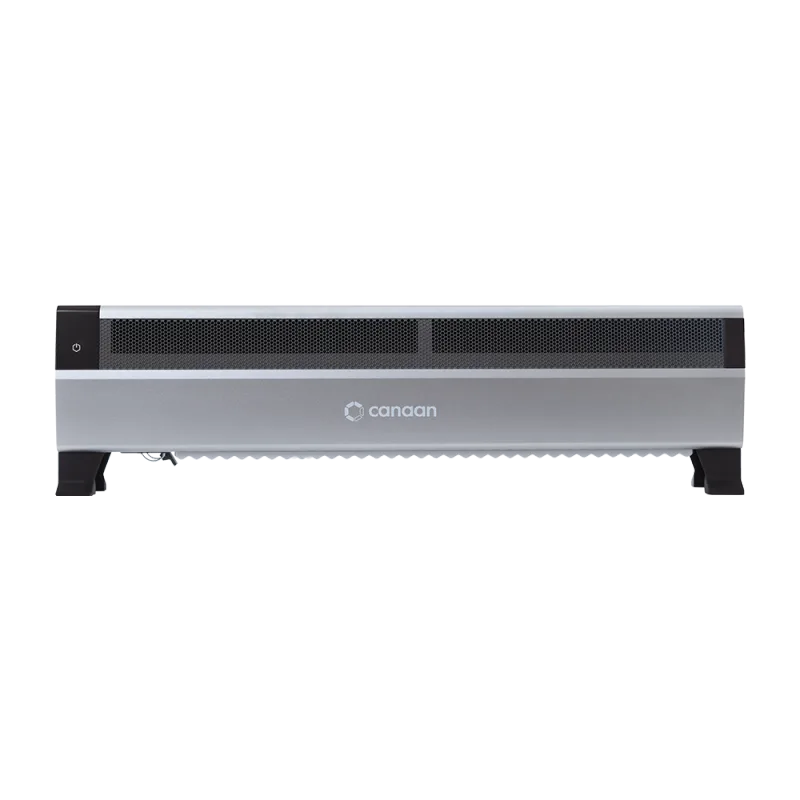
Canaan Avalon Mini 3 ASIC miner specifications and profitability image
Active Canaan SHA-256 HOME HEATER

Canaan Avalon Mini 3

Hashrate 37.5 TH/s
Power 800 W
Efficiency 21.3 J/TH
Noise 33 dB

Quick answer

The Canaan Avalon Mini 3 is a Bitcoin miner rated about 37.5 TH/s at roughly 800 W (about 21.3 J/TH). Quiet and efficient enough for home or desktop solo mining.

Heater-Class Miner

At 800W, this miner outputs approximately 2730 BTU/hr of heat — equivalent to a standard electric space heater. Every watt consumed by an ASIC miner is converted to heat with 100% efficiency, making it a space heater that also mines Bitcoin.

During heating season, miner heat can offset part of the heat a room would otherwise need from another electric heater. The economics depend on your electricity rate, room heat demand, BTC price, network difficulty, and noise constraints.

Heat Output 2730 BTU/hr
Explore Bitcoin Space Heaters →

Profitability Calculator

$64,266
Daily BTC Mined --
Breakeven Electricity $0.0568/kWh
Cost to Mine 1 BTC --
Network Hashrate Share --
Break-even Estimate --
Period Revenue Electricity Cost Profit
Daily $1.09 $1.34 $-0.25
Weekly $7.63 $9.41 $-1.78
Monthly $32.71 $40.32 $-7.61
Yearly $397.96 $490.56 $-92.60

Buy from D-Central

In stock and ready to ship from Laval, Quebec.

$1,750.00 CAD
View Canaan Avalon Mini 3

Where to Buy the Canaan Avalon Mini 3

Official

D-Central Technologies

Canada

Bitcoin Mining Hackers since 2016. Ships from Laval, Quebec.

$1,750.00 CAD
Buy from D-Central

Full Specifications

Model Canaan Avalon Mini 3
Model Number Avalon Mini 3
Manufacturer Canaan
Algorithm SHA-256
Coins Mined Bitcoin (BTC)
Hashrate 37.5 TH/s
Power Consumption 800 W
Efficiency 21.3 J/TH
Noise Level 33 dB
Dimensions 760*104*214.5mm
Weight 8.35
BTU Output 2730 BTU/hr
Equivalent Heater Half a standard space heater (2,730 BTU/hr)
Daily Power Cost $1.34/day
Monthly Power Cost $40.32/mo
Circuit Requirement Standard 120V 15A
Release Date 2025-03-01
MSRP $710.00
Status Active

Home Mining Assessment

81 /100
Excellent
Noise 33 dB
Quiet enough for living spaces
Heat Output 800W / 2730 BTU
Moderate heat - can supplement room heating
Power Draw 800W (0.8kW)
Dedicated 120V circuit recommended

The Canaan Avalon Mini 3 is a quiet, plug-and-play home SHA-256 miner that hashes around 37.5 TH/s for roughly 800 W (about 21.3 J/TH). It is built on Canaan’s third-generation Kendryte K230 platform, sits between the Avalon Nano 3S and the Avalon Q in the home line, and doubles as a ~2,730 BTU/h space heater.

Chip and hashboard architecture

The Mini 3 belongs to Canaan’s Generation 3 home line, the family that replaced the bare-metal K210 industrial controller with the Kendryte K230 system-on-chip. The K230 is a dual-core 64-bit RISC-V C908 design: a little core at 800 MHz runs Linux and handles the web UI, pool communication and the CGMiner API, while a big core at 1.6 GHz runs Canaan’s RT-Smart RTOS and drives the ASIC chips. That split is what lets a box this small behave like a real networked appliance rather than a USB stick.

Two architectural points matter for anyone who plans to live with — or repair — this miner. First, there is no FPGA between the controller and the hashboard. Where an Antminer S9 uses a Xilinx Zynq with a hardware midstate engine, the K230 dispatches work in software and talks to the hashboard directly over SPI (roughly 1 MHz, 40-byte CRC-checked packets). Second, there is no PIC microcontroller on the board. Frequency and voltage are set straight from the SoC, which means voltage is managed per power domain — the Vcore, VTOP (~0.75 V) and VDDIO (~1.8 V) rails — not chip-by-chip. Anyone who tells you a home ASIC tunes “each individual chip” is describing something the hardware does not do.

The ASIC itself is the one honest gap on this page. Canaan has never published the Mini 3’s chip part number, chip count or process node, and it is absent from every retail replacement-chip catalog. We can tell you what the lineage looks like: the smaller Nano 3 carries 10 chips (marketed as a 7 nm design) and the Nano 3S carries 12 chips (marketed as 4 nm). At ~37.5 TH/s the Mini 3 is roughly six times a Nano 3S, so it almost certainly runs a much larger array of the same Gen-3 SHA-256 silicon family on a single internal hashboard — but we will not print a chip SKU, a transistor node or a chip count that Canaan has not confirmed. When a real datasheet surfaces, this section gets the number; until then it stays qualitative.

Specifications at a glance

Specification Canaan Avalon Mini 3
Algorithm SHA-256 (Bitcoin)
Nameplate hashrate ~37.5 TH/s
Nameplate power ~800 W (internal PSU)
Efficiency ~21.3 J/TH
Controller SoC Kendryte K230 (dual-core RISC-V C908, Linux + RT-Smart)
Hashboards Single internal board, SPI-driven, no FPGA, no PIC
Heat output ~2,730 BTU/h
Noise ~33 dB
Input 110–240 V
Weight ~8.35 kg
Released Announced CES 2025, shipping March 2025

Real-world power, efficiency and tuning headroom

At ~21.3 J/TH the Mini 3 is not chasing the bleeding edge — modern air-cooled industrial flagships land closer to 17–18 J/TH — but it is genuinely efficient for a sub-35 dB box you can leave in an office. It is also tighter than its own siblings: the Nano 3S sits at ~23.3 J/TH and the original Nano 3 at ~29 J/TH, so the Mini 3 is the most efficient miner in the home line short of the much larger, much louder Avalon Q.

The 800 W figure is the nameplate, high-mode draw, and because the PSU is internal your wall reading will sit close to it (allow a little overhead for fans and conversion loss). Canaan exposes the same coarse Low / Mid / High work modes the rest of the home line uses, switchable from the web dashboard, the Avalon Family app, or over the API. Those three factory points are the extent of the “tuning” on offer: this is not an Antminer-class runtime autotuner that calculates per-domain frequency and voltage on the fly for a J/TH target — it is three pre-set operating points. If you are coming from custom Antminer firmware and want our broader notes on power scaling, see our ASIC power profiles database, but set expectations: on a stock Avalon home unit you choose a mode, not a curve.

One practical consequence: because the High point and the heat output (~2,730 BTU/h) are linked, the Mini 3 is at its best where electricity is cheap, where you are recovering the heat into a room you would have heated anyway, or both. Run it in Mid through a mild shoulder season and you trade a little hashrate for a quieter, cooler box.

Firmware and software

The Mini 3 runs Canaan’s stock firmware — a CGMiner fork on the Linux core plus the RT-Smart mining engine on the big core. You manage it the same way as the rest of the home line:

  • Web dashboard on port 80, with the usual config-mode default IP of 192.168.168.168.
  • CGMiner API on port 4028 — read commands such as version, summary and pools, and write commands via ascset (work mode, pool config, reboot, LED, IP/DNS, hashpower).
  • SWUpdate on port 9090 for firmware images, which are RSA-signed .swu packages.
  • The Avalon Family mobile app for setup and remote monitoring.

The honest reality on third-party firmware is that there isn’t any. Braiins OS+, VNish, LuxOS and ePIC do not run on Avalon hardware — full stop — so the popular firmware-swap playbook from the Antminer world simply does not apply here. The only community modification that exists anywhere in the Avalon line is a jailbreak for the smaller Nano 3, and it does not cover the Mini 3. To Canaan’s credit, they are the most open-source of the big three manufacturers: they open-sourced the Nano 3S network-service firmware and the K230 industrial firmware (Avalon_mm) in late 2025, which is more than Bitmain or MicroBT have ever published. But the ASIC driver blob is encrypted, no signing key has leaked, and a finished alternative OS for this box does not exist today.

That shapes what we will and won’t promise. D-Central’s own firmware and tooling work — DCENT_axe, DCENT_OS and the DCENT Toolbox — targets the platforms where open, hackable control is realistic right now; the K230 RISC-V home line is on our research bench, not our shipping list, and we would rather say that plainly than sell you a flash you can’t get. What does work today is monitoring: anything that speaks the CGMiner API on port 4028 can read the Mini 3’s hashrate, temperatures and pool status alongside the rest of your fleet. One more accuracy note for the pool-hoppers — out of the box the Mini 3 speaks Stratum V1; among ASIC firmwares only Braiins OS+ natively speaks Stratum V2, and Braiins doesn’t run on Avalon, so V2 is not on the table for this unit.

Common faults and troubleshooting

Most Mini 3 “problems” are home-network and firmware quirks rather than dead silicon, and they mirror what the Nano line has shown in the field:

  • Wi-Fi reconnect failures after a reboot and DNS handling that can be fussy — a wired connection where possible is the simplest fix.
  • Work mode silently reverting from High to a lower mode, usually a thermal-protection response in a too-warm room. Improve airflow before assuming a fault.
  • Pool rejects on endpoints that expect version-rolling / extranonce negotiation. Most major pools and CKPool-style solo endpoints are fine; if shares are being refused, test a second pool before suspecting the hardware.
  • Fan flakiness and factory-reset oddities (settings that survive a reset) — annoying, not fatal.

For genuine hardware symptoms — a board that won’t pick up its full chip count, climbing temperatures, hashrate that decays under load — work the symptom methodically with our ASIC fault finder before you open the case. The K230 platform reports per-board temperature from on-die and NTC thermistor sensors, so a board that reads abnormally hot or refuses to enumerate its full hashrate is telling you something specific.

Repair and longevity

D-Central has been opening and repairing Avalon hardware since the Gen-1 days, and the Mini 3’s simplicity actually helps here: no FPGA bitstream to wrangle and no PIC I2C bus to coax back to life. The flip side of a tidy single-board home miner is that the board is a single point of failure, and the first things to wear are the moving and thermal parts — fans, thermal interface and the internal PSU — long before the ASICs give out. Keep it dust-free, keep intake air cool, and a Mini 3 should outlast its profitability window comfortably.

Where it gets harder is deep chip-level work. Because Canaan has not published the Mini 3’s chip part number or hashboard schematic, and the silicon is an advanced-node BGA, component-level rework on this board is genuinely specialist territory rather than a kitchen-table job. If your unit develops a board-level fault, talk to us through our ASIC repair service — diagnosing it properly beats guessing, and we will tell you honestly when a repair makes sense versus when it doesn’t.

Who it’s for and how to buy

The Mini 3 is for the home miner who wants meaningfully more hashrate than a desk-side stick without industrial noise or three-phase power — someone heating a room, learning the stack, or stacking sats quietly. It is the mid-point of Canaan’s home range:

Model Hashrate Power Efficiency Form factor
Avalon Nano 3 ~4 TH/s ~140 W ~29 J/TH USB-C desktop
Avalon Nano 3S ~6 TH/s ~140 W ~23.3 J/TH USB-C desktop, LCD
Avalon Mini 3 ~37.5 TH/s ~800 W ~21.3 J/TH Quiet box, internal PSU
Avalon Q ~90 TH/s ~1,700 W ~18.9 J/TH Full box, ~45 dB

If you are weighing it against the open-source DIY world, it is a different animal: a Bitaxe Gamma is a single-chip board (~1–3.5 TH/s) you build and hack yourself, whereas the Mini 3 is a sealed, app-managed appliance with roughly ten times the hashrate and none of the soldering. Our home-miner comparison walks through that trade-off, and if tinkering is the point, DCENT_axe is where D-Central plays in the open-source single-board space. To see how the Mini 3 stacks up against everything else we carry, browse the full ASIC miner catalogue.

Generational context

Canaan earned its place in this story: it shipped the Avalon 1 in 2013, the first Bitcoin ASIC ever sold, and it has stayed the most open of the major manufacturers ever since. The Mini 3 is the home-mining chapter of that history — part of a deliberate 2025 pivot, alongside the Nano 3S and Avalon Q, toward quiet, Linux-capable miners designed to be lived with and to give their heat back. It rides the same wave as the broader home-mining and heat-reuse renaissance: not the most efficient box on the market, but one of the more thoughtful answers to the question of how an ordinary person keeps a little hashrate, and a little sovereignty, running in their own home.

Frequently Asked Questions

What are the current mining economics for the Canaan Avalon Mini 3?

At $0.07/kWh, the Canaan Avalon Mini 3 currently shows an estimated daily net cost of $0.25 before pool fees and hardware cost. Lower electricity rates, network changes, BTC price changes, or useful heat recovery can change the result.

Can I mine Bitcoin at home with the Canaan Avalon Mini 3?

Yes, the Canaan Avalon Mini 3 scores 81/100 for home mining viability. It produces 33 dB of noise and draws 800W. It is suitable for home environments with appropriate placement considerations.

Can the Canaan Avalon Mini 3 heat my home?

The Canaan Avalon Mini 3 outputs approximately 2730 BTU/hr of heat. For reference, a typical space heater produces 5,000-5,500 BTU/hr. All electrical energy consumed by the miner is converted to heat, making it 100% efficient as a heater. D-Central offers Bitcoin Space Heater builds designed specifically for home heating integration.

What power supply does the Canaan Avalon Mini 3 need?

The Canaan Avalon Mini 3 draws 800W of power. You need a power supply rated for at least 880W with appropriate voltage (200-240V AC). D-Central stocks compatible power supplies in our shop. Always use a quality PSU from a reputable manufacturer to protect the miner and wiring.