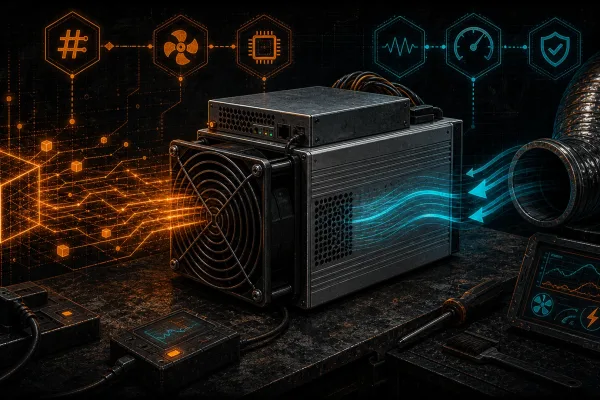
Industrial mining hardware was never designed to live in your house. An Antminer is a bare metal frame, exposed boards, and screaming high-RPM fans engineered for a warehouse where nobody cares about noise, looks, or where the hot air goes. The home miner cares about all three. That gap — between hardware built for a data center and a person who wants to mine in a spare room — is exactly where 3D printing earns its place at the workbench.
D-Central has been hacking mining hardware into home-friendly form since 2016, and 3D printing is one of the core tools that makes it possible. It is how you get a shroud that mates an Antminer’s exhaust to a duct, a chassis that quiets a hashboard, a stand that holds a Bitaxe at the right angle, or a replacement part for something that snapped. This guide covers what 3D printing actually does for a home mining setup — what you can print, what D-Central has already designed so you do not have to, and where the limits are.
Why 3D Printing and Home Mining Fit Together
Mining hardware is open and modular by nature. Bitaxe is open-source hardware — anyone can manufacture it, and its accessories are drawn and shared in the open. D-Central publishes its own shroud and accessory files the same way. Antminers are standardized enough that a part designed for one S19 fits the next. That openness means a 3D printer is not a gimmick; it is a practical fabrication tool for a setup that is, fundamentally, a hardware hack.
The concrete wins:
- Airflow control. Print shrouds and duct adapters that channel a miner’s exhaust instead of letting it dump into the room. This is the single highest-value print for a home setup.
- Noise reduction. Print enclosures and fan brackets that dampen vibration and isolate hashboard hum.
- Fit and placement. Print stands, mounts, brackets, and racks tailored to your actual space rather than buying generic hardware that almost fits.
- Repairs. Print replacement clips, feet, fan guards, and brackets — the small plastic parts that break and are not worth ordering individually.
- Iteration speed. Print a part, test it on the miner, adjust the model, print again. You dial in a design in an afternoon instead of waiting on a supplier.
What to Print: The High-Value Parts
Shrouds and duct adapters
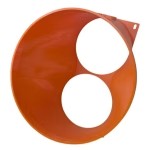
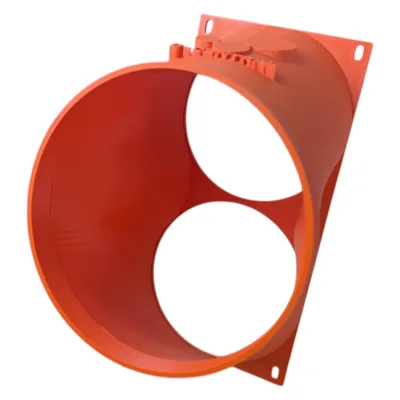
A shroud is a 3D-printed transition piece that connects a miner’s fan opening to a round duct — typically 6 inches or 8 inches. With a shroud and an inline fan, you stop fighting your miner’s heat and start directing it: into another room in winter, outside in summer, through a filter to keep dust out. This is the print that turns an industrial Antminer into something a home can actually accommodate.
D-Central designs and sells universal and Antminer-specific shrouds already — printed in PETG in black or orange, available in configurations from dual 120mm fan adapters to 6-inch and 8-inch duct transitions. They are designed to pair with AC Infinity Cloudline inline fans. If you have a printer, the shroud is a great thing to design yourself; if you do not, or you want a known-good fit, D-Central has done the engineering.
Enclosures and chassis
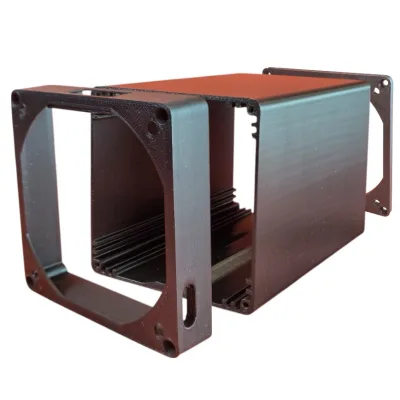
A printed enclosure does real acoustic and thermal work. It dampens fan vibration, isolates the hashboard hum, and channels airflow along a controlled path instead of letting it spill everywhere. This is the heart of D-Central’s residential miner line. The BitChimney is a single-hashboard Antminer S19-series miner wrapped in a vertical 3D-printed chimney enclosure — the housing uses natural convection to move heat and brings noise down to ~40-45 dB. The Antminer Slim Edition packs a single hashboard into a custom 3D-printed slim chassis with premium silent fans, so an industrial-grade miner fits on a bookshelf. These products are 3D printing applied at production scale — the same principle a home maker uses, just refined.
Stands, mounts, and racks
This is where 3D printing shines for Bitaxe and other open-source single-board miners. A Bitaxe is a small ~15W board that benefits from being held at a good angle for airflow and visibility. D-Central pioneered Bitaxe accessories from the start — including the original Bitaxe Mesh Stand, the first one manufactured — and the catalog includes printed stands, cases, and heatsinks across the accessories and open-source miner categories. For full ASICs, printed brackets and feet let you mount and elevate miners cleanly in whatever space you have.
Replacement parts
Fan guards, mounting clips, port covers, cable guides, feet — the small plastic bits that crack or go missing. Printing these is faster and cheaper than sourcing each one individually, and it keeps a miner in service instead of sidelined over a two-dollar clip.
Materials: PETG Is the Default for a Reason
Mining parts sit in a warm-air stream all day, every day. Material choice matters.
- PETG is the workhorse and D-Central’s choice for production shrouds. It handles sustained warm exhaust temperatures, it is durable, and it is forgiving to print. For anything that touches a miner’s airflow path, PETG is the safe default — our whole shroud line is printed in it, in black or D-Central orange.
- PLA is easy to print and fine for cool-running, low-stress parts like a Bitaxe stand sitting in open air. Keep it away from anything that gets warm — PLA softens at temperatures a miner exhaust can reach, and a sagging shroud is a failed shroud.
- Colour is a real choice. D-Central prints the shroud line in PETG in black and in D-Central orange — black to disappear into a room, orange to be findable behind a rack. If you are printing your own, the same logic applies.
The rule: match the material to the thermal load. A Bitaxe holder can be PLA. A shroud carrying Antminer exhaust should be PETG.
The Honest Limits of 3D Printing in Mining
3D printing solves enclosure, airflow, and fit problems. It does not solve electronics problems, and pretending otherwise gets hardware damaged. Be clear on the boundary:
- You can print: shrouds, ducts, enclosures, chassis panels, stands, mounts, brackets, fan guards, cable management, replacement plastic parts.
- You cannot print: a fix for a failed hashboard, a dead ASIC chip, a blown PSU, a faulty control board, or anything on the electronics side. A printed part can improve cooling so a board runs cooler — it cannot repair a board that is already faulted.
When the problem is electrical — a hashboard throwing faults, chips that have run too hot for too long, a PSU that gave out — that is board-level repair work. D-Central’s ASIC repair service handles exactly that, across dozens of models, as the Western repair authority. Use 3D printing to keep your miner cool and quiet; use the repair bench when the silicon needs help.
One more limit worth stating plainly: a printed enclosure does not change what a miner is. A Bitaxe in a custom printed case is still a ~15W open-source solo miner — a great learning device and a real shot at a solo block, but not a heat source for your home. If you want mining heat, that comes from full-ASIC hardware. Match the print to the machine; do not expect the print to turn one machine into another.
D-Central’s 3D-Printed Mining Catalog
If you do not have a printer — or you want parts engineered and tested rather than prototyped — D-Central has already designed the high-value pieces:
- Shrouds and duct adapters — universal and Antminer-specific, PETG in black or orange, built to pair with Cloudline inline fans.
- 3D-printed accessories — stands, cases, heatsinks, and brackets, including the Bitaxe accessory lineup D-Central pioneered.
- The BitChimney — a single-hashboard S19-series miner in a 3D-printed chimney enclosure: ~21-24 TH/s, ~600-650W, ~40-45 dB, runs on a standard 120V outlet.
- Antminer Slim Edition — 26-44 TH/s in a custom 3D-printed slim chassis with silent fans and a Loki control board for 120V operation.
- Mining accessories and cooling fans — the inline fans and hardware that complete a printed-shroud airflow setup.
Print Smart, Mine Better
3D printing is the maker’s bridge between industrial mining hardware and a home that has to live with it. Used well, it gives you airflow control, lower noise, a better fit for your space, and cheap fast repairs of the plastic parts that break. Used wrong — PLA in a hot exhaust stream, or expecting a printed case to fix an electronics fault — it just wastes filament. Match the material to the thermal load, print the parts that solve real enclosure and airflow problems, and lean on D-Central’s tested catalog for the pieces you do not want to engineer yourself.
Explore D-Central’s 3D-printed mining gear and shrouds, and read the full How to Mine Bitcoin at Home guide for how it all fits into a complete home setup.
Frequently Asked Questions
What is the most useful thing to 3D print for home mining?
A shroud and duct adapter. It connects your miner’s exhaust to a duct so you can direct the hot air where you want it — into another room, outside, or through a filter — instead of letting it dump into the room the miner sits in. It is the highest-value print because it solves the home miner’s biggest problem: managing heat.
What filament should I use for mining parts?
PETG for anything in a miner’s airflow path — shrouds, ducts, enclosure panels — because it tolerates sustained warm-air temperatures and is durable. It is what our own shroud line is printed in. PLA is fine for cool-running parts in open air, like a Bitaxe stand, but it softens in heat and should never go in an exhaust stream.
Can a 3D-printed enclosure repair or replace miner parts?
No. 3D printing handles enclosures, shrouds, stands, brackets, and plastic replacement parts. It cannot fix a failed hashboard, a dead ASIC chip, a blown power supply, or a faulty control board — those are electronics problems. A printed shroud can help a board run cooler, but a board that has already faulted needs board-level repair. D-Central’s ASIC repair service handles that side.
Do I need my own 3D printer to benefit from this?
No. D-Central designs, prints, and sells the high-value parts — shrouds, duct adapters, stands, mounts, and full residential miner enclosures like the BitChimney and Antminer Slim Edition. A printer is great if you want to iterate your own designs, but if you just want a tested part that fits, the accessories catalog has it.
Does D-Central make Bitaxe-specific 3D-printed accessories?
Yes — D-Central is a Bitaxe ecosystem pioneer and created the original Bitaxe Mesh Stand, the first one manufactured. The catalog includes printed stands, mounts, and holders for Bitaxe and other open-source single-board miners. Browse the Bitaxe category and 3D printed accessories for the current lineup.