Most home miners think about electricity as a single number — the rate on their bill — and they treat it as fixed. It is not. Power has a price that moves: by hour, by season, by demand, and by source. Energy arbitrage is the discipline of buying your electricity when it is cheap and turning it into hashrate, instead of paying the average rate around the clock like everyone else. For a Bitcoin miner, who runs a flexible, interruptible load that can be tuned or paused on command, this is not a fringe tactic. It is the single biggest lever on your profitability that has nothing to do with hardware.
D-Central has been helping Canadian home miners run leaner since 2016, and the math is consistent: the miner who pays attention to when they mine often beats the miner with better hardware who pays the flat rate. Here is how energy arbitrage actually works at home, and how to set up a rig that can take advantage of it.
Why Mining Is the Ideal Arbitrage Load
Bitcoin mining has a property almost no other household load has: it is perfectly flexible. Your fridge cannot wait for cheap power. Your furnace cannot pause for two hours and resume. A miner can. It can throttle down, power off, and come back online with no harm done and no lost “product” — every hash not made during expensive hours simply was not made, and the rig is fine.
That makes a miner the ideal vehicle for arbitrage. You are not trying to time a market in the speculative sense — you are matching a controllable load to a known, published price schedule. The grid wants flexible loads that soak up cheap off-peak power and back off during peak demand. A home miner that does this is being a good grid citizen and a more profitable operation at the same time.
Before anything else, get honest numbers. Run your hardware and your actual rate structure through D-Central’s Mining Power Cost Calculator and Mining Profitability Calculator. You cannot arbitrage a cost you have not measured.
The Three Real Forms of Energy Arbitrage
1. Time-of-use rate arbitrage
Many utilities — especially across Canada, where time-of-use pricing is widespread — charge different rates depending on the hour. Off-peak power (overnight, weekends) can cost a fraction of peak power (weekday late afternoons and early evenings). The arbitrage is simple in concept: run your miners hard during off-peak windows, throttle or pause them during peak windows.
The execution requires two things. First, knowing your utility’s exact rate schedule — the hours and the prices. Second, hardware and firmware that can act on it. Mining firmware that supports scheduling and power profiles — VNish, BraiinsOS+, LuxOS, or D-Central’s open-source DCENT OS for Antminer-class hardware — lets you set frequency and wattage by time of day, or pause the miner entirely on a schedule. A smart plug or PDU adds a hardware-level on/off layer. Set it once and the rig follows the rate card automatically.
2. Demand response and grid balancing
Some utilities and grid operators run demand response programs that pay or credit participants for reducing load during grid stress events. A miner is a perfect enrollee — you can shed a kilowatt or more on command with zero disruption to your household. Where these programs are available to residential participants, they turn your miner’s flexibility into a second revenue stream layered on top of the mining itself. Availability is region-specific, so check what your utility and grid operator offer. This is one of the areas D-Central’s mining consulting can help you evaluate for your specific jurisdiction.
3. Self-generation and surplus arbitrage
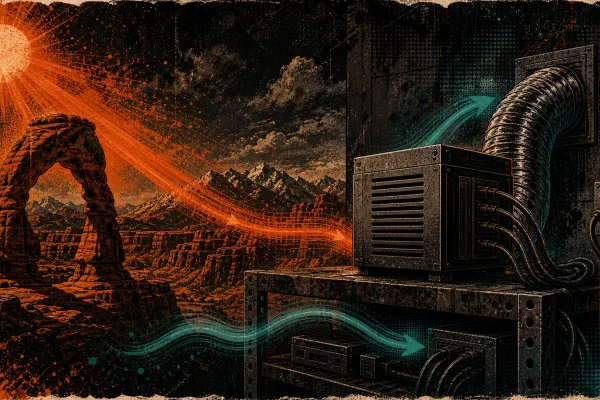
If you generate your own power — rooftop solar, a wind setup, micro-hydro — you often produce more than you can use at certain times, and the price your utility pays you to export that surplus is frequently low. The arbitrage: instead of selling cheap surplus back to the grid, point it at a miner. You are converting electricity you would have sold at a poor rate into Bitcoin at full value. This is the cleanest form of energy arbitrage available to a home miner — you are not even competing with your household for power, you are monetizing genuine surplus.
This is a core part of D-Central’s home mining thesis: renewable generation at home, with miners as the dispatchable load that absorbs whatever the panels produce. A small, efficient miner that can run on a variable supply is the right tool here.
Heat Arbitrage: The Form Everyone Forgets
There is a fourth form of arbitrage, and in a cold climate it can be the biggest one. It is not about the price of electricity — it is about getting two outputs from one input.
An electric space heater converts electricity into heat at 100% efficiency. So does an ASIC miner — every watt that enters a miner leaves as heat. The thermodynamics are identical. The difference is that the miner produces Bitcoin on the way to producing that heat. So if you are already going to spend money heating your home with electricity, running that load through a miner first means the heat costs you the same and the Bitcoin is free. You are arbitraging your heating budget into hashrate.
This is exactly what D-Central’s Bitcoin Space Heater line is engineered for:
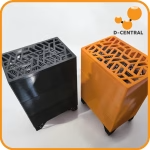
- The BitChimney — a single-hashboard Antminer S19-series miner in a vertical 3D-printed chimney enclosure that heats a room by natural convection. ~21 TH/s at ~600W (S19 variant) or ~24 TH/s at ~650W (S19j Pro variant), ~40-45 dB, running on a standard 120V outlet. Use the Space Heater BTU Calculator to size it to your room.
- Antminer S9 Space Heater Edition — a reconditioned Bitmain S9 in a D-Central silent enclosure: ~13.5 TH/s stock (or ~7-9 TH/s undervolted for quieter, more efficient running), ~4,600 BTU/hr of heat output, ~35-40 dBA on premium silent fans. The most accessible entry into heat arbitrage.
Heat arbitrage and time-of-use arbitrage stack. In a cold-climate home with time-of-use rates, you can run space-heater miners hard during cheap off-peak overnight hours — exactly when the house needs heat most — and ease off during expensive peak windows. Two arbitrages, one rig.
Building a Rig That Can Actually Arbitrage
Arbitrage only works if your hardware can respond to price. A rig you cannot tune or schedule just pays the average rate no matter how clever your plan is. What you need:
- Firmware with power profiles and scheduling. The ability to set frequency, voltage, and wattage — and to change them on a schedule or pause entirely — is the engine of time-of-use arbitrage. For Antminer hardware, that means VNish, BraiinsOS+, LuxOS, or DCENT OS.
- Efficient, controllable hardware. Lower power draw means lower exposure to expensive hours and a smaller load to manage. A Bitaxe — the open-source ~15W single-board solo miner — is the lowest-stakes way to learn arbitrage scheduling; D-Central’s residential full ASICs like the Slim Edition (26-44 TH/s, 860-930W) and Loki Edition (42-56 TH/s, 110V/240V) give you real hashrate with tunable firmware.
- Smart plugs or a managed PDU. A hardware on/off layer that follows a schedule, as a backstop to firmware control.
- Monitoring. You need to see what the rig is actually doing — power draw, hashrate, uptime — to confirm the arbitrage is working. Browse mining tools for monitoring gear.
- Solid electrical infrastructure. Arbitrage means cycling load up and down repeatedly. That belongs on properly rated, dedicated circuits — not borrowed outlets.
The Honest Caveats
Energy arbitrage is a real edge, not a magic profit button. Keep three things straight:
- It optimizes cost, it does not create profit from nothing. If mining is fundamentally underwater at your average rate, arbitrage narrows the loss — it does not flip it positive on its own. Run the profitability calculator first.
- Cycling hardware has a small cost. Powering miners up and down repeatedly is gentler than people fear, but thermal cycling is not zero-wear. Scheduled throttling between power profiles is usually easier on hardware than hard on/off cycling.
- Programs and rates vary by region. Time-of-use schedules, demand response programs, and surplus export rates are all jurisdiction-specific. What works for an Ontario miner on time-of-use pricing is different from a miner on a flat rate elsewhere. This is local homework — or a conversation with D-Central’s consulting team.
Mine When Power Is Cheap. Always.
The flat-rate miner leaves money on the table every single day. The arbitrage miner treats electricity as what it actually is — a commodity with a price that moves — and matches a flexible, controllable load to the cheap hours. Layer in heat arbitrage in a cold climate, and you are extracting two kinds of value from one kilowatt: warmth your home needed anyway, and Bitcoin on top.
Build the rig that can do it: tunable firmware, efficient hardware, scheduling control, real monitoring. Start by measuring your true costs with the Mining Power Cost Calculator, explore D-Central’s home mining hardware and Bitcoin space heaters, and read the full How to Mine Bitcoin at Home guide for the complete playbook.
Frequently Asked Questions
What is energy arbitrage in Bitcoin mining?
It is the practice of running your miners when electricity is cheap and throttling or pausing them when it is expensive — instead of paying the average rate around the clock. Because a miner is a flexible, interruptible load, it can match itself to time-of-use rate schedules, demand response programs, or your own surplus generation, lowering your effective cost per kilowatt-hour.
Does energy arbitrage make unprofitable mining profitable?
Not on its own. Arbitrage lowers your electricity cost, which improves margins — but if mining is deeply underwater at your average rate, arbitrage narrows the loss rather than eliminating it. Always model your specific hardware and rates with the Mining Profitability Calculator before counting on it.
What is heat arbitrage and how does it differ?
Heat arbitrage is getting two outputs from one input rather than chasing the cheapest electricity. An ASIC miner converts electricity into heat at the same 100% efficiency as an electric space heater — but produces Bitcoin on the way. If you are already heating your home with electricity, running that load through a miner makes the heat cost the same and the Bitcoin essentially free. D-Central’s Bitcoin Space Heater line is built for exactly this.
What hardware do I need to do energy arbitrage at home?
The key is firmware that supports power profiles and scheduling — VNish, BraiinsOS+, LuxOS, or D-Central’s DCENT OS for Antminer-class miners — plus efficient, controllable hardware and ideally a smart plug or managed PDU for a hardware on/off layer. A Bitaxe is a low-stakes way to learn the scheduling; residential full ASICs like the Slim and Loki Editions handle real hashrate.
Is it bad for my miner to power it on and off repeatedly?
Cycling miners is gentler than many people assume, but thermal cycling is not entirely free of wear. For arbitrage, scheduled throttling between power profiles — easing the miner down rather than hard-stopping it — is generally easier on hardware than repeated full on/off cycling. If a board does develop a fault, D-Central’s ASIC repair service handles board-level work.