A Bitcoin miner is, thermodynamically, a heater that happens to do math. A 900W Antminer Slim Edition dumps roughly 900W of heat into your house. A 3,250W S19 dumps 3,250W. That heat does not disappear because you ignore it — it builds up, recirculates into the miner’s intakes, drives chip temperatures up, and the firmware throttles your hashrate to protect the silicon. Most home miners treat this as a problem to fight. The miners who win treat it as a resource to manage. The tool for managing it is your HVAC system.
This is where Canadian home miners have a structural edge, and it is core to D-Central’s approach since 2016: in a cold climate, miner heat is not waste — it is home heating you would have paid for anyway. But capturing that value, and avoiding the throttling that kills hashrate, takes deliberate airflow design. Here is how to integrate a home mining setup with HVAC properly.
The Physics You Are Working With
Two facts drive every decision here:
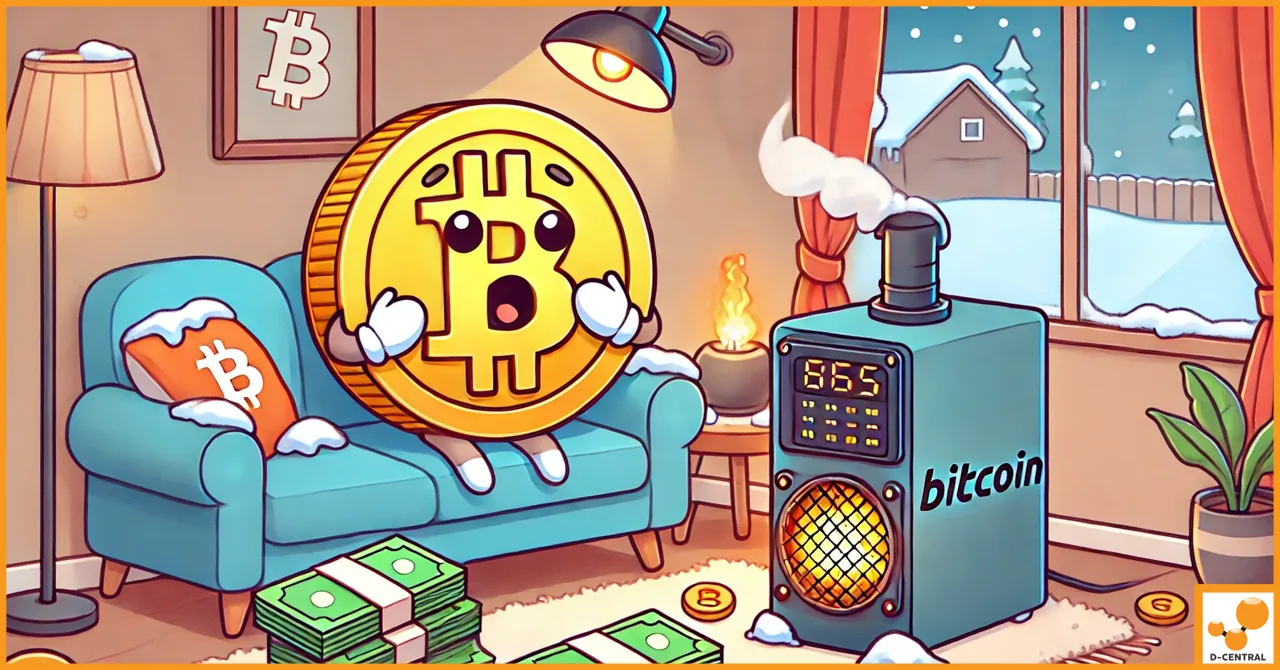
- An ASIC converts essentially 100% of its power draw into heat. There is no meaningful “efficiency loss” — the electricity becomes heat and hashes. A 1,350W miner produces the same ~4,600 BTU/hr as a 1,350W resistive space heater. This is not an estimate; it is thermodynamics.
- Miners self-throttle on heat. Every ASIC has a thermal limit. When intake air gets too warm or airflow is inadequate, the firmware drops frequency to keep chips safe. You do not get a warning — you just quietly lose hashrate. Heat management is hashrate management.
So the goal of HVAC integration is twofold: keep cool air reaching the intakes so the miner never throttles, and put the hot exhaust somewhere it does useful work instead of recirculating.
Rule One: Separate Intake From Exhaust
The most common home mining mistake is letting hot exhaust and cool intake share the same air. A miner sitting in the middle of a small room pulls in air it just heated, which it heats again, in a loop that spirals temperatures up until the miner throttles or the room becomes unusable.
The fix is physical separation of the two air paths. Cool air comes in from one place; hot air leaves to another. The cleanest way to enforce that separation is to duct the exhaust — capture it at the miner and channel it away so it physically cannot get back to the intake. That is what shrouds are for.
Shrouds and Ducting: The Core Hardware
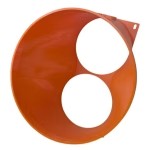
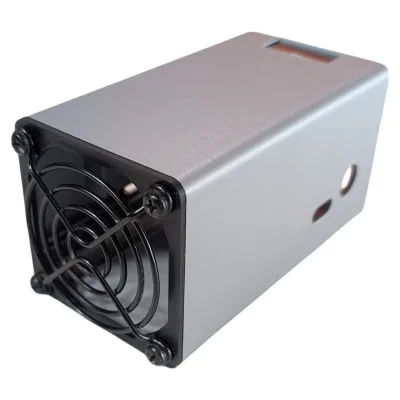
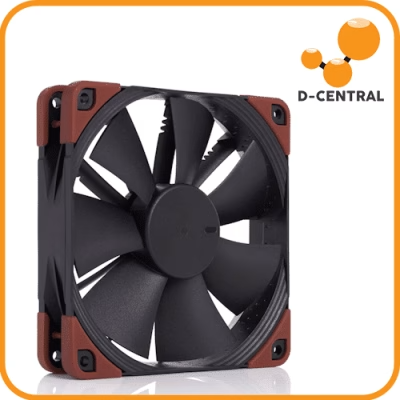
A shroud is a transition piece that mates a miner’s fan opening to a round duct — typically 6 inches or 8 inches. With a shroud, a length of insulated duct, and an inline fan, you get full control over where the heat goes. D-Central designs and sells universal and Antminer-specific shrouds in PETG, black or orange, built to pair with AC Infinity Cloudline inline fans. The full range of cooling fans and accessories rounds out the kit.
Once the exhaust is ducted, you have options that turn miner heat into HVAC:
- Duct it into adjacent rooms (winter). Run the exhaust duct into a hallway, a basement living area, or another room that needs heat. The miner becomes a supplemental furnace for that space.
- Duct it outside (summer). When you do not want the heat, channel it straight out through a window panel or wall vent. The miner keeps hashing; the house stays cool.
- Duct it into a heated workspace. Garages and workshops are ideal heat sinks for miner exhaust — spaces you want warm but do not heat carefully.
- Filter the intake side. With a controlled air path you can put a filter on the intake, keeping dust out of the miner. Dust insulates heatsinks and is a leading cause of overheating faults — see our full guide to a dust-free mining environment.
A seasonal duct setup — a simple damper or a duct you re-route by hand — lets one rig heat the house in winter and vent outside in summer. That is HVAC integration at its most practical.
Working With a Forced-Air Furnace System
If your home has central forced-air heating, you have existing ductwork that can distribute miner heat through the house. The cautious, recommended approach is not to tie miner exhaust directly into your supply ducts — that risks pushing dust into your HVAC and can confuse the system’s air balance. Instead:
- Place miners near a cold-air return. If the miner heats the air in a room and that room has a return vent, your furnace’s blower will pull the warmed air and circulate it through the house on its normal cycle — no direct duct connection needed.
- Let the miner offset the furnace. A miner running in a central area raises the ambient temperature, which means your thermostat calls for furnace heat less often. The miner is doing part of the furnace’s job.
- Keep the furnace filter upgraded. A miner sharing space with HVAC returns means more dust in circulation. A MERV 11-13 furnace filter handles it.
- Mind your air balance. If you are ducting significant exhaust out of the house, you are removing air the building has to make up from somewhere. In a tightly sealed modern home, plan a make-up air path so you do not create negative pressure that affects other appliances.
For anything beyond simple placement — actually integrating into ductwork, sizing make-up air, or planning a dedicated mining zone — bring in an HVAC professional. This is one area where D-Central’s mining consulting can help you plan the setup before you cut into anything.
Cooling: When You Need to Remove Heat, Not Use It
In summer, or in warm climates year-round, the job flips: you need the heat out. Options, roughly in order of cost and complexity:
- Direct exhaust ducting. The cheapest and most effective: duct the hot air straight outside. The miner never loads the room with heat in the first place.
- Increased ventilation. High-CFM intake and exhaust fans moving large volumes of air through the mining space, keeping it close to outdoor temperature.
- Spot air conditioning. A portable or mini-split AC for the mining room. Effective but expensive — you are spending electricity to remove heat your miner spent electricity to create, so this only makes sense when the climate forces it.
- Run cooler. Tune the firmware down. A miner run at a lower power profile produces less heat and is easier to keep cool — at the cost of some hashrate. For warm-climate miners this trade is often worth it. Our guide to home mining across climate zones covers the regional strategy in depth.
Hardware Built for Home HVAC Integration
The HVAC battle is much easier when the miner was designed for a home in the first place. D-Central’s residential line is built around exactly this:
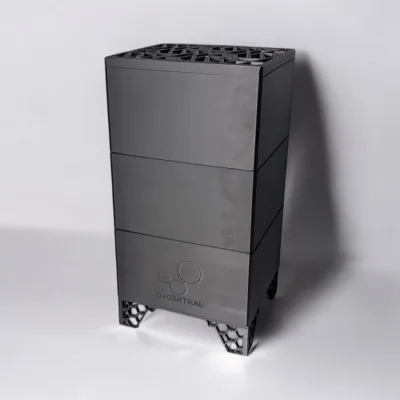
- The BitChimney — a single-hashboard S19-series miner in a vertical 3D-printed chimney enclosure engineered to heat a room by natural convection. ~21-24 TH/s, ~600-650W, ~40-45 dB, standard 120V outlet. The enclosure is the heat-delivery design. Size it to your space with the Space Heater BTU Calculator.
- Antminer S9 Space Heater Edition — a reconditioned Bitmain S9 in a D-Central silent enclosure: ~13.5 TH/s stock (or ~7-9 TH/s undervolted), ~4,600 BTU/hr stock heat output, ~35-40 dBA on premium silent fans. A heating appliance you can plan a room around.
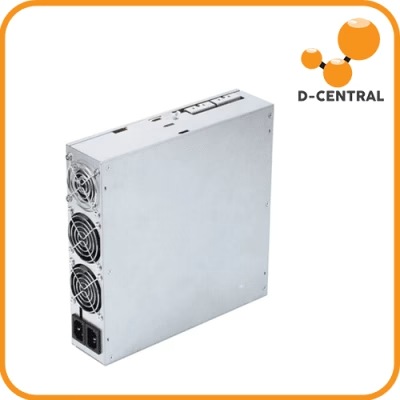
- Antminer Slim Edition — 26-44 TH/s at 860-930W in a slim 3D-printed chassis with a contained airflow path, far easier to duct cleanly than a bare industrial Antminer.
- Antminer Loki Edition — residential-modded S19/S19j Pro/S19k Pro builds (42/48/56 TH/s) on 110V/240V, with silent fans and a chassis meant to live in a home.
These are the full Bitcoin Space Heater line — full-ASIC miners engineered so their heat output is a feature, not a problem to vent away. They are the cleanest answer to HVAC integration because the integration thinking was done at the design stage.
To size the source itself, pick the watt target first: every point in a model’s tuning envelope is a BTU/h figure (watts × 3.412), so the floor and sweet spot tell you what heat outputs a model can be tuned to deliver.
The Economics of Heat Recovery
Here is why HVAC integration is not just a comfort issue — it is the core of home mining economics in a cold climate. If you are heating your home with electricity anyway, every watt you route through a miner first costs you nothing extra in heating. You were going to pay for that kilowatt-hour of heat regardless. Running it through a miner means the heat is unchanged and the Bitcoin is a bonus.
That changes the entire profitability calculation. A miner evaluated as a pure mining investment might look marginal. The same miner evaluated as a heater that also mines — where the “electricity cost” is reassigned to your heating budget — looks very different. Model both scenarios with D-Central’s Mining Profitability Calculator and Power Cost Calculator. For most cold-climate home miners running space-heater hardware through the winter, the heat-offset math is the math that matters.
Manage the Heat, Keep the Hashrate
HVAC integration is not optional for a serious home miner — it is the difference between a rig that holds its rated hashrate and a heated home, and a rig that throttles in a stuffy room while the heat goes nowhere useful. Separate intake from exhaust. Duct the heat with shrouds and inline fans. Send it where it does work in winter, outside in summer. Run hardware that was built for a home, and do the make-up air and ductwork properly. Get it right and your miner stops being an appliance you tolerate and becomes part of your home’s heating system.
Build the airflow path: explore D-Central’s shrouds and duct adapters, cooling fans, and the Bitcoin Space Heater line — and read the full How to Mine Bitcoin at Home guide for the complete picture.
Frequently Asked Questions
Can I connect my miner’s exhaust directly to my home’s HVAC ducts?
It is not recommended to tie miner exhaust directly into your furnace’s supply ducts — it can push dust into the HVAC system and disrupt the system’s air balance. The safer approach is to place the miner near a cold-air return so the furnace blower naturally circulates the warmed air, or to run a dedicated exhaust duct to the rooms you want heated. For anything more involved, consult an HVAC professional.
Why does my miner lose hashrate when the room gets warm?
Every ASIC has a thermal limit, and the firmware drops frequency to protect the chips when intake air is too warm or airflow is inadequate. That throttling is silent — you just see lower hashrate. The usual cause is hot exhaust recirculating back into the intakes. Separating the intake and exhaust air paths, typically by ducting the exhaust away with a shroud, fixes it.
How much heat does a Bitcoin miner actually produce?
An ASIC converts essentially 100% of its power draw into heat. A 1,350W miner produces roughly 4,600 BTU/hr — the same as a 1,350W electric space heater. D-Central’s Antminer S9 Space Heater Edition, for example, puts out about 4,600 BTU/hr at stock. To match a miner’s heat output to a room, use the Space Heater BTU Calculator.
What do I need to duct my miner’s heat?
A shroud that mates the miner’s fan opening to a round duct (typically 6 or 8 inches), a length of insulated duct, and an inline fan such as an AC Infinity Cloudline. D-Central’s shrouds and duct adapters are PETG, in black or orange, and built to pair with Cloudline fans. That kit lets you send heat into other rooms in winter and outside in summer.
Is it worth running a Bitcoin miner just for the heat?
In a cold climate where you heat with electricity, often yes. If you were going to spend that electricity on heating anyway, routing it through a miner first means the heat costs the same and the Bitcoin is essentially free — which transforms the profitability math. D-Central’s full-ASIC Bitcoin Space Heater line is engineered specifically for this. Model your own numbers with the profitability calculator.