Skip to content

Bitcoin accepted at checkout  |  Ships from Laval, QC, Canada  |  Expert support since 2016

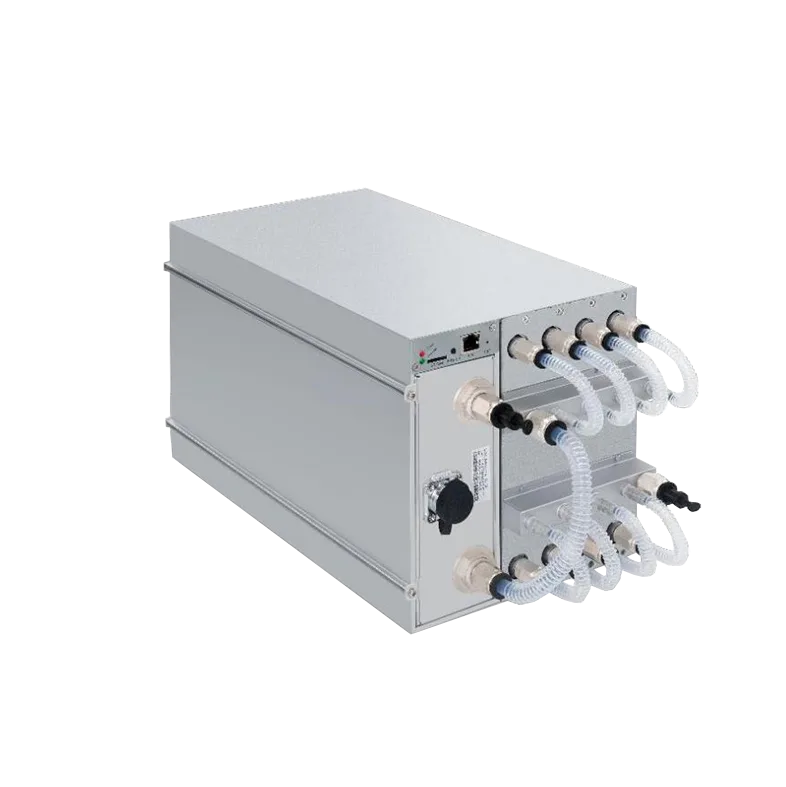
Bitmain Antminer S19 XP Hyd (257Th) ASIC miner specifications and profitability image
Active Bitmain SHA-256 PRO Hydro

Bitmain Antminer S19 XP Hyd (257Th)

Hashrate 257 TH/s
Power 5,346 W
Efficiency 20.8 J/TH

Quick answer

The Bitmain Antminer S19 XP Hyd (257Th) is a Bitcoin miner rated about 257 TH/s at roughly 5,346 W (about 20.8 J/TH). An industrial-class unit — loud and power-hungry, best suited to a dedicated mining space, not living areas.

Hydro-Cooled Miner

This miner uses a closed-loop liquid cooling system (hydro cooling) instead of traditional air cooling. Water or coolant circulates through internal channels to absorb heat from the ASIC chips, then transfers it to an external radiator or facility cooling loop.

Hydro-cooled miners run significantly quieter than air-cooled models since they eliminate or minimize fan noise. They also achieve higher hashrates and better efficiency because the chips can be driven harder while staying within safe thermal limits. The trade-off: hydro miners require compatible water infrastructure — inlet/outlet connections, a cooling distribution unit (CDU), and proper plumbing.

Hydro cooling is ideal for professional mining operations and data centers where water infrastructure already exists, or for home miners building a dedicated water-cooled setup to eliminate noise completely.

Professional-Grade Miner

This miner draws 5,346W and produces 75+ dB of noise — it is designed for dedicated mining environments, not living spaces. Professional-grade miners deliver the highest hashrate and revenue per unit but require proper infrastructure: a 240V circuit, adequate ventilation or exhaust ducting, and a space where noise is not a concern (garage, basement, warehouse, or outdoor enclosure).

For home miners looking for a quieter alternative, consider our Bitcoin Space Heater builds or explore open-source miners like the Bitaxe that are purpose-built for residential environments.

Circuit Requirement 240V dedicated circuit

Profitability Calculator

$62,921
Daily BTC Mined --
Breakeven Electricity $0.0634/kWh
Cost to Mine 1 BTC --
Network Hashrate Share --
Break-even Estimate --
Estimated mining profitability by period at current network conditions.
Period Revenue Electricity Cost Profit
Daily $8.14 $8.98 $-0.84
Weekly $56.96 $62.87 $-5.91
Monthly $244.11 $269.44 $-25.33
Yearly $2,969.95 $3,278.17 $-308.22

Where to Buy the Bitmain Antminer S19 XP Hyd (257Th)

Official

D-Central Technologies

Canada

Bitcoin Mining Hackers since 2016. Ships from Laval, Quebec.

Shop all Bitcoin mining products
Partner

ASIC Miner Market

United States

Wide selection of new and used ASIC miners. US-based shipping.

Shop Now
Partner

MinersDeals

United States

Competitive prices on new ASIC miners with coupon codes.

Shop Now

BT-Miners

United States

Large inventory of ASIC miners. US-based.

Shop Now

Coin Mining Central

United Kingdom

UK-based mining hardware retailer. Ships worldwide.

Shop Now

CryptoMinerBros

United States

Established US retailer with repair services.

Shop Now

Full Specifications

Full technical specifications for this miner.
Model Bitmain Antminer S19 XP Hyd (257Th)
Model Number Antminer S19 XP Hyd (257Th)
Manufacturer Bitmain
Algorithm SHA-256
Coins Mined Bitcoin (BTC)
Hashrate 257 TH/s
Power Consumption 5,346 W
Efficiency 20.8 J/TH
Cooling Hydro
Dimensions 410 x 170 x 209mm
BTU Output 18241 BTU/hr
Equivalent Heater Equal to a 5,346W space heater
Daily Power Cost $8.98/day
Monthly Power Cost $269.44/mo
Circuit Requirement 240V circuit required
Release Date 2023-07-01
MSRP $1,059.00
Status Active

Home Mining Assessment

8 /100
Not Recommended
Heat Output 5,346W / 18241 BTU
High heat - requires ventilation or duct system
Power Draw 5,346W (5.3kW)
240V dedicated circuit required

The Bitmain Antminer S19 XP Hyd (257 Th) is a liquid-cooled SHA-256 Bitcoin miner built on Bitmain’s 5 nm BM1366 ASIC. It produces 257 TH/s for about 5,346 W — roughly 20.8 J/TH — the most hashrate Bitmain ever pulled out of the S19 platform by cooling it with water instead of air.

Chip and hashboard architecture

Under the cold plates sit Bitmain’s BM1366, a TSMC 5 nm SHA-256 ASIC (the same silicon family used in the air-cooled S19 XP, the S19k Pro, and the hobbyist Bitaxe Ultra). Each BM1366 die carries roughly 894 small hashing cores. It is a refinement, not a reinvention, of the 7 nm BM1398 that powered the original S19 — same architecture, far better performance-per-watt thanks to the smaller node.

The defining trait of the Hyd variant is board density. Where the air-cooled S19 XP runs a BHB568xx hashboard with 110 chips (11 voltage domains × 10 chips), the hydro board (HHB56601 / HHB56611) packs 204 BM1366 chips into 17 voltage domains of 12 chips each. Across the unit’s three hashboards that is roughly 612 ASICs — nearly double the chip count of the air model, which is exactly how a 141 TH air miner becomes a 257 TH hydro one. Liquid cooling is what makes that density survivable.

Two accuracy notes worth getting right, because most spec sheets blur them:

  • Voltage is regulated per domain, not per chip. Each of the 17 domains feeds a string of 12 series-wired chips from its own DC-DC buck stage at roughly 0.4 V per domain. There is no individual per-chip voltage rail — a single failed regulator silences all twelve chips it supplies.
  • The S19 XP generation still uses a PIC microcontroller on each hashboard to manage the voltage regulators and report board identity over I²C. (The later S21 family dropped the PIC for “no-PIC” silicon — that change belongs to the next generation, not this one.)

The chips talk to the control board over a daisy-chained UART (command-in to command-out, chip 1 through chip 204), level-shifted between the board’s 3.3 V logic and the ASIC chain’s 1.8 V. The XP generation moved most units onto an Amlogic A113D control board that drives the hash chains in software, with no separate FPGA in the signal path — a simpler, cheaper topology than the Xilinx Zynq boards of the early S19s.

Spec S19 XP (air) S19 XP Hyd (this unit) S21 Hyd (next gen)
ASIC BM1366 (5 nm) BM1366 (5 nm) BM1368 (5 nm)
Chips per board 110 (11×10) 204 (17×12) 216 (18×12)
Hashboards 3 3 3
Total ASICs ~330 ~612 ~648
Hashrate ~141 TH/s 257 TH/s ~335 TH/s
Efficiency ~21.5 J/TH 20.8 J/TH ~17.5 J/TH (class)
Cooling Air (fans) Liquid (cold plate) Liquid (cold plate)

Real-world power and efficiency

Bitmain rates this unit at 5,346 W at the wall for 257 TH/s, giving 20.8 J/TH at a 25 °C ambient. Treat the nameplate as a starting point: real wall draw drifts up in warm coolant conditions and down in cold ones, and the integrated APW-class PSU’s own losses are already baked into that figure.

The BM1366 board has genuine tuning headroom, and the water loop is what lets you use it — you can sit on watts an air-cooled board could never dissipate. The factory point is not the floor and it is not the ceiling. Representative operating points for this hydro platform look like this:

Mode Wall power Hashrate Efficiency
Undervolt / eco ~4,200 W ~200 TH/s 21.0 J/TH
Efficiency sweet spot ~4,600 W ~225 TH/s 20.4 J/TH
Stock (factory) ~5,346 W 257 TH/s 20.8 J/TH
Overclock up to ~7,000 W up to ~302 TH/s 23.2 J/TH

The takeaway: the best efficiency on this machine is found slightly below stock, around 225 TH at ~20.4 J/TH, while the headroom above stock buys raw hashrate at a rising J/TH cost. Where you sit depends on your power price and your heat-reuse plan. Explore the full curve on our ASIC power profiles database before you lock in a tune.

A word on the “heat output” number. This is a hydro miner: it carries roughly 18,200 BTU/h (~5.3 kW) of waste heat out through its coolant loop, not as hot air blown into a room. That is a feature, not a footnote — captured in water, the heat is far easier to move and reuse via a heat exchanger for space heating, greenhouses, pool/loop heating, or district-style setups. It also means the unit runs near-silent at the chassis (no high-RPM fans); the noise lives in your external dry cooler and pumps.

What “hydro” actually requires

The S19 XP Hyd has no onboard fans and cannot run on a bench in open air. It needs a closed liquid loop: a coolant supply at a controlled inlet temperature, a coolant distribution unit (CDU) or manifold, and a dry cooler or water-to-water heat exchanger to reject the heat. Plan the plumbing and the coolant chemistry before the miner arrives — it is infrastructure, not plug-and-play.

Firmware compatibility

The S19 XP Hyd ships with Bitmain’s stock firmware (a cgminer/bmminer derivative) exposing the usual web UI and CGMiner API on port 4028. That stock build mines reliably but locks you out of the autotuning and undervolting that make the power table above reachable.

The BM1366 platform is one of the best-supported in the third-party ecosystem. Mature aftermarket firmwares — Braiins OS+, LuxOS, and VNish among them — carry working BM1366 drivers and per-board autotuning, and we credit that engineering work openly; it is what pushed the whole community forward. Two honest caveats:

  • Autotuning is calculated at runtime, not preset. A good autotuner profiles each individual board’s chips on the unit and converges on stable per-domain voltage/frequency points — the numbers are not canned, and they will differ board to board.
  • Only Braiins OS+ natively speaks Stratum V2. If V2 transport and job negotiation matter to your setup, that is currently the one stock-replaceable firmware that does it without a proxy.

D-Central’s own contribution to this space is DCENT_OS, our GPL-3.0 open firmware effort for Amlogic-class Antminer control boards. It is in closed beta today with a public beta targeted for summer 2026; we are building it standing on the shoulders of the open-source firmware projects that came before, not against them. If sovereignty over your own hardware is the goal, that is the direction we are pushing.

Common faults and troubleshooting

On a BM1366 board the daisy-chained chip topology is the thing to understand: because data flows chip-to-chip in series, one dead ASIC can take the whole chain offline downstream of the fault. Typical symptoms and where they point:

  • “X asics found” / fewer than 204 chips per board — a broken link in the UART chain, usually a single failed chip or a cold/cracked solder joint that needs the chain traced to the first missing address.
  • An entire 12-chip block dead — suspect that domain’s buck regulator or its PIC-managed voltage rail before condemning the chips.
  • Comms / EEPROM / “eeprom error” — level-shifter, I²C, or PIC/EEPROM faults; the board identity can’t be read.
  • Thermal shutdown or throttling — on a hydro unit this is almost always the loop: inlet water too warm, low flow, a failing pump, or air trapped against the cold plate. Check coolant temperature and flow first, sensors second.
  • Hashrate present but elevated hardware-error rate — an over-aggressive overclock, a marginal domain, or degraded thermal contact at the cold plate.

Work symptoms methodically rather than swapping parts at random. Our ASIC fault finder walks the common Antminer error codes and symptoms to a root cause, and is the right first stop before you open the unit.

Repair and longevity

D-Central has been doing in-house ASIC repair in Laval since 2016, and the BM1366 board is firmly in our wheelhouse. Chip-level work — reflowing or replacing individual BM1366 dies, testing recovered chips on a dedicated BM1366 fixture, rebuilding failed buck stages, and re-seating or re-pasting the hydro cold plate — routinely brings a “dead” board back to full chip count for a fraction of replacement cost. Hydro units in particular reward maintenance: keep the coolant chemistry clean and the thermal interface fresh and these boards run for years. When a hashboard drops chips or a domain goes dark, see our ASIC repair services rather than writing the unit off.

Who it is for and where to buy

The S19 XP Hyd is an industrial-deployment machine, not a home unit — its home-mining score of 16/100 reflects exactly that. You want it if you already run, or plan to run, a hydro container or a water loop and you are optimizing for hashrate density per rack and for usable, transportable heat. For heat-reuse projects — warming a building, a greenhouse, or a process loop — the water-cooled design is a genuine advantage over air.

If you are a home miner or a tinkerer drawn to the BM1366 silicon, the honest answer is to start small: the Bitaxe Ultra runs the very same BM1366 chip as a single-ASIC, fan-quiet desktop solo miner. Browse current S19-class hydro stock, refurbished units, and Bitaxe kits in our ASIC miner shop, and talk to us about a build if you need a unit configured for a specific loop.

Where the S19 XP Hyd sits

This is the high-water mark of Bitmain’s S19 line. “XP” was the most-refined 5 nm step of that generation, and the hydro variant squeezed the platform as hard as the chips would allow — 257 TH at 20.8 J/TH, a figure no air-cooled S19 ever reached. It has since been surpassed by the S21 generation (BM1368, roughly 17.5 J/TH in the same hydro form factor) and the S21 Pro / S21 XP on BM1370. Credit where it is due: each of those builds directly on the BM1366 work here.

None of that makes the S19 XP Hyd obsolete. At ~20.8 J/TH it remains a viable workhorse wherever electricity is cheap or, better still, wherever its 5.3 kW of liquid heat is doing a second job. Bought right, kept cool, and repaired rather than discarded, it is one of the more sensible ways to add serious hashrate density without paying flagship prices.

Run open-source firmware on your Antminer

DCENT_OS is D-Central’s open-source, GPL-3.0 firmware effort for Antminer hardware — currently in closed beta, with public beta targeted for summer 2026. We build on the shoulders of the open-firmware projects that came before us. Want early access? Join the beta list. Collection only — we will not email you anything else yet.

Broken miner? Get a real quote.

Tell us the symptom and get an instant repair-tier estimate ($95 / $145 / $195 CAD). Mail-in from across Canada, bench in Laval, Quebec.

Send it to D-Central — start a repair →

Frequently Asked Questions

What are the current mining economics for the Bitmain Antminer S19 XP Hyd (257Th)?

At $0.07/kWh, the Bitmain Antminer S19 XP Hyd (257Th) currently shows an estimated daily net cost of $0.84 before pool fees and hardware cost. Lower electricity rates, network changes, BTC price changes, or useful heat recovery can change the result.

Can I mine Bitcoin at home with the Bitmain Antminer S19 XP Hyd (257Th)?

The Bitmain Antminer S19 XP Hyd (257Th) has a home mining score of 8/100. With 0 dB noise and 5,346W power draw, it may require a dedicated space like a garage, basement, or outdoor enclosure. Consider noise insulation and proper ventilation.

Can the Bitmain Antminer S19 XP Hyd (257Th) heat my home?

The Bitmain Antminer S19 XP Hyd (257Th) outputs approximately 18241 BTU/hr of heat. For reference, a typical space heater produces 5,000-5,500 BTU/hr. All electrical energy consumed by the miner is converted to heat, making it 100% efficient as a heater. D-Central offers Bitcoin Space Heater builds designed specifically for home heating integration.

What power supply does the Bitmain Antminer S19 XP Hyd (257Th) need?

The Bitmain Antminer S19 XP Hyd (257Th) draws 5,346W of power. You need a power supply rated for at least 5,881W with appropriate voltage (200-240V AC). D-Central stocks compatible power supplies in our shop. Always use a quality PSU from a reputable manufacturer to protect the miner and wiring.