Skip to content

Bitcoin accepted at checkout  |  Ships from Laval, QC, Canada  |  Expert support since 2016

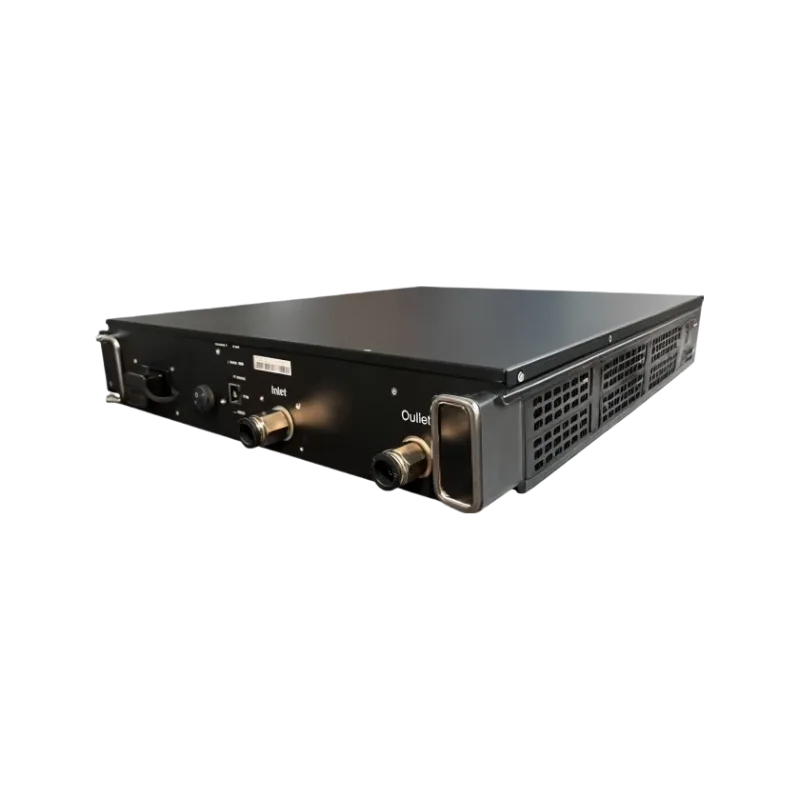
Bitmain Antminer S23e U2H ASIC miner specifications and profitability image
Active Bitmain SHA-256 Latest Gen PRO

Bitmain Antminer S23e U2H

Hashrate 865 TH/s
Power 8,650 W
Efficiency 10 J/TH

Quick answer

The Bitmain Antminer S23e U2H is a Bitcoin miner rated about 865 TH/s at roughly 8,650 W (about 10 J/TH). An industrial-class unit — loud and power-hungry, best suited to a dedicated mining space, not living areas.

Latest Generation Hardware

This is a newer generation of mining hardware using recent ASIC chip technology. Compare efficiency, hashrate, and power draw against older generations before choosing a deployment plan.

Efficiency Rating 10 J/TH

Lower J/TH means lower electricity cost per unit of hashrate. Compare efficiency alongside purchase cost, noise, voltage, firmware support, and current network difficulty.

Professional-Grade Miner

This miner draws 8,650W and produces 75+ dB of noise — it is designed for dedicated mining environments, not living spaces. Professional-grade miners deliver the highest hashrate and revenue per unit but require proper infrastructure: a 240V circuit, adequate ventilation or exhaust ducting, and a space where noise is not a concern (garage, basement, warehouse, or outdoor enclosure).

For home miners looking for a quieter alternative, consider our Bitcoin Space Heater builds or explore open-source miners like the Bitaxe that are purpose-built for residential environments.

Circuit Requirement 240V dedicated circuit

Profitability Calculator

$62,619
Daily BTC Mined --
Breakeven Electricity $0.1313/kWh
Cost to Mine 1 BTC --
Network Hashrate Share --
Break-even Estimate --
Estimated mining profitability by period at current network conditions.
Period Revenue Electricity Cost Profit
Daily $27.26 $14.53 $12.72
Weekly $190.79 $101.72 $89.06
Monthly $817.66 $435.96 $381.70
Yearly $9,948.15 $5,304.18 $4,643.97

Where to Buy the Bitmain Antminer S23e U2H

Official

D-Central Technologies

Canada

Bitcoin Mining Hackers since 2016. Ships from Laval, Quebec.

Shop all Bitcoin mining products
Partner

ASIC Miner Market

United States

Wide selection of new and used ASIC miners. US-based shipping.

Shop Now
Partner

MinersDeals

United States

Competitive prices on new ASIC miners with coupon codes.

Shop Now

BT-Miners

United States

Large inventory of ASIC miners. US-based.

Shop Now

Coin Mining Central

United Kingdom

UK-based mining hardware retailer. Ships worldwide.

Shop Now

CryptoMinerBros

United States

Established US retailer with repair services.

Shop Now

Full Specifications

Full technical specifications for this miner.
Model Bitmain Antminer S23e U2H
Model Number Antminer S23e U2H
Manufacturer Bitmain
Algorithm SHA-256
Coins Mined Bitcoin (BTC)
Hashrate 865 TH/s
Power Consumption 8,650 W
Efficiency 10 J/TH
Dimensions 600*483*86mm
Weight 42
BTU Output 29514 BTU/hr
Equivalent Heater Equal to a 8,650W space heater
Daily Power Cost $14.53/day
Monthly Power Cost $435.96/mo
Circuit Requirement 240V circuit required
Release Date 2026-01-01
MSRP $19,600.00
Status Active

Home Mining Assessment

8 /100
Not Recommended
Heat Output 8,650W / 29514 BTU
High heat - requires ventilation or duct system
Power Draw 8,650W (8.7kW)
240V dedicated circuit required

The Antminer S23e is Bitmain’s high-density, water-cooled (hydro) machine for industrial SHA-256 mining: about 865 TH/s drawn from 8,650 W, or roughly 10 J/TH, in a 2U hydro chassis. It is a hashcenter and immersion-grade installation unit — not a home miner — and it represents the newest, most efficient generation Bitmain currently ships.

Where the S23e sits in the S23 family

The “U2H” designation marks this as the 2U hydro build of the S23 line — liquid-cooled, rack-mounted, and built for water-loop hashcenters rather than a spare bedroom. Bitmain’s S23 series launched in early 2026 as a clean break from the S21 generation. The lineup spans an air-cooled base model, an immersion variant, and several hydro densities; the S23e at 865 TH/s slots near the top, just below the dual-board S23 Hyd 3U that crosses 1.1 PH/s in a single chassis.

Model Hashrate Power Efficiency Cooling
S23 (air) 318 TH/s 3,498 W ~11 J/TH Air (4 fans)
S23 IMM 442 TH/s 5,304 W ~12 J/TH Immersion
S23 Hyd 580 TH/s 5,510 W ~9.5 J/TH Hydro
S23e (2U Hyd) 865 TH/s 8,650 W ~10 J/TH Hydro 2U
S23 Hyd 3U 1,160 TH/s 11,020 W ~9.5 J/TH Hydro (2-board)

At roughly 600×483×86 mm and about 42 kg, the S23e is a 2U rack form factor with no onboard fans — heat leaves through a sealed coolant loop, not exhaust air. That single fact reshapes everything about how it is powered, cooled, deployed, and reused, which we cover below.

Chip and hashboard architecture

The S23 generation is a genuinely new SHA-256 silicon design, the successor to the BM1370 that powers the S21 Pro and S21 XP. At the time of writing Bitmain has not publicly disclosed the S23’s ASIC part number or its TSMC process node, and confirmed die markings had not yet surfaced through teardowns or the repair-parts channels we watch. We treat those details as unconfirmed and will update this page when hardware on our bench settles them.

What is not in doubt is that the chip is a true generational step, not a rebin. The jump from the BM1370’s ~15 J/TH to the S23’s ~9.5–11 J/TH is far too large to come from binning or a stepping of the older part; it points to a new core architecture, a more advanced node, or both. Expect Bitmain’s modern conventions to carry forward: three hashboards per unit, chips wired into series chains, and — critically — no PIC. Since the S21, Bitmain’s top SHA-256 boards have used a “no-PIC” topology where board voltage is managed by a DAC under kernel control rather than the dedicated PIC microcontroller found on S9/S17/S19-era boards.

The other architectural detail that matters for tuning and repair is that voltage is regulated per domain, not per chip. On the preceding BM1370 boards, chips are grouped into roughly a dozen series voltage domains (on the order of seven to nine chips each), fed from a board-level boost rail near 21 V and stepped down per domain to about 1.0 V. A whole domain rises and falls together; you cannot dial an individual chip. The S23 hashboards are expected to keep this domain-based scheme. Understanding it is the difference between a clean diagnosis and a guess — a single weak chip drags its entire domain, and the symptoms read at the domain level.

Real-world power and efficiency

The S23e’s 8,650 W nameplate is a hydro figure, and hydro figures tend to track wall draw more closely than air-cooled ratings because there is no fan power swinging with ambient temperature. Plan capacity around the nameplate plus PSU and distribution overhead, and remember that 8.65 kW per box is three-phase, hashcenter-grade electrical — this is not a 15 A wall outlet machine.

At ~10 J/TH the S23e sits at the efficient end of everything Bitmain has shipped, roughly a third more efficient per terahash than the S21 Pro. Hydro cooling is also what makes that number sustainable: a liquid loop holds junction temperatures far steadier than air, which both protects the silicon and gives operators real tuning headroom. Liquid-cooled boards historically accept harder overclock and undervolt profiles than their air-cooled siblings because the thermal ceiling is higher and more stable. The S23 is too new to have a published profile table, but the principle is the same one documented across the catalog — see our ASIC power profiles database for how hydro units in the prior generation were pushed in both directions, and apply the same caution when the S23 curves are characterized.

One correction to a common misconception about this class of machine: a hydro unit does not “duct waste heat into a room.” All ~8.65 kW of its heat leaves through the water loop. That is actually the better heat-reuse story — captured hot water can preheat domestic hot water, feed hydronic radiant heating, warm greenhouses or aquaculture, or tie into district-heat infrastructure. Air-cooled miners scatter their heat; a hydro S23e hands it to you in a pipe.

Firmware compatibility — the honest picture

Like every brand-new Bitmain generation, the S23 ships locked to stock Bitmain firmware, and at launch that is your only option. The popular aftermarket firmwares are not here yet:

  • BraiinsOS+ — not supported on the S23 at the time of writing. (BraiinsOS+ is also the only firmware that natively speaks Stratum V2; if SV2 matters to you, note that stock S23 firmware runs Stratum V1.) Braiins historically adds new Bitmain models roughly a year after they ship.
  • VNish — not supported on the S23 as of this writing.
  • LuxOS / ePIC — not confirmed for the S23.

The reason is simple and not a knock on anyone: third-party firmware teams need physical hardware to reverse the boot chain and the new chip’s initialization sequence before they can support it safely. Until that work lands, treat the S23 as a stock-firmware machine. D-Central’s own open firmware effort, DCENT_OS, follows the same rule — we build support model-by-model, on real silicon, and we will not claim a unit is supported before it mines on our bench. The S23 is on the roadmap, not in the released set.

Common faults and troubleshooting

A hydro S23e has two failure surfaces: the electronics every Antminer shares, and the water loop unique to liquid cooling.

  • Hashboard faults — the dominant failure mode across all S-series hardware. A dead or under-performing voltage domain, a chip that has lost its place in the chain, an “0 ASIC found” or reduced chip-count alarm, or a board that drops offline under load. Because voltage is per-domain, a single bad chip typically takes its whole domain’s hashrate with it.
  • Coolant-loop faults — low or no flow, trapped air, fouled or degraded coolant, an under-seated quick-disconnect, or an inlet temperature that is too high. Any of these will trip thermal protection or throttle the unit even when every chip is healthy.
  • Control board and PSU — network drop-outs, failure to boot, or a PSU that will not hold the high-current rails these boards demand.

Work the problem methodically rather than swapping parts on a hunch. Our ASIC fault finder walks the symptom-to-cause path for Antminer error and fault codes, and pairs each with the relevant repair guidance — the same discipline applies to the S23, with the added step of clearing the water side before condemning a board.

Repair and longevity

An 865 TH/s box is a capital asset, and at ~$19,600 MSRP it is one you repair, not discard, when a board fails. D-Central has run an in-house ASIC repair lab in Laval since 2016 — domain-level voltage diagnosis, BGA reballing and chip replacement, board-level rework, and full post-repair load testing. Hydro boards add leak and pressure testing and careful coolant handling to that workflow, but the underlying SHA-256 board is repairable by the same people who have rebuilt S9, S17, S19 and S21 hardware for years.

The no-PIC, domain-based design rewards proper diagnostics: identifying the exact failed domain and the chip within it, instead of throwing a whole board away. That is how a fleet’s effective cost-per-terahash keeps falling over a multi-year life. If you run S23-class hardware, our ASIC repair service is built to keep it hashing rather than letting a single $40 chip retire a five-figure machine.

Who it’s for and buying notes

The S23e is unambiguously industrial. With a home-mining score near the bottom of our scale, 8.65 kW of three-phase draw, and a mandatory water loop with a dry cooler or CDU to reject heat, it belongs in a hashcenter, an immersion/hydro facility, or a serious heat-reuse installation — not a residence. For that buyer it is one of the most efficient, highest-density units on the market, and the closed water loop makes its waste energy genuinely recoverable.

If you are mining at home, this is the wrong machine — an air-cooled S21-class unit, or a small open-source board, fits far better; our miner catalog and Bitaxe coverage are the right starting points there. If you are deploying at scale and want hardware that stays serviceable for years, the S23e earns its place — and D-Central can advise on sourcing, deployment, and the repair tail that comes after.

Generational context

The S23 generation is the latest rung on a steep efficiency ladder. The progression tells the story plainly:

Generation Representative chip Efficiency
S19 Pro (2020) BM1398 ~29.5 J/TH
S19 XP (2022) BM1366 ~21.5 J/TH
S21 (2023) BM1368 ~17.5 J/TH
S21 Pro / XP (2024) BM1370 ~13.5–15 J/TH
S23 / S23e (2026) new gen ~9.5–11 J/TH

Breaking below 10 J/TH is a milestone for SHA-256 mining, and the S23 family reaches it on hydro builds like this one. Credit where it is due — Bitmain has carried the efficiency curve forward generation after generation, and the S23e is the current high-water mark of that work. As the new silicon makes its way onto repair benches and into third-party firmware, this page will be updated with verified chip, node, voltage-domain and tuning data. Until then, we report what is confirmed, flag what is not, and refuse to invent the rest.

Run open-source firmware on your Antminer

DCENT_OS is D-Central’s open-source, GPL-3.0 firmware effort for Antminer hardware — currently in closed beta, with public beta targeted for summer 2026. We build on the shoulders of the open-firmware projects that came before us. Want early access? Join the beta list. Collection only — we will not email you anything else yet.

Broken miner? Get a real quote.

Tell us the symptom and get an instant repair-tier estimate ($95 / $145 / $195 CAD). Mail-in from across Canada, bench in Laval, Quebec.

Send it to D-Central — start a repair →

Frequently Asked Questions

What are the current mining economics for the Bitmain Antminer S23e U2H?

At $0.07/kWh electricity, the Bitmain Antminer S23e U2H currently shows an estimated $12.72 daily net result before pool fees and hardware cost. Results depend on your electricity rate and Bitcoin network conditions. Use the calculator above with your actual electricity rate.

Can I mine Bitcoin at home with the Bitmain Antminer S23e U2H?

The Bitmain Antminer S23e U2H has a home mining score of 8/100. With 0 dB noise and 8,650W power draw, it may require a dedicated space like a garage, basement, or outdoor enclosure. Consider noise insulation and proper ventilation.

Can the Bitmain Antminer S23e U2H heat my home?

The Bitmain Antminer S23e U2H outputs approximately 29514 BTU/hr of heat. For reference, a typical space heater produces 5,000-5,500 BTU/hr. All electrical energy consumed by the miner is converted to heat, making it 100% efficient as a heater. D-Central offers Bitcoin Space Heater builds designed specifically for home heating integration.

What power supply does the Bitmain Antminer S23e U2H need?

The Bitmain Antminer S23e U2H draws 8,650W of power. You need a power supply rated for at least 9,515W with appropriate voltage (200-240V AC). D-Central stocks compatible power supplies in our shop. Always use a quality PSU from a reputable manufacturer to protect the miner and wiring.