Skip to content

Bitcoin accepted at checkout  |  Ships from Laval, QC, Canada  |  Expert support since 2016

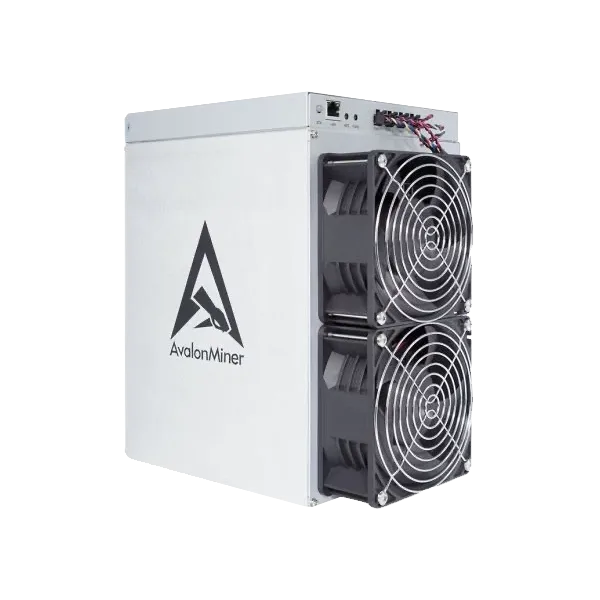
Canaan Avalon A15XP-206T ASIC miner specifications and profitability image
Active Canaan SHA-256 PRO

Canaan Avalon A15XP-206T

Hashrate 206 TH/s
Power 3,667 W
Efficiency 17.8 J/TH
Noise 75 dB

Quick answer

The Canaan Avalon A15XP-206T is a Bitcoin miner rated about 206 TH/s at roughly 3,667 W (about 17.8 J/TH). An industrial-class unit — loud and power-hungry, best suited to a dedicated mining space, not living areas.

Professional-Grade Miner

This miner draws 3,667W and produces 75 dB of noise — it is designed for dedicated mining environments, not living spaces. Professional-grade miners deliver the highest hashrate and revenue per unit but require proper infrastructure: a 240V circuit, adequate ventilation or exhaust ducting, and a space where noise is not a concern (garage, basement, warehouse, or outdoor enclosure).

For home miners looking for a quieter alternative, consider our Bitcoin Space Heater builds or explore open-source miners like the Bitaxe that are purpose-built for residential environments.

Circuit Requirement 240V dedicated circuit

Profitability Calculator

$62,411
Daily BTC Mined --
Breakeven Electricity $0.0735/kWh
Cost to Mine 1 BTC --
Network Hashrate Share --
Break-even Estimate --
Estimated mining profitability by period at current network conditions.
Period Revenue Electricity Cost Profit
Daily $6.47 $6.16 $0.31
Weekly $45.28 $43.12 $2.16
Monthly $194.08 $184.82 $9.26
Yearly $2,361.29 $2,248.60 $112.68

Where to Buy the Canaan Avalon A15XP-206T

Official

D-Central Technologies

Canada

Bitcoin Mining Hackers since 2016. Ships from Laval, Quebec.

Shop all Bitcoin mining products
Partner

ASIC Miner Market

United States

Wide selection of new and used ASIC miners. US-based shipping.

Shop Now
Partner

MinersDeals

United States

Competitive prices on new ASIC miners with coupon codes.

Shop Now

BT-Miners

United States

Large inventory of ASIC miners. US-based.

Shop Now

Coin Mining Central

United Kingdom

UK-based mining hardware retailer. Ships worldwide.

Shop Now

CryptoMinerBros

United States

Established US retailer with repair services.

Shop Now

Full Specifications

Full technical specifications for this miner.
Model Canaan Avalon A15XP-206T
Model Number Avalon A15XP-206T
Manufacturer Canaan
Algorithm SHA-256
Coins Mined Bitcoin (BTC)
Hashrate 206 TH/s
Power Consumption 3,667 W
Efficiency 17.8 J/TH
Noise Level 75 dB
Dimensions 301*192*292mm
Weight 12.8
BTU Output 12512 BTU/hr
Equivalent Heater Equal to a 3,667W space heater
Daily Power Cost $6.16/day
Monthly Power Cost $184.82/mo
Circuit Requirement 240V circuit required
Release Date 2024-12-01
MSRP $1,909.95
Status Active

Home Mining Assessment

8 /100
Not Recommended
Noise 75 dB
Loud - garage or basement recommended
Heat Output 3,667W / 12512 BTU
High heat - requires ventilation or duct system
Power Draw 3,667W (3.7kW)
240V dedicated circuit required

The Canaan Avalon A15XP-206T is an air-cooled SHA-256 (Bitcoin) ASIC miner from the 15th-generation Avalon family, released December 2024. It produces a nameplate 206 TH/s at roughly 3,667 W from the wall, for an efficiency of about 17.8 J/TH on Canaan’s in-house 5 nm A3197 silicon.

It is a high-performance bin of the A15 line, slotting above the base A1566 (185 TH/s) and below the immersion-class A15 hydro units. Below is a complete, hardware-grounded breakdown of how it is built, how it behaves on the wall, what firmware it will and will not run, and how D-Central keeps one alive long after the warranty ends.

Avalon A15XP-206T specifications at a glance

Specification Value
Algorithm / coin SHA-256 (Bitcoin)
Nameplate hashrate 206 TH/s
Wall power ~3,667 W
Efficiency ~17.8 J/TH
ASIC chip Canaan A3197 / A3197S (TSMC 5 nm)
Hashboards 3 (air-cooled, MM4v2_X3 platform)
Control SoC Kendryte K210 (dual-core 64-bit RISC-V)
Cooling Dual axial fans, front-to-back air
Noise ~75 dB
Heat output ~12,512 BTU/h
Weight 12.8 kg
Dimensions 301 × 192 × 292 mm
Released December 2024
Indicative MSRP ~$1,909 USD

Chip and hashboard architecture

The A15XP-206T is built on Canaan’s A3197 (factory-marked A3197S in the firmware driver tree), the company’s first 5 nm-class SHA-256 ASIC, fabricated at TSMC. Like the rest of the A15 family, the unit carries three hashboards driven from a single control board. Each board hosts on the order of 75 A3197 chips, and across three boards the design lands near the 185 TH/s figure of the base A1566 — the A15XP simply pushes clocks and board voltage higher to reach the 206 TH/s nameplate.

Architecturally, the A3197 is a departure from the Bitmain approach most miners know. Where an Antminer chains many simple chips in long serial strings, Canaan uses a proprietary multi-core ASIC: each chip is a substantial mining engine in its own right, with per-core PLLs and an on-die PVT (process-voltage-temperature) sensor block that the firmware reads back continuously. That is why per-chip hashrate (~0.8 TH/s) is far higher than a BM1366-class part — there are simply fewer, larger chips per board.

Control board: Kendryte K210, not Zynq

The single biggest thing to understand about any A10–A15 Avalon is the controller. Instead of the Xilinx Zynq (ARM + FPGA) that sits inside an Antminer, the A15 runs on Canaan’s own Kendryte K210 — a dual-core 64-bit RISC-V SoC on TSMC 28 nm with only 8 MB of on-chip SRAM and no external DDR. There is no Linux here: the stock firmware is a bare-metal FreeRTOS image, and the K210 talks to the hashboards directly over SPI (around 1 MHz) using Canaan’s framed “toast” protocol. There is no FPGA midstate engine and, critically, no PIC microcontroller on the hashboards — voltage and frequency are set by the SoC itself.

Voltage and power domains

Voltage on an Avalon hashboard is managed per domain, not per chip. Each board carries a variable core rail (Vcore) plus fixed VTOP (~0.75 V) and VDDIO (~1.8 V) rails, with 12 V from the PSU boosted internally for the chip core. Two NTC 10K thermistors per board feed the controller, and the hashboard-to-controller link is a 2×7-pin (14-pin) connector. Eliminating the PIC removes a whole class of failure modes that plague older Antminer boards — there is no I²C voltage controller to corrupt or “wake up” — but it also means there is no per-board PIC EEPROM to read back, so board identity lives in the controller’s chip-detect pass instead.

Real-world power and efficiency

At a measured ~3,667 W for 206 TH/s, the A15XP-206T runs at roughly 17.8 J/TH at the wall. That number already includes PSU and fan overhead, so it is a real operating figure rather than a chip-only nameplate. Plan your circuit around it honestly: at North-American 240 V this is roughly a 15.3 A draw, comfortably inside a 20 A circuit but not something to share with other heavy loads, and on 208 V three-phase it sits around 17.6 A per leg.

Within the modern SHA-256 field (broadly 13–19 J/TH), 17.8 J/TH places the A15XP in the current-generation tier — efficient enough to run on today’s electricity, though a step behind the most aggressive flagships from Bitmain (S21-class) and MicroBT. It is an honest, mid-pack-efficient, high-output machine rather than a record-setter.

On tuning headroom, be realistic about what an Avalon allows. The stock firmware exposes a coarse work-mode switch (normal vs. performance) rather than a granular curve, and its smart-speed logic adjusts per-core PLLs at runtime from live PVT feedback — these are calculated on the fly, not a preset table you edit. Canaan’s per-core frequency and voltage tables are encrypted on the K210’s fuses, and there is no third-party autotuner for this platform, so do not expect Braiins-style profile sweeping here. For models where granular profiles do exist, our ASIC power profiles database documents the trade-offs between hashrate, watts and J/TH.

Firmware compatibility

Stock firmware is Canaan’s MM (Miner Manager) build running on the K210. You manage it through the web UI on port 80 (default address 192.168.168.168 in config mode) and the standard CGMiner API on port 4028, which exposes summary, pools, stats and extended per-chip telemetry (estats). There is no SSH or shell in stock firmware, because there is no Linux underneath it. A “privileged” API for finer voltage/frequency control exists but is sparsely documented and voids the warranty.

On third-party firmware, we will be blunt because buyers deserve it: there is essentially none for Avalon. BraiinsOS+, VNish, LuxOS and ePIC all support Antminer (and in some cases WhatsMiner) hardware, but none of them runs on a Canaan Avalon. The RISC-V K210 with bare-metal FreeRTOS and encrypted tuning tables is simply a different world from the ARM/Zynq Antminers those firmwares target. The upside is that Canaan is the most open of the big three manufacturers — it publishes CGMiner driver source and has open-sourced its newer K230 home-line firmware — so management and monitoring tools such as pyasic and most farm dashboards talk to the A15 cleanly over the CGMiner API.

D-Central’s own firmware research (DCENT_OS) is part of our broader push to give miners more sovereignty over their hardware, and Canaan’s openness makes the platform interesting long-term — but the K210 industrial line like the A15 is the hardest target of all, and today there is no custom firmware for it. For now, the honest answer is: run it on stock, monitor it over the API, and let the chips do their job.

Common faults and troubleshooting

Avalon air-cooled units are mechanically simple, and most field issues fall into a few buckets. Use our ASIC fault finder to walk symptoms to a root cause, but in our shop the recurring A15-class problems are:

  • One hashboard dropping out — the miner reports two boards live and a third dead or at a fraction of rated hashrate. Because the three boards are independent, a single failed board costs you roughly a third of the 206 TH/s, not the whole machine.
  • Underperforming chips / rising hardware-error rate — the A3197’s per-chip PVT telemetry usually points at the offending chip or core domain before total failure.
  • Thermal shutdowns — clogged fins, a failing fan, or a hot intake. The two NTC thermistors per board trigger protection well before silicon damage; clean airflow first.
  • Fan faults — a stalled or out-of-spec fan will force the controller to throttle or stop. These are inexpensive consumables and the easiest first fix.
  • PSU / power delivery — instability under load or boards that will not power up often trace to the supply or the 12 V boost stage rather than the ASICs themselves.

The CGMiner API and the web dashboard give you enough per-board and per-chip data to localise most faults before you ever open the case, which keeps diagnosis fast.

Repair and longevity

D-Central has run an in-house ASIC repair bench in Quebec since 2016, and we service Canaan Avalon hashboards alongside Antminer and WhatsMiner. The A15’s architecture is, if anything, repair-friendly: no PIC microcontroller and no FPGA means none of the I²C-controller or bitstream headaches that complicate older Antminer repairs, and Canaan’s open CGMiner drivers make the protocol legible. Board-level work — reflowing or replacing a failed A3197, chasing a broken signal in the chip chain, restoring a domain rail, swapping thermistors or fans — is well within reach of a proper bench.

Treated well (clean air, stable power, sensible ambient temperatures) a 5 nm A15 should give years of service, and a single dead board is a repair, not a write-off. If your A15XP-206T is down or underperforming, our ASIC repair service can diagnose it at the board and chip level and return it to full rated hashrate rather than selling you a replacement you do not need.

Who the Avalon A15XP-206T is for

This is an industrial-class machine, and at ~75 dB it belongs in a dedicated mining space, garage, or hosting facility — not a living room. Its home-viability score reflects that: it is loud and power-hungry by domestic standards. That said, its ~12,512 BTU/h of waste heat is genuinely useful: ducted into a workshop or outbuilding through a cold Canadian winter, it converts electricity you would otherwise spend on a heater into Bitcoin and warmth at the same time.

It suits the operator who wants high per-box output and Canaan’s reliability without paying flagship prices, and who values the simplicity of a platform with no PIC and an open API. If you are mining at home and noise or breaker capacity is the constraint, look instead at Avalon’s quieter home line or an open-source Bitaxe-class device. To compare the A15XP against other current hardware on hashrate, efficiency and price, browse the full ASIC miner catalogue, and see what we have in stock in the D-Central shop.

Where it fits in Canaan’s lineup

Canaan built the first Bitcoin ASIC miner — the original Avalon, in 2013 — and the A15 is the fifteenth generation of that lineage. The family has tracked a steady efficiency curve: A1246 (90 TH/s, 2021), A1346 (110 TH/s), A1466 (150 TH/s, 2023), and then the 5 nm A1566/A15 at 185 TH/s in 2024. The A15XP-206T is a high-performance bin of that 5 nm generation, trading a little efficiency for more output, and it is succeeded by the A16 / A16XP (roughly 282–300 TH/s) that move toward the sub-13 J/TH range.

In the wider market the A15XP competes with Bitmain’s S21 family and MicroBT’s WhatsMiner M60 line. It does not claim the efficiency crown — Bitmain and MicroBT have earned their lead, and we will not pretend otherwise — but it is a credible, openly documented, repairable workhorse from the company that started ASIC mining in the first place. For a farm that values serviceability and a clean API as much as raw J/TH, the A15XP-206T is a sensible, honest choice.

Broken miner? Get a real quote.

Tell us the symptom and get an instant repair-tier estimate ($95 / $145 / $195 CAD). Mail-in from across Canada, bench in Laval, Quebec.

Send it to D-Central — start a repair →

Frequently Asked Questions

What are the current mining economics for the Canaan Avalon A15XP-206T?

At $0.07/kWh electricity, the Canaan Avalon A15XP-206T currently shows an estimated $0.31 daily net result before pool fees and hardware cost. Results depend on your electricity rate and Bitcoin network conditions. Use the calculator above with your actual electricity rate.

Can I mine Bitcoin at home with the Canaan Avalon A15XP-206T?

The Canaan Avalon A15XP-206T has a home mining score of 8/100. With 75 dB noise and 3,667W power draw, it may require a dedicated space like a garage, basement, or outdoor enclosure. Consider noise insulation and proper ventilation.

Can the Canaan Avalon A15XP-206T heat my home?

The Canaan Avalon A15XP-206T outputs approximately 12512 BTU/hr of heat. For reference, a typical space heater produces 5,000-5,500 BTU/hr. All electrical energy consumed by the miner is converted to heat, making it 100% efficient as a heater. D-Central offers Bitcoin Space Heater builds designed specifically for home heating integration.

What power supply does the Canaan Avalon A15XP-206T need?

The Canaan Avalon A15XP-206T draws 3,667W of power. You need a power supply rated for at least 4,034W with appropriate voltage (200-240V AC). D-Central stocks compatible power supplies in our shop. Always use a quality PSU from a reputable manufacturer to protect the miner and wiring.