Skip to content

Bitcoin accepted at checkout  |  Ships from Laval, QC, Canada  |  Expert support since 2016

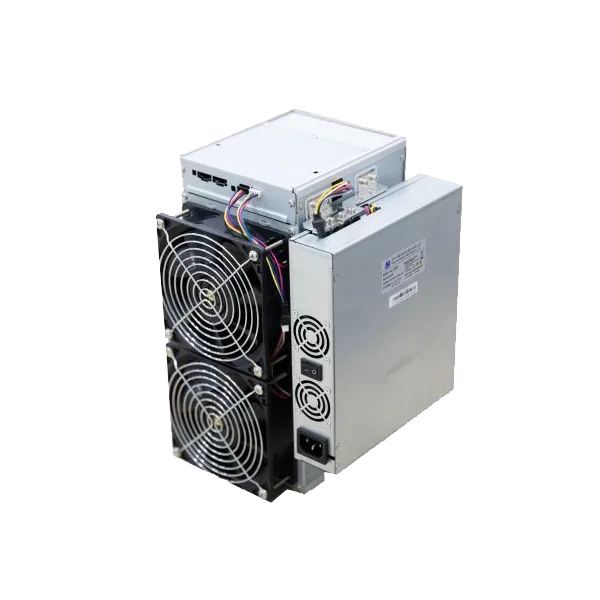
Canaan AvalonMiner 1066 ASIC miner specifications and profitability image
Active Canaan SHA-256 PRO HEATER

Canaan AvalonMiner 1066

Hashrate 50 TH/s
Power 3,250 W
Efficiency 65 J/TH

Quick answer

The Canaan AvalonMiner 1066 is a Bitcoin miner rated about 50 TH/s at roughly 3,250 W (about 65 J/TH). An industrial-class unit — loud and power-hungry, best suited to a dedicated mining space, not living areas.

Professional-Grade Miner

This miner draws 3,250W and produces 75+ dB of noise — it is designed for dedicated mining environments, not living spaces. Professional-grade miners deliver the highest hashrate and revenue per unit but require proper infrastructure: a 240V circuit, adequate ventilation or exhaust ducting, and a space where noise is not a concern (garage, basement, warehouse, or outdoor enclosure).

For home miners looking for a quieter alternative, consider our Bitcoin Space Heater builds or explore open-source miners like the Bitaxe that are purpose-built for residential environments.

Circuit Requirement 240V dedicated circuit

Heater-Class Miner

At 3,250W, this miner outputs approximately 11089 BTU/hr of heat — equivalent to a standard electric space heater. Every watt consumed by an ASIC miner is converted to heat with 100% efficiency, making it a space heater that also mines Bitcoin.

During heating season, miner heat can offset part of the heat a room would otherwise need from another electric heater. The economics depend on your electricity rate, room heat demand, BTC price, network difficulty, and noise constraints.

Heat Output 11089 BTU/hr
Explore Bitcoin Space Heaters →

Profitability Calculator

$62,799
Daily BTC Mined --
Breakeven Electricity $0.0203/kWh
Cost to Mine 1 BTC --
Network Hashrate Share --
Break-even Estimate --
Estimated mining profitability by period at current network conditions.
Period Revenue Electricity Cost Profit
Daily $1.58 $5.46 $-3.88
Weekly $11.06 $38.22 $-27.16
Monthly $47.40 $163.80 $-116.40
Yearly $576.69 $1,992.90 $-1,416.21

Where to Buy the Canaan AvalonMiner 1066

Official

D-Central Technologies

Canada

Bitcoin Mining Hackers since 2016. Ships from Laval, Quebec.

Shop all Bitcoin mining products
Partner

ASIC Miner Market

United States

Wide selection of new and used ASIC miners. US-based shipping.

Shop Now
Partner

MinersDeals

United States

Competitive prices on new ASIC miners with coupon codes.

Shop Now

BT-Miners

United States

Large inventory of ASIC miners. US-based.

Shop Now

Coin Mining Central

United Kingdom

UK-based mining hardware retailer. Ships worldwide.

Shop Now

CryptoMinerBros

United States

Established US retailer with repair services.

Shop Now

Full Specifications

Full technical specifications for this miner.
Model Canaan AvalonMiner 1066
Model Number AvalonMiner 1066
Manufacturer Canaan
Algorithm SHA-256
Coins Mined Bitcoin (BTC)
Hashrate 50 TH/s
Power Consumption 3,250 W
Efficiency 65 J/TH
Dimensions 195 x 292 x 331mm
Weight 11.4
BTU Output 11089 BTU/hr
Equivalent Heater Equal to a 3,250W space heater
Daily Power Cost $5.46/day
Monthly Power Cost $163.80/mo
Circuit Requirement 240V circuit required
Release Date 2019-09-01
MSRP $1,255.00
Status Active

Home Mining Assessment

8 /100
Not Recommended
Heat Output 3,250W / 11089 BTU
High heat - requires ventilation or duct system
Power Draw 3,250W (3.3kW)
240V dedicated circuit required

The Canaan AvalonMiner 1066 is a 2019-era SHA-256 (Bitcoin) ASIC that hashes around 50 TH/s while pulling roughly 3,250 W at the wall — about 65 J/TH. That puts it in the legacy-efficiency tier: it is at its best as a low-cost learning rig, a backup hasher, or a heat source rather than a grid-power profit machine.

Chip and hashboard architecture

The 1066 is built on Canaan’s A3205 ASIC (also catalogued as the A3205N), part of the company’s 16nm-generation A32xx SHA-256 family — the same lineage as the A3206 that powered the closely related AvalonMiner 1126 and 1146. Canaan never published a public datasheet for the A3205, so we treat its exact die parameters as undocumented rather than guess at them. What is well established is the topology: the chips are wired in daisy-chained series groups across the unit’s hash boards, with clock, control, reset and data lines threaded chip-to-chip (CKin/CKout, Cin/Cout, Rin/Rout, Din/Dout). For a sense of the layout in this generation, the sibling A1146 carried 72 A3206 chips in a 12×6 grid per board.

Where the 1066 matters historically is the control board. It belongs to Canaan’s Gen-2 integrated-controller generation — the AvalonMiner “A10” series ran the MM3v2 control board with MM320 management software. This was the point where Canaan dropped the external Raspberry Pi + AUC3 USB bridge of the older Avalon 7/8/9 units and moved everything onto a single on-board controller. That controller is a Kendryte K210: a RISC-V dual-core 64-bit SoC clocked up to 400 MHz, fabricated on TSMC 28nm, with only 8 MB of on-chip SRAM and no external DRAM. Because there is no DDR, the K210 cannot run Linux — the 1066 runs a bare-metal FreeRTOS image, not a full operating system.

Two architectural facts make the Avalon design genuinely different from a contemporary Antminer, and they shape everything about tuning and repair:

  • No FPGA. Unlike the Antminer S9/S17 (which use a Xilinx Zynq with an on-die FPGA to build midstates and dispatch work), the K210 talks directly to the hash boards over SPI at about 1 MHz, using 40-byte “CN” packets with a CRC16 checksum. Work dispatch and nonce checking happen in software.
  • No PIC microcontroller. Avalon hash boards do not carry the per-board PIC that Antminer uses for voltage commands and board identity. Frequency and voltage are driven straight from the SoC.

On the power-delivery side, each hash board runs several voltage domains — a variable Vcore plus a fixed VTOP (0.75 V) and VDDIO (1.8 V) rail — fed from 12 V at the PSU and boosted internally (up to ~17.7 V on some boards). Two NTC 10K thermistors per board feed temperature back to the controller. It is worth being precise here: voltage is set per board and per domain, not per individual chip. There is no per-chip voltage trim on this hardware.

Specification AvalonMiner 1066
Algorithm SHA-256 (Bitcoin / BTC)
Hashrate ~50 TH/s
Wall power ~3,250 W
Efficiency ~65 J/TH
ASIC chip Canaan A3205 / A3205N (16nm-era A32xx family)
Controller Integrated MM3v2 board, Kendryte K210 RISC-V SoC (TSMC 28nm)
Control firmware Canaan MM (MM320) + CGMiner fork, FreeRTOS bare-metal
Hash-board comms SPI ~1 MHz, 40-byte “CN” packets, CRC16 (no FPGA, no PIC)
Heat output ~11,089 BTU/h
Weight ~11.4 kg
Dimensions 195 × 292 × 331 mm
Released 2019 (A10 series)

Real-world power and efficiency

At nameplate the 1066 turns roughly 3,250 W at the wall into about 50 TH/s, which works out to ~65 J/TH. To put that in context, this generation lands between Bitmain’s S9 era and the S17 era — far behind anything modern. The table below uses approximate nameplate efficiencies to show where the 1066 sits.

Miner (era) Approx. efficiency
Antminer S9 (2017) ~98 J/TH
AvalonMiner 1066 (2019) ~65 J/TH
Antminer S17 (2019) ~45 J/TH
Antminer S19 (2020) ~34 J/TH
Antminer S19 XP (2022) ~21.5 J/TH
Antminer S21 (2023) ~17.5 J/TH

Tuning headroom on the 1066 is deliberately limited compared with a modern autotuned firmware. Its stock software exposes only a coarse work-mode switch — a normal mode and a higher-performance mode — through the user-facing API; finer voltage and frequency control lives behind Canaan’s privileged API, and Canaan’s own documentation states that using it voids the warranty. There is no runtime autotuner of the kind found on current-generation Antminers: the 1066 runs to fixed frequency and voltage targets rather than recalculating per-chip set-points on the fly. If you want to understand the safe envelope before touching any of those values, work from our ASIC power profiles database rather than experimenting blind — at 65 J/TH there is very little efficiency to be gained and a lot of board life to be lost.

Firmware: stock software and the third-party reality

Out of the box the 1066 runs Canaan’s MM management firmware (MM320) on top of a fork of CGMiner. You administer it through:

  • A web UI on port 80 (default config-mode IP 192.168.168.168, default credentials root/root — change them immediately).
  • The CGMiner API on port 4028, which answers version, summary, pools, stats and a detailed estats that reports per-board chip temperatures, voltages, frequencies, fan RPM and PSU state.

Because the K210 is a bare-metal FreeRTOS device with no Linux underneath, there is no SSH and no shell on stock firmware. That same constraint is the honest answer to the most common question we get about these units: there is no aftermarket firmware for Avalon hardware. The popular Antminer-focused firmwares do not run on Avalon, and that is not an oversight — they assume an ARM/Linux control board, which the K210 simply is not. Practically, the 1066 is a Stratum V1 miner; native Stratum V2 support is something only specific Antminer firmware offers, and none of that is portable to this SoC.

For transparency about our own work: D-Central’s firmware research (DCENT_OS) currently centers on Antminer-class hardware, where the architecture is well understood. Custom firmware for Avalon’s RISC-V/FreeRTOS controllers is feasible but materially harder, and remains research-stage rather than a product we can flash onto a 1066 today. We would rather tell you that plainly than over-promise.

Common faults and troubleshooting

The good news about the Avalon design is that, with no FPGA bitstream and no PIC to coax back to life, faults usually map cleanly to a chip, a domain or a sensor. The patterns we see most often on this generation:

  • A hash board not detected. Zero active chips on a board, or a power/I²C comms failure flagged in estats, usually points at the board’s power stage, the SPI link, or the boost converter rather than the silicon itself.
  • A whole chip group goes dark. Because chips sit in series groups, a single failed A3205 silences every chip downstream of it in that group — so you lose a block of a board’s hashrate in one step rather than a gentle taper.
  • Climbing hardware-error rate. A rising HW-error / reject percentage in the API is the classic signature of a marginal chip, a cracked solder joint, or a board running too hot.
  • Temperature and fan faults. A failed NTC thermistor will report nonsense temperatures and can trip protective shutdowns; clogged or dying fans drive thermal throttling.
  • PSU under-volting. An ageing supply that sags under load shows up as low hashrate and instability before it fails outright.

Start with the estats output to localise the problem to a specific board, then walk our ASIC fault finder to turn a symptom into a likely root cause and a repair path.

Repair and longevity

D-Central has run an in-house ASIC repair bench in Laval, Québec since 2016, and the AvalonMiner family is part of that work — we even publish a maintenance and repair guide for the same-generation A1146. Board-level repair on the 1066 follows a logical sequence: identify the dead chip within its series group, reflow or replace the A3205, verify the Vcore / VTOP (0.75 V) / VDDIO (1.8 V) domains are clean, swap any failed thermistor, and service the PSU if it is sagging. The absence of a PIC and an FPGA genuinely simplifies diagnosis here — there is no microcontroller handshake to defeat and no bitstream to reload, so a symptom on the bench tends to point straight at a component.

These are simple, sturdy, repairable machines. Kept cool, clean and dry, a 1066 will run for years, and a board that drops to half-hashrate is very often a one- or two-chip fix rather than scrap. If yours has a dead board or has lost hashrate, our ASIC repair service can diagnose it and quote a fix before you write it off.

Who the AvalonMiner 1066 is for

Be honest with the maths: at ~65 J/TH the 1066 is not built to out-earn its own power bill on grid rates, and we would not point a profit-first miner at one. Where it earns its keep is in three roles:

  • A heater that pays you back. It dumps roughly 11,089 BTU/h — comparable to a 3.25 kW electric space heater — so ducted into a workshop, garage or grow space it turns money you would have spent on heat into a trickle of hashrate.
  • A learning and solo-lottery rig. Cheap to acquire and simple to run, it is an excellent unit for learning pool configuration, the CGMiner API, and solo “lottery” mining without risking modern-hardware money.
  • Backup or surplus-power hashing. Where power is effectively free — solar overproduction, behind-the-meter hydro, flared gas — efficiency stops being the deciding factor and a low-cost hasher makes sense.

If those use cases fit, dial it in with the power profiles database and keep a repair plan in your back pocket. If you have outgrown legacy efficiency, that is a sign to look at a newer-generation machine instead.

Where the 1066 sits in the Avalon timeline

Credit where it is due: Canaan shipped the world’s first Bitcoin ASIC — the Avalon 1, back in 2013 — and has remained the most open of the major manufacturers, publishing CGMiner drivers, FPGA sources and, more recently, full home-miner firmware. The AvalonMiner 1066 is a meaningful waypoint in that story: as part of the 2019 “A10” series it was among the first Avalons to integrate the controller onto the miner itself, retiring the external Raspberry Pi + AUC bridge of the Avalon 7/8/9 era.

From there Canaan iterated quickly — the A3206-based A1126/A1146, the 120-chip-per-board A11/A12 series (A1166/A1246), and the modern A13/A14/A15 industrial line (A1346/A1466/A1566), the latest of which reach roughly 185 TH/s on a TSMC 5nm A3197 chip. The current home line has moved on again to the Kendryte K230 (Nano 3/Mini 3/Avalon Q), which even ships open-source firmware. Seen against that arc, the 1066 is a legacy workhorse — modest by today’s numbers, but a clean, hackable, repairable piece of mining history that still does useful work as a heater or a learning machine.

Broken miner? Get a real quote.

Tell us the symptom and get an instant repair-tier estimate ($95 / $145 / $195 CAD). Mail-in from across Canada, bench in Laval, Quebec.

Send it to D-Central — start a repair →

Frequently Asked Questions

What are the current mining economics for the Canaan AvalonMiner 1066?

At $0.07/kWh, the Canaan AvalonMiner 1066 currently shows an estimated daily net cost of $3.88 before pool fees and hardware cost. Lower electricity rates, network changes, BTC price changes, or useful heat recovery can change the result.

Can I mine Bitcoin at home with the Canaan AvalonMiner 1066?

The Canaan AvalonMiner 1066 has a home mining score of 8/100. With 0 dB noise and 3,250W power draw, it may require a dedicated space like a garage, basement, or outdoor enclosure. Consider noise insulation and proper ventilation.

Can the Canaan AvalonMiner 1066 heat my home?

The Canaan AvalonMiner 1066 outputs approximately 11089 BTU/hr of heat. For reference, a typical space heater produces 5,000-5,500 BTU/hr. All electrical energy consumed by the miner is converted to heat, making it 100% efficient as a heater. D-Central offers Bitcoin Space Heater builds designed specifically for home heating integration.

What power supply does the Canaan AvalonMiner 1066 need?

The Canaan AvalonMiner 1066 draws 3,250W of power. You need a power supply rated for at least 3,575W with appropriate voltage (200-240V AC). D-Central stocks compatible power supplies in our shop. Always use a quality PSU from a reputable manufacturer to protect the miner and wiring.