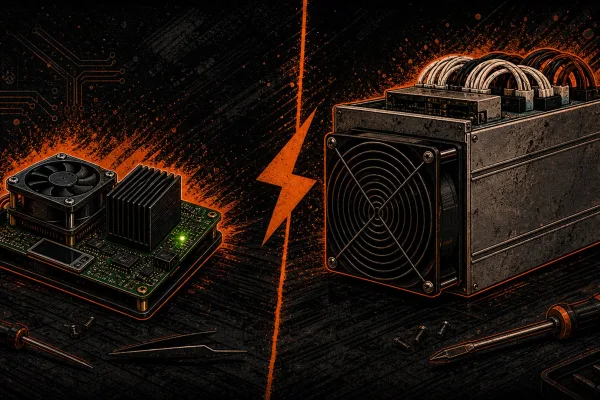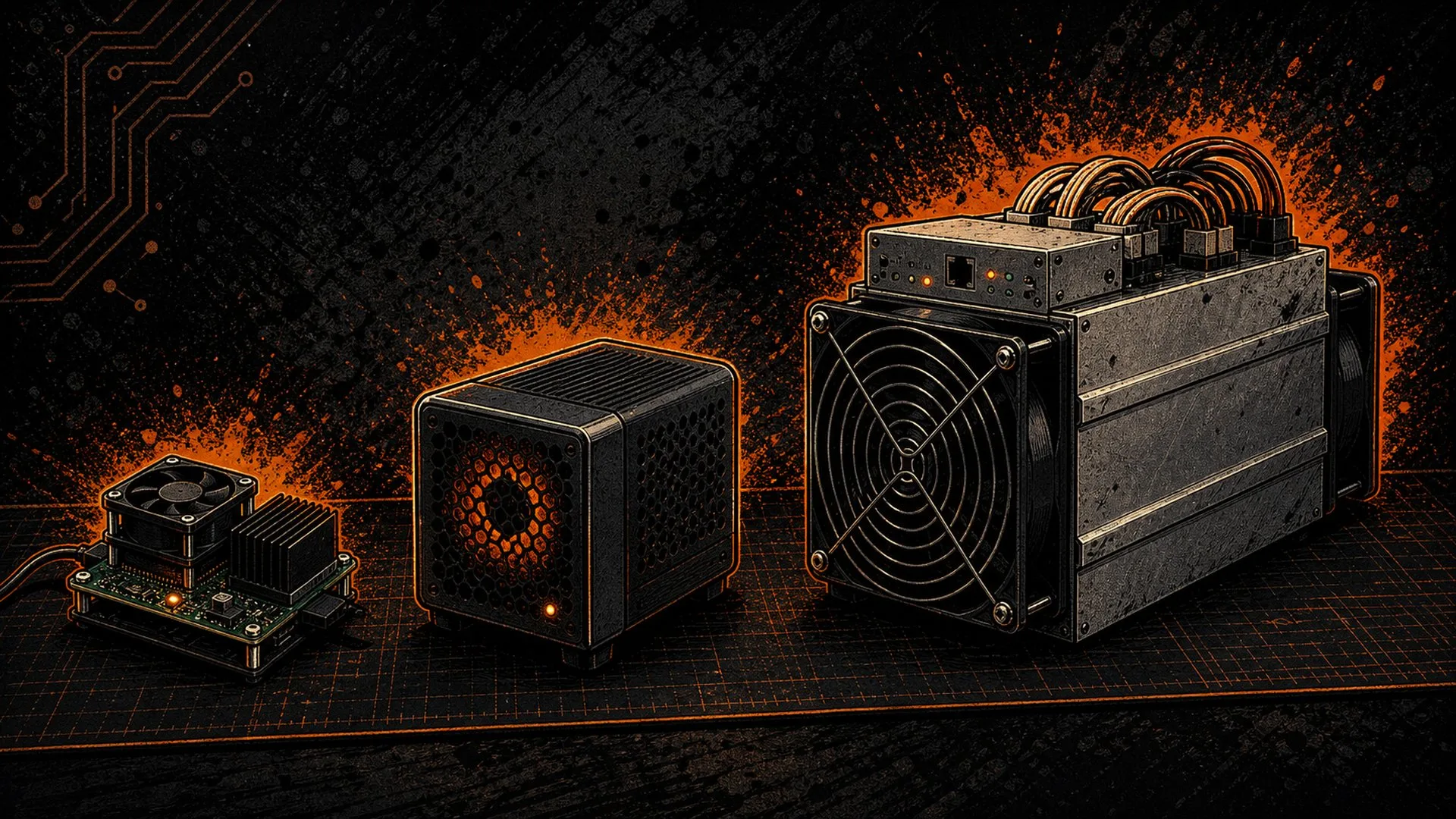
Most “best home Bitcoin miner” lists pit two machines against each other and call it a day. Real buyers don’t shop in pairs. You’re standing in your living room weighing a silent desk-sized solo lottery board against a router-shaped plug-and-play unit against a recommissioned industrial workhorse that doubles as a space heater. This is the home Bitcoin miner comparison for 2026 that actually puts every home-class option on one table, ranked by what matters at home: hashrate, efficiency, noise, heat output, price in CAD, and how much tinkering you’re signing up for.
We’ve built and repaired thousands of these machines, so we’ll be straight with you. There is no single “best home miner” — there’s the right miner for your wall outlet, your noise tolerance, and what you actually want out of mining. Some of you want a sovereign solo-mining lottery ticket. Some want a quiet appliance that just works. Some want to heat a room while stacking sats. Let’s sort it out.
The three families of home Bitcoin miners
Before the numbers, understand that “home miner” isn’t one thing. The market splits into three distinct philosophies, and choosing the wrong family is the most expensive mistake a new miner makes.
- Open-source single-board miners (the Bitaxe family). Born from the open-source-hardware movement standing on the shoulders of the bitaxe community and Skot’s original design, these run one to six ASIC chips on an ESP32-S3 controller. They sip power, run near-silent, and are pure solo-mining lottery machines. You won’t out-hash a data center, but every share you submit is genuinely yours.
- Plug-and-play consumer units (Canaan Avalon Nano). Designed to look like a Wi-Fi router and sit on a shelf. A USB-C cable, a phone app, done. More hashrate than a Bitaxe, still quiet enough for an apartment, but a closed appliance you don’t really own under the hood.
- Recommissioned industrial ASICs (Antminer S9, S21 family). The serious hashrate. An older S9 reborn as a heater, or a current-gen S21 Pro pushing 234 TH/s. Loud, hot, and power-hungry — but if you want real mining output or want to heat a workshop, nothing else competes.
The complete home Bitcoin miner comparison table (2026)
Every figure below is grounded in verified hardware data — chip part numbers, measured hashrate, and efficiency in joules per terahash (J/TH, lower is better). Prices are in CAD; note that competitors and US retailers usually quote USD, so factor exchange and import when you compare elsewhere.
| Miner | Chip(s) | Hashrate | Power | Efficiency | Noise | Skill level | Best for |
|---|---|---|---|---|---|---|---|
| Bitaxe Gamma | 1× BM1370 | ~1.2 TH/s | ~18 W | ~15 J/TH | Near-silent (small fan) | Tinkerer | Solo lottery, learning, sovereignty |
| Bitaxe GT | 2× BM1370 | ~2.4 TH/s | ~36 W | ~15 J/TH | Quiet (small fan) | Tinkerer | More solo lottery odds, desk setup |
| Bitaxe Hex | 6× BM1366 | ~3 TH/s | ~100 W | ~33 J/TH | Quiet | Tinkerer | Maxed-out single-board solo rig |
| Avalon Nano 3 | 10 chips (7nm) | 4 TH/s | 67–140 W | 29 J/TH | 33–36 dB | Plug-and-play | Apartment, hands-off mining |
| Antminer S9 (heater) | 189× BM1387 | ~13.5 TH/s | ~1,320–1,400 W | ~98 J/TH | Loud (heater-modded quieter) | Intermediate | Heating + hashing, cheap entry |
| Antminer S21 Pro | BM1370 (3 boards) | 234 TH/s | 3,510 W | 15 J/TH | Very loud | Intermediate | Serious hashrate, workshop heat |
A few things jump out of that table that the marketing pages never tell you.
Efficiency does not scale the way you’d expect
The single-chip Bitaxe Gamma and the 234 TH/s S21 Pro both run the same BM1370 silicon (the Gamma-class chip used in the S21 Pro), so both land around 15 J/TH — the best efficiency in the entire table. The difference is purely scale: one chip versus hundreds. The decade-old S9’s BM1387 chip, by contrast, burns roughly 98 J/TH — about six times less efficient per terahash. That’s why the S9 only makes sense today as a heater, where the “wasted” electricity becomes useful warmth rather than pure loss.
Noise is the silent dealbreaker
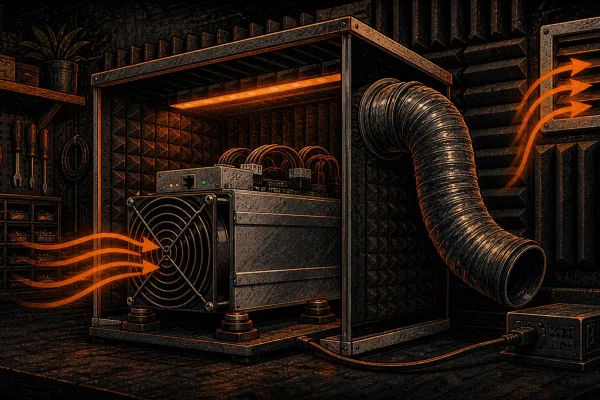
The numbers that sink most apartment mining dreams aren’t on the spec sheet you were reading — they’re decibels. A Bitaxe or an Avalon Nano sits comfortably under 40 dB (think a quiet refrigerator). An unmodified S21 Pro screams past 70 dB and belongs in a garage, basement, or a properly built enclosure. If “where will I put this” is your first worry, start at the top of the table, not the bottom.
Which home miner is right for you?
Forget the spec war for a second. Match the machine to your actual goal.
You want a sovereign solo-mining lottery ticket
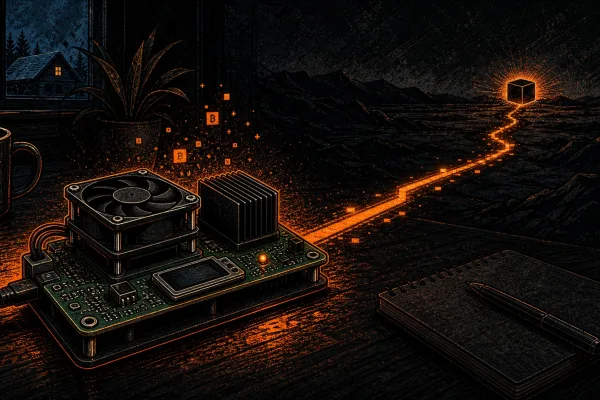
Buy a Bitaxe. The Gamma is the entry point — one BM1370 chip, around 1.2 TH/s, near-silent, and cheap enough to be impulse-affordable. You won’t earn steady income; solo mining is a lottery where you point your hashrate directly at a block and hope to hit one. But it’s the purest form of mining: open hardware, open firmware (AxeOS), no middleman, no pool taking a cut if you go solo. Step up to the Bitaxe GT (two chips, ~2.4 TH/s) or the Hex (six chips) for better odds. Start with our Bitaxe hub to compare every model, or jump straight to the lineup at buy Bitaxe in Canada.
You want it to just work, in an apartment, with zero fuss
The Avalon Nano 3 is the appliance answer. It’s the size of a router, runs on a USB-C power-delivery brick (the same family of plug that charges a laptop), and is set up from a phone. At 4 TH/s and 29 J/TH it out-hashes a single Bitaxe while staying quiet at 33–36 dB. The trade-off is sovereignty: it’s a closed consumer product, so you’re trusting Canaan’s firmware rather than running open code. For a hands-off shelf miner in a one-bedroom, that’s a reasonable trade.
You want to heat a room while you mine
This is where the industrial machines earn their keep. A recommissioned Antminer S9 puts out roughly 1,400 watts of heat — the same as a small electric space heater — while still hashing 13.5 TH/s. Its terrible efficiency stops mattering when you were going to spend that electricity on heating anyway. For more output, an S21 Pro at 3,510 watts will warm a workshop or garage and produce real hashrate. Both belong in our broader best Bitcoin miners rankings, and if you’re weighing whether an old S9 still earns its spot, we wrote a dedicated breakdown: is the Antminer S9 still worth mining in 2026?
You want maximum hashrate, period
The S21 Pro is the table-topper at 234 TH/s and a class-leading 15 J/TH, courtesy of the cutting-edge BM1370 chip. It’s loud, draws 3,510 watts, and needs a dedicated circuit and a place where noise won’t matter. Browse the current-gen lineup in our ASIC miners category. This is a build-to-order machine, not an Amazon impulse buy — we hand-prep and bench-test every unit before it ships, which is exactly why it’s worth the lead time.
The sovereignty angle: who actually owns your miner?
Here’s a layer most comparison tables skip entirely. Two miners with identical hashrate can differ wildly in how much you actually control. A Bitaxe runs fully open firmware — you own the hardware design and the code. An Avalon Nano runs closed consumer firmware. An Antminer runs Bitmain’s locked stock firmware out of the box, and newer models tie the control board to Bitmain’s servers in ways that can brick a unit you supposedly own.
That ownership gap is exactly why open firmware matters, and it’s the problem we’re working on. DCENT_OS is the first open-source firmware aimed at industrial Antminer hardware — built in Rust, GPL-3.0, with a 0% mandatory dev-fee target. It stands on the shoulders of the projects that proved this was possible (Braiins OS+, VNish, LuxOS) and aims to give Antminer owners the same code-level sovereignty a Bitaxe owner already enjoys. It’s in active beta on the S9 today, with S19 and S21 support incoming and a public beta planned for summer 2026. Decentralizing your hardware is one layer; decentralizing the code that runs it is the next.
Frequently asked questions
What is the best home Bitcoin miner in 2026?
There’s no single best — it depends on your goal. For quiet sovereign solo mining, a Bitaxe Gamma. For a hands-off apartment appliance, the Avalon Nano 3. For heating plus hashing or maximum output, a recommissioned Antminer S9 (heat) or S21 Pro (hashrate). Match the machine to your noise tolerance, power circuit, and whether you want open hardware.
Can a Bitaxe actually mine a Bitcoin block?
Yes, though it’s a lottery. A Bitaxe pointed at a solo pool submits valid work to the network like any miner. Real Bitaxe units have hit full blocks. With around 1.2 TH/s against the global hashrate the odds are extremely long, but the chance is real — that’s the appeal of solo lottery mining.
Is the Avalon Nano better than a Bitaxe?
It’s faster and more plug-and-play (4 TH/s vs ~1.2 TH/s, app-based setup), but it’s a closed consumer product. A Bitaxe is slower yet fully open-source — you control the hardware and firmware. “Better” depends on whether you value convenience or sovereignty.
Are old Antminers like the S9 worth it for home mining?
Only as a heater. At roughly 98 J/TH the S9 is far too inefficient to profit on hashrate alone, but if you’d otherwise be paying to heat a room, the electricity does double duty and the math works. As a pure profit miner, skip it; as a Bitcoin space heater, it’s a bargain entry point.
The bottom line
The right home Bitcoin miner is the one that fits your outlet, your ears, and your reason for mining. Tinkerers and sovereignty-minded plebs should start with a Bitaxe. Apartment dwellers who want zero fuss should look at the Avalon Nano. Anyone heating a space — or chasing serious hashrate — belongs on the Antminer side of the table. Every row above routes to a machine we actually build, test, and stand behind.
Ready to choose? Use the table above to find your row, then click through to that miner’s page to see live pricing and availability. Not sure where to land between solo-lottery and serious hashrate? Our best Bitcoin miners guide walks the full lineup — and if firmware sovereignty is your endgame, get on the DCENT_OS beta waitlist and own every layer of your mining stack.