Quick answer
A Bitaxe is worth it as a lottery ticket, a learning device, and a small heater — not as an income stream. A single Gamma-class unit’s expected solo-block time is roughly 15,000 years, yet it costs only about $1–3 CAD/month to run. Buy it for the craft and the principle, never for a payback period.
Verdict: worth it for the experience and the ticket; not worth it for the yield.
Ask whether a Bitaxe is worth it and you will get two kinds of answers. One camp swears it is a money-printer; the other calls it a toy. Both are wrong, and both miss the point. The honest answer is that a Bitaxe is worth it for what it actually is — a lottery ticket, a learning device, and a small heater — and it is a terrible disappointment if you bought it expecting a yield instrument. This guide does the math the cheerleaders skip, sets realistic expectations on solo-mining odds, and then makes the case for the value that does not show up on a profitability calculator. If you read it and still want one, you will want it for the right reasons.
What a Bitaxe actually is (and isn’t)
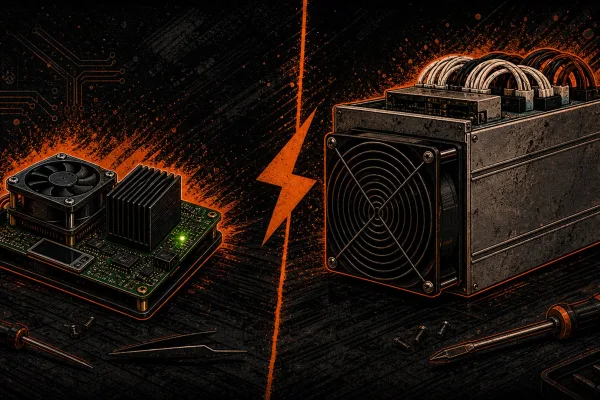
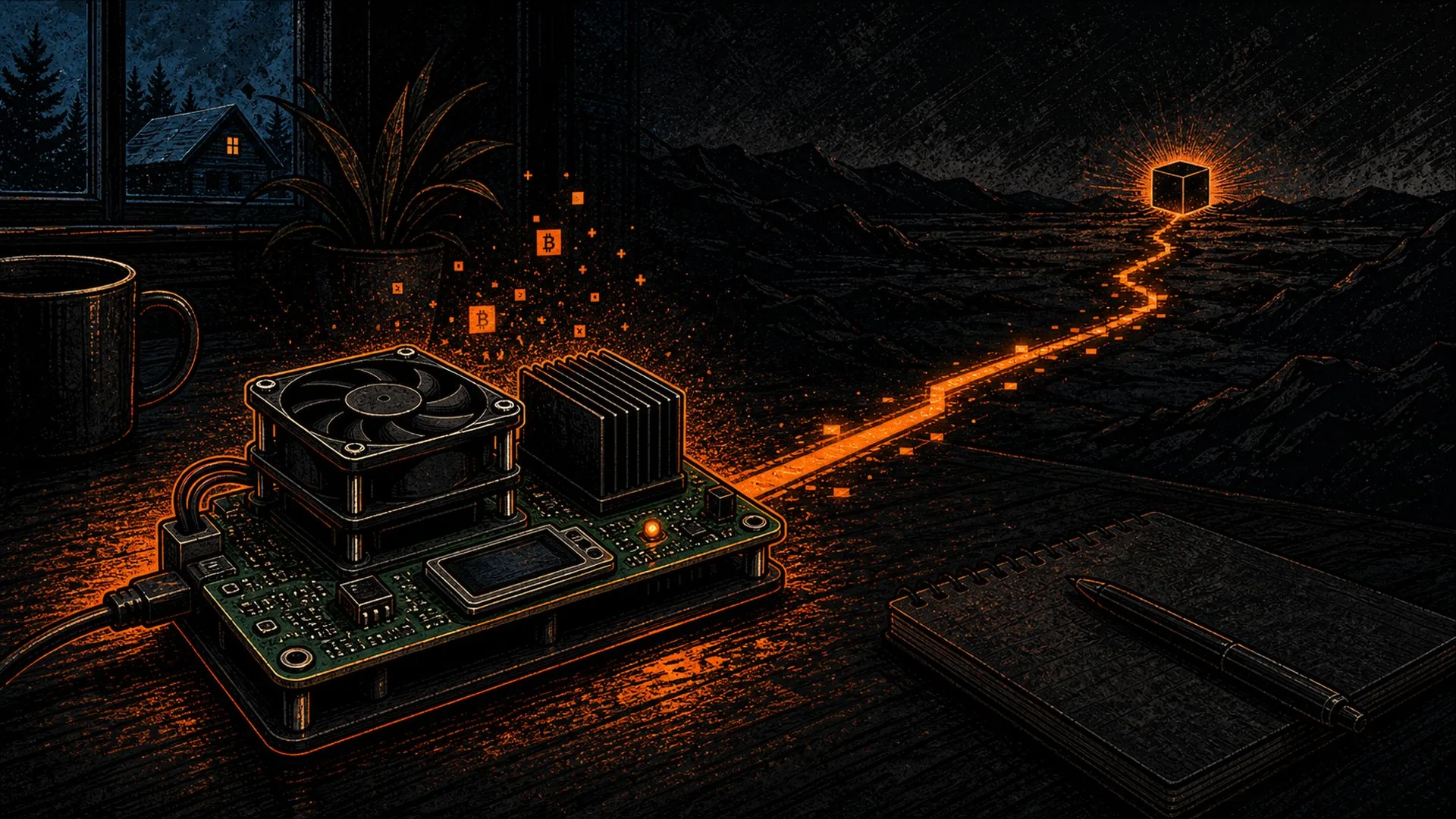
A Bitaxe is an open-source, single-chip Bitcoin ASIC miner. The popular Gamma generation runs a single Bitmain BM1370 chip — the same 5 nm, S21 Pro-class silicon found in Bitmain’s flagship machines — delivering about 1.0–1.2 TH/s at a best-case ~15 J/TH when tuned, drawing roughly 15–21 W at the wall. That makes the modern Bitaxe genuinely efficient per chip. It is also, by industrial standards, almost nothing: a top-end S21-class machine packs over a hundred of those chips per hash board, three boards deep.
So the first reframe: a Bitaxe is not a small industrial miner. It is one chip, sitting on your desk, taking a swing at the entire Bitcoin network on its own. That single fact drives everything that follows. It is not “ASIC mining at home, but smaller.” It is a categorically different activity called solo lottery mining, and the economics are nothing like running a fleet on a pool.
The lottery, explained without the hopium
When you point a Bitaxe at a solo pool like CKPool or run your own setup, you are not earning a steady drip of sats. You are buying repeated chances to find a whole block on your own. Find one, and you collect the full block reward — subsidy plus fees, a life-changing payout. Don’t find one, and you earn essentially zero. There is no middle. That is the deal, and pretending otherwise is the single most dishonest thing the Bitaxe hype machine does.
Here is the part nobody wants to print plainly: a Bitaxe contributes around one trillion hashes per second (~1 TH/s) to a network currently running on the order of 800–900 exahashes per second (an exahash is a billion gigahashes — so the whole network is doing roughly a billion trillion hashes every second). Your single chip is therefore a vanishingly small slice of total hashpower. Multiply that slice by the roughly 144 blocks mined per day and you get a per-block probability so small that the expected time for one Gamma-class Bitaxe to find a block is on the order of 15,000 years — and adding chips barely moves it: an 8-chip NerdOctaxe only shortens the expected wait to roughly 2,000 years.
Want to pressure-test those odds against your own hardware and pool? Run the numbers in our Solo Mining Probability Calculator before you spend a dollar.
That sounds brutal, and it is — if you treat the expected value as a forecast. But a lottery is not an average; it is a distribution. Bitaxe-class machines have found real blocks — we log every confirmed one in our Bitaxe Block Wins Tracker. It is rare, it is luck, and it has happened. The correct mental model is: you are paying a few dollars of electricity a month to keep a ticket in a drawing with an astronomical jackpot and astronomical odds. Buy it for the ticket, never for the expectation.
How the odds compare to other long shots
- Vs. a state lottery: Honestly comparable in spirit — both are tiny odds at a huge prize — but a Bitaxe ticket “resets” continuously and the prize grows with Bitcoin, not with ticket sales.
- Vs. pooled mining on a big ASIC: A pool smooths your payout into a predictable drip proportional to your hashrate. A solo Bitaxe trades that predictability for the slim shot at the whole block. Different game entirely.
- Vs. stacking the same dollars in spot BTC: Buying Bitcoin is the low-variance option. Solo mining is the high-variance one. Neither is “better” — they are different bets, and we cover that trade-off in our guide to lottery mining odds and our deep dive on Bitaxe mining vs just buying Bitcoin.
The electricity math: what it really costs to keep the ticket live
This is where a Bitaxe quietly wins. Because it is a single low-power chip, the cost of “playing” is tiny. A Gamma-class Bitaxe tuned toward 1.2 TH/s draws roughly 18 W. Run the numbers at a few common Canadian and North American rates — and read the verdict column, because it is the honest part:
| Power draw | Electricity rate | Monthly cost (~720 h) | Annual cost | Verdict |
|---|---|---|---|---|
| 18 W | $0.08/kWh (Quebec hydro) | ~$1.04 CAD | ~$12.50 CAD | Charming bet — keep the ticket live, guilt-free |
| 18 W | $0.15/kWh (typical Canadian) | ~$1.94 CAD | ~$23.30 CAD | Still trivial — coffee money for a year of swings |
| 18 W | $0.25/kWh (high-cost regions) | ~$3.24 CAD | ~$38.90 CAD | Fine for one unit; don’t stack a wall purely for odds |
Read that table again. The cost of keeping a Bitaxe lottery ticket live for a full year is roughly the price of a couple of coffees in Quebec, or a cheap dinner out in a high-rate region. (Prices here are CAD; many U.S. comparisons quote USD, so adjust if you are converting.) That changes the whole “worth it” calculation. You are not betting thousands of dollars a year on a long shot — you are betting tens. For a deeper breakdown of draw across models and overclock profiles, see our Bitaxe power consumption guide.
So when does the electricity NOT make sense?
If you are paying $0.30+/kWh and you stack three or four Bitaxes “to improve your odds,” you are spending real money to move a near-zero probability to a slightly-less-near-zero probability. Four Bitaxes do not meaningfully change the lottery math — they quadruple the cost of a ticket that is still astronomically unlikely to hit. One Bitaxe is a charming bet. A wall of them, bought for odds, is just an expensive way to feel busy. (A wall of them bought for heat or for the joy of the build is a different, defensible story.)
The payback question: there usually isn’t one (and that’s fine)
“Bitaxe ROI” and “Bitaxe payback period” are the wrong questions, and any calculator that gives you a confident answer is lying. Payback assumes predictable revenue. Solo mining has no predictable revenue — it has a binary jackpot. The intellectually honest framing is:
- Hardware cost: a one-time purchase, from $184.99 CAD for the flagship Gamma (see the CAD pricing table below).
- Running cost: a small, known number (the table above).
- Expected mining revenue: effectively zero in any realistic timeframe — with a tail-end chance of a full block that would dwarf everything.
If you need the hardware to “pay for itself,” a Bitaxe is the wrong purchase — and so, frankly, is most home mining without cheap power. Buyers chasing yield should look at our best Bitcoin miners rankings and run honest pooled-mining numbers on a larger machine, where the revenue is predictable even if the margins are thin. We would rather lose your Bitaxe sale than sell you a false promise.
What it costs to buy: the Bitaxe family in CAD
Hardware is a one-time cost, and in Canada you buy it in Canadian dollars from a Canadian workshop — no customs surprises, no FX games, no cross-border brokerage. Here is the current lineup, built and shipped from our Montreal, Quebec bench:
| Model | Chip(s) | Approx. hashrate | Price (CAD) | Best for |
|---|---|---|---|---|
| The Bitaxe (Gamma 601) | 1× BM1370 (5 nm) | ~1.0–1.2 TH/s | $184.99 | The default solo-miner; start here |
| Bitaxe GT | BM1370 “Turbo” | ~2.15 TH/s | $269.99 | Most hashrate from a single component |
| Bitaxe Hex | 6 ASIC chips | 3+ TH/s | $389.99 | Most hashrate on one Bitaxe board |
Not sure which one is for you? The fastest way to decide is the Which Bitaxe Should You Buy? picker. If this is your first build and you want zero decisions, the Bitaxe Starter Build bundles the flagship Bitaxe with a case, power supply, and heatsink — a decision-free first build that arrives ready to flash and mine. Prefer to step up to a quad-chip board? The NerdQAxe+ (quad BM1368) sits one rung above the Hex for builders who want more chips on one board.
The value that isn’t on the spreadsheet
Here is the case for the Bitaxe, made without a single inflated stat. A Bitaxe is worth it when you value the things a profitability calculator cannot price.
1. It is the best Bitcoin mining classroom money can buy
A Bitaxe teaches you the entire stack hands-on: stratum connections, pool selection, frequency and voltage tuning, thermal management, firmware flashing, the AxeOS web interface and its API. You learn what a “share” is, why solo differs from pooled, and how an ASIC actually behaves — all on a $185 device instead of a $5,000 one. That education transfers directly to running real industrial hardware. Plebs who started on a Bitaxe make far fewer expensive mistakes when they scale up. If you are brand new, our guided first-build path walks you through it.
2. It is sovereignty, in physical form
A Bitaxe is open-source hardware running open firmware. You can solo mine to your own node, validate your own coinbase, and contribute hashrate that no pool operator controls. Every independent miner pointing at the network is one more vote against the centralization of hashpower into a handful of industrial farms. That is the throughline of everything we build: own your hardware, own your firmware, own your block template. A Bitaxe is one more layer decentralized. The open firmware story that started with projects like the bitaxe community is exactly the lineage our own DCENT_OS work continues for industrial Antminer hardware — built on the shoulders of the people who proved open mining could work.
3. It is a small, real space heater
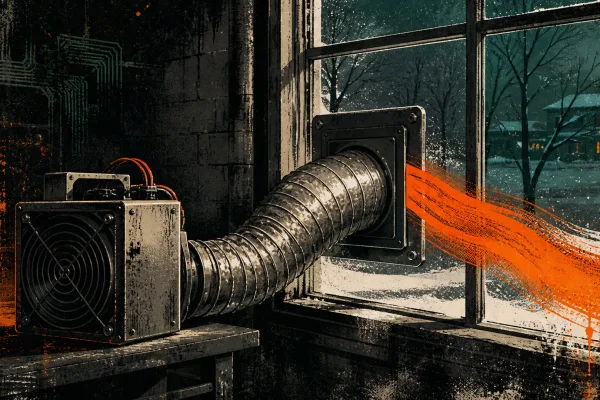
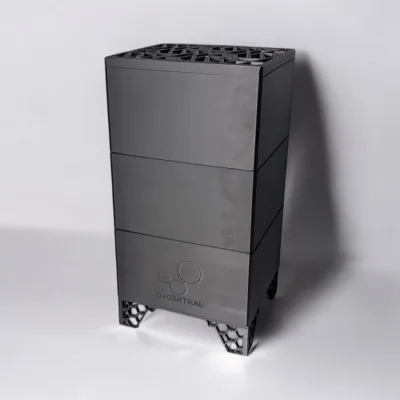
Every watt a Bitaxe draws becomes heat — that is not a metaphor, it is thermodynamics, and it is the part the “wasted electricity” crowd forgets. At 15–21 W a single unit will not warm a room (be honest with yourself), but in winter that draw is heat you would have paid for anyway, so the true running cost of the ticket is effectively offset by the warmth. It runs silent, and unlike a resistive heater it is also taking lottery swings while it heats. If genuine room heating is your goal, a single Bitaxe is not the tool; a converted ASIC space heater is. But as a quiet desk companion that turns electricity into both warmth and a ticket, it is a uniquely satisfying object.
Who should buy one — and who shouldn’t
| Buy a Bitaxe if you… | Skip it if you… |
|---|---|
| Want to learn ASIC mining hands-on | Expect predictable monthly income |
| Like the idea of a lifelong lottery ticket with a Bitcoin jackpot | Are calculating a “payback period” |
| Value decentralization and self-custody of your hashrate | Want a room heater (buy a converted ASIC instead) |
| Have normal-to-cheap power and a few dollars a month to spare | Pay $0.30+/kWh and plan to run a stack purely for odds |
| Enjoy tinkering, flashing firmware, and tuning | Want a sealed appliance you never touch |
Notice the pattern: the people who should buy one are buying an experience, an education, and a principle — with a jackpot lottery ticket attached for free. The people who shouldn’t are buying a financial product that does not exist.
Frequently asked questions
Will a Bitaxe ever pay for itself?
Not through expected mining revenue — the odds of a single chip finding a block are astronomically small (on the order of 15,000 years expected for a Gamma-class unit), so the realistic expected value is near zero over any normal timeframe. The only path to “paying for itself” is the rare lottery hit, which would pay for itself thousands of times over. Treat the purchase as a fixed cost for the experience and the ticket, not as an investment with a payback period.
How much does it cost to run a Bitaxe per month?
Very little. A Gamma-class Bitaxe drawing around 18 watts costs roughly $1 CAD/month on cheap Quebec hydro, about $2 CAD/month at typical Canadian rates, and around $3 CAD/month in high-cost regions. The running cost is one of the strongest arguments in its favour — you can keep the lottery ticket live for the price of a coffee.
How much does a Bitaxe cost to buy in Canada?
The flagship Bitaxe (Gamma 601) is $184.99 CAD, the Bitaxe GT is $269.99 CAD, and the six-chip Bitaxe Hex is $389.99 CAD — all built and shipped from our Montreal, Quebec workshop, so there are no customs, FX, or brokerage surprises on top. The decision-free Starter Build bundles the flagship with a case, PSU, and heatsink.
Does adding more Bitaxes improve my odds enough to matter?
Not meaningfully. Each Bitaxe adds roughly 1 TH/s to a network running 800–900 exahashes, so two or four units multiply both your cost and a still-astronomically-small probability. Stack Bitaxes for heat, for the build, or for the fun — not because you think the odds become favourable. They don’t.
Is solo mining with a Bitaxe better than just buying Bitcoin?
It is different, not better. Buying spot Bitcoin is the low-variance way to stack sats. Solo mining a Bitaxe is the high-variance way — near-zero expected return with a tiny chance of an enormous one — plus the education and sovereignty that buying coins doesn’t give you. Many plebs do both.
The honest verdict
Is a Bitaxe worth it? Yes — if you are buying a lottery ticket, a classroom, and a principle, all in one quiet little open-source board, for a few dollars a month. No — if you are buying yield. We will not pretend the odds are anything but a long shot, because the long shot is the product, and respecting that is the whole point. If you want to mine for predictable returns, scale up to real hardware with cheap power. If you want to learn the craft, hold your own hashrate, and keep a ticket in the most interesting drawing on earth, a Bitaxe is one of the best $185 a sovereign Bitcoiner can spend.
Ready to take your swing? Start with the flagship Bitaxe (Gamma 601) for $184.99 CAD, or grab the decision-free Bitaxe Starter Build if you want everything in one box. Still deciding? Use the Which Bitaxe picker, browse the full lineup on the Bitaxe hub, or buy a Bitaxe in Canada shipped from our Montreal workshop. And if the open-mining mission resonates, see where the same philosophy is heading next as industrial miners are reclaimed and repurposed in the great hashcenter migration.