Quick answer
Net metering and net billing decide how your utility credits surplus solar you export. Net metering gives a roughly one-to-one kWh credit near retail; net billing pays a lower dollar credit, often wholesale or avoided-cost. Because export rarely pays full retail, self-consuming solar on-site usually wins.
Net metering and net billing decide how your utility credits the surplus electricity your home solar array sends back to the grid, and that single number quietly sets the economics of running a Bitcoin miner behind your meter. Under true net metering you get a one-to-one kilowatt-hour credit at (or near) the retail rate; under net billing you get a monetary credit that is usually lower, often the wholesale or avoided-cost price. Because surplus is rarely paid at full retail, using your own midday solar on-site, for example to run a miner as a controllable load, generally returns more than exporting it. This is an informational orientation to the companion Canadian net-metering and net-billing dataset, not legal, financial, or engineering advice; confirm your own province’s current terms on the official sources linked there.
Net metering vs net billing: what the words actually mean
Both arrangements let a customer-generator send excess renewable electricity to the grid and receive a credit toward what they consume. The Ontario Energy Board describes net metering as a program that lets eligible customers send surplus renewable electricity to the distribution system and “receive credit towards the energy the customer consumes.” The difference is what that credit is worth and what form it takes.
Net metering banks your exported energy as kilowatt-hours. One kWh you push out roughly cancels one kWh you later pull back, valued at the retail energy rate. Net billing instead converts each exported kWh into a dollar credit, typically at a wholesale, “excess energy,” or avoided-cost price that sits below the retail rate you pay to import. Retail rates bundle in transmission, distribution, and grid-maintenance costs; when you export, the utility avoids only its generation cost, so net-billing credits tend to land closer to that lower number.
| Feature | Net metering | Net billing |
|---|---|---|
| Credit unit | Kilowatt-hours (banked energy) | Dollars (monetary credit) |
| Typical value of export | At or near the retail energy rate (1:1) | Wholesale / excess-energy / avoided-cost rate, usually below retail |
| What it offsets | Future kWh you import (often energy charge only) | Dollar amounts on the bill |
| Best return comes from | Self-consumption; export is a fallback | Self-consumption even more strongly, since export pays least |
In Canada, the companion dataset shows most provinces still run 1:1 retail-rate net metering, while Alberta and Manitoba operate net-billing programs. British Columbia is mid-transition: BC Hydro is introducing a new self-generation service rate, and from July 1, 2026 it purchases excess generation at 10 cents per kWh, compensated each billing cycle rather than at an annual true-up. Several other provinces are also revising their terms, which is why the dataset carries an official source and a verification date for every row.
Why surplus is usually credited below retail
The recurring pattern across Canadian programs is that the energy you keep is worth more than the energy you give away. A few examples drawn straight from the dataset’s official sources illustrate the spread:
- British Columbia. Under BC Hydro’s net metering, any surplus remaining at the annual true-up has historically been paid at a market price that ranged from roughly 3 to 10 cents per kWh and averaged about 6 cents; the incoming self-generation rate fixes export at 10 cents per kWh.
- Alberta. Micro-generation under 150 kW is credited at the retail energy rate, but larger systems are credited at the hourly wholesale pool price, which fluctuates and is typically well under retail.
- Newfoundland and Labrador. Banked credits are settled annually at the rate Newfoundland Power pays NL Hydro for power, which is below retail.
- Quebec. Hydro-Quebec banks surplus as kWh; whatever positive balance remains at the reset is credited at the average cost of electricity supply, again not the full retail rate.
Even where the headline program is “1:1,” the credit often applies to the energy portion of your bill only. Ontario’s net metering, for instance, credits exports against the electricity charge but does not offset delivery, regulatory, or other fixed charges. That makes the practical value of an exported kWh lower than the all-in rate you pay, and it strengthens the case for consuming your own generation rather than shipping it out.
A miner is a controllable load that turns surplus into bitcoin
Here is the through-line for a home setup: a Bitcoin miner is a controllable, deferrable electrical load that can soak up surplus solar instead of letting it leave the meter at a low export credit. Solar peaks at midday, which is often exactly when a household uses the least power, so a typical home exports its biggest surplus during the hours the grid values that energy the least. A miner can run during those midday peaks and pause or throttle at other times, converting kilowatt-hours that would have earned a sub-retail credit into hashing work instead.
The arithmetic is just the spread between two numbers. Suppose, purely for illustration, that you import at 15 cents per kWh and your utility credits exports at 6 cents per kWh. Every kWh you export earns 6 cents; every kWh you self-consume avoids paying 15 cents. The 9-cent gap is the value self-consumption captures over exporting, before you account for whatever the miner itself produces. Your real numbers will differ by province, rate plan, and season, but the direction holds wherever export credits sit below retail.
Self-consumption value per kWh is, roughly, your retail import rate minus your export credit. The wider that gap, the more a controllable load like a miner is worth relative to exporting.
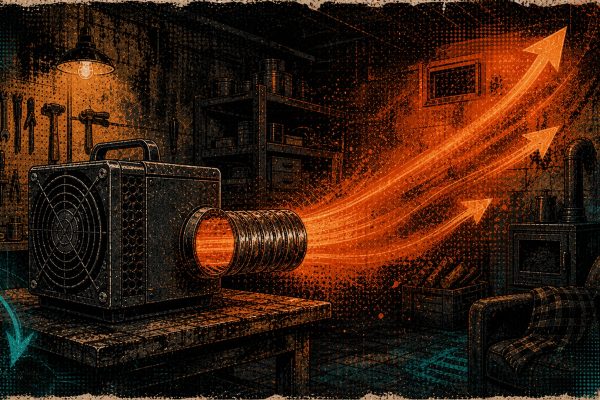
This is an economics-of-the-load argument, not a profitability promise. Whether a given miner is worth running depends on bitcoin’s price, network difficulty, hardware efficiency, and your all-in power cost, none of which net metering rules control. Mining also adds heat and noise to your space; plan the airflow with the mining-room ventilation calculator before you commit hardware to a room. Treat the figures here as a framework for thinking, not a forecast.
How the annual reset and rollover affect sizing
Most Canadian net-metering programs let credits roll over month to month but then reconcile or expire on an annual (or in Quebec’s case, biennial) anniversary. Banked kWh you do not use by that reset are usually either paid out at the low surplus rate or forfeited entirely. That reset is the reason oversizing an array purely to export is often a poor trade.
The dataset records several distinct reset behaviours, for example:
- Carry then reset to zero. Ontario carries credits up to 12 months, then resets to $0; New Brunswick resets each March 31 and forfeits remaining credits.
- Annual true-up with payout. British Columbia and Newfoundland and Labrador settle leftover surplus once a year at a below-retail rate.
- No rollover at all. Yukon’s micro-generation program pays surplus out by an annual cheque with no carryover, and its intake was paused into 2026, so current status should be confirmed.
- No expiry. Saskatchewan credits do not expire for systems enrolled after November 2019.
The practical implication: if your program forfeits or under-pays year-end surplus, sizing an array to roughly match your own annual consumption (rather than to maximise export) keeps more value on your side of the meter. A controllable load gives you a second lever, letting you raise on-site usage to absorb generation you would otherwise lose at the reset. You can sketch a balance between panel size, a node or small load, and self-consumption with the solar Bitcoin node calculator.
Province-by-province orientation
The table below is a high-level orientation only. The authoritative, regularly verified detail, including credit treatment, eligible generation, administrator, and the official source link for each program, lives in the Canadian net-metering and net-billing dataset, which also exposes a machine-readable JSON endpoint under a CC BY 4.0 licence. Caps and rules change, so always confirm against the official utility or regulator before acting.
| Province / territory | Program type | System size cap | Reset / rollover (summary) |
|---|---|---|---|
| Ontario | Net metering | 500 kW | Carry up to 12 months, then reset to $0 |
| Quebec | Net metering | 1,000 kW | kWh bank resets every 24 months; balance credited |
| British Columbia | Net metering (transitioning) | 100 kW | Annual true-up (Mar 1); new self-generation rate from Jul 1, 2026 |
| Alberta | Net billing | 5,000 kW (5 MW) | Credited monthly on the bill |
| Saskatchewan | Net metering | 100 kW | No expiry for systems enrolled after Nov 2019 |
| Manitoba | Net billing | Not specified | Monetary credit applied to monthly bills |
| New Brunswick | Net metering | 100 kW | Resets to zero each Mar 31; remainder forfeited |
| Nova Scotia | Net metering | 27 kW residential (1,000 kW commercial) | Reconciled annually (Jan 1); surplus not purchased |
| Prince Edward Island | Net metering | 100 kW (30 kW applied for new applicants) | Outstanding credits expire Oct 31 each year |
| Newfoundland and Labrador | Net metering | 100 kW (5 MW provincial total) | Settled annually at a below-retail rate |
| Yukon | Net metering (micro-generation) | Not specified | No carryover; annual payout cheque (intake paused into 2026) |
| Nunavut | Net metering | 15 kW | Credits expire at fiscal year-end |
Read across the table and the spread is clear: caps run from 15 kW in Nunavut to 5 MW in Alberta, most jurisdictions still credit at the retail rate, and almost all of them reset on an anniversary that values leftover surplus below retail. That combination is what makes a controllable on-site load worth understanding before you size anything.
Putting it together
For a home miner on solar, the workflow is straightforward. First, identify whether your province runs net metering or net billing and what it pays for export, using the dataset and its official source links. Second, note your reset rule, since that tells you how much oversizing-to-export actually buys you (often little). Third, treat any miner as a load you schedule into your surplus window so its kilowatt-hours displace low-value exports rather than high-value imports. Size the solar and load relationship with the solar Bitcoin node calculator, and plan the room’s heat and airflow with the mining-room ventilation calculator.
None of this replaces a conversation with your utility or a qualified electrician and accountant. Program terms, interconnection requirements, and electrical-code obligations are specific to your site and change over time. Use this guide to ask better questions, then confirm the answers against the official sources before you spend anything.
Frequently asked questions
What is the difference between net metering and net billing?
Net metering banks your exported electricity as kilowatt-hours and credits it at roughly the retail rate, so one exported kWh offsets about one imported kWh. Net billing converts exports into a dollar credit at a wholesale or avoided-cost rate that is usually lower than retail. In short, net metering credits energy; net billing credits money, typically at a smaller amount.
Should I run my miner on solar or export the power to the grid?
Wherever your export credit is below your retail import rate, self-consuming your solar is generally worth more per kilowatt-hour than exporting it, because consumption avoids the full retail cost while export earns only the lower credit. A miner is one way to consume that midday surplus on-site. Whether the miner is worth running overall still depends on bitcoin price, difficulty, and hardware efficiency, which net-metering rules do not control.
Does net metering make a home Bitcoin miner free to run?
No. Net metering changes how your surplus is valued; it does not make electricity free. A miner running on self-generated solar avoids buying that power at retail, but it still consumes real energy, adds heat and noise, and only “earns” if mining revenue exceeds its all-in operating cost. Treat it as informational, not a guarantee of profit.
How does the annual reset affect how big a solar array I should build?
Most Canadian programs reconcile credits once a year and either pay out leftover surplus at a low rate or forfeit it. That means oversizing an array purely to export tends to give back value at the reset. Sizing closer to your own annual consumption keeps more value on your side of the meter, and a controllable load lets you absorb generation you would otherwise lose.
Can I still get paid for surplus after running a miner?
Usually yes, but at the program’s export rate, which is often below retail. Any generation you do not self-consume flows to the grid and is credited under your province’s net-metering or net-billing terms. The point of the controllable-load approach is to shift as much of that energy as possible into the higher-value self-consumption bucket first.
Where can I find my province’s exact rules?
The Canadian net-metering and net-billing dataset lists all 12 provincial and territorial programs with administrator, type, cap, credit treatment, reset rule, and an official utility or regulator source link for each, plus a machine-readable JSON endpoint. Because terms change and several provinces are mid-transition, always confirm the current details on the official source before making a decision.