Skip to content

Bitcoin accepted at checkout  |  Ships from Laval, QC, Canada  |  Expert support since 2016

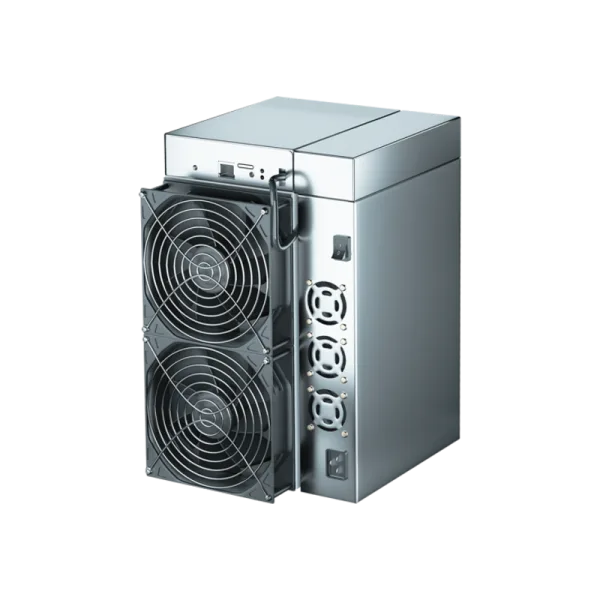
Goldshell KD Max ASIC miner specifications and profitability image
Active Goldshell Blake2s PRO HEATER

Goldshell KD Max

Hashrate 40.2 TH/s
Power 3,350 W
Efficiency 83.3 J/TH

Quick answer

The Goldshell KD Max is a Blake2s miner rated about 40.2 TH/s at roughly 3,350 W. An industrial-class unit — loud and power-hungry, best suited to a dedicated mining space, not living areas.

Professional-Grade Miner

This miner draws 3,350W and produces 75+ dB of noise — it is designed for dedicated mining environments, not living spaces. Professional-grade miners deliver the highest hashrate and revenue per unit but require proper infrastructure: a 240V circuit, adequate ventilation or exhaust ducting, and a space where noise is not a concern (garage, basement, warehouse, or outdoor enclosure).

For home miners looking for a quieter alternative, consider our Bitcoin Space Heater builds or explore open-source miners like the Bitaxe that are purpose-built for residential environments.

Circuit Requirement 240V dedicated circuit

Heater-Class Miner

At 3,350W, this miner outputs approximately 11430 BTU/hr of heat — equivalent to a standard electric space heater. Every watt consumed by an ASIC miner is converted to heat with 100% efficiency, making it a space heater that also mines Bitcoin.

During heating season, miner heat can offset part of the heat a room would otherwise need from another electric heater. The economics depend on your electricity rate, room heat demand, BTC price, network difficulty, and noise constraints.

Heat Output 11430 BTU/hr
Explore Bitcoin Space Heaters →

Profitability Calculator

$63,683
Daily KDA Mined --
Breakeven Electricity $0.0144/kWh
Cost to Mine 1 KDA --
Network Hashrate Share --
Break-even Estimate --
Period Revenue Electricity Cost Profit
Daily $1.16 $5.63 $-4.47
Weekly $8.11 $39.40 $-31.29
Monthly $34.75 $168.84 $-134.09
Yearly $422.74 $2,054.22 $-1,631.48

Where to Buy the Goldshell KD Max

D-Central Technologies is a Bitcoin-only company. For this miner, check out our trusted partner retailers below.

Partner

ASIC Miner Market

United States

Wide selection of new and used ASIC miners. US-based shipping.

Shop Now
Partner

MinersDeals

United States

Competitive prices on new ASIC miners with coupon codes.

Shop Now

BT-Miners

United States

Large inventory of ASIC miners. US-based.

Shop Now

Coin Mining Central

United Kingdom

UK-based mining hardware retailer. Ships worldwide.

Shop Now

CryptoMinerBros

United States

Established US retailer with repair services.

Shop Now

Partner links may earn D-Central a commission at no extra cost to you. Have you considered Bitcoin mining instead? Explore Bitcoin miners →

Full Specifications

Model Goldshell KD Max
Model Number KD Max
Manufacturer Goldshell
Algorithm Blake2s
Coins Mined Kadena (KDA)
Hashrate 40.2 TH/s
Power Consumption 3,350 W
Efficiency 83.3 J/TH
Dimensions 200 x 264 x 290mm
Weight 8.5
BTU Output 11430 BTU/hr
Equivalent Heater Equal to a 3,350W space heater
Daily Power Cost $5.63/day
Monthly Power Cost $168.84/mo
Circuit Requirement 240V circuit required
Release Date 2022-06-01
MSRP $1,320.00
Status Active

Home Mining Assessment

8 /100
Not Recommended
Heat Output 3,350W / 11430 BTU
High heat - requires ventilation or duct system
Power Draw 3,350W (3.4kW)
240V dedicated circuit required

The Goldshell KD Max is a single-algorithm Kadena (KDA) ASIC that hashes the Blake2S-256 proof-of-work at 40.2 TH/s while pulling roughly 3,350 W at the wall — about 83 J/TH on Kadena’s work unit. Launched in June 2022, it was the flagship of Goldshell’s KD line and remains a serviceable, repairable altcoin miner.

Chip and hashboard architecture

The KD Max runs on Goldshell’s own in-house Blake2S silicon. Unlike Bitmain or MicroBT — whose control boards, ASIC dies and power chains we have reverse-engineered in depth — Goldshell does not publish die-level documentation for its Kadena chips. There is no verifiable public process node, die size or per-board chip count for this unit, and we will not invent numbers the manufacturer keeps closed. What we can describe with confidence is the structural layout, because it is what we see on the bench during repair.

The KD Max is a self-contained desktop-class unit: the hashing chips, control board and power supply are integrated into a single compact chassis (200 x 264 x 290 mm), so there is no separate APW-style PSU brick to source or fail. Several Blake2S hashboards are driven by one Goldshell control board, which runs the miner’s firmware, talks to the boards over the chip chain, and exposes a small web UI for monitoring and pool configuration. Cooling is handled by integrated fans pushing air across the board heatsinks — this is an actively cooled, audible machine, not a passive or living-room-quiet device.

Two architectural points are worth setting straight for buyers coming from the Bitcoin world. First, the KD Max is a Kadena miner only — its silicon is fixed to the Blake2S-256 hash and cannot mine SHA-256 (Bitcoin), Scrypt (Litecoin/Doge) or any other algorithm. Second, Goldshell’s voltage and frequency control lives at the board/firmware level, not the per-chip level; like every modern ASIC, “tuning” here means adjusting board-wide operating points, not addressing individual chips.

Real-world power and efficiency

Goldshell rates the KD Max at 3,350 W with a typical +/-5% tolerance, so expect real wall draw to land in the roughly 3,200-3,500 W band depending on ambient temperature, line voltage and PSU losses. At the nameplate figures, efficiency works out to about 83.3 J/TH (3,350 W / 40.2 TH/s). It produces on the order of 11,430 BTU/h of waste heat (3,350 W x 3.412), which is a genuine consideration for any room you place it in.

One number that is routinely misread: that 83 J/TH is measured on Kadena’s Blake2S work unit, not on Bitcoin’s SHA-256. You cannot line up a Kadena “J/TH” against an Antminer S21’s “J/TH” and conclude anything meaningful — they are different hashes doing different work. Judge the KD Max against other Kadena hardware and against the live KDA price, not against Bitcoin miners.

Specification Goldshell KD Max
Algorithm Blake2S-256
Coin Kadena (KDA)
Hashrate 40.2 TH/s
Power draw (nameplate) 3,350 W (+/-5%)
Efficiency ~83.3 J/TH (on Blake2S)
Heat output ~11,430 BTU/h
Dimensions 200 x 264 x 290 mm
Weight ~8.5 kg
Power supply Integrated
Cooling Active (integrated fans)
Stock firmware Goldshell (BFGMiner-derived)
Released June 2022

On tuning headroom: Goldshell’s stock firmware exposes only a small set of operating modes rather than the runtime autotuning loops you find on Bitmain hardware running BraiinsOS+ or similar. That keeps things simple, but it also means there is far less practical headroom to undervolt for efficiency or push for a few extra TH/s. If you want to understand how board-level power and efficiency tuning works across the ASIC landscape — and where a closed unit like this sits on that spectrum — our ASIC power profiles resource walks through the methodology.

Firmware and software

The KD Max ships with Goldshell’s stock firmware, which is BFGMiner-derived: it presents a web interface on the local network for status, pool and wallet configuration, plus a CGMiner/BFGMiner-style API for programmatic monitoring. Fleet tooling such as pyasic recognises Goldshell as a first-class stock-firmware type and can read summary, pool and device data from it over that API.

Here is the honest third-party reality. The aftermarket firmware ecosystem that Bitcoin miners take for granted — BraiinsOS+, VNish, LuxOS, and our own DCENT_OS — is built for Bitmain and MicroBT SHA-256 hardware. None of it targets Goldshell’s Kadena units, and there is no published open API or documented custom-firmware path for the KD Max. In practice that means you run the stock firmware, keep it updated from Goldshell, and do your pool and wallet configuration through the built-in web UI. Stock firmware speaks standard Stratum V1 to Kadena pools; native Stratum V2 is a BraiinsOS+ feature on Antminers and is not part of this picture.

Common faults and troubleshooting

After years on the repair bench, the failure modes on Goldshell KD-series units are familiar and mostly mechanical or thermal rather than exotic:

  • Dead or low hashboard — total hashrate drops by a board’s share, or a board stops being detected. Usually a chip-chain or power-stage fault on that board.
  • Fan failure — a stalled or failing fan triggers thermal throttling or shutdown; the unit may keep restarting until airflow is restored.
  • Power supply or controller faults — because the PSU and controller are integrated, a failure here can take the whole unit offline rather than just one board.
  • Network / web-UI lockups — the miner becomes unreachable or unresponsive; often resolved by a reboot, a firmware refresh, or correcting pool/IP settings.
  • Degraded efficiency — accumulated dust and dried thermal interface material raise temperatures and drag down stable hashrate over time.

Before assuming hardware failure, rule out the cheap causes first: verify clean, sufficient power; confirm the pool URL, worker and KDA wallet are correct in the web UI; and make sure ambient temperature and airflow are within reason. If you have isolated a fault to a specific board or symptom and want a structured path through it, our ASIC fault finder walks the diagnostic steps in order.

Repair and longevity

D-Central has repaired ASICs in-house since 2016, and that extends beyond Bitcoin miners to the wider hashing ecosystem, Goldshell’s KD line included. Goldshell hashboards in the KD family can be diagnosed on dedicated test fixtures that scan the chip chain and flag faulty stages, which means a board is rarely a write-off on the first dead chip — chip-level rework, fan replacement and PSU/controller repair are all on the table.

That repairability is the strongest argument for keeping an older KD Max in service. A single-coin altcoin miner from 2022 is not worth replacing wholesale, but it can absolutely be worth fixing: a hashboard repair or a fan swap costs a fraction of a new unit and returns it to full output. If your KD Max is down or under-performing, our ASIC repair service covers board-level diagnosis and component-level rework.

Who the KD Max is for

Be clear-eyed about this machine. The KD Max mines Kadena and nothing else, so its economics rise and fall entirely with the KDA price and Kadena network difficulty — neither of which sits where it did at the 2022 launch. We are not in the business of over-promising returns: in 2026 this is best understood as a hobby, learning or collector unit, or a niche play for someone with genuine conviction in Kadena and access to cheap power. Its ~11,430 BTU/h of heat output can be put to use in a workshop or garage during the cold months, turning some of the power bill into useful warmth, but that is a consolation rather than a business case.

If your real goal is to learn ASIC mining or stack sats on Bitcoin’s own SHA-256, a Kadena box is the wrong tool and a Bitcoin-focused unit will serve you better. If you specifically want Kadena exposure on hardware you can actually get serviced, the KD Max remains a reasonable, repairable choice. Browse the full range in our miner catalog, and talk to us if you want a straight answer about whether a given unit fits your power, space and goals.

Generational context

The KD Max sat at the top of Goldshell’s Kadena (“KD”) lineup, above the smaller KD-Box and mid-range KD-series boxes, and arrived in June 2022 when Kadena was drawing real attention from home miners. Goldshell’s pitch across that line was always the same — compact, plug-and-play, home-friendly hardware for a single altcoin — and the KD Max was the high-hashrate expression of it. Since launch, the broader Kadena mining landscape has matured and KDA’s market has cooled from its early-cycle highs, which is the honest backdrop for any purchase or repair decision today. As a piece of hardware, though, it is exactly what it was meant to be: a self-contained, serviceable Blake2S miner that does one job and, when maintained, keeps doing it for years.

Frequently Asked Questions

What are the current mining economics for the Goldshell KD Max?

At $0.07/kWh, the Goldshell KD Max currently shows an estimated daily net cost of $4.47 before pool fees and hardware cost. Lower electricity rates, network changes, BTC price changes, or useful heat recovery can change the result.

Can I mine Bitcoin at home with the Goldshell KD Max?

The Goldshell KD Max has a home mining score of 8/100. With 0 dB noise and 3,350W power draw, it may require a dedicated space like a garage, basement, or outdoor enclosure. Consider noise insulation and proper ventilation.

Can the Goldshell KD Max heat my home?

The Goldshell KD Max outputs approximately 11430 BTU/hr of heat. For reference, a typical space heater produces 5,000-5,500 BTU/hr. All electrical energy consumed by the miner is converted to heat, making it 100% efficient as a heater. D-Central offers Bitcoin Space Heater builds designed specifically for home heating integration.

What power supply does the Goldshell KD Max need?

The Goldshell KD Max draws 3,350W of power. You need a power supply rated for at least 3,685W with appropriate voltage (200-240V AC). D-Central stocks compatible power supplies in our shop. Always use a quality PSU from a reputable manufacturer to protect the miner and wiring.