On this page
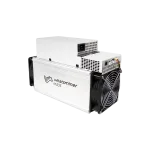
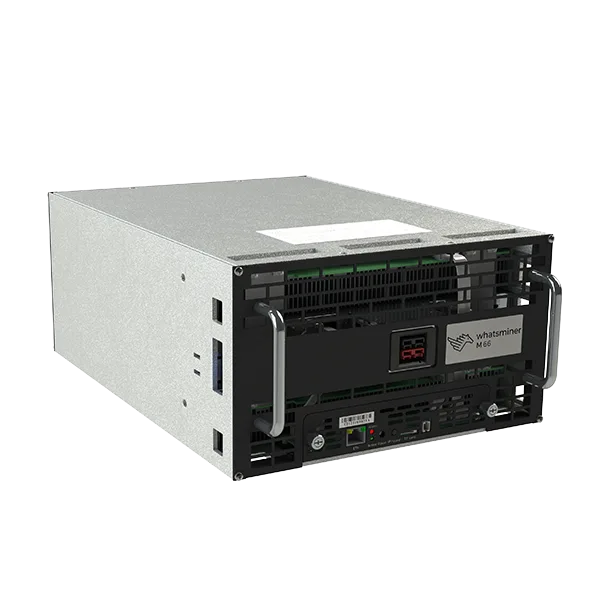
MicroBT Whatsminer M66
Quick answer
The MicroBT Whatsminer M66 is a Bitcoin miner rated about 238 TH/s at roughly 4,736 W (about 19.9 J/TH). An industrial-class unit — loud and power-hungry, best suited to a dedicated mining space, not living areas.
Professional-Grade Miner
This miner draws 4,736W and produces 75+ dB of noise — it is designed for dedicated mining environments, not living spaces. Professional-grade miners deliver the highest hashrate and revenue per unit but require proper infrastructure: a 240V circuit, adequate ventilation or exhaust ducting, and a space where noise is not a concern (garage, basement, warehouse, or outdoor enclosure).
For home miners looking for a quieter alternative, consider our Bitcoin Space Heater builds or explore open-source miners like the Bitaxe that are purpose-built for residential environments.
Profitability Calculator
| Period | Revenue | Electricity Cost | Profit |
|---|---|---|---|
| Daily | $7.49 | $7.96 | $-0.47 |
| Weekly | $52.42 | $55.70 | $-3.27 |
| Monthly | $224.66 | $238.69 | $-14.03 |
| Yearly | $2,733.42 | $2,904.12 | $-170.70 |
Heating offset estimates the value of heat replacing an electric space heater during heating season (~6 months/year in Canada). Actual savings depend on your heating setup and climate.
Where to Buy the MicroBT Whatsminer M66
D-Central Technologies
CanadaBitcoin Mining Hackers since 2016. Ships from Laval, Quebec.
Shop all Bitcoin mining productsASIC Miner Market
United StatesWide selection of new and used ASIC miners. US-based shipping.
Shop NowFull Specifications
| Model | MicroBT Whatsminer M66 |
|---|---|
| Model Number | Whatsminer M66 |
| Manufacturer | MicroBT |
| Algorithm | SHA-256 |
| Coins Mined | Bitcoin (BTC) |
| Hashrate | 238 TH/s |
| Power Consumption | 4,736 W |
| Efficiency | 19.9 J/TH |
| Dimensions | 267.5*147*401mm |
| Weight | 16 |
| BTU Output | 16159 BTU/hr |
| Equivalent Heater | Equal to a 4,736W space heater |
| Daily Power Cost | $7.96/day |
| Monthly Power Cost | $238.69/mo |
| Circuit Requirement | 240V circuit required |
| Release Date | 2023-11-01 |
| MSRP | $3,672.00 |
| Status | Active |
Home Mining Assessment
The Whatsminer M66 is MicroBT’s air-cooled, SHA-256 ASIC from the M6x generation (late 2023). The base unit D-Central lists delivers 238 TH/s while drawing roughly 4,736 W at the wall — about 19.9 J/TH. It is a three-hashboard, ~5 kW data-centre machine built on MicroBT’s own K-series silicon and an Allwinner control board.
Chip and hashboard architecture
Unlike Bitmain, which fabricates its BM-series chips at TSMC, MicroBT designs its own SHA-256 silicon — the K-series ASICs. The M6x generation (2023–2024) is a refinement of the 5 nm-class die family that debuted in the M5x machines. On a sibling M60S we benched, the boards carried part numbers like K32A317, K88A318 and K55A312 — almost certainly different speed bins of the same die rather than three different chips. We keep the exact foundry node qualitative on purpose: MicroBT does not publish it, and our teardown notes place the M6x die in the 5 nm-class bracket. We do not claim a 3 nm process for this part.
The M66 carries three hash boards (the “K10” slot type), each populated with a long series chain of K-series ASICs. At the listed 238 TH/s, that works out to roughly 79 TH/s per board — which is why a single failed board roughly thirds the machine’s output. Voltage is regulated per power domain across the chain, in groups of chips, not per individual ASIC; this is the same domain-level scheme every modern SHA-256 design uses, and it is what tuning firmware actually manipulates.
The control board is the real architectural fork from Antminer. MicroBT uses a CB6-class board built around an Allwinner H616 SoC — a 64-bit quad-core ARM Cortex-A53 — with no FPGA. Bitmain’s S19/S21 boards pair an ARM core with a Xilinx Zynq FPGA that runs the nonce-search state machine; MicroBT instead talks to the hash boards directly over SPI/UART straight from the SoC. The practical fallout: Whatsminer hash boards and control boards are not interchangeable with Antminer parts. Different EEPROM format, different power delivery, different connectors, different communication engine entirely.
Real-world power and efficiency
The M66’s headline number is honest because MicroBT integrates the PSU and measures at the wall: 238 TH/s at ~4,736 W is a true 19.9 J/TH including PSU conversion loss and fan draw, not a chip-only figure you have to derate. MicroBT shipped the broader M66/M66S family across a band of roughly 218–298 TH/s, with every bin landing near 18.5–19.9 J/TH; the 238 TH/s unit is the mainstream air-cooled bin.
Stock firmware exposes three coarse power modes — Low, Normal and High — plus a power-percentage and target-frequency control for finer trimming. In Low mode the M66 trades hashrate for a better J/TH, the same lever you see across the Whatsminer line. There is real tuning headroom here, but it is narrower than on an Antminer running an open autotuner: MicroBT’s write API is locked by default (see firmware section), and the deeper per-domain autotuning is calculated at runtime by the firmware rather than pulled from a fixed preset table. For documented tuning bands on hardware we have profiled in depth, see our ASIC power profiles database.
On the heat side, ~4,736 W becomes roughly 16,159 BTU/h of waste heat — enough to warm a workshop or garage if ducted, but this is a 240 V machine. At ~4.7 kW it will not run on a standard North American 120 V household circuit; it needs a dedicated 208–240 V supply, the same as the high-bin M63S and S21-class units.
| Model | Generation | Hashrate | Wall power | Efficiency | Cooling | Year |
|---|---|---|---|---|---|---|
| Whatsminer M50S | M5x (Samsung 5 nm) | 128 TH/s | 3,276 W | 25.6 J/TH | Air | 2022 |
| Whatsminer M66 (this unit) | M6x (5 nm-class) | 238 TH/s | 4,736 W | 19.9 J/TH | Air | 2023 |
| Whatsminer M70 | M7x | 236 TH/s | ~3,420 W | ~14.5 J/TH | Air | 2025 |
| Antminer S21 | BM1368 (TSMC 5 nm) | 200 TH/s | ~3,500 W | ~17.5 J/TH | Air | 2023 |
| Canaan Avalon A1566 | A15 (5 nm) | 185 TH/s | 3,420 W | 18.5 J/TH | Air | 2024 |
Firmware compatibility
The M66 runs MicroBT’s stock BTMiner stack on a hardened OpenWrt base, and it is one of the most locked-down platforms in mining. The firmware images are fully encrypted, the on-device filesystem is protected with dm-crypt, keys live in ARM TrustZone (OP-TEE), and there is no SSH/dropbear shipped at all. The BTMiner API (V2.2.x on port 4028, plus a newer V3 framing on 4433) answers read commands out of the box, but the write API — pool changes, power tuning, firmware updates — is disabled by default and has to be unlocked with MicroBT’s own WhatsMinerTool utility behind a token-based encryption handshake.
Be realistic about third-party firmware on this generation. The well-known open Antminer firmwares do not run on Whatsminer hardware at all — and because only one of those projects natively speaks Stratum V2, an M66 on stock firmware is a Stratum V1 machine in practice. Aftermarket performance firmware that historically targeted older M2x–M5x Whatsminers has only nascent reach on the M6x platform, precisely because of the TrustZone-plus-encrypted-image lockdown described above. We deliberately keep that guidance generic rather than pointing you at a specific aftermarket image to flash on a ~$3,600 machine.
D-Central’s own direction here is DCENT_OS: we are actively reverse-engineering the Whatsminer M6x control platform (the H616/CB6 boards and the K-series ASIC protocol) as part of bringing our open, GPL-3.0 firmware to MicroBT hardware. That work is in closed beta — we are not over-promising a release date — and it follows the same shoulders-of-giants principle we hold for every product: MicroBT built excellent silicon, and our job is to add one more layer of sovereignty on top of it.
Common faults and troubleshooting
Whatsminer reports faults as numeric error codes rather than the plain-text strings Antminer uses, which trips up first-time owners. The failures we see most on the M6x platform mirror what we logged on the bench:
- Chip-ID read errors (codes in the 541/542 range): the control board cannot enumerate the ASICs on a board — usually a cold-solder joint, a failed chip in the chain, or a marginal board-to-control ribbon.
- Hashboard boot failure (5491-class): a slot that will not initialise, dropping the machine to roughly two-thirds output (~159 TH/s on a three-board unit).
- PSU and power faults: the integrated P-series PSU throwing under-voltage or fan faults, common when an M66 is fed from an under-spec’d or sagging 240 V circuit.
- Thermal throttling: high environment temperature or clogged fans pulling target frequency down to protect the chips.
Work the symptom methodically before you condemn a board. Our ASIC fault finder walks the diagnostic tree, and the on-site error-code library decodes the specific Whatsminer number your unit is reporting so you can tell a recoverable config fault from a board that actually needs the bench.
Repair and longevity
D-Central has repaired SHA-256 ASICs in-house since 2016, Whatsminers included, and the M66 is a machine we service rather than a throwaway. Board-level work is the difference between a $3,600 paperweight and a runner: failed K-series chip replacement, hashboard reflow and fixture testing, P-series PSU repair, and full Allwinner H616 / CB6 control-board swaps when the SoC side dies. The catch worth knowing up front is that MicroBT’s dm-crypt and TrustZone hardening, plus the proprietary EEPROM format, mean Whatsminer repair needs vendor-aware tooling and test fixtures — it is not the same workflow as an Antminer, which is exactly why it pays to send these to a shop that already speaks the platform. If your M66 is down a board or dead on the control side, our ASIC repair service is the path back to full hashrate.
Who it is for, and buying
The M66 is a hashcenter and serious-home-mining machine, not a plug-and-play home appliance. You need a dedicated 208–240 V circuit, real airflow to move ~4.7 kW of heat, and tolerance for the loud, jet-like fan noise typical of a 5 kW air-cooled ASIC — far too much for occupied living space. Where it shines is a garage, workshop or small facility where the ~16,159 BTU/h of exhaust can be ducted into a useful heating role, turning what you would otherwise spend on heat into hashrate. If you are mining at home for sovereignty and learning rather than scale, a low-draw unit or a Bitaxe-class solo miner from our catalogue is a saner starting point; the M66 is for operators ready to run industrial-class hardware on industrial-class power.
Generational context
The M66 sits squarely in the middle of MicroBT’s modern lineage. It is a clear step up from the M5x M50S generation (~25 J/TH, 2022) and lands at 19.9 J/TH — efficient enough to beat the Antminer S19 XP era (~21.5 J/TH) and roughly match Canaan’s A15 generation (~18.5 J/TH). It trails the absolute frontier: Bitmain’s S21 (BM1368, ~17.5 J/TH) edges it on efficiency, and MicroBT’s own M7x successors (M70 at ~14.5 J/TH) leave it behind a generation later. That makes the M66 the workhorse air-cooled ~5 kW Whatsminer of the 2023–2024 deployment wave — past the bleeding edge today, but still a productive, repairable, well-understood machine for operators who can feed it the power and air it demands.
Broken miner? Get a real quote.
Tell us the symptom and get an instant repair-tier estimate ($95 / $145 / $195 CAD). Mail-in from across Canada, bench in Laval, Quebec.
Send it to D-Central — start a repair →Antminer S19 XP specs, repair, and parts
Use the S19 XP cluster to confirm specs, maintenance steps, hashboard symptoms, and compatible power or board parts before buying.
Compare the MicroBT Whatsminer M66
Frequently Asked Questions
What are the current mining economics for the MicroBT Whatsminer M66?
At $0.07/kWh, the MicroBT Whatsminer M66 currently shows an estimated daily net cost of $0.47 before pool fees and hardware cost. Lower electricity rates, network changes, BTC price changes, or useful heat recovery can change the result.
Can I mine Bitcoin at home with the MicroBT Whatsminer M66?
The MicroBT Whatsminer M66 has a home mining score of 8/100. With 0 dB noise and 4,736W power draw, it may require a dedicated space like a garage, basement, or outdoor enclosure. Consider noise insulation and proper ventilation.
Can the MicroBT Whatsminer M66 heat my home?
The MicroBT Whatsminer M66 outputs approximately 16159 BTU/hr of heat. For reference, a typical space heater produces 5,000-5,500 BTU/hr. All electrical energy consumed by the miner is converted to heat, making it 100% efficient as a heater. D-Central offers Bitcoin Space Heater builds designed specifically for home heating integration.
What power supply does the MicroBT Whatsminer M66 need?
The MicroBT Whatsminer M66 draws 4,736W of power. You need a power supply rated for at least 5,210W with appropriate voltage (200-240V AC). D-Central stocks compatible power supplies in our shop. Always use a quality PSU from a reputable manufacturer to protect the miner and wiring.