Electricity is the line item that decides whether your home mining operation prints sats or burns money. Most guides know this and then give you advice written for an industrial mining farm — “negotiate with your utility,” “leverage your demand profile,” “secure favourable contract terms.” If you’re a home miner in Canada running a Bitaxe or two and a heater-edition ASIC, you can’t negotiate anything. Your utility hands you a rate card and that’s the deal.
So let’s throw out the fantasy and talk about what a residential miner can actually do: read your rate structure correctly, pick the plan that fits a 24/7 load, and adapt your mining to the electricity you’ve got. That’s the real “negotiation” — and it’s entirely in your control.
The honest reality of residential electricity
Industrial miners get custom contracts because they represent megawatts of load a utility wants to plan around. You represent a few kilowatts. No utility account rep is taking that call. What you do have power over:
- Which rate plan you’re on — many provinces let you choose between flat and time-of-use, or you’re defaulted onto one without realizing the other exists.
- When your miner runs — the single biggest lever a home miner has.
- How efficient your hardware is — joules per terahash is a permanent multiplier on every kilowatt-hour you buy.
- What else that electricity does — if the miner is also heating your home, the “cost” math changes completely.
That’s your toolkit. It’s smaller than the industrial playbook, but used well it’s plenty.
Know which rate structure you’re actually on
Before you optimize anything, find out exactly how you’re billed. Pull up an actual bill — not your memory of it. Canadian residential customers generally fall into one of three structures:
- Flat rate. One price per kWh, all day, every day. Simple. A miner running 24/7 costs the same per hour at 3 a.m. as at 6 p.m. Common in provinces with cheap hydro power.
- Time-of-use (TOU). The price changes by time of day — expensive on-peak, cheaper mid-peak, cheapest off-peak and overnight. This is where scheduling pays off, and it’s the default for a lot of Ontario customers whether they chose it or not.
- Tiered. The price steps up after you exceed a monthly usage threshold. This one quietly punishes miners — a 24/7 load can push your whole household into the expensive upper tier.
The structure you’re on determines your entire strategy. On a flat rate, scheduling does nothing — run the miner 24/7. On TOU, scheduling is your biggest weapon. On a tiered plan, you need to know exactly where the threshold sits before you add a continuous load. If you don’t know which one you’re on, that’s your first action item, not an optional detail.
Provincial rate structures vary enormously across the country — our provincial guide to Bitcoin mining in Canada breaks down what miners are working with province by province, and the Bitcoin mining electricity guide covers the fundamentals.
If you’re on time-of-use: schedule around the price
This is the closest thing a home miner has to “negotiating a better rate” — and on a TOU plan it’s genuinely powerful. The idea: run the miner hard during cheap off-peak hours, throttle or pause it during expensive on-peak hours.
- Map your price windows. Get the exact on-peak, mid-peak, and off-peak hours for your utility and season. They shift between summer and winter in most TOU regions.
- Automate the on/off. A smart plug or smart relay can power a miner down during on-peak windows and back up off-peak without you babysitting it. For full-size ASICs, some firmware supports scheduled power profiles directly.
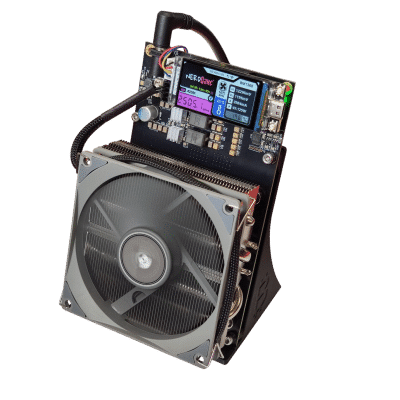
- Consider throttling instead of stopping. A full-size miner like the Antminer Slim Edition can be run at a reduced power profile during peak hours instead of fully off — you keep some hashrate while cutting the expensive draw.
- Mind the uptime trade-off. Mining only earns while it hashes. If on-peak is a big chunk of the day, you’re sacrificing real hashrate to save money. The math has to actually favour the trade — check it, don’t assume it.
We’ve written a dedicated deep-dive on this — how to mine only when electricity is cheap — because for TOU customers it’s the highest-leverage move available.
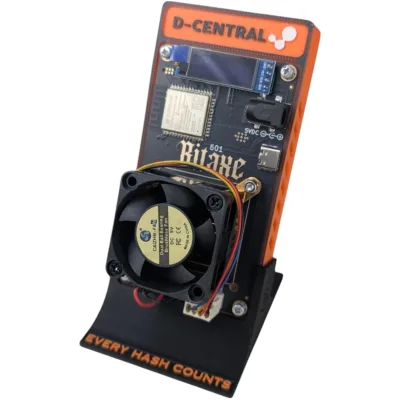
One important note for Bitaxe miners: at roughly 15 W, scheduling a Bitaxe to dodge peak rates saves you pennies. It’s not worth the hassle, and you’d be giving up solo block lottery uptime for almost nothing. Scheduling is a full-size-ASIC strategy.
Hardware efficiency is the rate cut you actually control
You can’t change your price per kWh, but you can change how much hashrate you get per kWh — and that’s the same thing as a permanent discount. This is where the joules-per-terahash number on a miner’s spec sheet stops being trivia.
The generational gap is large. An older Bitmain S9 runs at roughly 98 J/TH. An S19j Pro is around 30.5 J/TH. The newer S21 generation pushes well below that. Running an inefficient old miner on a good rate can lose to an efficient modern miner on a worse rate — efficiency compounds on every single kilowatt-hour. D-Central’s miner database tracks the real-world hashrate, power draw, and efficiency of 561 miners precisely so you can compare honestly instead of trusting marketing.
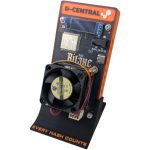
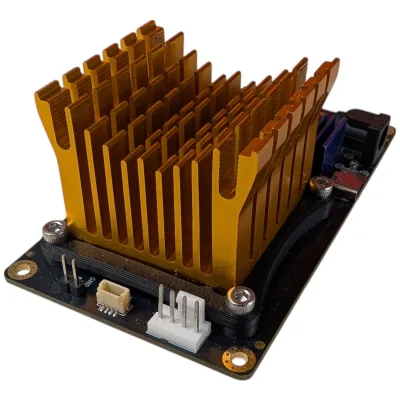
The Bitaxe class — open-source single-board solo miners running around 15 W — sits at the low-power end of the spectrum entirely. They won’t out-hash a full-size ASIC, but their total electricity exposure is so small that rate optimization barely applies. For a lot of home miners worried about their power bill, that’s the point: a Bitaxe is a solo block lottery ticket that costs about as much to run as a nightlight. Start with the complete Bitaxe guide, then browse the Bitaxe lineup — board generations Max, Ultra, Supra, and Gamma.
The reframe: make the electricity do two jobs
Here’s the move industrial miners can’t make and home miners can. If your miner is also heating your home, the electricity isn’t a pure mining cost — it’s heating spend you’d have made anyway, now doing double duty.
An ASIC converts essentially 100% of its electricity into heat, exactly like an electric resistance heater — but it also hashed on the way through. In a Canadian heating season, running D-Central’s Antminer S9 Space Heater Edition or another unit from the Space Heater lineup means your “mining electricity bill” is partly offset by the baseboard or furnace heating you didn’t have to buy. The 5-year cost comparison vs. a regular electric heater runs the full numbers. This single reframe does more for a cold-climate miner’s economics than any rate plan ever could.
Before you sign anything: the home miner’s checklist
If you do have a choice of plan or provider, here’s the realistic checklist — no fantasy negotiation involved:
- Confirm your rate structure — flat, TOU, or tiered — from an actual bill.
- If tiered, find the threshold and estimate whether a 24/7 miner pushes your household into the upper tier.
- If choosing between plans, model both against your real mining schedule. A TOU plan only wins if you’ll actually schedule around it.
- Watch for fixed delivery and admin charges — the per-kWh rate isn’t the whole bill.
- Check your circuit capacity first. A full-size miner is a continuous high-draw load that often needs a dedicated circuit — see the space heater electrical guide. Electrical safety is not a place to economize.
Run your real numbers
None of this is theoretical — it’s arithmetic, and you should do it before you buy hardware or change plans. Drop your actual rate (or both rates, if you’re comparing plans) and a specific miner’s wall-power spec into our mining profitability calculator, then model the raw energy cost with the power cost calculator. If a full-size unit is marginal on your rate, the answer often isn’t a better contract — it’s a more efficient miner, a heater-edition build that offsets heating, or starting on the low-power Bitaxe path.
The bottom line
Home miners don’t negotiate electricity contracts — utilities don’t negotiate with kilowatt-scale residential loads, and pretending otherwise just wastes your time. What you actually control is real and sufficient: know your rate structure cold, schedule a full-size miner around time-of-use pricing, buy the most efficient hardware you can, and — if you’re in a heating climate — make that electricity heat your home while it mines. That last move is the one no industrial farm can copy.
D-Central has been building home mining hardware for Canadian electricity realities since 2016 — efficient builds, quiet-tuned full-size ASICs, and heater editions that turn your power bill into double duty. Browse the Antminer Slim Edition and Space Heater lineup for full-size hashrate, or the Bitaxe lineup if you want a solo miner that barely registers on your bill.