On this page
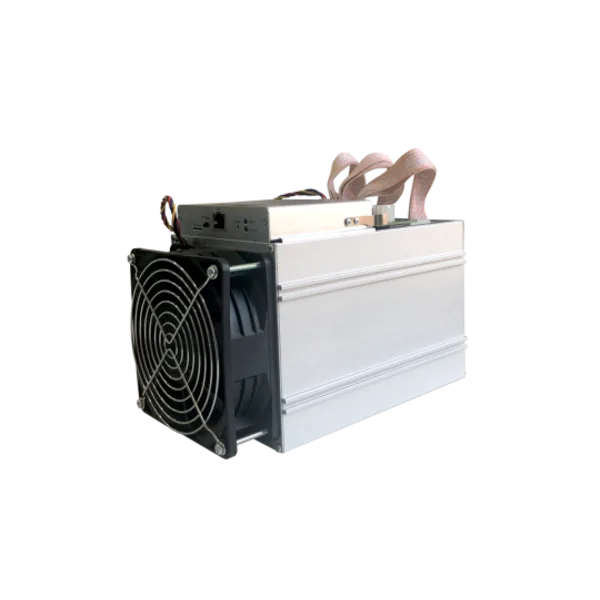
Bitmain Antminer B7 (96Kh)
Quick answer
The Bitmain Antminer B7 (96Kh) is a Tensority miner rated about 96 KH/s at roughly 528 W. Runnable at home with proper airflow and noise control; best in a dedicated space.
Heater-Class Miner
At 528W, this miner outputs approximately 1802 BTU/hr of heat — equivalent to a standard electric space heater. Every watt consumed by an ASIC miner is converted to heat with 100% efficiency, making it a space heater that also mines Bitcoin.
During heating season, miner heat can offset part of the heat a room would otherwise need from another electric heater. The economics depend on your electricity rate, room heat demand, BTC price, network difficulty, and noise constraints.
Profitability Calculator
| Period | Revenue | Electricity Cost | Profit |
|---|---|---|---|
| Daily | $0.00 | $0.89 | $-0.89 |
| Weekly | $0.00 | $6.21 | $-6.21 |
| Monthly | $0.00 | $26.61 | $-26.61 |
| Yearly | $0.00 | $323.77 | $-323.77 |
Heating offset estimates the value of heat replacing an electric space heater during heating season (~6 months/year in Canada). Actual savings depend on your heating setup and climate.
Where to Buy the Bitmain Antminer B7 (96Kh)
D-Central Technologies is a Bitcoin-only company. For this miner, check out our trusted partner retailers below.
ASIC Miner Market
United StatesWide selection of new and used ASIC miners. US-based shipping.
Shop NowPartner links may earn D-Central a commission at no extra cost to you. Have you considered Bitcoin mining instead? Explore Bitcoin miners →
Full Specifications
| Model | Bitmain Antminer B7 (96Kh) |
|---|---|
| Model Number | Antminer B7 (96Kh) |
| Manufacturer | Bitmain |
| Algorithm | Tensority |
| Coins Mined | Unknown |
| Hashrate | 96 KH/s |
| Power Consumption | 528 W |
| Efficiency | 5500000000 J/TH |
| Dimensions | 130 x 155 x 244mm |
| BTU Output | 1802 BTU/hr |
| Equivalent Heater | Small personal heater (1,802 BTU/hr) |
| Daily Power Cost | $0.89/day |
| Monthly Power Cost | $26.61/mo |
| Circuit Requirement | Standard 120V 15A |
| Release Date | 2019-03-01 |
| Status | Active |
Home Mining Assessment
The Bitmain Antminer B7 is a legacy, air-cooled ASIC built for the Tensority proof-of-work algorithm that once secured the Bytom (BTM) blockchain. It hashes at roughly 96 KH/s while pulling about 528 W at the wall. Released in Bitmain’s 2018-2019 altcoin-ASIC wave, it is now valued for collecting, learning and supplemental heat rather than profit.
Antminer B7 at a glance
| Specification | Antminer B7 (96 KH) |
|---|---|
| Manufacturer | Bitmain |
| Algorithm / chain | Tensority (Bytom, BTM) |
| Rated hashrate | ~96 KH/s |
| Wall power | ~528 W |
| Efficiency | ~5.5 joules per kilohash (528 W ÷ 96 KH/s) |
| Cooling | Air, dual-fan, single-enclosure |
| Dimensions | 130 × 155 × 244 mm |
| Heat output | ~1,802 BTU/h |
| Era | Late 2018 / early 2019 |
Tensority and the Bytom blockchain
Unlike almost every other Antminer, the B7 was never a Bitcoin miner. It targets Tensority, the proof-of-work algorithm behind Bytom (BTM). Tensority is unusual: it was designed around large matrix and tensor multiplications, the same math that powers neural-network inference. Bytom’s stated goal was an algorithm that AI-acceleration silicon could also mine, blurring the line between a hashing ASIC and a tensor-math accelerator. That ambition is the reason a dedicated chip like the one inside the B7 exists at all.
Because the B7 hashes Tensority rather than SHA-256, two things follow that shape the rest of this page. First, its performance is quoted in kilohashes per second (KH/s), not terahashes, so it is not directly comparable to an S9, S19 or S21. Second, an efficiency figure expressed in joules per terahash is meaningless here. The correct way to read the B7’s efficiency is roughly 5.5 joules per kilohash (528 W divided by 96 KH/s). If you have seen this model listed with a “5,500,000,000 J/TH” rating, that is an artifact of forcing a Tensority device through a Bitcoin-oriented calculator, not a real spec.
Chip and hashboard architecture
The B7 carries Bitmain’s purpose-built Tensority hashing ASIC, replicated across the unit’s hashboards and fed by a single control board inside the familiar Antminer chassis. Bitmain did not publish the Tensority chip’s internals to the same depth as its Bitcoin line (the BM1387, BM1397 and BM1398 generations), so D-Central treats the exact die SKU and per-board chip count as undocumented rather than guessing at a number.
What we can state with confidence comes from the control-board platform the B7 shares with the rest of Bitmain’s 2018-2019 catalog, hardware we have probed and repaired in-house since 2016. That generation is built around a Xilinx Zynq SoC pairing dual Arm Cortex-A9 cores (clocked around 667 MHz) with an FPGA fabric; the FPGA drives the hashing chains while the Arm side runs a Linux stack and the web dashboard. A single I2C bus links the controller to the on-board voltage regulation and temperature sensors, and the hashboards plug into the controller through Bitmain’s standard 18-pin connector.
One architectural detail matters more than any marketing number when you own or diagnose one of these units: voltage is regulated per domain, not per chip. The ASICs sit in series-connected strings, and a DC-DC stage holds a target voltage across a domain (a group of chips on a shared rail). There is no individual-chip voltage knob. That is why a single weak or shorted die can drag down an entire domain and present as a dead section of the board rather than a single bad chip.
Real-world power and efficiency
The 528 W nameplate is a wall figure for a stock unit in a reasonable ambient. As with every air-cooled ASIC, expect the number to drift with intake temperature, PSU age and fan condition: a tired power supply or clogged heatsinks raise draw for the same work. There is no meaningful undervolting or autotuning ecosystem for the B7 the way there is for modern SHA-256 hardware, so treat 528 W as roughly fixed rather than a starting point you can tune down.
For context on how tuning headroom, voltage domains and joules-per-unit-of-work behave on the hardware we do tune, see our ASIC power profiles database. It documents the per-domain frequency and voltage steps that modern Antminers expose, the runtime-calculated autotuner behavior of current firmware, and why a published efficiency number is only ever the starting point of a real-world curve. The B7 predates all of that: it runs at one operating point and stays there.
Firmware compatibility
The B7 ships with Bitmain’s stock firmware, a cgminer-derived stack with the classic Antminer web interface for pool configuration, status and basic diagnostics. That is essentially the whole story for this model.
The rich aftermarket firmware world that mining hackers rely on, BraiinsOS+, VNish, LuxOS and D-Central’s own DCENT_OS, is built exclusively for SHA-256 Antminers (the S9, S17, S19 and S21 families). None of it targets the Tensority hash engine, so there is no custom-firmware path to extra efficiency or features on a B7. Conveniences that live in that ecosystem, such as native Stratum V2 support (currently only in BraiinsOS+), simply do not exist in the Tensority world. DCENT_OS is our firmware for modern SHA-256 Antminers and does not apply to this device. If you are running a B7, plan around stock firmware and judge it on stock terms.
Common faults and troubleshooting
A B7 fails in the same ways any air-cooled Antminer of its era does. The usual suspects are a hashboard or chain dropping offline, temperature-sensor read errors, fan faults flagged by the controller, and outright PSU failure. Because Tensority is a niche, low-value chain today, the most common reason a B7 stops earning is simply that nobody is left to maintain it, not a single dramatic fault.
When you do need to diagnose one, work from symptoms rather than guesses. Our ASIC fault finder walks the standard decision tree, dead board versus dead PSU versus controller, fan errors, thermal trips, and how a per-domain voltage layout makes one bad die look like a missing section of the board. The logic transfers cleanly from our SHA-256 repair work to a B7, even though the chip is different. Start with the easy wins: confirm clean power, reseat the hashboard connectors, clear dust from the heatsinks and fans, and check that both fans actually spin before you ever suspect the silicon.
Repair and longevity
D-Central has repaired Antminers since 2016, and we are honest about what is and is not worth fixing. On a B7, the serviceable parts are the parts the whole Antminer line shares: the power supply, the fans and the control board all use common, repairable components, and a unit that is “dead” because of a failed PSU or a tired fan is usually an easy save.
The hard limit is the hashboard. Tensority ASICs are out of production and there is no donor-board supply to harvest, so a B7 board with dead chips is generally beyond economical repair, the replacement silicon simply does not exist. We respect what Bitmain built here, an early bet on AI-friendly proof-of-work, but we will always tell you plainly when a board is not worth the bench time rather than sell you a repair that cannot hold. For anything still serviceable, see our ASIC repair service.
Who the Antminer B7 is for today
This is not an income machine. Bytom’s value and network activity faded years ago, and Tensority mining no longer pays for its own electricity in any normal setting. Buy or keep a B7 for one of three honest reasons:
- Collecting and blockchain history — the B7 is a clean example of Bitmain’s brief push into AI-adjacent altcoin ASICs.
- Teardown and learning — it is a low-stakes platform for studying Antminer control boards, hashboard wiring and PSU behavior.
- Supplemental heat — at ~528 W it emits about 1,802 BTU/h, enough to take the edge off a small room, the same money you would spend on a space heater.
If your real goal is to learn mining hands-on at low power and low risk, a Bitaxe is a far better modern starting point: open-source, single-chip, a few watts, and an active community. If you want hashrate that actually earns, look at current SHA-256 hardware in our shop or browse the full ASIC miner database to compare efficiency tiers before you buy.
Generational context
The B7 belongs to Bitmain’s 2018-2019 expansion beyond Bitcoin, the same wave that produced dedicated miners for Ethash, Equihash, Blake and other altcoin algorithms. Within the Bytom line specifically, the earlier B3 introduced Tensority mining and the B7 arrived as the dramatically faster successor, a large multiple of the B3’s throughput in a similar single-box form factor.
That wave did not last. The crypto winter that followed, combined with declining interest in Bytom itself, hollowed out the market for single-algorithm altcoin ASICs almost as quickly as it appeared. Bitmain redirected its engineering back toward the SHA-256 line that became the S17, S19 and S21 generations, the hardware that defines mining today and the hardware D-Central tunes, repairs and builds firmware for. Viewed from 2026, the Antminer B7 is best understood as a well-built artifact of an ambitious detour, interesting for what it tried to do, but no longer a tool for making money.
Antminer S21 specs, repair, and parts
Use the S21 cluster to connect current-generation specs, buying options, chip-level parts, troubleshooting, and repair support.
Compare the Bitmain Antminer B7 (96Kh)
Frequently Asked Questions
What are the current mining economics for the Bitmain Antminer B7 (96Kh)?
At $0.07/kWh, the Bitmain Antminer B7 (96Kh) currently shows an estimated daily net cost of $0.89 before pool fees and hardware cost. Lower electricity rates, network changes, BTC price changes, or useful heat recovery can change the result.
Can I mine Bitcoin at home with the Bitmain Antminer B7 (96Kh)?
Yes, the Bitmain Antminer B7 (96Kh) scores 67/100 for home mining viability. It produces 0 dB of noise and draws 528W. It is suitable for home environments with appropriate placement considerations.
Can the Bitmain Antminer B7 (96Kh) heat my home?
The Bitmain Antminer B7 (96Kh) outputs approximately 1802 BTU/hr of heat. For reference, a typical space heater produces 5,000-5,500 BTU/hr. All electrical energy consumed by the miner is converted to heat, making it 100% efficient as a heater. D-Central offers Bitcoin Space Heater builds designed specifically for home heating integration.
What power supply does the Bitmain Antminer B7 (96Kh) need?
The Bitmain Antminer B7 (96Kh) draws 528W of power. You need a power supply rated for at least 581W with appropriate voltage (200-240V AC). D-Central stocks compatible power supplies in our shop. Always use a quality PSU from a reputable manufacturer to protect the miner and wiring.
