Skip to content

Bitcoin accepted at checkout  |  Ships from Laval, QC, Canada  |  Expert support since 2016

Antminer T17+ ASIC miner specifications and profitability image
Discontinued Bitmain SHA-256 DCENT_OS PRO HEATER

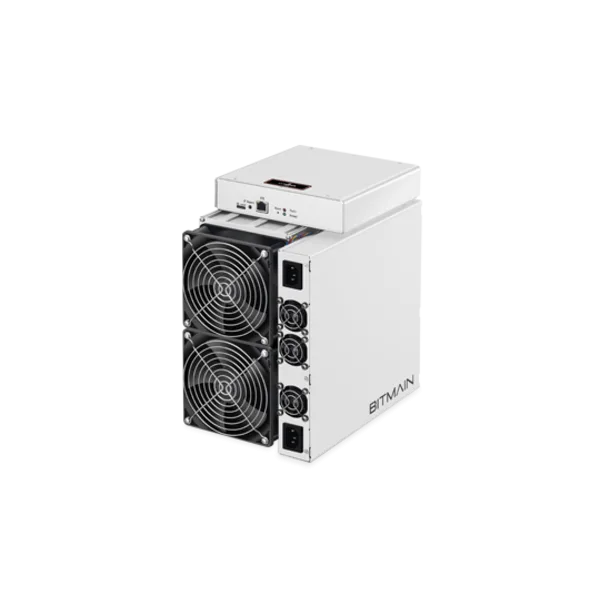
Antminer T17+

Budget version of the S17+ with slightly lower efficiency. Uses BM1397 chips. Available at low cost on the secondary market.

Hashrate 64 TH/s
Power 3,200 W
Efficiency 50 J/TH
Noise 75 dB

Quick answer

The Antminer T17+ is a Bitcoin miner rated about 64 TH/s at roughly 3,200 W (about 50 J/TH), built on the BM1397 ASIC. An industrial-class unit — loud and power-hungry, best suited to a dedicated mining space, not living areas.

DCENT_OS Compatible

DCENT_OS is custom firmware developed by D-Central Technologies specifically for home miners. It transforms this miner with whisper-quiet fan profiles, 120V North American outlet support, auto-tuning for maximum efficiency, heater mode integration, and a clean web dashboard for monitoring.

Miners running DCENT_OS score higher on our Home Mining Assessment because the firmware is purpose-built to make industrial hardware livable in residential spaces.

Learn More About DCENT_OS →

Professional-Grade Miner

This miner draws 3,200W and produces 75 dB of noise — it is designed for dedicated mining environments, not living spaces. Professional-grade miners deliver the highest hashrate and revenue per unit but require proper infrastructure: a 240V circuit, adequate ventilation or exhaust ducting, and a space where noise is not a concern (garage, basement, warehouse, or outdoor enclosure).

However, this miner is compatible with DCENT_OS — D-Central's custom firmware that adds whisper-quiet fan profiles and 120V North American outlet support. With DCENT_OS installed, this industrial miner can be transformed for home use.

Circuit Requirement 120V with DCENT_OS / 240V stock

Heater-Class Miner

At 3,200W, this miner outputs approximately 10918.4 BTU/hr of heat — equivalent to a standard electric space heater. Every watt consumed by an ASIC miner is converted to heat with 100% efficiency, making it a space heater that also mines Bitcoin.

During heating season, miner heat can offset part of the heat a room would otherwise need from another electric heater. The economics depend on your electricity rate, room heat demand, BTC price, network difficulty, and noise constraints.

Heat Output 10918.4 BTU/hr
Explore Bitcoin Space Heaters →

Profitability Calculator

$62,079
Daily BTC Mined --
Breakeven Electricity $0.0260/kWh
Cost to Mine 1 BTC --
Network Hashrate Share --
Estimated mining profitability by period at current network conditions.
Period Revenue Electricity Cost Profit
Daily $2.00 $5.38 $-3.38
Weekly $13.99 $37.63 $-23.64
Monthly $59.98 $161.28 $-101.30
Yearly $729.70 $1,962.24 $-1,232.54

Where to Buy the Antminer T17+

Official

D-Central Technologies

Canada

Bitcoin Mining Hackers since 2016. Ships from Laval, Quebec.

Shop all Bitcoin mining products
Partner

ASIC Miner Market

United States

Wide selection of new and used ASIC miners. US-based shipping.

Shop Now
Partner

MinersDeals

United States

Competitive prices on new ASIC miners with coupon codes.

Shop Now

BT-Miners

United States

Large inventory of ASIC miners. US-based.

Shop Now

Coin Mining Central

United Kingdom

UK-based mining hardware retailer. Ships worldwide.

Shop Now

CryptoMinerBros

United States

Established US retailer with repair services.

Shop Now

Full Specifications

Full technical specifications for this miner.
Model Antminer T17+
Model Number T17+
Manufacturer Bitmain
Algorithm SHA-256
Coins Mined Bitcoin (BTC)
Hashrate 64 TH/s
Power Consumption 3,200 W
Efficiency 50 J/TH
Noise Level 75 dB
Chip Model BM1397
Cooling Air
Voltage Range 200-240V AC
Operating Temperature 5-40°C
Dimensions 175x298x304
Weight 10
Interface Ethernet
BTU Output 10918.4 BTU/hr
Equivalent Heater Equal to a 3,200W space heater
Daily Power Cost $5.38/day
Monthly Power Cost $161.28/mo
Circuit Requirement 240V circuit required
Release Date 2019-12-01
Status Discontinued

Home Mining Assessment

8 /100
Not Recommended
This score reflects DCENT_OS firmware capabilities: whisper-quiet fan profiles, 120V support, and auto-tuning for home environments.
Noise 75 dB ~40 dB DCENT_OS
Whisper-quiet with DCENT_OS fan profiles — suitable for living spaces
Heat Output 3,200W / 10918.4 BTU
High heat - requires ventilation or duct system
Power Draw 3,200W (3.2kW)
120V compatible with DCENT_OS auto-tuning — standard North American outlet

Budget version of the S17+ with slightly lower efficiency. Uses BM1397 chips. Available at low cost on the secondary market.

The Antminer T17+ is Bitmain’s 64 TH/s SHA-256 miner from late 2019, built on the 7 nm BM1397 ASIC. At a nameplate 3,200 W (about 50 J/TH) it is a legacy-tier workhorse — most valuable today as a deeply tunable space heater, a hobby or solo-lottery rig, and a low-cost, genuinely repairable platform.

Chip and hashboard architecture

The T17+ runs three hashboards from a single Xilinx Zynq-7 control board — the am2-s17 platform Bitmain shared across the whole S17/T17 family (a single Linux kernel image serves S17, S17+, T17 and T17+; only the FPGA bitstream changes between the base and “+” variants). Each board carries 44 Bitmain BM1397 ASICs daisy-chained over a shared UART bus, for 132 chips in a complete unit.

The BM1397 is Bitmain’s second-generation SHA-256 chip, fabricated on TSMC’s 7 nm DUV process (2019) in a compact QFN-34 package, with roughly 672 hashing cores per die. At the chip level it does around 200 GH/s at about 36 J/TH — the silicon is genuinely capable; the T17+’s middling system efficiency comes from how hard Bitmain clocks the board, not from the chip itself.

On the control board, a Zynq-7 SoC (ARM core at 667 MHz) runs embedded Linux, while its FPGA fabric handles the time-critical hashboard signalling — the forward clock and command lines (CLK, CI/CO, RST) and the reverse nonce-return path (RO/RI) down each daisy chain. Crucially, the 17-series moved voltage regulation off the per-board PIC microcontrollers used on the older S9 and into an FPGA “board-control” peripheral working with a dsPIC33EP16GS202 controller and the PSU’s I²C link. Voltage is set per voltage domain, not per chip: the chips on each board are wired into series-connected domains (BM1397 boards use 12 domains), each fed by its own regulator and held near a ~1.57 V core at the stock 500 MHz. Temperature is read from LM75A sensors physically located on the hashboards, accessed through the BM1397’s I²C pass-through rather than from discrete sensors on the control board. Four fans handle cooling, and the boards use the familiar 18-pin ribbon interface, which keeps them friendly to bench test fixtures.

Spec snapshot vs the rest of the 17-series

Model ASIC Chips (per board × boards) Nameplate hashrate Wall power Efficiency Stock frequency
Antminer T17 BM1397 (7 nm) 30 × 3 = 90 40 TH/s 2,200 W 55 J/TH 650 MHz
Antminer T17+ BM1397 (7 nm) 44 × 3 = 132 64 TH/s 3,200 W 50 J/TH 500 MHz
Antminer S17+ BM1397 (7 nm) 65 × 3 = 195 73 TH/s 2,920 W 40 J/TH 500 MHz

The pattern is clear: the “+” generation added chips per board (132 here versus the base T17’s 90) to lift hashrate, while the S17+ traded raw output for the best efficiency in the family.

Real-world power and efficiency

The nameplate is 64 TH/s at 3,200 W, which works out to exactly 50 J/TH. Bitmain rates wall power to ±10%, so a real unit pulls roughly 2,880–3,520 W — about 13–15 A on a 240 V circuit — and dumps close to 10,900 BTU/h of heat. Out of the box, stock firmware pins the board near 500 MHz and offers little room to move.

The real story with the T17+ is tuning headroom. On autotuning firmware the same hardware spans a wide power/efficiency curve, and — unusually for this family — its best efficiency sits at the low end, which makes it a surprisingly sane miner to run gently:

Mode Frequency Wall power Hashrate Efficiency
Eco / heater (minimum) 400 MHz 1,150 W 35 TH/s 32.9 J/TH
Quiet balanced 540 MHz 1,800 W 48 TH/s 37.5 J/TH
Stock-equivalent 750 MHz 3,200 W 66 TH/s 48.5 J/TH
Maximum overclock 850 MHz 3,850 W 75 TH/s 51.3 J/TH

Run at its 400 MHz floor, the T17+ delivers 35 TH/s at just 32.9 J/TH — quiet enough and low-power enough to live on a 120 V circuit, and far more efficient than its 50 J/TH nameplate. These targets are calculated by the firmware’s autotuner at runtime against each board’s measured chip behaviour; they are not fixed presets baked into the silicon. Explore the complete curve in our ASIC power profiles database, and use the spec card and live profitability calculator on this page to model a given profile against current difficulty and your own electricity rate.

Firmware compatibility

Out of the box the T17+ runs Bitmain’s stock cgminer-based firmware: factory-locked near 500 MHz, a handful of fixed operating points, no native autotuning and no Stratum V2. Bitmain stopped issuing meaningful firmware updates for the 17-series long ago, so a stock unit is essentially frozen in its 2019 capabilities.

Honestly, that is why almost every T17+ still earning today runs aftermarket firmware. The 17-series has a mature third-party ecosystem built around autotuning and undervolting — exactly the tools that unlock the efficiency curve above. BraiinsOS+ supported the am2-s17 platform with a dedicated BM1397 driver and remains the only firmware that natively speaks Stratum V2; several community autotuning firmwares also target these boards. We owe those projects credit for keeping a generation of hardware productive. One honest caveat: flashing aftermarket firmware can trip warranty-tracking flags, and an interrupted flash can corrupt the NAND — recoverable, but only via the SD-card recovery procedure.

D-Central is bringing its own firmware, DCENT_OS, to the am2-zynq platform that powers the T17+. It is GPL-3.0 and built squarely on the shoulders of the open-source mining-firmware community; the BM1397 driver path is documented and in active development, and the firmware is currently in closed beta with a public beta targeted for summer 2026. We would rather tell you it is on the bench than over-promise that it ships today.

Common faults and troubleshooting

The 17-series is the generation our bench sees most often for hashboard failures, so we know its symptoms well. The daisy-chained design means a single bad chip can take a whole board offline. The most common patterns:

  • Fewer chips than expected. A dead or open chip stops forwarding the clock, command and reset signals, so every chip downstream of it becomes invisible. A board reporting, say, 29 of 44 ASICs has its break point immediately after the last detected chip.
  • Zero chips / board not detected. A shorted chip can pull down the shared signal lines and make the entire chain read dead, as can a failed domain or a damaged signal ribbon.
  • Voltage-domain faults. A shorted chip or a failed LDO drops that domain’s voltage; abnormal voltage across any domain will stop the whole board from hashing — a classic 17-series failure.
  • Temperature-sensor errors. A faulty LM75A or a broken I²C pass-through trips the firmware’s thermal protection even when the chips are fine.
  • Fan and PSU faults. Fan-speed errors and APW9/APW9+ power-supply failures are common at this age and are often mistaken for board problems.

Map a specific error string or status-LED blink pattern to its root cause with our ASIC fault finder and error-code database before you open the unit — many “dead” T17+ boards are a single failed chip or a tired PSU, not scrap.

Repair and longevity

D-Central has repaired Bitmain hardware in-house in Laval, Quebec since 2016, and the T17+ is firmly in our wheelhouse. Because the BM1397 board architecture is so well understood, most failures are economically fixable rather than landfill: we reball and replace failed BM1397 chips, rebuild collapsed voltage domains and their regulators, replace dsPIC and power-management components, repair fan and temperature circuits, and verify every board on a test fixture before it ships back. A T17+ that “died” overnight is usually one chip or one domain away from running again. See our ASIC repair service for a diagnosis and quote.

Who it is for and buying

The T17+ is discontinued — there is no new stock — so it lives on the secondary and refurbished market, typically at a low price. That low entry cost defines who it suits today: anyone who wants a ducted space heater (its ~10,900 BTU/h is real, usable warmth), a hobby or learning rig, a solo-mining lottery box, or an inexpensive, repairable platform to practice ASIC tuning on. What it is not is an efficiency leader. At 50 J/TH stock it cannot compete with S19- or S21-class machines on pure profit at most electricity rates, so it earns its keep where the heat has value or the hardware was nearly free. Compare it head-to-head against newer models in our universal ASIC spec database, or see current options on buying ASIC miners in Canada. If you would rather start smaller and learn solo mining at a few watts, an open-source Bitaxe is a gentler entry point.

Generational context

The BM1397 was Bitmain’s second-generation 7 nm SHA-256 chip, the bridge between the long-lived 16 nm S9 era and the refined 7 nm BM1398 that powered the S19 generation. Within its own family, the “+” models were higher-chip-count refreshes: the T17+ carries 132 chips against the base T17’s 90, lifting 40 TH/s to 64 TH/s, while the S17+ pushed family efficiency to 40 J/TH. The generations that followed — BM1398 (S19, 2020) and the 5 nm BM1362/BM1366 chips of the S19j Pro and S19 XP — roughly halved joules per terahash. That progression is exactly why a well-tuned, well-maintained T17+ now makes the most sense as a heater, a learning bench or a repair-and-resell platform rather than a primary earner — and why keeping the one you have alive is often smarter than chasing its original spec sheet.

Run open-source firmware on your Antminer

DCENT_OS is D-Central’s open-source, GPL-3.0 firmware effort for Antminer hardware — currently in closed beta, with public beta targeted for summer 2026. We build on the shoulders of the open-firmware projects that came before us. Want early access? Join the beta list. Collection only — we will not email you anything else yet.

Broken miner? Get a real quote.

Tell us the symptom and get an instant repair-tier estimate ($95 / $145 / $195 CAD). Mail-in from across Canada, bench in Laval, Quebec.

Send it to D-Central — start a repair →

Frequently Asked Questions

What are the current mining economics for the Antminer T17+?

At $0.07/kWh, the Antminer T17+ currently shows an estimated daily net cost of $3.38 before pool fees and hardware cost. Lower electricity rates, network changes, BTC price changes, or useful heat recovery can change the result.

Can I mine Bitcoin at home with the Antminer T17+?

The Antminer T17+ has a home mining score of 8/100. With 75 dB noise and 3,200W power draw, it may require a dedicated space like a garage, basement, or outdoor enclosure. Consider noise insulation and proper ventilation.

Can the Antminer T17+ heat my home?

The Antminer T17+ outputs approximately 10918.4 BTU/hr of heat. For reference, a typical space heater produces 5,000-5,500 BTU/hr. All electrical energy consumed by the miner is converted to heat, making it 100% efficient as a heater. D-Central offers Bitcoin Space Heater builds designed specifically for home heating integration.

Does D-Central repair the Antminer T17+?

Yes, D-Central provides professional repair services for the Antminer T17+. Services include hashboard repair, control board diagnostics, fan replacement, and full refurbishment. Ship your miner to our Laval, Quebec facility for diagnosis and repair.

What power supply does the Antminer T17+ need?

The Antminer T17+ draws 3,200W of power. You need a power supply rated for at least 3,520W with appropriate voltage (200-240V AC). D-Central stocks compatible power supplies in our shop. Always use a quality PSU from a reputable manufacturer to protect the miner and wiring.