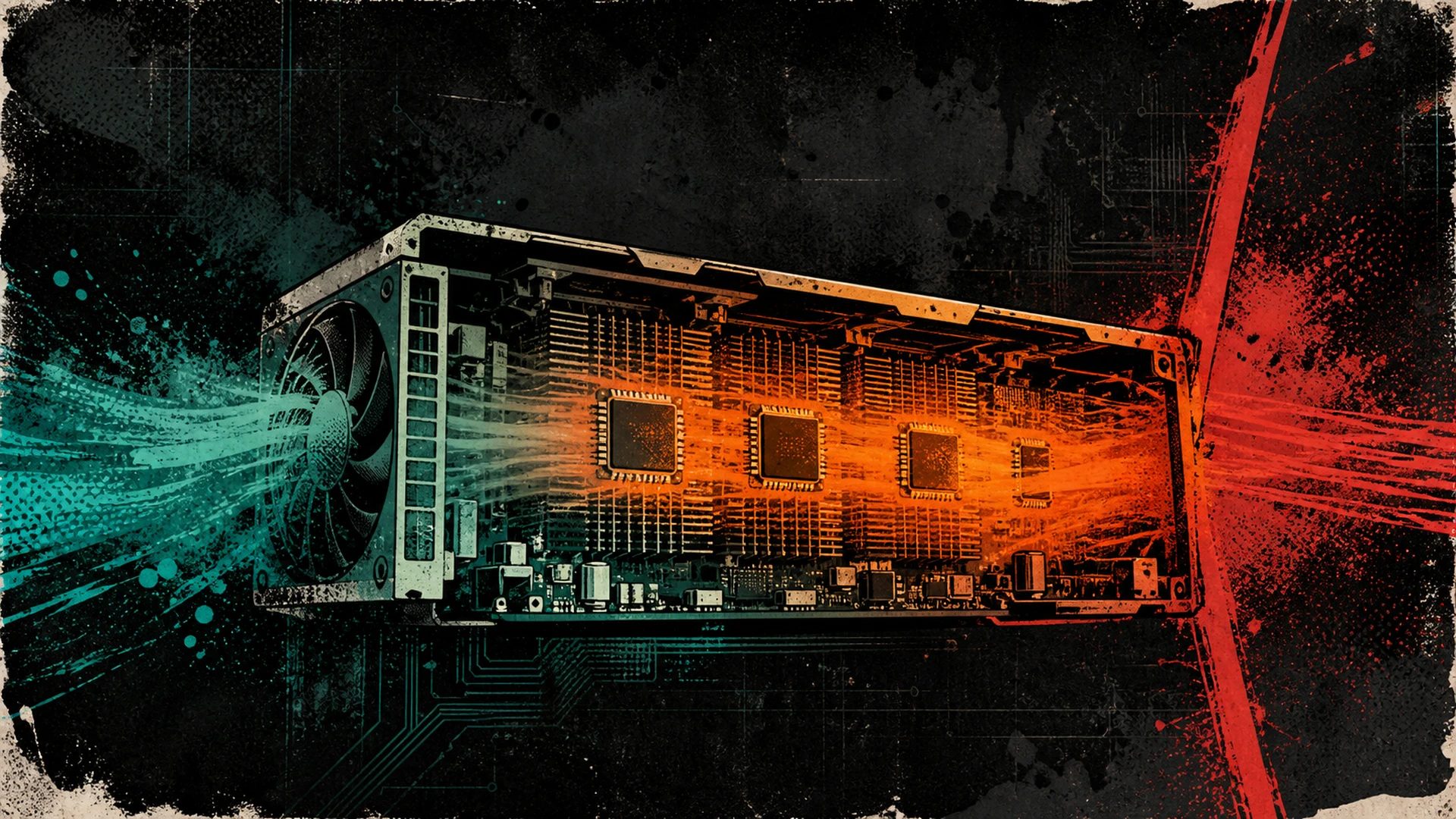
An ASIC reports several temperatures, and they are not interchangeable. Intake is the air you control; max-chip is the hottest on-die junction the firmware actually protects. Cross the throttle point and firmware cuts frequency to shed heat; cross the critical point and it kills the hashboards. Keep intake low enough that the chips never reach throttle.
Underneath the hashrate spec, every modern Bitcoin miner is a thermal machine running close to its silicon limits. Whether a unit holds its rated number for years or quietly de-rates, drops chips, and trips over-temperature errors comes down to how the operator manages temperature. This guide interprets what an ASIC thermal-limits table actually means — max-chip versus intake versus throttle versus shutdown — and how to use it. Read it alongside your manufacturer’s datasheet, not instead of it.
The four temperatures every miner reports
The most common operator mistake is treating “the temperature” as one number. A hashboard exposes at least two independent readings, and firmware derives two more limit points from them. Understanding which is which is the whole game.
| Reading | What it actually measures | Where it comes from | Why it matters |
|---|---|---|---|
| Max chip (junction) temperature | The hottest on-die temperature across all ASICs on the board | On-die temperature diodes (TEMP_P / TEMP_N pins) read per chip | This is the number the protection logic watches; it is always higher than the air |
| Intake (inlet) temperature | The air entering the unit | A sensor IC at the air inlet (board sensor, not the silicon) | The one temperature you directly control through the room |
| Outlet temperature | The heated air leaving the unit | A second sensor IC at the air outlet | Intake plus the heat the board just added; the inlet/outlet gap is a diagnostic |
| Throttle / shutdown points | Firmware limit thresholds, not sensors | Set in firmware against the chip reading | Define when the miner starts cutting hashrate and when it stops entirely |
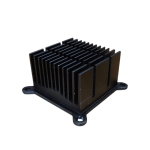
Physically, those sensor ICs sit on the bottom of the hashboard beneath the heatsink — one near the inlet, one near the outlet — talking to the control board over I2C at 3.3V; common parts are the LM75A, TMP75, TMP451, and NCT218 families. The chip-junction reading is separate, coming from diodes built into the ASIC die, which is why “chip temp” reads meaningfully hotter than the board sensor beside it. When a spec sheet quotes a maximum operating temperature, check whether it means intake air or silicon junction — they describe very different headroom.
How thermal throttling actually works
Thermal throttling is not a failure; it is the firmware doing its job. As the chip reading climbs, firmware walks up a ladder of escalating responses, cheapest fix first, most drastic last. A representative ladder — the structure D-Central’s DCENT_OS uses, mirroring how other modern firmware behaves — looks like this:
| Chip reading | Firmware response | Effect on hashrate |
|---|---|---|
| ~55°C (target) | PID fan control holds the board at this setpoint | None — full hashrate |
| ~65°C (hot) | Fans ramp to 100% | None yet, but the fan headroom is now spent |
| ~70°C (dangerous) | Frequency throttle begins — the chip is de-rated | Hashrate drops as clocks fall |
| ~75°C (critical) | Hashboards disabled | Board stops hashing entirely |
| Sensor failure or fan stall | Fans forced to 100%, alert raised | Safety override regardless of reading |
The exact numbers vary by manufacturer and firmware. Stock Bitmain firmware on an Antminer S19, for example, raises its over-temperature error when a board sensor (Temp1/Temp2) exceeds roughly 95°C, which is a higher PCB-referenced ceiling than the junction ladder above. Treat any single vendor’s figures as that vendor’s, and read your own unit’s thresholds rather than assuming. What is universal is the shape: fans first, frequency second, shutdown last.
Throttling matters financially: a de-rated miner still draws meaningful power while producing less hash, so efficiency in joules per terahash worsens. Heat also compounds. An ASIC’s static (leakage) power rises steeply with junction temperature — on the order of 2% per °C, roughly 2.7× at 80°C versus 25°C — so a hotter chip leaks more current, which makes more heat, which raises leakage further. Below the throttle point the cooling system absorbs that feedback; riding the limit, a small ambient rise can tip a board into a throttle-and-recover oscillation. The firmware’s recovery routine shows how seriously it treats this: on a hard overheat it holds the chip in reset, drops its voltage, waits for the silicon to fall well below the trip point, then restarts at a reduced frequency before ramping back up.
How to read your miner’s temperature telemetry
With multiple readings, the skill is interpreting them together rather than watching one dashboard number.
- Chip temperature is your ceiling — the number the protection ladder acts on, so keep margin against it. If your fleet manager shows only one temperature, find out whether it is chip or board.
- Inlet temperature is your input. It tracks the room: if inlet climbs across the day, every other temperature climbs with it.
- The inlet-to-outlet gap shows how hard the board is working to move heat. A widening gap at constant load points to reduced airflow — a clogged filter, a failing fan, recirculation — before any single sensor looks alarming.
- Per-board spread matters. Modern firmware exposes per-hashboard inlet and outlet temperatures (BraiinsOS+ reports lowest inlet and highest outlet per board from v1.5.0). One board hotter than its siblings on the same intake usually means a mechanical fault on that board, not a room problem.
Log chip temp, intake, and per-board outlet together. When something changes, ask whether it moved on all boards (a room or airflow issue) or one board (a hardware fault such as pumped-out paste or a detached heatsink). That one question routes most thermal triage.
What intake and ambient to target
You cannot set chip temperature directly — firmware and silicon decide that. You set the intake, and intake plus the board’s heat rise determines the chip reading. So target it backward from the throttle point: keep intake low enough that under full load, on the hottest board, the chip still sits comfortably below where de-rating begins.
Manufacturers commonly rate air-cooled ASICs for operation up to around 35–40°C ambient, but the rated ceiling is where the unit is allowed to keep running, not where it runs well. In practice, an intake in the low-to-mid 20s°C gives a typical air-cooled S19- or S21-class unit enough margin to hold full hashrate with fans off their maximum, leaving headroom for a hot afternoon or a partly blocked filter. As intake climbs toward the ceiling, fans hit 100%, margin disappears, and you are one filter-clog away from throttle.
The other half is moving enough air. Heat removed depends on airflow volume and the temperature difference the room can sustain — a room that re-ingests its own exhaust defeats any per-unit fan. Sizing exhaust and intake to the heat load is what D-Central’s mining-room ventilation calculator is for; it turns a kilowatt heat load into the airflow you actually need, so intake stays in the target band instead of drifting up under its own exhaust.
How overheating causes the failures behind the error codes
Most “temperature too high” alarms are the visible tip of a physical failure that heat caused or accelerated. The code is the symptom; heat is the mechanism. Mapping them makes troubleshooting obvious.
| Thermal mechanism | What it physically does | How it shows up |
|---|---|---|
| Sustained over-temperature | Firmware trips protection: throttle, then disable boards | “Temperature too high” error; lost or reduced hashrate |
| Dried or pumped-out thermal paste / heatsink detachment | A chip loses its heat path and spikes locally even when air looks fine | Single chip or board drops out; intermittent thermal shutdown |
| Repeated thermal cycling (heat up / cool down) | Differential expansion fatigues BGA solder joints until they crack | Intermittent chip dropout; chain breaks at a specific chip |
| Thermal runaway at a weak chip | Leakage feedback drives a chip into a short | Zero chips detected; a power domain voltage collapses |
| Temperature sensor IC failure | The reading itself is wrong, so protection trips on bad data | False over-temp trips; fans forced to maximum with no real heat |
Thermal cycling is the quiet killer of fleets: a miner that is repeatedly power-cycled, or that throttles and recovers all day, heats and cools its solder joints far more than one running steadily, and that fatigue is cumulative. Heatsink and paste problems are the most common single-board overheats — the tell is one board hotter than the rest on identical intake, which is why per-board spread is worth logging. For the model-specific alarms, D-Central’s troubleshooting library covers cases such as the Antminer S19 “temperature too high” error and the underlying thermal-paste degradation behind many of them; the full ASIC troubleshooting index maps codes to causes.
Mapping cooling choices to staying under throttle
Every cooling decision is a bet on keeping the chip below its throttle point at worst-case intake. The options trade cost, density, and ambient headroom.
- Air cooling is the default and works well when the room supplies cool intake and removes hot exhaust without recirculation. Its weakness is being hostage to room ambient: on a hot day intake rises and margin shrinks. Filter hygiene and honest intake/exhaust separation are most of the battle.
- Hydro / water cooling moves heat into a liquid loop and decouples the chip from room air, allowing higher sustained density. It adds a coolant-temperature limit of its own — a loop ceiling you must manage, which appears as its own “coolant temperature too high” condition.
- Immersion cooling submerges the boards in dielectric fluid, which has far higher heat capacity than air and lets firmware run a different, often more aggressive, profile. In immersion mode firmware raises the chip-temperature ceiling and lowers its minimum target, because the fluid removes heat far more evenly than air.
To compare these for your load and budget, see D-Central’s ASIC cooling comparison, and for the fluid side, the guide to immersion cooling fluids. Whatever you choose, the test is the same: does the chip reading stay under the throttle point at your hottest realistic intake, on your hottest board? If yes, you keep full hashrate. If no, you are leaving hashrate on the table and aging solder every cycle.
When a board has crossed the line — chips dropping out, a collapsed domain, a heatsink that has clearly cooked — thermal management has become repair. Heat-driven failures like cracked BGA joints, degraded paste, and shorted chips are diagnosed at the bench, not the dashboard. D-Central’s ASIC repair service handles them on calibrated equipment, and you can start a repair directly; to confirm which silicon a model carries before ordering parts, the ASIC chip reference maps models to their BM-series chips.
Frequently asked questions
What is the difference between chip temperature and intake temperature?
Intake (inlet) temperature is the air entering the miner, read by a board-mounted sensor; chip temperature is the on-die junction reading from diodes inside the ASIC. The chip is always hotter than the air around it, often by a wide margin under load. Firmware protects against the chip reading, but you only control the intake, so you manage one to keep the other safe.
At what temperature does an ASIC miner start to throttle?
It depends on the firmware, and the threshold is set against the chip (junction) reading, not the air. In a representative ladder, fans hit 100% in the mid-60s°C, throttling begins near 70°C, and hashboards are disabled near 75°C. Stock vendor firmware can use different, often higher, board-sensor ceilings — an Antminer S19 raises its over-temp error near 95°C on the PCB sensor. Always read your own unit’s thresholds.
Is thermal throttling bad for my miner?
The throttle itself is protective — firmware cutting clocks to prevent damage. The problem is what it signals: a throttling miner is no longer producing rated hashrate while still drawing significant power, so efficiency worsens, and repeated throttle-and-recover cycling fatigues solder joints over time. Persistent throttling is a fix-the-cooling signal, not a steady state to accept.
What intake temperature should I aim for?
Frame it backward from the throttle point. Manufacturers commonly rate air-cooled units to roughly 35–40°C ambient, but that is the survival ceiling, not a target. An intake in the low-to-mid 20s°C typically leaves enough margin to hold full hashrate with fans off their maximum, so a hot day or a partly clogged filter does not tip you into throttle.
Why does overheating eventually kill a hashboard?
Several mechanisms. Sustained heat trips protection and stops hashing; dried or pumped-out paste and detached heatsinks create hotspots that drop chips; repeated heat-and-cool cycling fatigues BGA solder until joints crack; and at a weak chip, leakage rising exponentially with temperature can drive thermal runaway into a short. Most “temperature too high” alarms are the visible symptom of one of these physical failures.
How do I tell whether one hot board is a room problem or a hardware problem?
Compare boards on the same intake. If every board rose together, suspect the room or airflow — high ambient, recirculated exhaust, a clogged filter, a failed fan. If one board runs hotter than its siblings, the cause is almost certainly on that board: degraded paste, a heatsink that has lost contact, or a failing sensor. Logging per-board temperatures makes this distinction quick.