A Bitcoin miner is a space heater that happens to do math. An Antminer Slim Edition pulls 860–930W continuously; a full S19 pulls over 3,000W. That energy doesn’t disappear — it leaves as heat, through cabling, connectors, and a circuit that was probably never sized for a 24/7 industrial load. Most home mining fires are not dramatic equipment failures. They start at a loose connector, an overloaded circuit, or a dust-choked PSU, smoldering for hours before anything visible happens. This guide is about engineering those failure modes out before they happen — and being ready if one slips through.
Why Home Mining Carries Real Fire Risk
The risk isn’t the miner being “dangerous.” It’s the mismatch between an industrial-duty-cycle load and residential electrical infrastructure. Four factors stack up:
- Continuous high current. A miner runs at full load 24/7/365. Household circuits and outlets are rated for that current as a peak, not a permanent state. Connectors that would be fine for an occasional vacuum cleaner run hot when they never get a break.
- Connector and cable heating. The most common ignition point in mining is a high-resistance connection — a marginally seated PCIe plug, an undersized extension cord, a backstabbed outlet. Resistance generates heat, heat degrades the contact, resistance climbs further. It’s a runaway loop. D-Central’s Antminer S21 power cable melting troubleshooting file documents exactly this failure on real hardware.
- Dust as fuel and insulator. Dust packs into heatsinks and PSUs. It blankets components so they run hotter, and a thick enough layer is itself combustible.
- Confined, unventilated spaces. Closets and small rooms trap heat. Higher ambient temperature means everything — chips, capacitors, connectors — operates closer to its limit with less margin.
Get the Electrical Right First — It’s 90% of Fire Safety
Everything else in this guide is secondary to the wiring. If you fix one thing, fix this.
Size the Circuit for the Load
Add up the continuous draw of every miner on a circuit and treat 80% of the breaker rating as your real ceiling — that’s the continuous-load derating electricians use, and it exists for exactly this reason. A 15A/120V circuit gives you about 1,440W of usable continuous capacity. One Antminer Slim Edition at ~900W fits with margin. Two do not. A full S19 needs its own dedicated circuit, and for several full ASICs you’re talking to an electrician about a 240V subpanel — not negotiable, not a corner to cut.
Connections, Cables, and Outlets
- Use outlets where the wires are clamped under a screw terminal, not pushed into “backstab” holes. Backstab connections are a known long-term failure point under sustained load.
- Plug miners directly into the wall. If you must use a cord, it should be a heavy-gauge, properly rated cord — never a thin household extension cord, never daisy-chained.
- Inspect PSU connectors monthly. Discoloration, a melted-plastic smell, or any browning at a contact means stop and replace it now. A clean connector is a cool connector.
- Consider an electrician installing AFCI/GFCI protection on mining circuits. Arc-fault breakers are designed to catch exactly the kind of intermittent arcing that precedes a wiring fire.
Cooling and Ventilation: Heat You Don’t Remove Is Heat That Accumulates
A miner converts essentially 100% of its power draw into heat. In a closed room, that heat has nowhere to go and ambient temperature climbs until the hardware is operating with no thermal margin. Active heat removal is a fire-safety measure, not just a performance one.
- Run a clear intake-and-exhaust path: cool air in low, hot air ducted out high.
- D-Central’s ASIC shrouds and ducting accessories let you channel a full ASIC’s exhaust straight outdoors or into a garage, paired with a quiet high-static-pressure inline fan. In a Canadian winter, that exhaust is genuinely useful heat — but the point here is that it leaves the room the miner is in.
- Leave physical space between units so air can actually move around them. Miners crammed against each other and a wall create hot pockets.
- Mount nothing combustible directly above or beside a miner’s exhaust. Hot air on cardboard storage, curtains, or a wooden shelf face is a slow ignition setup.
Dust Control Is Fire Control
This is the cheapest fire-prevention work you can do, and the most neglected. On a schedule — monthly at minimum, more often with pets or carpet — power the miner down, unplug it, and blow the dust out of heatsinks, fans, and especially the PSU intake with compressed air. A dust-free miner runs cooler, runs quieter, and removes a layer of combustible material from inside a hot enclosure. Set a recurring reminder and treat it like the non-optional maintenance it is.
Hardware Choices That Lower the Risk Baseline
Some setups are inherently lower-risk because they ask less of your home’s wiring.
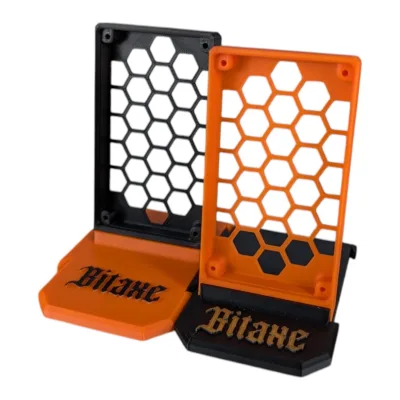
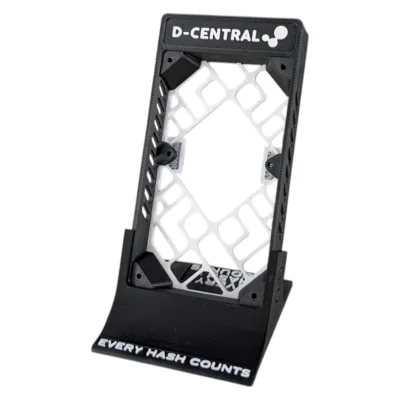
- Bitaxe — an open-source single-board solo miner drawing roughly 15–20W. A device pulling less power than a phone charger is in an entirely different fire-risk category than a full ASIC. The whole Bitaxe lineup — Supra, Gamma, and the dual-chip Bitaxe GT at 35–43W — runs on a simple low-voltage supply with trivial heat output. For most apartments and shared-wall situations, this is the responsible starting point.
- Antminer Slim Edition — designed from the ground up to run on a single 120V household circuit. Every unit is hand-assembled and stress-tested for 24 hours in D-Central’s Montreal, Quebec workshop before shipping, specifically so connector seating and thermal behavior are verified before the miner ever reaches your wall.
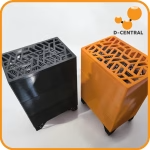
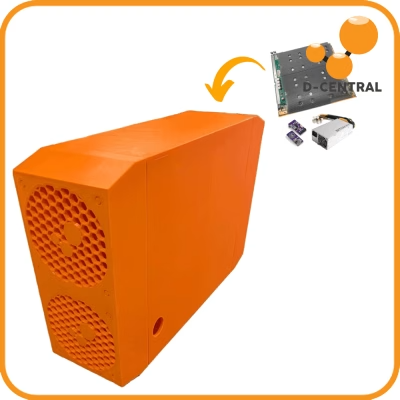
- Space Heater Editions and the BitChimney — D-Central’s purpose-built dual-purpose units (Antminer S9, L3, S17, S19 editions) are engineered as residential heating appliances with silent-fan enclosures designed for living spaces. They’re built to operate in a home, not retrofitted into one. For dedicated heating use, check the Space Heater Electrical Requirements guide before you plug in.
Note: D-Central does not manufacture or sell any “fire-safe” miner as a marketing category — fire safety is a property of how you wire and run the equipment, not a product SKU. Be skeptical of any vendor claiming otherwise.
Detection: Buy the Cheapest Insurance in Mining
A working smoke detector is the difference between a $40 connector replacement and a structure fire. Non-negotiable:
- Install a smoke detector in the mining room itself and in adjacent spaces. Test them; replace batteries on schedule.
- A heat-rise detector is worth adding in a dedicated mining room — it triggers on a rapid temperature climb, which can catch a smoldering electrical fault before there’s enough smoke for a standard alarm.
- Keep a Class C (electrical-rated) fire extinguisher within reach of the mining area, and make sure everyone in the house knows where it is and how to use it. Water on an energized electrical fire makes things worse.
- Temperature and power monitoring — through tuned firmware like DCENT OS or a smart plug with consumption alerts — gives you an early warning when a miner starts drawing or running abnormally.
Have a Plan Before You Need One
If something does go wrong, the response is decided in advance or it isn’t decided at all:
- Know how to kill power fast — ideally a single accessible breaker for the mining circuit, so you can de-energize the whole setup without touching a burning device.
- Keep the mining-room exit path clear. No stacked boxes blocking the door.
- Make sure everyone in the household knows there’s mining equipment, where it is, and that an electrical fire means get out and call the fire department — not fight it past the first extinguisher.
- Check your home insurance. Some policies have conditions or exclusions around home-based equipment loads; a five-minute call now beats a denied claim later.
The Bottom Line
Home Bitcoin mining is not inherently dangerous — running an industrial 24/7 load on undersized residential wiring is. Get the electrical right: size the circuit, kill the bad connections, derate to 80%. Remove the heat instead of letting it pool. Keep the dust out. Choose hardware — a Bitaxe, a Slim Edition, a purpose-built Space Heater Edition — that’s sized for a home in the first place. Then back it all with smoke detection and a plan. Do that, and you can mine sovereign money in your own house without lying awake wondering about the closet. That’s the Mining Hacker standard: institutional hardware, run safely, on your terms.
Frequently Asked Questions
Can a Bitcoin miner really start a fire? Yes — almost always at a high-resistance electrical connection or an overloaded circuit, not through spontaneous equipment failure. Correct wiring and connector inspection eliminate the large majority of the risk.
Do I need a dedicated circuit for a home miner? For a Bitaxe, no. For an Antminer Slim Edition, ideally yes — and definitely don’t share the circuit with other significant loads. For a full S19-class ASIC, a dedicated circuit is mandatory, and multiple full ASICs need a properly installed 240V setup.
How often should I clean a mining rig for fire safety? Monthly at minimum — power off, unplug, blow out heatsinks, fans, and the PSU intake. More often with pets or in a carpeted room.
Is there a fire-safe Bitcoin miner I can just buy? No vendor sells fire safety as a product. The lowest-risk option is a low-power device like a Bitaxe; beyond that, fire safety comes from how you wire, ventilate, and maintain the equipment.
Related Reading
- Bitcoin Mining Insurance Guide
- Bitcoin Mining Equipment Checklist
- Space Heater Electrical Requirements