Your power bill has a structure most people never look at: electricity isn’t priced the same all day. In many regions, off-peak overnight rates are a fraction of peak afternoon rates. A Bitcoin miner runs 24/7 — which means without intervention, you’re paying peak rates for a chunk of your mining hours. Battery storage is the lever that fixes that: charge cheap, mine on stored energy when grid power is expensive, and turn a flat electricity cost into an optimized one. This guide covers when battery integration actually makes financial sense for home mining, how to size it, and how to do it without burning your savings on hardware that never pays back.
Why Pair Batteries With a Home Miner
Battery storage isn’t about going off-grid for its own sake — it’s about controlling when your miner draws power and where that power comes from. The real benefits:
- Energy arbitrage. Charge the battery during off-peak hours at low rates, then run the miner from stored energy during peak hours. You’re shifting consumption in time to dodge the expensive part of the day. On a time-of-use plan, this is the core economic case.
- Solar self-consumption. If you have solar panels, a battery lets you store midday generation and mine with it after dark — instead of exporting that energy to the grid for a low feed-in rate and buying it back later at retail. For the full control loop — running the miner off the battery state of charge, thresholds and all — see our SoC-driven solar mining guide.
- Grid resilience. A battery buffer keeps a miner running through short outages and smooths the small power hiccups that can otherwise cause crashes or restarts.
- Demand management. In areas with demand charges or tight circuit capacity, a battery lets the miner draw from storage instead of spiking your grid draw.
Be honest about the order here: arbitrage and solar self-consumption are where the money is. Resilience is a nice secondary benefit. If your utility charges a flat rate with no time-of-use pricing and you have no solar, the economic case for batteries is weak — and you should know that before you spend.
The Honest Math: When Batteries Actually Pay Back
Battery systems are expensive, and they degrade. The integration only makes sense if the savings outrun the hardware cost over the battery’s usable life. Run the numbers before you buy:
- Your rate spread. The bigger the gap between off-peak and peak pricing, the faster a battery pays back. A small spread means a payback period longer than the battery lasts — a losing trade.
- Cycle life. Batteries are rated for a finite number of charge/discharge cycles. Daily mining-driven cycling uses them up. Divide hardware cost by total lifetime cycles to get your real cost per cycle, then compare that to what each cycle saves you.
- Round-trip efficiency. You lose roughly 10–15% of the energy that goes into a battery on the way back out. That loss eats into your arbitrage margin — factor it in, don’t ignore it.
- Depth of discharge. Repeatedly draining a battery fully shortens its life. Realistic usable capacity is less than nameplate capacity.
Model it concretely with D-Central’s Mining Power Cost Calculator — plug in your actual rates and your miner’s draw and see what the spread is really worth. Battery integration is a sound move for the right power situation and a money pit for the wrong one. Do the math first.
Sizing the System to the Miner
Battery capacity must match the miner’s appetite, and this is where your hardware choice changes everything.
Start From the Miner’s Real Draw
- A Bitaxe — an open-source single-board solo miner — draws only about 15–20W. The current lineup runs the Bitaxe Supra (BM1368, 625–775 GH/s), the Bitaxe Gamma (BM1370, 1.0–1.2 TH/s), and the dual-chip Bitaxe GT (2.15 TH/s at 35–43W). At those power levels, even a modest battery runs a Bitaxe — or a small fleet of them — through a full peak window easily. This is the cleanest, lowest-cost entry point for battery-integrated mining, and the Bitaxe’s low, steady draw is genuinely friendly to a storage system. The Bitaxe Hub has the full lineup.
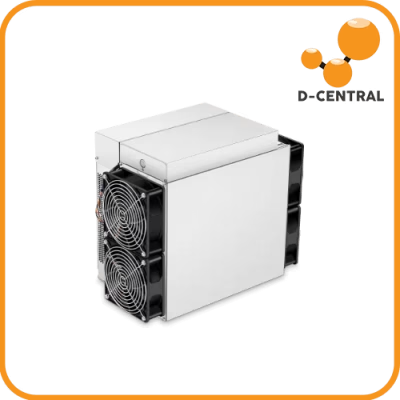
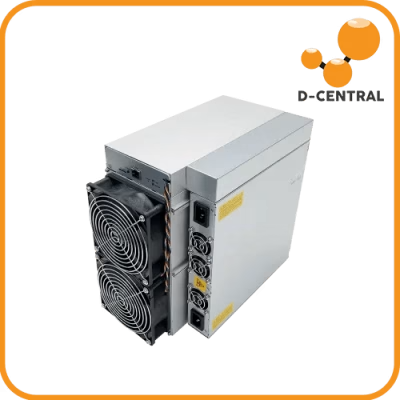
- An Antminer Slim Edition draws 860–930W. Running one through a multi-hour peak window means a substantially larger — and pricier — battery bank. The arbitrage can still work, but the capital requirement is in a different league, so the rate-spread math has to be strong to justify it.
- A full S19-class ASIC at 3,000W+ pushes you toward serious battery infrastructure. At that scale, this is a real energy-systems project, not a weekend add-on.
The takeaway: the smaller and lower-power your miner, the cheaper and easier battery integration is. For most home miners experimenting with storage, a Bitaxe-based setup is where to start — you can prove the concept on hardware that costs little to buffer.
Capacity Calculation
Usable battery capacity needed = miner power draw × hours you want to run on stored energy ÷ depth-of-discharge factor, with round-trip losses added on top. Build in headroom — undersizing means the battery dies mid-window and the miner drops to grid power anyway.
The Components of an Integrated System
A battery-integrated mining setup is more than a battery on a shelf:
- The battery bank — sized to your miner and your target run-time, with cycle life and chemistry chosen for daily cycling.
- An inverter/charger — manages charging from the grid (or solar) and converts stored energy back to the form the miner needs.
- A battery management system (BMS) — protects the battery, balances cells, and controls charge/discharge cycles. Non-negotiable for safety and lifespan.
- Scheduling and monitoring — the logic that charges off-peak and discharges on-peak, plus visibility into battery state, energy flow, and miner performance so you can verify the system is actually saving money.
For anything involving household AC wiring and grid interconnection, this is licensed-electrician territory. A miner is already an industrial-duty-cycle load on residential infrastructure; adding a battery and inverter to that is not a DIY-it-blind situation. Get it inspected and done right.
How to Integrate It — Step by Step
- Profile your power. Confirm you’re on a time-of-use plan, get the actual off-peak and peak rates, and measure your miner’s real draw. No rate spread, no business case.
- Run the payback math. Use the Mining Power Cost Calculator to see whether the spread covers the battery’s lifetime cost. If it doesn’t, stop here — you’ve saved yourself an expensive mistake.
- Size the battery to your miner’s draw and your target peak-window run-time, with depth-of-discharge and efficiency headroom built in.
- Spec the supporting hardware — inverter/charger, BMS, monitoring — to the battery and the load.
- Install with a qualified electrician for anything touching grid AC. Get it inspected.
- Program the schedule: charge off-peak, discharge on-peak, never deep-cycle unnecessarily.
- Monitor and verify. Track real savings against your model. If the numbers don’t match the projection, adjust the schedule or accept that your situation isn’t a fit.
Where Heat Recovery Fits — and Where It Doesn’t
Battery storage optimizes when you pay for power. Heat recovery optimizes what you get back from it — and the two are independent strategies that stack well. A miner converts essentially all its power draw into heat, and capturing that heat to warm your home is a real efficiency win, especially through a Canadian winter. D-Central’s full-ASIC Space Heater Editions (Antminer S9, L3, S17, S19 editions) and the BitChimney are purpose-built for exactly this — they’re real heating appliances built on full ASIC silicon. One clarification, since it gets confused often: a Bitaxe is not a space heater. At 15–43W it produces negligible heat; its role in a battery-integrated setup is as a low-draw miner that’s cheap to buffer, not as a heat source. Match the tool to the job — heaters for warmth, Bitaxe for low-power hashrate.
The Bottom Line
Battery integration is a powerful lever for home mining economics — but only when the power situation supports it. If you’re on a time-of-use plan with a real off-peak/peak spread, or you have solar generation to soak up, charging cheap and mining on stored energy genuinely lowers your cost per hash. If you’re on a flat rate with no solar, batteries are an expense looking for a justification. Start by running the honest math, start small with a low-draw Bitaxe setup you can buffer cheaply, and scale only when the numbers prove out. That’s the Mining Hacker approach to energy: don’t accept the grid’s pricing as fixed — engineer around it, but engineer with the calculator open.
Frequently Asked Questions
Does battery storage make home mining more profitable? It can — if you’re on a time-of-use electricity plan with a meaningful off-peak/peak rate spread, or you have solar generation to store. On a flat rate with no solar, the battery hardware cost usually outruns the savings.
How big a battery do I need for a home miner? It scales with the miner’s draw. A Bitaxe at 15–43W needs only a modest battery to run through a peak window; an Antminer Slim Edition at ~900W needs a substantially larger, costlier bank.
What’s the best miner to start battery-integrated mining with? A Bitaxe. Its low, steady ~15–43W draw is cheap and easy to buffer, letting you prove the arbitrage concept without a large battery investment.
Can I install a battery system myself? The battery and low-voltage side, with care — but anything touching household AC wiring or grid interconnection should be done by a licensed electrician and inspected.