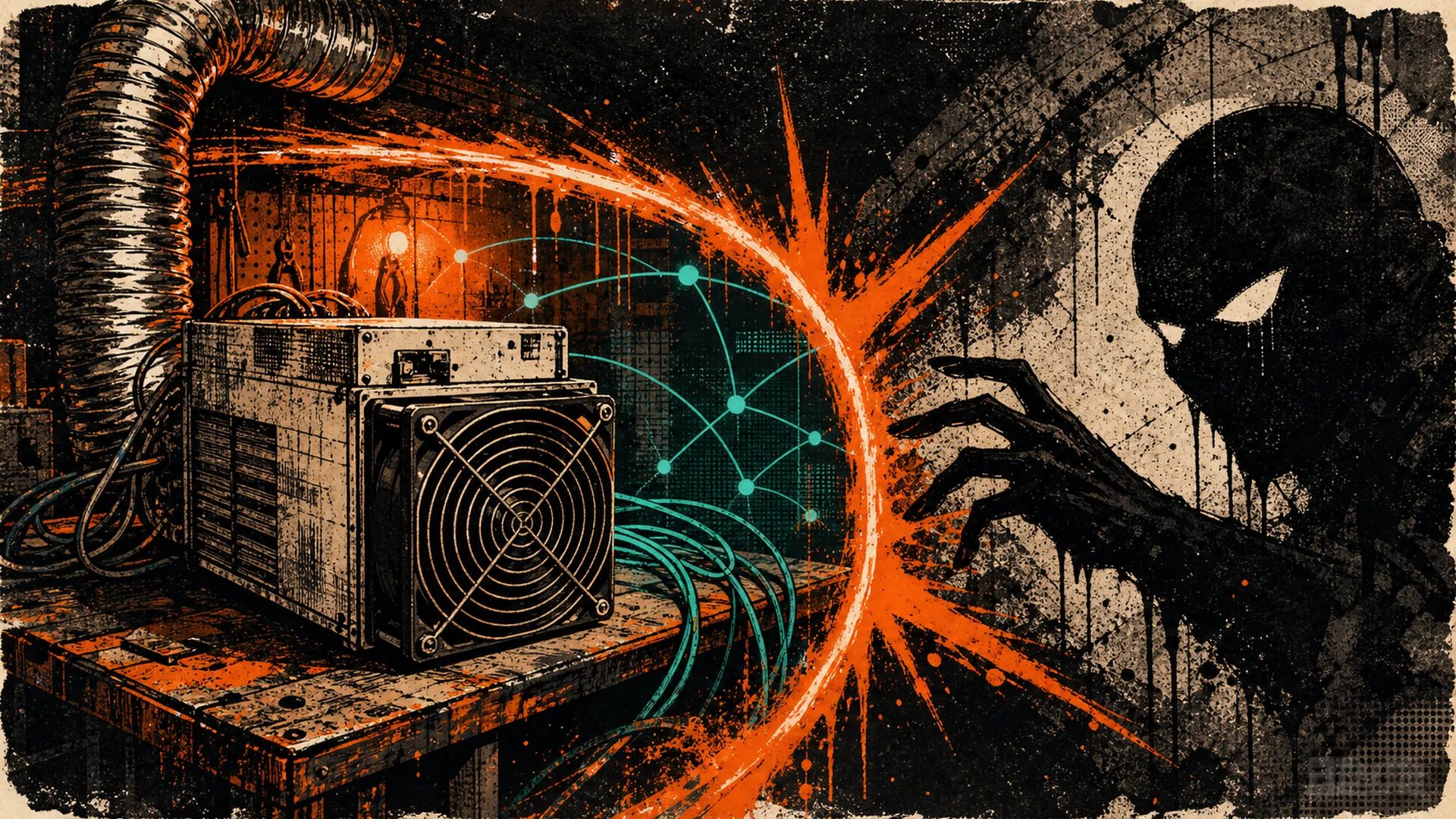
Here’s the uncomfortable truth about home mining security: the miner itself is rarely the target. Your Bitaxe or Antminer is a small Linux-class device sitting on your network 24/7, and attackers don’t want the hardware — they want the hashrate redirected to their pool, the wallet address it pays to, the credentials it shares with your other accounts, or simply a foothold on your home network. Mining is one of the few hobbies where your equipment is internet-connected, always on, and directly tied to money. That combination demands a real security posture, not a vague “use a strong password” gesture. This guide is the actual playbook.
What Attackers Actually Want From a Home Miner
Understand the threat model and the defenses become obvious. Five concrete attacks matter for home miners:
- Hashrate hijacking. An attacker who reaches your miner’s admin interface changes the pool URL or wallet address. Your electricity, your hardware, their Bitcoin. This is the single most common and most direct attack.
- Credential theft and reuse. If your miner’s web UI, your pool account, and your email all share a password, one breach is total. Attackers count on reuse.
- Cryptojacking and malware. Malware on a PC you use to manage mining can steal wallet keys, log keystrokes, or swap a copied wallet address on the clipboard for the attacker’s.
- Network foothold. A miner with default credentials and outdated firmware is a soft entry point. Compromise it, and the attacker is now inside your home network, eyeing everything else.
- Wallet compromise — the endgame. Every other attack is a means to this end: getting at the Bitcoin you’ve mined. Wallet security is the layer that matters most.
Layer One: Lock Down the Miner Itself
Every miner — a Bitaxe running AxeOS, an Antminer running DCENT OS, Braiins, LuxOS, or Vnish — ships with a web admin interface. That interface is the front door, and it’s usually left unlocked.
- Change every default credential immediately. Default miner passwords are public knowledge — they’re in the manual and in scanning tools. This is non-negotiable and takes two minutes.
- Never expose the admin interface to the internet. Do not port-forward to your miner. There is no good reason to, and automated scanners find exposed mining interfaces within hours. If you need remote access, use a VPN back into your home network instead.
- Keep firmware current. Firmware updates patch real vulnerabilities. Tuned firmware like DCENT OS, Braiins, LuxOS, and Vnish is actively maintained — stale firmware is an open door.
- Verify your pool and wallet config after every firmware change or reboot. Make it a habit: a quick check that the pool URL and payout address are still yours. Hijacking is invisible if you never look.
Layer Two: Segment Your Network
This is the highest-leverage move most home miners skip, and it’s free. Your miner should not sit on the same network as your laptop, your phone, and your wallet-management machine.
- Put miners on their own VLAN or guest network. If a miner is ever compromised, segmentation contains the damage — the attacker is stuck in a network segment with nothing valuable in it, not roaming your whole house.
- Use WPA3 (or at minimum WPA2) on your Wi-Fi, with a long, unique passphrase. Many small miners are Wi-Fi devices; a weak wireless key undermines everything else.
- Update your router’s firmware. The router is the actual perimeter. An unpatched router makes every device behind it vulnerable.
- For multi-unit setups, consider a hardware firewall between the mining segment and the rest of your network for explicit, auditable rules.
Network segmentation costs nothing but ten minutes in your router’s admin panel, and it’s the difference between “a miner got compromised” and “my home network got compromised.”
Layer Three: Authentication and Account Hygiene
Every account in your mining stack — pool, exchange, miner UI, the email tied to all of them — needs its own defense:
- Unique passwords everywhere, generated and stored in a password manager. Reuse is the vulnerability; a manager eliminates it without you memorizing anything.
- Two-factor authentication on every account that supports it — pool, exchange, email. Prefer an authenticator app over SMS; SIM-swap attacks make SMS 2FA the weak option.
- Lock down the email account hardest. Email is the master key — password resets flow through it. If your email falls, everything connected to it falls with it.
Layer Four: Wallet Security — The Layer That Actually Matters
You can lose a miner. You cannot un-lose stolen Bitcoin. Every other layer exists to protect this one.
- Mine directly to a wallet you control. Solo mining with a Bitaxe means the payout goes straight to your address — no custodian, no exchange holding your coin. That’s the Mining Hacker model: not your keys, not your coin. Pointing payouts at your own wallet removes an entire category of risk.
- Use a hardware wallet for anything beyond pocket change. A hardware wallet keeps your private keys offline, isolated from any malware on your everyday machines. This is the single most important security purchase a miner can make.
- Back up your seed phrase offline, never digitally. No photos, no cloud notes, no password manager entry. Physical, secured, ideally redundant.
- Verify receiving addresses character by character. Clipboard-hijacking malware swaps a copied address for the attacker’s. Always confirm the first and last characters before sending — and ideally the whole string.
Layer Five: Operational Discipline
Security is a habit, not a one-time setup:
- Use reputable, well-known mining pools. Obscure pools can disappear with your unpaid balance or run shady payout schemes. Stick to established operators.
- Monitor your miners. Watch the dashboard for hashrate that suddenly drops or redirects, or power draw that looks wrong — early signs of a hijacked or compromised unit. Tuned firmware and smart plugs make this easy.
- Keep firmware and management-PC software patched. The machine you manage mining from should run current OS and antivirus; it touches your wallet.
- Secure physical access. Someone with hands on your miner can factory-reset it and reconfigure the payout address. For most home setups this means simply not leaving miners accessible to visitors or in shared spaces.
- Run cool and clean. An overheating miner is an unstable miner, and instability creates security gaps. D-Central’s ASIC shrouds and cooling accessories keep hardware in a stable, predictable operating state — boring is secure.
Hardware Choice and Your Attack Surface
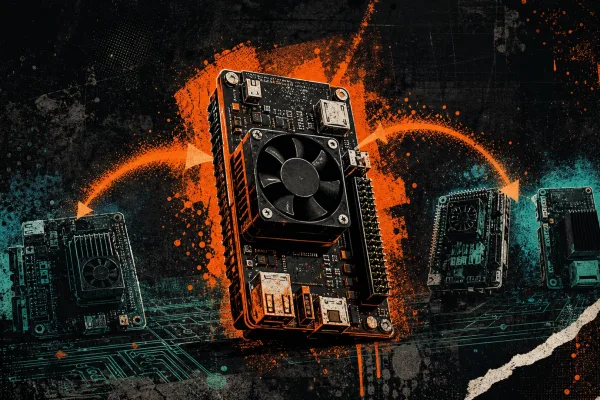
The miner you run shapes how much there is to defend. A Bitaxe — an open-source single-board solo miner — runs AxeOS, fully open and auditable firmware: you can read exactly what the software does, which is a security property no closed firmware can match. The current Bitaxe lineup runs by generation — the Bitaxe Supra (BM1368, 625–775 GH/s), the Bitaxe Gamma (BM1370, 1.0–1.2 TH/s), and the dual-chip Bitaxe GT (2.15 TH/s at 35–43W). Mining solo to your own wallet, on open firmware you can inspect, with no pool account and no custodian in the loop, is a structurally smaller attack surface than a pool-connected, exchange-linked setup. The Bitaxe Hub covers the full lineup. For higher-throughput home mining, the Antminer Slim Edition runs maintained firmware and the same network-segmentation rules apply.
The Bottom Line
Home mining security isn’t paranoia — it’s recognizing that you’re running an always-on, internet-connected device tied directly to money. The playbook is layered and most of it is free: lock the miner’s admin interface and never expose it to the internet, segment your network so a compromised miner can’t reach anything else, give every account a unique password and 2FA, and — above all — get your mined Bitcoin onto a hardware wallet whose keys never touch a networked machine. Mining is about Bitcoin sovereignty. Sovereignty without security is just a target. Build both.
Frequently Asked Questions
What’s the most common attack on a home miner? Hashrate hijacking — an attacker reaches an exposed or default-credentialed admin interface and changes the pool or wallet address so your mining pays them. Changing default passwords and never port-forwarding to a miner shuts this down.
Should I expose my miner’s web interface to the internet for remote access? No. Automated scanners find exposed mining interfaces within hours. Use a VPN into your home network instead.
What’s the single most important security step? Getting your mined Bitcoin onto a hardware wallet with an offline-backed seed phrase. You can replace a miner; you cannot recover stolen coin.
Does solo mining with a Bitaxe improve security? Structurally, yes — payouts go straight to a wallet you control, there’s no pool account or custodian to compromise, and AxeOS is open, auditable firmware. It’s a smaller attack surface by design.