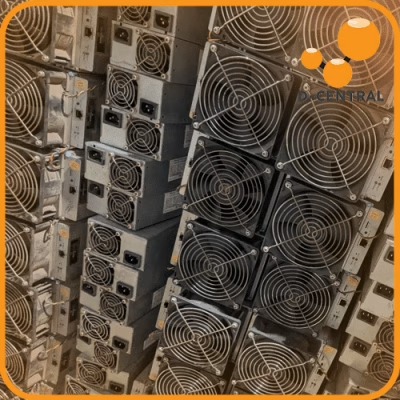
Something quietly enormous is happening in the secondary hardware market. Used ASICs that cost thousands two years ago are showing up cheap, in volume, on every reseller channel and marketplace we watch. If you are a home miner, a pleb stacking sats on your own terms, this is not bad news. It is one of the best buying windows the network has handed ordinary people in years. But only if you know what you are looking at.
This is the honest version. Not every cheap miner is a deal, and a lot of what is being dumped is genuinely close to e-waste at common home power rates. The difference between a smart used buy and an expensive paperweight comes down to a few numbers and a willingness to get your hands dirty. Let us walk through it.
Why used-ASIC prices are crashing
Two forces are colliding, and both push the same direction: down.
The corporate pivot to AI. A large slice of the industrial mining world has spent the last year repositioning. Sites that were built to hash Bitcoin are being retooled to host GPU compute for AI workloads, because that is where the institutional money is chasing returns right now. When an operator pivots a facility, the Bitcoin ASICs that were running there do not vanish. They get liquidated. Whole Hashcenters worth of S19-class machines hit the resale market at once, and supply that large drags prices down hard.
A point worth keeping straight: an ASIC and an AI accelerator are completely different silicon. A Bitcoin ASIC computes SHA-256 double hashes and nothing else. It cannot run an AI model, and the GPUs that replace it cannot mine efficiently. So this is not one machine swapping jobs. It is one fleet being thrown out and a different fleet being bought, which is exactly why so much used Bitcoin hardware is suddenly available.
The new generation arriving. At the same time, the efficiency frontier kept moving. The S21 generation (the BM1368 and BM1370 chips) lands around 15 to 17.5 J/TH, and the newest S23 class pushes further still, into roughly the 9.5 to 11 J/TH range depending on whether it is air or hydro cooled. Against that, an older S19 running near 29.5 J/TH looks thirsty. Industrial operators chasing the lowest cost per terahash rotate their oldest machines out the moment the math flips. Those machines become your opportunity.
What is actually a good buy versus e-waste
Here is where the honesty matters, because plenty of people will sell you a miner that costs more to run than it earns. The single number that decides everything is your electricity rate.
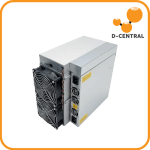
An older S19 family machine, sitting around 29.5 J/TH, is genuinely uneconomic at home power rates much above roughly $0.07/kWh when measured purely on what it earns versus what it draws. That is not a knock on the hardware. It is a 38-domain BM1398 design that was a workhorse in its day. It is simply that the efficiency math no longer favors paying retail-grid prices to run it for profit alone.
So who should buy one anyway? A few clear cases:
- You have cheap or stranded power. Solar overflow, off-peak rates, a hydro setup, flared gas, or any energy you would otherwise waste. Below that ~$0.07/kWh line, an old S19 can still earn.
- You want the heat. A miner is a space heater that pays you back. If you were going to burn electricity heating a workshop or garage anyway, the marginal cost of mining is far smaller than the sticker suggests.
- You are mining for sovereignty, not just yield. Running your own hardware, validating with your own pool choices, is a political act as much as a financial one. Some plebs accept thin margins because the point is participation.
And who should walk away? If you pay typical residential rates, have no use for the heat, and are buying purely to turn a profit on an old S19 at stock settings, that machine is closer to e-waste than to an investment. We would rather tell you that up front than sell you a regret. The sweet spot in today’s crashed market tends to be the more efficient S19 variants and early S21-class units when they appear, run on cheap power, ideally tuned down for efficiency rather than pushed for maximum hashrate.
The decentralization upside nobody is talking about
Step back from the spreadsheet for a second, because this is the part that actually matters for Bitcoin.
For years, hashrate concentrated. Capital pooled into massive facilities, machines clustered where power was cheapest, and the people running the network got fewer and larger. That concentration is a quiet risk to the thing that makes Bitcoin worth defending. A network secured by a handful of giant operators is a network with a handful of points of pressure.
The price crash reverses some of that. When industrial operators dump hardware, that hardware does not disappear. It disperses. It leaves the Hashcenters and lands in garages, basements, workshops, and spare rooms. Hashrate that was concentrated in a few buildings spreads back out across thousands of homes. That is decentralization happening in physical space, driven by economics rather than ideology. Every used S19 that ends up humming in a pleb’s utility room is one more sliver of the network that no single operator controls.
We think that is worth getting excited about. The cheapest path to a more decentralized network right now runs straight through the secondary market.
De-risking a used buy: the repair craft
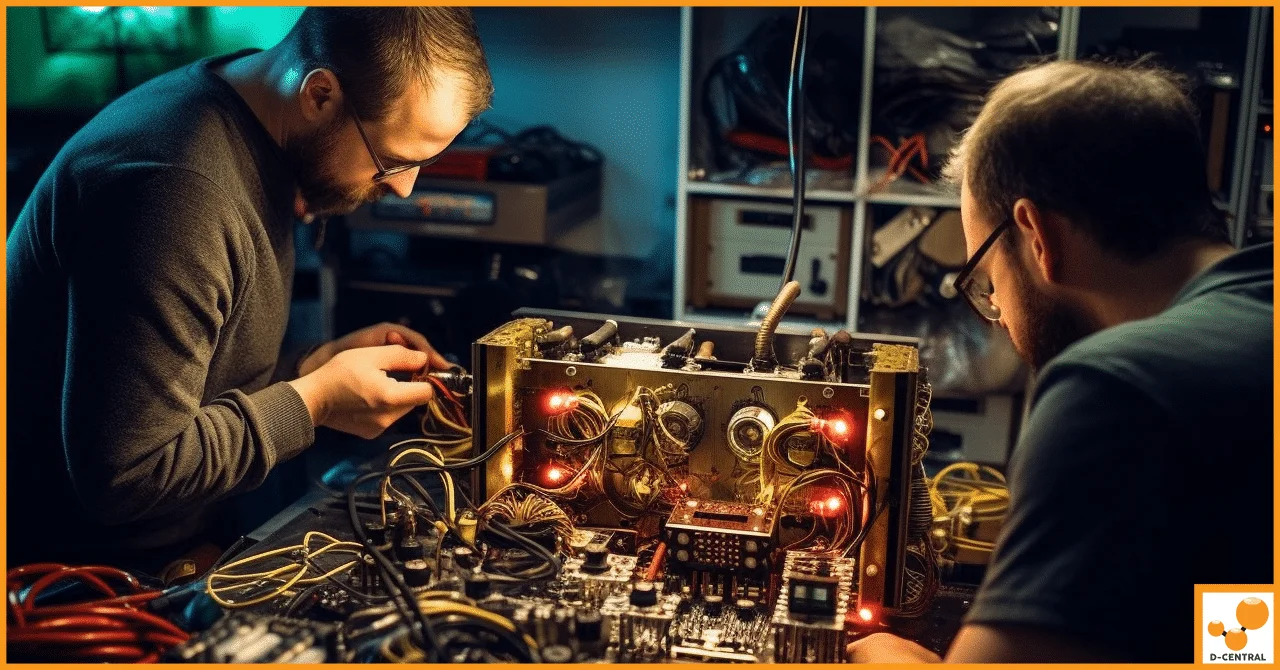
A used miner is a gamble until someone who knows the hardware has looked at it. The good news is that these machines are fixable, and most of what fails is repairable rather than fatal. The industry treats a dead hashboard as a reason to scrap a unit. We treat it as a reason to pull out the hot air station. We repair what the industry throws away, and that craft is exactly what turns a risky used purchase into a sound one.
If you are inspecting a used machine yourself, here is what we look at first:
- All three hashboards reporting. An S19 runs three boards (Chain0, Chain1, Chain2). A unit advertised at full hashrate should show all three alive. A missing chain is the most common defect, and it is often repairable, but it should change the price.
- Chip count and model honesty. An S19 board carries 76 BM1398 chips; an S19 Pro board carries 114. Knowing the real model stops a seller from passing one off as the other.
- Heat damage and corrosion. Look for scorched DC-DC converters, discolored boards, and corrosion from humid or coastal environments. Voltage is regulated per domain, so a single failed converter can take a cluster of chips offline.
- PSU and fan health. Power supplies and fans are consumables. Budget for replacements; they are cheap relative to the board.
- Honest hour-meter and history. Ex-Hashcenter machines often ran flat out for years. That is not disqualifying, but it should be reflected in what you pay.
If diagnosing all that yourself sounds like a lot, that is fair. It is a real skill, and it is the reason a professionally refurbished unit from people who actually open these machines is worth more than a marketplace mystery box. Every machine we refurbish is built to order and hand-checked, which means lead times are an estimate rather than a same-day promise. We are not Amazon, and we are fine with that. If you want to learn the craft yourself or send us a sick unit, our ASIC repair work is where that knowledge lives.
Where open firmware fits in
Here is the catch with buying cheap, used hardware: a lot of it ships with firmware you do not control. Locked stock builds, sometimes mystery configurations from a previous operator, occasionally firmware with a developer fee skimming your hashrate. The third-party firmwares that plebs reach for to reclaim control all carry a fee in the low single digits: Braiins OS+ runs a 2 to 2.5 percent range, VNish sits around 2 to 2.8 percent, LuxOS holds at 2.8 percent. Useful tools, and we credit the work they pioneered, but every one of them takes a cut.
That gap is where we are building. DCENT_OS is our open firmware effort: a Rust mining daemon (dcentrald) on a Buildroot system, targeting a GPL-3.0 release, with no mandatory developer fee (the optional donation ships on at 2% and takes one click to set to 0%). The goal is simple. Hardware that leaves a Hashcenter and lands in a home should answer to the person who owns it, not to whoever flashed it last.
DCENT_OS is D-Central Technologies’ GPL-3.0 open-source Bitcoin mining firmware for selected Bitmain Antminer ASIC miners. Guarded artifacts exist only for exact S9 XIL and S19j Pro XIL lanes; install evidence is incomplete and neither is production-ready. Check the exact evidence ledger.
So if you are buying used today, buy on the strength of the hardware and the power math, not on a firmware promise. When DCENT_OS is ready for your machine, it will be there. The S9 that so much of this market started on is exactly where we began the work.
The bottom line for plebs
The corporate pivot away from Bitcoin mining is handing ordinary people a rare chance to acquire serious hashing hardware cheaply. Used right, with cheap power, a use for the heat, and an honest read on the efficiency math, that hardware is a way to participate in the network on your own terms. Used wrong, paying grid rates for a tired S19 expecting profit, it is an expensive mistake. The difference is knowledge, and that is the part we are happy to give away for free.
If you want to go deeper on running your own infrastructure and what self-sovereignty actually demands, start with our sovereignty coverage. To weigh firmware options honestly, our firmware comparison lays out the trade-offs. And if you have heard the noise about repurposing miners for AI, our piece on whether you can run AI on a Bitcoin miner separates the reality from the marketing.
Frequently asked questions
Should I buy a used ASIC in 2026?
If you have power cheaper than roughly $0.07/kWh, a use for the heat it produces, or you are mining for sovereignty rather than pure yield, then yes, the crashed secondary market is a strong buying window. If you pay typical residential rates and expect profit from an old S19 at stock settings, the math probably does not work. Decide on your power rate first, then shop.
Why are used S19 prices so low right now?
Two reasons at once. Large operators are pivoting facilities from Bitcoin mining to AI compute and liquidating their ASIC fleets, and the newer S21 and S23 generations are far more efficient (roughly 9.5 to 17.5 J/TH versus an S19’s ~29.5 J/TH), which pushes industrial sellers to dump older machines. The combined oversupply crashes secondary prices.
What should I inspect before buying a used Antminer?
Confirm all three hashboards report and the unit hits its advertised hashrate, verify the real model by chip count (76 chips per board on an S19, 114 on an S19 Pro), check for heat damage or corrosion on the boards and DC-DC converters, and treat the PSU and fans as replaceable consumables. A missing chain or a dead converter is often repairable, but it should lower the price you pay.
Can I put open firmware on a cheap used S19?
The open-source option does not reach a plain S19 yet. DCENT_OS — GPL-3.0, no mandatory fee — publishes signed experimental artifacts for exactly two lanes, the Antminer S9 and the S19j Pro on Zynq/XIL control boards; the base S19 and the S19 Pro have bring-up evidence and no public artifact, so there is nothing to flash on them today, and even the two artifact lanes have no published witnessed install route. Check the exact model and board against the evidence ledger before you assume anything — a listing titled “S19” can be an S19j Pro or an S19 Pro. The firmware you can actually run on a used S19 today is the mature third-party kind: BraiinsOS+ (2–2.5% dev fee), VNish (1.8–2.8%) or LuxOS (2.8%), all closed or partially open. Flashing any custom firmware carries a real bricking risk, which is exactly why a cheap used machine is the right place to learn — once you have proven the recovery route.
Is buying cheap used hardware actually good for Bitcoin?
We think so. When hardware leaves concentrated industrial Hashcenters and disperses into thousands of homes, the network’s hashrate spreads across far more independent operators. That is decentralization happening through economics, and a more distributed network is a more resilient one. The price crash is quietly one of the healthiest things to happen to home mining in years.