Quick answer
Maintaining a single-phase immersion tank is four ongoing jobs: keep the dielectric fluid healthy (test breakdown voltage, moisture and acidity on schedule), filter out particulate, keep the heat-rejection loop moving, and drip-drain miners before board work. Lighter than air-cooled upkeep, but not zero.
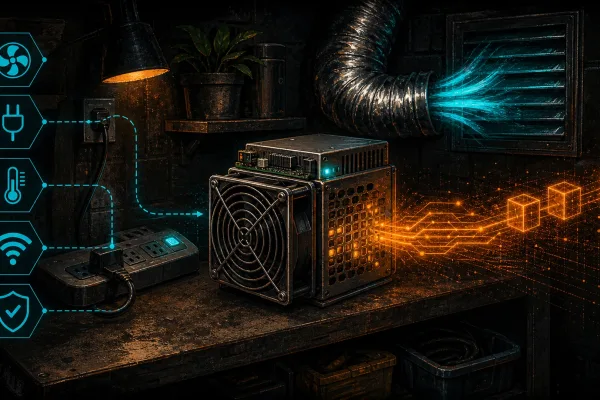
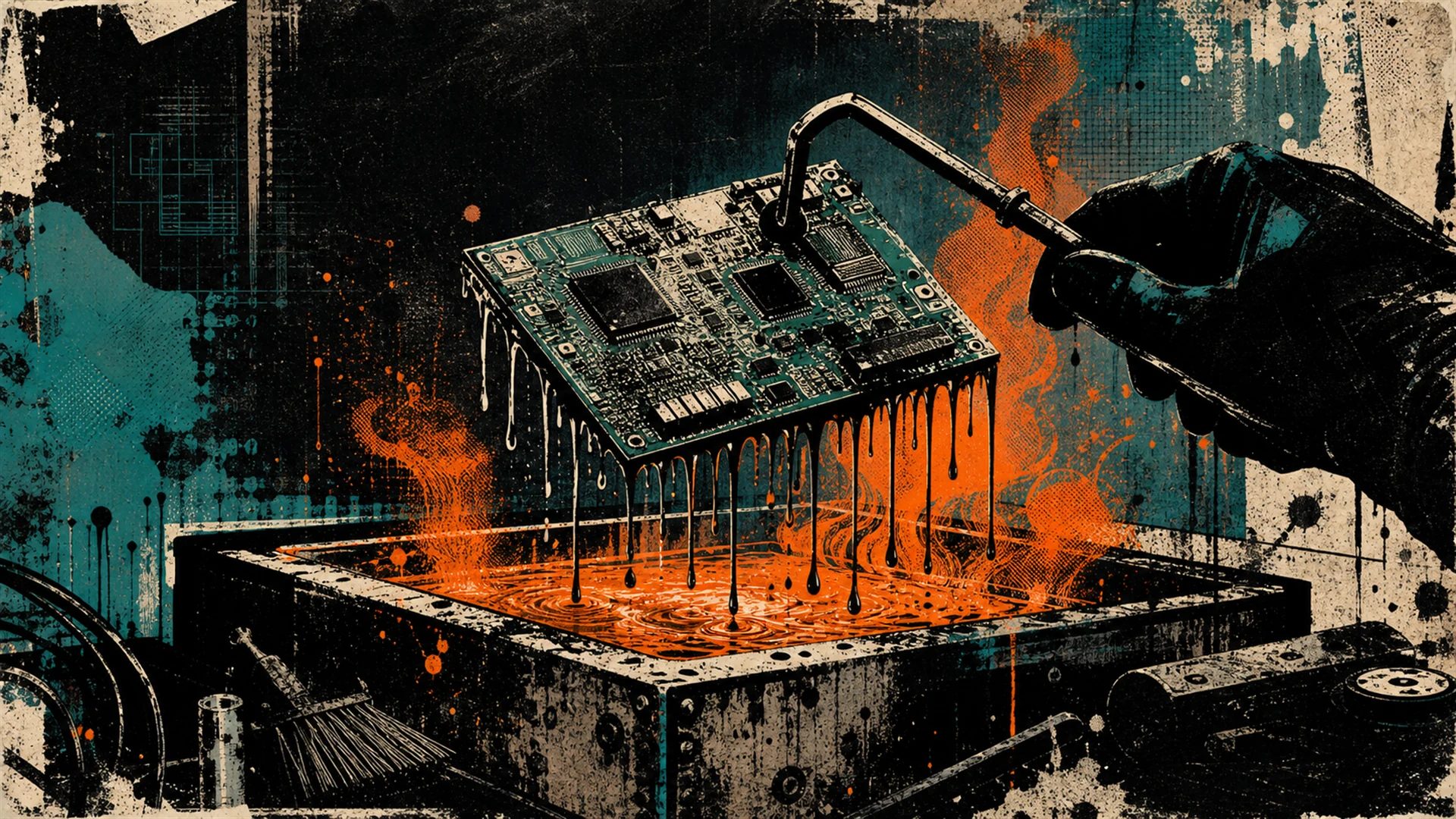
Maintaining an operating single-phase immersion Bitcoin mining deployment comes down to four ongoing jobs: keep the dielectric fluid healthy (test breakdown voltage, moisture and acidity on a schedule, then top up or change it), keep particulate out of it (filtration on the circulation loop), keep the heat-rejection loop moving (pump, heat exchanger and dry cooler), and service miners cleanly (drip-drain and reclaim fluid before any board work). Done consistently, immersion upkeep is lighter than air-cooled fan maintenance, but it is not zero — fluid is a consumable that ages, and a neglected tank quietly loses both its insulating margin and its thermal performance. This guide is the operations procedure for a running deployment; for the chemistry and per-fluid specifications, use our companion immersion cooling fluids dataset rather than memorising numbers here.
If you are still deciding whether immersion is right for you at all, that is a different question covered in our immersion vs air cooling comparison. This page assumes the tank is built, filled and hashing, and your problem now is keeping it that way.
What “maintenance” actually means in a single-phase tank
In single-phase immersion the dielectric fluid never boils. A pump circulates warm fluid out of the tank, through a heat exchanger (plate or shell-and-tube) that hands the heat to a water/glycol loop, then to a dry cooler or other rejection stage, and the cooled fluid returns to the tank. Nothing in that loop is maintenance-free. The fluid degrades, filters clog, seals take a compression set, pumps wear, and dry-cooler coils foul. Your job is to catch each of those before it shows up as a thermal-throttle event or a board fault.
The single biggest difference from air cooling: in immersion the fluid is both your coolant and your electrical insulation. A failure of either property — thermal or dielectric — is a fluid problem first. That is why fluid health sits at the top of every immersion maintenance plan.
Fluid health: the core of immersion upkeep
How dielectric fluid degrades over time
Single-phase immersion fluids (synthetic and gas-to-liquid hydrocarbons, PAOs and esters — see the fluids dataset for the families and their specs) are stable, but four things age them in a working tank:
- Dielectric breakdown decline. The breakdown voltage of an insulating liquid falls as contaminants accumulate. A fresh charge has a large insulating margin; moisture, particulate and oxidation by-products all erode it. Breakdown voltage is the headline number you trend over the life of the fluid.
- Moisture pickup. Hydrocarbon and ester fluids are mildly hygroscopic and a tank that breathes ambient air will slowly absorb water vapour. Dissolved and — worse — free water is the fastest way to collapse breakdown voltage, and esters in particular hold more water than mineral-style fluids.
- Oxidation and rising acidity. Heat plus dissolved oxygen slowly oxidises the base fluid, raising its acid (neutralization) number. Rising acidity is the early signal that the fluid’s additive package is being consumed and that varnish and sludge will follow.
- Particulate loading. Dust carried in on hardware, fines from thermal interface material and flux residue outgassing off the PCBs, and trace wear debris all build up. Particulate both abrades pump internals and lowers breakdown voltage by giving current a path to bridge.
When and how to test
You cannot manage what you do not measure. Borrow the test discipline that the power industry has used on dielectric oils for decades — the same ASTM methods apply to immersion fluids:
| Property | What it tells you | Reference method | Typical cadence |
|---|---|---|---|
| Dielectric breakdown voltage | Remaining insulating margin | ASTM D877 / D1816 | Quarterly to semi-annual |
| Water content | Moisture ingress, seal/breather problems | ASTM D6304 (Karl Fischer) | Quarterly to semi-annual |
| Acid (neutralization) number | Oxidation, additive depletion | ASTM D974 / D664 | Semi-annual to annual |
| Particulate cleanliness | Filtration health, debris load | ISO 4406 particle count | Semi-annual |
Pull the sample from a consistent point in the loop (a sample port downstream of the pump is ideal), with clean glassware, while the system is at operating temperature so the fluid is well mixed. Always compare against the fresh-fluid baseline on your supplier’s data sheet — the trend matters more than any single reading. Send samples to a fluid-analysis lab unless you have calibrated in-house instruments; consumer “test pen” gadgets are not adequate for a breakdown-voltage decision.
Top-up versus full change
Two different actions, two different triggers:
- Top-up replaces fluid lost to evaporation, drag-out on serviced hardware, and small leaks. Single-phase loss is low, but it is not zero — keep a sealed drum of the same fluid on hand and top up to the marked level. Never mix fluid families; blending an ester into a hydrocarbon (or vice versa) can change viscosity, water tolerance and material compatibility unpredictably.
- Full change is driven by your test data, not the calendar. When breakdown voltage has fallen near your minimum, water content is high and will not respond to filtration/drying, or acid number has climbed past the supplier’s condemning limit, it is time to drain, clean and recharge. A well-run single-phase tank with good filtration and a sealed or desiccant-breathing headspace can run for years between full changes; a tank that breathes humid air and skips filtration will need attention far sooner.
Particulate filtration
Filtration is what lets fluid last. Put a filter on the circulation loop (typically on the pump discharge) sized for the flow rate, and trend the differential pressure across it. The sources of solids in a Bitcoin tank are specific and predictable: airborne dust that rode in on the miners, fines shed from thermal interface material — stock Antminer S19-class boards ship with Fujipoly SPG-30B thermal gel under the heatsinks, per D-Central’s hashboard diagnostics reference — flux residue that outgasses from the PCBs during the first weeks of immersion, and trace wear particles from the pump itself.
- Filter media: start coarse (around 25–50 micron) for a freshly commissioned tank that is shedding flux and dust, then step to a finer final filter (down to ~5–10 micron) once the system has “broken in.” Match the media to fluid compatibility on the supplier sheet.
- Change cadence: by differential pressure, not by a fixed interval. A rising pressure drop means the element is loading; a sudden drop can mean a ruptured or bypassed element. Expect frequent early changes after commissioning, then a long, stable interval.
- New-tank break-in: the first filter set after filling a new deployment will load fast because of flux and TIM outgassing — plan for it and do not interpret it as a fluid failure.
Seals, gaskets and connector care
Every static and dynamic seal in the loop is a wear item. Tank-lid gaskets, bulkhead fittings, pump shaft seals and heat-exchanger gaskets all take a compression set over time and must be elastomer-compatible with your specific fluid — esters and some hydrocarbons swell or harden the wrong rubber. Inspect for weeping at every scheduled service and replace on condition.
Submerged power and data connectors deserve their own attention. Dielectric fluid is non-conductive, but contamination and particulate can bridge closely spaced pins, so keep connector surfaces clean and fully seated. When you reconnect a serviced miner, follow the same power sequencing the manufacturer specifies for the bench: on Antminer S19-class hardware, D-Central’s maintenance intelligence is explicit — connect negative first, then positive, then the signal cable, and reverse that order to disconnect — because getting it wrong damages the input components on the board. If a connector or board has been exposed to water (not dielectric fluid), treat it as a contamination event and follow the water-damaged ASIC recovery procedure before re-energising.
Pump, heat exchanger and dry-cooler upkeep
The heat-rejection loop is conventional thermal plant, and it fails in conventional ways:
- Pump: trend flow and listen/feel for cavitation or bearing noise. Falling flow with a clean filter points to a worn impeller or a failing seal. Keep a spare pump or seal kit on the shelf — a dead pump means a dead tank within minutes.
- Heat exchanger: a rising fluid-side temperature at constant load and flow means the exchanger is fouling — scale or biofilm on the water/glycol side, or sludge on the fluid side. Plate exchangers can be back-flushed or chemically cleaned per the maker’s instructions.
- Dry cooler / rejection stage: coils foul with dust, cottonwood and grime, and fan health drives your entire rejection capacity. Clean the coils on a seasonal schedule, verify fan operation, and check glycol concentration and freeze protection before winter. Inadequate rejection shows up first as creeping tank temperature, then as miners thermal-throttling.
Converting an air-cooled miner: fan removal and airflow
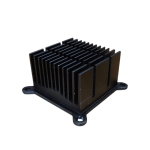
Most miners going into immersion start as air-cooled units, and conversion is a maintenance event in its own right. Remove the unit’s fans before submersion — they do nothing useful in fluid, they churn and aerate it, and a spinning fan in liquid is a drag and contamination source. With the fans gone the unit relies entirely on fluid flowing through the existing heatsinks, so confirm the tank’s flow actually reaches every board (corner and edge positions are the usual cold/hot spots). Keep the stock heatsinks; they are now your fluid-to-die interface. Because you have physically removed the fans, the firmware will see zero RPM and fault unless it is told the unit is in fluid — which is the next section.
Firmware and thermal-tuning notes for immersion
An air-cooled miner expects spinning fans and will fault — or refuse to hash — when it reads 0 RPM. Immersion-capable firmware exposes an “immersion mode” that, per D-Central’s firmware feature analysis, disables the fan-RPM watchdog, raises the thermal limits, and lets you tune the unit for liquid cooling. In practice that means: turn off fan-fault shutdown, set thermal limits appropriate to your fluid’s operating window (the fluids dataset lists each fluid’s usable range), and only then push power/efficiency tuning. Immersion’s stable, even die temperatures are exactly what makes aggressive efficiency tuning safe — but raise it in steps and watch per-board and per-domain temperatures, not just the headline number. If a unit misbehaves after conversion, our ASIC fault finder will help you separate a genuine board fault from a firmware/sensor configuration issue. We deliberately keep firmware guidance generic here; choose an immersion-capable firmware you trust and follow its own immersion documentation.
Removing a miner for service: drip, drain and reclaim
Pulling a hashing unit out of fluid for a hashboard swap or inspection is the most routine hands-on task in an immersion shop, and the goal is to lose as little fluid — and make as little mess — as possible:
- Power down and de-energise the unit and, on S19-class hardware, disconnect in the correct order (signal cable, then positive, then negative — the reverse of connecting).
- Lift and let it drip. Raise the unit just clear of the fluid surface and let it drain back into the tank for several minutes on a drip rack or perforated tray positioned over the tank. Most of the drag-out fluid is reclaimed here.
- Reclaim, do not waste. Catch every drop in clean, dedicated containers and return filtered fluid to the tank. Reclaimed fluid is expensive; treat it as the consumable it is.
- Service on an absorbent, fluid-rated surface, keeping the board free of dust and water. If you reseat heatsinks, re-apply the correct thermal interface material — D-Central’s diagnostics reference specifies an even, thin layer of Fujipoly SPG-30B across the full die for S19-class boards — because immersion does not compensate for a dry or starved TIM joint.
- Re-immerse, reconnect in the correct sequence, and watch the first boot. On S19-class control boards, respect the manufacturer’s post-recovery one-time-programming caution — power on, and do not cut power during the initial programming window — to avoid destroying the control board.
For a full repair rather than a quick swap, hand the unit to a bench equipped for chip-level work — our start-a-repair intake routes it to the right diagnostic flow, and the field manual covers the broader bench procedures.
Signs your fluid is degrading
| Observation | Likely cause | Action |
|---|---|---|
| Darkening colour, varnish on hardware | Oxidation, rising acid number | Test acid number; plan a change if past condemning limit |
| Cloudy or hazy fluid | Free water or emulsion | Test moisture; find and fix the ingress; dry or change |
| Falling breakdown voltage on test | Moisture + particulate | Filter and dry; change if it will not recover |
| Rising filter differential pressure | Particulate loading | Change filter element |
| Creeping tank temperature at constant load | Fouled exchanger/coils or low flow | Service rejection loop; check pump and filter |
| Sludge or sediment at tank bottom | Advanced oxidation / heavy debris | Drain, clean tank, recharge |
Safety and housekeeping
Single-phase immersion fluids are generally combustible liquids with high flash points, not flammable solvents, but they are still a fire-load and a slip hazard — keep the right extinguisher class nearby, post the fluid’s safety data sheet, and clean spills immediately. Keep water away from the tank: water is the enemy of both dielectric strength and your hardware. Wear nitrile gloves and eye protection when handling fluid, label your reclaim and top-up drums clearly so families never get mixed, and dispose of spent fluid and filters per your local regulations and the supplier’s guidance. A tidy immersion room with a documented sample log, filter-change record and dated fluid-test results is the difference between a deployment that runs for years and one that fails quietly.
Frequently asked questions
How often should I change immersion cooling fluid?
By condition, not by calendar. A well-filtered single-phase tank with controlled moisture ingress can run for years between full changes; the trigger is your test data — breakdown voltage near your minimum, persistent high water content, or acid number past the supplier’s condemning limit. Top up for normal evaporation and drag-out in the meantime, always with the same fluid.
Do I need to remove the fans before putting a miner in immersion?
Yes. Fans do no useful work submerged, they aerate and contaminate the fluid, and you should pair their removal with enabling the firmware’s immersion mode so the unit does not fault on zero RPM. Keep the stock heatsinks — in immersion they become the fluid-to-die thermal interface.
Can I mix two different immersion fluids when topping up?
No. Different fluid families (hydrocarbons versus esters, for example) can differ in viscosity, water tolerance and elastomer compatibility, and blending them can change the fluid’s behaviour and attack your seals. Top up only with the exact product already in the tank. See the fluids dataset for which families are which.
Does immersion cooling eliminate thermal paste maintenance?
No. The thermal interface material between each ASIC die and its heatsink still matters in fluid. If you remove a heatsink during service you must re-apply the correct interface material (Fujipoly SPG-30B on S19-class boards, per D-Central’s diagnostics reference); immersion does not rescue a dry or starved joint.
How do I service a miner without losing expensive fluid?
Lift the unit just clear of the surface and let it drip-drain back into the tank for several minutes on a rack or tray, reclaim every drop in clean dedicated containers, filter it, and return it. Service on an absorbent, fluid-rated surface and reconnect in the manufacturer’s specified power sequence before re-immersing.
Immersion maintenance rewards discipline over heroics: sample the fluid on a schedule, trust the trend, keep the filter and rejection loop honest, and service hardware cleanly. For deeper background, the immersion cooling overview explains the deployment side, and the Antminer S21 hub covers the current-generation hardware most operators are immersing today.