On this page
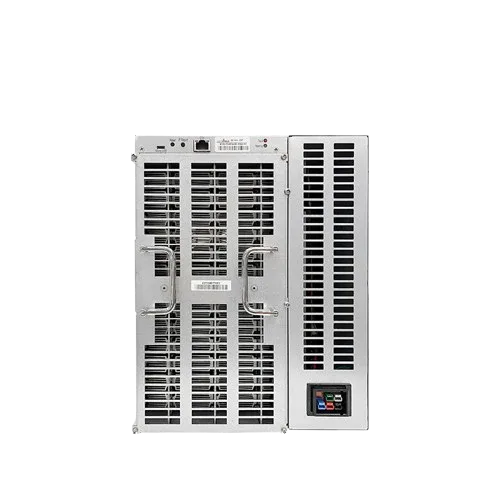
Bitmain Antminer S21 XP Immersion
Quick answer
The Bitmain Antminer S21 XP Immersion is a Bitcoin miner rated about 300 TH/s at roughly 4,050 W (about 13.5 J/TH). An industrial-class unit — loud and power-hungry, best suited to a dedicated mining space, not living areas.
Latest Generation Hardware
This is a newer generation of mining hardware using recent ASIC chip technology. Compare efficiency, hashrate, and power draw against older generations before choosing a deployment plan.
Lower J/TH means lower electricity cost per unit of hashrate. Compare efficiency alongside purchase cost, noise, voltage, firmware support, and current network difficulty.
Immersion-Cooled Miner
This miner is designed to operate fully submerged in a dielectric (non-conductive) cooling fluid. Unlike hydro miners that circulate liquid through internal channels, immersion miners have their entire board and chips bathed in engineered coolant inside a specialized tank.
Immersion cooling is the most effective thermal management available for ASIC miners. It eliminates all fan noise (completely silent operation), removes dust and humidity as failure factors, enables maximum overclocking potential, and dramatically extends hardware lifespan by maintaining perfectly even chip temperatures.
The trade-off is infrastructure: immersion requires a tank, dielectric fluid (typically engineered hydrocarbon or synthetic), and a heat exchanger. It is the gold standard for professional mining farms and serious home miners who want maximum performance with zero noise.
Professional-Grade Miner
This miner draws 4,050W and produces 50 dB of noise — it is designed for dedicated mining environments, not living spaces. Professional-grade miners deliver the highest hashrate and revenue per unit but require proper infrastructure: a 240V circuit, adequate ventilation or exhaust ducting, and a space where noise is not a concern (garage, basement, warehouse, or outdoor enclosure).
For home miners looking for a quieter alternative, consider our Bitcoin Space Heater builds or explore open-source miners like the Bitaxe that are purpose-built for residential environments.
Profitability Calculator
| Period | Revenue | Electricity Cost | Profit |
|---|---|---|---|
| Daily | $8.51 | $6.80 | $1.71 |
| Weekly | $59.57 | $47.63 | $11.94 |
| Monthly | $255.29 | $204.12 | $51.17 |
| Yearly | $3,106.00 | $2,483.46 | $622.54 |
Heating offset estimates the value of heat replacing an electric space heater during heating season (~6 months/year in Canada). Actual savings depend on your heating setup and climate.
Where to Buy the Bitmain Antminer S21 XP Immersion
D-Central Technologies
CanadaBitcoin Mining Hackers since 2016. Ships from Laval, Quebec.
Shop all Bitcoin mining productsASIC Miner Market
United StatesWide selection of new and used ASIC miners. US-based shipping.
Shop NowFull Specifications
| Model | Bitmain Antminer S21 XP Immersion |
|---|---|
| Model Number | Antminer S21 XP Immersion |
| Manufacturer | Bitmain |
| Algorithm | SHA-256 |
| Coins Mined | Bitcoin (BTC) |
| Hashrate | 300 TH/s |
| Power Consumption | 4,050 W |
| Efficiency | 13.5 J/TH |
| Noise Level | 50 dB |
| Cooling | Immersion |
| Dimensions | 400*195*290mm |
| Weight | 14.4 |
| BTU Output | 13819 BTU/hr |
| Equivalent Heater | Equal to a 4,050W space heater |
| Daily Power Cost | $6.80/day |
| Monthly Power Cost | $204.12/mo |
| Circuit Requirement | 240V circuit required |
| Release Date | 2024-10-01 |
| MSRP | $1,592.80 |
| Status | Active |
Home Mining Assessment
The Bitmain Antminer S21 XP Immersion is a single-phase immersion-cooled SHA-256 Bitcoin miner built on Bitmain’s BM1370 ASIC. It carries a nameplate rating of 300 TH/s at 4,050 W (13.5 J/TH), making it one of the most efficient air-or-fluid SHA-256 machines Bitmain has shipped — and a purpose-built unit for dielectric-tank farms rather than fan-cooled racks.
Chip and hashboard architecture
Underneath the immersion housing, the S21 XP Immersion runs the same silicon as the rest of Bitmain’s XP-class lineup: the BM1370, fabricated on TSMC’s 5 nm process. This is fifth-generation Bitmain SHA-256 silicon, packing on the order of 1,280 small hashing cores per die and a stock pipeline frequency around 525 MHz. It is “no-PIC” silicon — there is no PIC microcontroller gatekeeping the hashboards the way older S9/S17/S19 generations used, so voltage and chip authentication are handled differently from the legacy fleet.
The machine uses a three-hashboard design with 91 chips per board — 273 ASICs in total. Each board organizes its 91 chips into 13 voltage domains of 7 chips each, with a nominal domain voltage near 1.04 V. This is the single most misunderstood point about modern Antminers, so it is worth stating plainly: voltage is controlled per domain, not per chip. The seven chips inside a domain share one regulated rail and sit in series; the firmware sets a domain voltage, and the autotuner trims frequency to balance the string. Twelve cross-domain level shifters (U1–U12) translate the chain signal as it crosses domain boundaries, with the upper shifters fed from a boosted ~19 V rail.
The brain of the unit is an Amlogic A113D (AXG) control board — a quad-core Cortex-A53 (AArch64) SoC with 256 MB of DDR3 and no FPGA. Unlike the Xilinx Zynq boards on the S19 generation, which expose a UART per chain, the Amlogic platform drives all three chains over a single serial path. This same control board is shared byte-for-byte across the S21, S21+, S21 Pro and S21 XP family, which is good news for serviceability: a control-board fault on one S21-class machine looks like a control-board fault on any of them.
| Architecture | Specification |
|---|---|
| ASIC | Bitmain BM1370 (TSMC 5 nm) |
| Hashboards | 3 |
| Chips per board | 91 |
| Total chips | 273 |
| Voltage domains | 13 per board (7 chips/domain) |
| Domain voltage (nominal) | ~1.04 V |
| Control board | Amlogic A113D (AXG), 4× Cortex-A53, 256 MB DDR3, no FPGA, no-PIC |
| Cooling | Single-phase immersion (dielectric fluid) |
| Algorithm | SHA-256 (Bitcoin / BTC) |
| Released | October 2024 |
Real-world power and efficiency
The 4,050 W nameplate is the figure quoted at the wall for the stock 300 TH/s preset, which works out to the headline 13.5 J/TH. Across 273 chips that is roughly 1.1 TH/s of work per die — a useful sanity check when you are diagnosing a board that is hashing low. Because the immersion variant has no onboard fans, almost the entire wall draw becomes recoverable heat in the dielectric fluid; the small fan-power overhead an air-cooled sibling spends on shrouds and rotors simply does not exist here.
What makes this chip worth tuning is how flat its efficiency curve stays under the nameplate. The firmware exposes a wide performance band, and the J/TH only climbs once you push past stock. The figures below are drawn from the documented S21 XP Immersion profile tables — note that you can pull the wall draw all the way down to ~2,943 W and still hold 13.5 J/TH, which is how operators on a tight power budget or a constrained breaker keep these running efficiently:
| Operating point | Wall power | Hashrate | Efficiency |
|---|---|---|---|
| Efficiency floor (perf mode) | ~2,943 W | 218 TH/s | 13.5 J/TH |
| Stock nameplate | 4,050 W | 300 TH/s | 13.5 J/TH |
| Near-stock perf preset | ~4,077 W | 302 TH/s | 13.5 J/TH |
| Pushed | ~5,196 W | 352 TH/s | 14.8 J/TH |
| Maximum overclock | ~6,967 W | 419 TH/s | 16.6 J/TH |
| Conservative “normal” mode | 4,900–5,610 W | 249–280 TH/s | 19.7–20.0 J/TH |
The lesson in that table: from the efficiency floor up to roughly the stock point, every additional watt buys you proportional hashrate at a constant 13.5 J/TH. Above ~4.1 kW the curve bends — you can buy hashrate up to 419 TH/s, but each extra terahash costs progressively more power, reaching 16.6 J/TH at the top. Immersion cooling is exactly what lets an operator live in that upper band safely: with the chips submerged, the thermal headroom to run hot presets is there. For the full set of presets and how to apply them, see our ASIC power profiles database.
Firmware compatibility
Out of the box the S21 XP Immersion runs Bitmain’s stock firmware, which is perfectly capable but conservative — it will not expose the deep tuning band shown above, and its remote-management and curtailment options are limited. The honest third-party reality for BM1370 hardware in 2026 is that aftermarket firmware support exists but is still maturing relative to the heavily-trodden S19 generation:
- BraiinsOS+ — supports the S21 generation and is the one firmware that natively speaks Stratum V2 end-to-end (job declaration and encryption), if pool-side decentralization matters to you.
- VNish (“AnthillOS”) — runs on the Amlogic S21-class boards and is where most of the granular per-domain tuning presets above originate.
- LuxOS — covers the S21 generation including hydro/immersion variants, with SOC 2 certification for institutional operators.
D-Central’s own firmware effort, DCENT_OS, targets this exact silicon family as part of its roadmap (the BM1370 is on the supported-chip list), with a focus on tighter home-quiet thermal envelopes and operator sovereignty. It is currently in closed beta. Whichever path you choose, the immersion variant has a quirk worth knowing: the firmware exposes a dedicated immersion cooling mode that assumes no fans are present and drives thermal management off the fluid loop rather than PWM fan curves — make sure any firmware you flash is configured for that mode, not air-cooled defaults.
Common faults and troubleshooting
The S21 XP Immersion shares the failure vocabulary of the whole BM1370 family, with a few immersion-specific twists. The most common patterns we see on the bench:
- Hashboard reporting low or zero chips — a broken chain usually means one ASIC or one inter-chip link in the series string has failed, dropping a whole domain or stalling the chain past it. Because the 91 chips run as a single signal chain, one dead chip can silence the chips downstream of it.
- Domain voltage faults — with 13 domains per board sharing regulated rails, a domain that cannot hold ~1.04 V throws the board into protection. This is a regulator/LDO or level-shifter issue, not a per-chip one.
- Temperature-sensor errors — the S21 XP reads four sensors per board through a bus switch at I2C address 0x4c. A sensor returning an error or stale reading will trip the firmware’s safety logic (chip-temp throttle at 85 °C, emergency stop at 90 °C).
- Immersion-specific issues — fluid that is contaminated, under-circulated, or sitting at the wrong level changes the thermal picture entirely; a pump or heat-exchanger fault on the external loop will look like a thermal fault on the miner.
- Control-board no-boot — an Amlogic board that will not POST or hold a network address.
Work through symptoms methodically with our ASIC fault finder, which maps error codes and behaviors to likely root causes for exactly this class of hardware.
Repair and longevity
An immersion ASIC is a long-term asset, and the BM1370’s efficiency means a healthy S21 XP Immersion stays economically relevant for years. When a board does fail, replacing the whole machine is the expensive answer. D-Central has repaired Antminers in-house since 2016, and the S21 family is squarely in our wheelhouse: chip-level hashboard repair, domain and regulator diagnosis, level-shifter and control-board work. Because the Amlogic control board is shared across the entire S21 line, board-swap and component-level fixes are well-understood. If you have a dead or under-performing unit — air, hydro, or immersion — our ASIC repair service can diagnose it at the chip and domain level rather than condemning a board on sight.
Who it is for and buying
This is not a living-room machine. The S21 XP Immersion is built for operators who already run, or are building, a single-phase immersion deployment — a tank of dielectric fluid with an external pump and dry cooler. In that environment it shines: near-silent operation (the noise comes from the cooling loop, not the miner), excellent heat capture for reuse, and the thermal headroom to run aggressive presets without the dust, fan-bearing wear, and acoustic penalty of air cooling. Its ~13,800 BTU/h of rejected heat is captured cleanly by the fluid, making it a strong candidate for hydronic heat-reuse projects. For home and hobby miners, an air-cooled or a small open-source machine is the better fit; for a serious BTC-only farm with immersion infrastructure, this is a flagship-tier workhorse. Browse current availability and pricing in our ASIC miner catalog.
Generational context
Credit where it is due: Bitmain’s XP line is a genuine efficiency milestone. The S21 XP Immersion sits inside the broader S21 XP family, all built on the BM1370. Its air-cooled and hydro siblings span a wide hashrate envelope — the S21 XP Hydro pushes the same chip to 562 TH/s while holding roughly 13.5 J/TH, the flagship of the family — while this immersion model targets a 300 TH/s nameplate tuned for single-phase tanks. Step back a generation and the contrast is stark: the S19 XP (BM1366) landed around 21.5 J/TH, and the S21 (BM1368) around 17.5 J/TH. The XP class roughly halving the energy-per-terahash of the S19 XP is why these machines reset farm economics. Looking forward, Bitmain’s next-generation S23 (BM1373) is the successor on the horizon, but as of 2026 the BM1370 remains the efficiency benchmark to beat — and a unit worth keeping in service.
Broken miner? Get a real quote.
Tell us the symptom and get an instant repair-tier estimate ($95 / $145 / $195 CAD). Mail-in from across Canada, bench in Laval, Quebec.
Send it to D-Central — start a repair →Antminer S19 XP specs, repair, and parts
Use the S19 XP cluster to confirm specs, maintenance steps, hashboard symptoms, and compatible power or board parts before buying.
- Antminer S19 XP specs
- S19 XP maintenance guide
- S19 XP hashboard troubleshooting
- S19 XP replacement hashboard
- APW12 PSU for S19 family
- S19 family control boards
- Compare S19 XP with other ASICs
- Confirm chip count, voltage domains, fitment
- Full per-model repair BOM
- Match firmware to this model
- Which firmwares run on this control board — factual support matrix
Compare the Bitmain Antminer S21 XP Immersion
Frequently Asked Questions
What are the current mining economics for the Bitmain Antminer S21 XP Immersion?
At $0.07/kWh electricity, the Bitmain Antminer S21 XP Immersion currently shows an estimated $1.71 daily net result before pool fees and hardware cost. Results depend on your electricity rate and Bitcoin network conditions. Use the calculator above with your actual electricity rate.
Can I mine Bitcoin at home with the Bitmain Antminer S21 XP Immersion?
The Bitmain Antminer S21 XP Immersion has a home mining score of 32/100. With 50 dB noise and 4,050W power draw, it may require a dedicated space like a garage, basement, or outdoor enclosure. Consider noise insulation and proper ventilation.
Can the Bitmain Antminer S21 XP Immersion heat my home?
The Bitmain Antminer S21 XP Immersion outputs approximately 13819 BTU/hr of heat. For reference, a typical space heater produces 5,000-5,500 BTU/hr. All electrical energy consumed by the miner is converted to heat, making it 100% efficient as a heater. D-Central offers Bitcoin Space Heater builds designed specifically for home heating integration.
What power supply does the Bitmain Antminer S21 XP Immersion need?
The Bitmain Antminer S21 XP Immersion draws 4,050W of power. You need a power supply rated for at least 4,455W with appropriate voltage (200-240V AC). D-Central stocks compatible power supplies in our shop. Always use a quality PSU from a reputable manufacturer to protect the miner and wiring.
