
Antminer Red Light Flashing: Complete Troubleshooting Guide for Home Miners
In the dynamic world of cryptocurrency mining, Bitmain’s Antminer stands out as a beacon of efficiency and reliability. Launched by Bitmain Technologies Ltd.
$349.99 CAD
The Antminer S9 might be old by ASIC standards, but it is far from dead.
Save 3% when you pay in Bitcoin.
Why Buy From D-Central
Use the S9 cluster to route legacy miner owners to specs, repair guidance, APW3 power parts, hashboard bundles, and heater use cases.
The Antminer s9 hashboard repair parts is a reliable choice for Bitcoin mining operations.
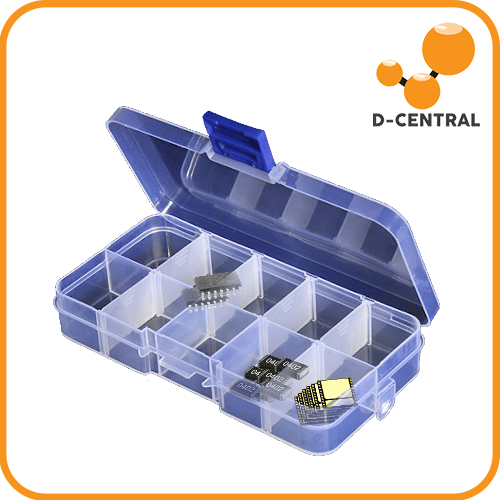
The Antminer S9 might be old by ASIC standards, but it is far from dead. Thousands of S9s are still hashing in Bitcoin space heaters, home mining setups, and off-grid operations around the world — especially in Canada, where the free heat output makes the economics work even at current difficulty levels. This Bitmain Antminer S9 Hashboard Repair Parts Bundle gives you the most commonly needed replacement components to keep those boards alive and hashing.The bundle contains a curated selection of the most failure-prone components found on S9 hashboards — the parts that die first and most often. Instead of sourcing individual chips and passives from a dozen different suppliers (half of them overseas with 3-week shipping), this kit puts everything you need on your workbench in one shipment from Canada. BM1387 ASIC chips, voltage regulators, PIC microcontrollers, temperature sensors, capacitors, inductors, and more — the complete toolkit for board-level S9 repair.
D-Central has been repairing Antminer S9 hashboards since the model launched. We know exactly which components fail, why they fail, and how to replace them. This bundle is assembled based on years of real repair data from our Montreal, Quebec facility — not guesswork from a parts catalog.
| Component | Part / Description | Role on Hashboard |
|---|---|---|
| BM1387 ASIC Chip | Bitmain BM1387 SHA-256 hashing chip | The primary hashing silicon — 63 per hashboard |
| PIC16F1704 | Microchip PIC microcontroller | Board identification and communication controller |
| uP1542S / LM27402 | Voltage regulators | Power regulation for ASIC chip domains |
| Temperature Sensors | T451 / NCT218 | Thermal monitoring for overheat protection |
| QN3109 MOSFET | Power MOSFET | Switching regulation in the power delivery circuit |
| 2SCR553P | NPN transistor | Signal switching in the control circuit |
| Tantalum Capacitors | 330μF 2.5V (2R5TPE330M9) | Decoupling and filtering on ASIC power rails |
| Solid Capacitors | 1000μF 16V | Bulk power filtering |
| SMD Capacitors | 1210 package (C1072 / C954) | High-frequency decoupling across ASIC chains |
| Inductors | HPC1050-22UH (220 series) | Energy storage in the buck converter stages |
| IO Connectors | 18-pin bent IO socket | Data ribbon cable connection to control board |
| Power Connectors | 6-pin curved power socket | PSU power input to hashboard |
Bundle includes multiple units of each component to cover multiple repair jobs. Exact quantities may vary — contact us for current bundle composition.
To perform S9 hashboard repair, you will need:
The bundle includes multiple units of each component — typically enough to repair several S9 hashboards depending on the failure severity. Most S9 repairs involve replacing 1–3 chips plus a few supporting components. For a board with a single dead BM1387 chip and a blown cap, you will have plenty of parts left over for future repairs. This is designed as a parts inventory, not a one-shot kit.
Yes. The S9 family shares the BM1387 chip and most of the same supporting components across variants. There are minor PCB layout differences between some versions, but the vulnerable components — chips, regulators, capacitors, and connectors — are largely interchangeable. Always verify component placement against your specific board revision.
This kit provides the parts, not the skills. S9 hashboard repair requires SMD soldering and rework experience, a proper soldering station with hot air capability, and the ability to read board schematics and use a multimeter for diagnosis. If you are new to board-level repair, we recommend starting with D-Central’s repair training resources or sending the board to our professional repair service first.
Absolutely — with the right economics. The S9 at ~13.5 TH/s is not competitive as a pure mining investment at high electricity rates. But as a Bitcoin space heater, the equation changes completely. Every watt of electricity becomes a watt of heat. In a Canadian winter, where you are paying for heat anyway, the S9 mines Bitcoin for effectively free. Keeping S9 hashboards alive means keeping your heating miner running. The repair cost of a few components is trivial compared to the ongoing dual-purpose value.
Yes. Our ASIC repair service handles S9 hashboard repairs professionally. Ship us the board, we diagnose it, repair it at the component level, test it on our jig, and ship it back. If you prefer to do it yourself, this parts bundle is here. If you want it done right by professionals, we are here too.
D-Central Technologies has repaired more Antminer S9 hashboards than most shops have ever seen. We have been at this since 2016 — before the S9 was even considered “legacy” hardware. Every part in this bundle was selected because our technicians have replaced it hundreds of times on real customer boards in our Montreal, Quebec repair facility.
The S9 is the workhorse of the home mining and space heater community. It is the miner that proved you could heat your home while stacking sats. We are not going to let these boards die when a few replacement components can keep them hashing. Every hash counts — even the ones coming from an eight-year-old miner heating your living room. Explore our full ASIC repair services.
The bundle includes multiple units of each component — typically enough to repair several S9 hashboards depending on the failure severity. Most S9 repairs involve replacing 1–3 chips plus a few supporting components. For a board with a single dead BM1387 chip and a blown cap, you will have plenty of parts left over for future repairs. This is designed as a parts inventory, not a one-shot kit.
Yes. The S9 family shares the BM1387 chip and most of the same supporting components across variants. There are minor PCB layout differences between some versions, but the vulnerable components — chips, regulators, capacitors, and connectors — are largely interchangeable. Always verify component placement against your specific board revision.
This kit provides the parts, not the skills. S9 hashboard repair requires SMD soldering and rework experience, a proper soldering station with hot air capability, and the ability to read board schematics and use a multimeter for diagnosis. If you are new to board-level repair, we recommend starting with D-Central’s repair training resources or sending the board to our professional repair service first.
Absolutely — with the right economics. The S9 at ~13.5 TH/s is not competitive as a pure mining investment at high electricity rates. But as a Bitcoin space heater, the equation changes completely. Every watt of electricity becomes a watt of heat. In a Canadian winter, where you are paying for heat anyway, the S9 mines Bitcoin for effectively free. Keeping S9 hashboards alive means keeping your heating miner running. The repair cost of a few components is trivial compared to the…
Yes. Our ASIC repair service handles S9 hashboard repairs professionally. Ship us the board, we diagnose it, repair it at the component level, test it on our jig, and ship it back. If you prefer to do it yourself, this parts bundle is here. If you want it done right by professionals, we are here too.
| Weight | 300 g |
|---|---|
| Dimensions | 15 × 12 × 8 cm |
Only logged in customers who have purchased this product may leave a review.
In the dynamic world of cryptocurrency mining, Bitmain’s Antminer stands out as a beacon of efficiency and reliability. Launched by Bitmain Technologies Ltd.
Your ASIC miner just died. The dashboard shows zero hashrate, error codes are scrolling past, and you are standing in front of a machine that was earning you bitcoin yesterday.
Complete guide to ASIC miner repair costs in 2026. Covers pricing for hashboard repair, control board repair, chip-level micro-soldering, PSU repair, and full system rebuilds. Includes repair vs replace decision framework and cost breakdown by miner model.
Reviews
There are no reviews yet.