Quick answer
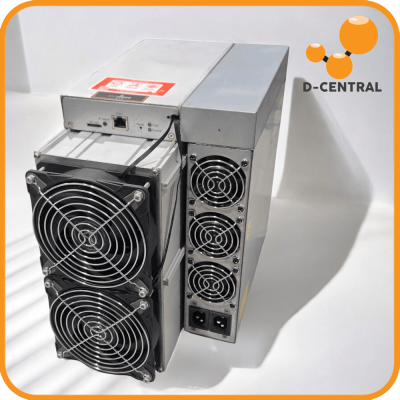
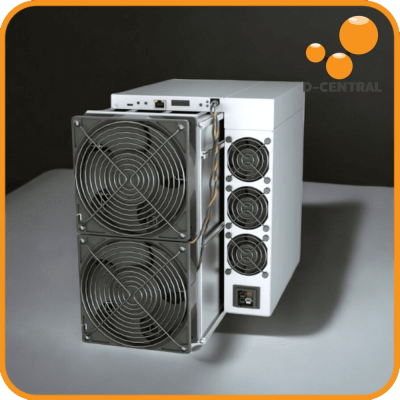
For an Antminer S9, the current DCENT_OS Experimental catalog provides exact-board development-signed packages with route-specific verification and recovery boundaries. First-party daemon, dashboard and Buildroot source is published; reused vendor kernel, boot and FPGA source correspondence and redistribution permission remain unverified. The October default donation configuration is disabled at 0%; retained settings may differ. Optional contributions use configured Stratum V1 mining time, and saved changes require a daemon restart; accepted-share or payout percentages are not guaranteed. Earlier S9 bench evidence does not physically qualify the current package.
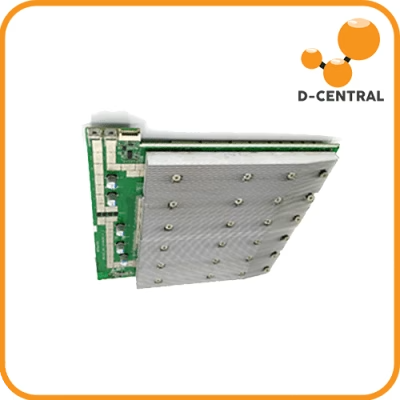
The Antminer S9 launched in 2016. Nine years later, it is still the single most-flashed, most-documented, most-hacked Bitcoin miner ever built — and that is precisely why it has quietly become the proving ground for the next generation of open-source firmware. If you have an S9 sitting in a garage, a basement, or a shed, you have one of the best machines on the planet for learning what it actually means to own your hardware.
TL;DR — The honest answer
DCENT_OS is D-Central Technologies’ GPL-3.0 open-source Bitcoin mining firmware for Bitmain Antminer ASIC miners. The historical 13-model registry is not the current download catalog. Use the current publication catalog and exact-controller cards for available files and their separate native-SD, first-install and existing-runtime update boundaries. Verify the original filename, matching signed companions and explicitly approved development key. Published files remain Experimental and physically unqualified; another board does not inherit eligibility.
Why the Antminer S9 still matters in 2026
On paper, the S9 is ancient. At roughly 13.5 TH/s and ~1,300–1,400W on stock firmware, its efficiency (~95 J/TH) is nowhere near a modern S21. For a commercial farm paying $0.07+/kWh, an old S9 mining at stock settings is underwater. So why does anyone care?
- There are millions of them. The S9 was produced in enormous volume. They are cheap, abundant, and frequently free for the hauling. That makes them the perfect machine to experiment on — if you brick one learning, you are out very little.
- The chip is the most-documented ASIC in existence. The S9 runs the BM1387 (16 nm) — 189 chips across 3 hashboards (63 per chain). Its command headers, PLL register encoding, and CRC behaviour have been reverse-engineered and re-documented more thoroughly than any other Bitmain ASIC. When you are building open firmware, you start where the map is most complete.
- The control board is simple and recoverable. The S9 uses a Xilinx Zynq-7010 SoC (dual-core ARM Cortex-A9, clocked around 667 MHz in mining operation) with an integrated Artix-7 FPGA fabric and an A/B pair of firmware slots on NAND. Simple, well-understood, and forgiving — you can often recover a bad flash over SD card or serial.
- It makes a genuinely useful space heater. A constant ~1.3 kW of heat is a real appliance. Under-clocked and quieted, an S9 can warm a room while it stacks sats — turning "obsolete" hardware into a home-mining resilience layer instead of e-waste.
That combination — cheap, abundant, exhaustively documented, easy to recover — is exactly why the S9 is the right place to prove open firmware first. It is not the fastest miner. It is the most honest one to learn on.
The open-source firmware options for an S9
Let us be precise about what "open-source" and "free" actually mean here, because the marketing rarely is. None of the incumbents are fully open source — but they earned their place, and any honest S9 guide credits them first.
BraiinsOS+ — the one that proved it could be done
Braiins (formerly Slush Pool) built the firmware that demonstrated, years ago, that an S9 could run a completely different mining stack and tune itself better than stock ever did. BOSminer, their mining engine, was written in Rust — a decision that influenced everyone who came after, us included. BraiinsOS+ brought per-chip frequency autotuning to the S9 and remains the autotuning reference. It is partially open (Braiins published the BCB100 control board and parts of the stack; the tuning binaries are closed), and standalone use carries a dev fee in the 2–2.5% range. For an S9 today, it is the most mature, lowest-risk option. We stand on their shoulders, and we say so plainly.
VNish — the one that made aftermarket firmware mainstream
VNish proved that miners want granular control, and with well over a million devices in the field, it normalised the idea of replacing stock firmware at all. It is fully closed source, with a dev fee in the 2–2.8% range, but it is battle-tested and supports a wide model range. If you value field-proven maturity over reading the code, VNish is a legitimate S9 choice. (For perspective, LuxOS sits in the same closed-source aftermarket tier at a 2.8% dev fee, though it is far more focused on newer industrial fleets than on the S9.)
Stock Bitmain firmware
Stock is technically 0% dev fee and only partially open. It does no real tuning, ships closed binaries, and phones home. It is the baseline everything else improves on — not an "open-source" option in any meaningful sense.
Where DCENT_OS fits: exact S9 XIL evidence, without inherited support
Here is what actually separates DCENT_OS from the incumbents above, and it is not a performance claim in either direction — nobody has run that benchmark, us included, and we are not going to invent one. What is different is that the project publishes GPL-3.0 daemon, dashboard and Buildroot source; complete-image source correspondence, third-party redistribution permission and reproducibility remain unverified. Earlier project-reported S9 bench history records sustained cold-boot mining with accepted pool shares. That reported result does not qualify the current beta20261002 artifact: its physical boot, accepted-share, endurance and recovery qualification remain pending. Use the exact current release card for package availability and installation eligibility. What is genuinely different is the openness target. DCENT_OS is built to be:
- Auditable source boundary. The project’s own daemon, dashboard and Buildroot integration are published under GPL-3.0. Exact corresponding source for reused vendor kernel, boot and FPGA components, and their applicable distribution basis, remain unverified. Published project source and scoped component records do not establish complete-image corresponding source or reproducibility.
- DCENT_OS has no mandatory firmware fee. October default configuration disables the optional contribution at 0%; retained miner settings may differ. An enabled contribution schedules 0–5% of Stratum V1 mining time, not a guaranteed accepted-share, payout or wall-clock percentage. Disable it or set it to zero to opt out; saved changes require a daemon restart. Settings displays the configured pool and worker, with API/TOML configuration available.
GET /api/donation/infodiscloses configuration and a firmware public address; an explorer link does not prove wallet ownership, a particular miner’s work or pool payouts. BraiinsOS+ takes 2–2.5%, LuxOS 2.8% always collected, VNish a cut; the difference here is not the number, it is that ours is a file you can open. - Written from scratch in Rust. The mining daemon,
dcentrald, is not forked from CGMiner or bmminer — it is a memory-safe Rust rewrite on a stripped-down Buildroot Linux base. Braiins proved memory safety and mining performance are not at odds when they wrote BOSminer in Rust; we took that lesson to the whole stack.
On the S9 specifically, DCENT_OS reached sustained, cold-boot mining — real accepted shares from all three hashboards — in spring 2026. That is the milestone that makes the S9 a real beta target rather than a wish-list. It is also the limit of what we will claim: it mines on the S9, and that is where the proven story ends.
What works today vs what is coming
This is where most firmware write-ups quietly oversell. We are not going to. Here is the honest split for DCENT_OS on the S9.
Working in the S9 beta today
- BM1387 chip communication and full-chain enumeration across all three boards.
- Stratum V1 pool mining with first accepted shares, multi-pool failover, and AsicBoost (version rolling).
- An adaptive autotuner that calculates stable operating points at runtime via binary search (roughly 10–15 minutes) — not canned presets baked into a file.
- A web dashboard with contribution controls. October defaults disable contribution at 0%; retained settings may differ. Saved changes require a daemon restart.
- The Rust
dcentralddaemon on Buildroot, with the U-Boot auto-recovery path kept intact.
On the roadmap — being built, not shipping
Everything below is source capability or roadmap context, not an artifact, install-readiness or production-support claim. Treat any third-party page that lists these as "live" with suspicion — they are roadmap items:
- Support beyond the S9 — The current publication catalog includes exact Zynq/Xilinx native SD images for S19 and S19 Pro, with separate S19j Pro Xilinx artifact installation/update boundaries. S21 has no current public artifact. Published files remain Experimental and physically unqualified; inspect the matching exact-controller card and installation/recovery limits rather than infer eligibility from a model family. For production use today, choose a mature supported firmware.
- Native Stratum V2 — a Phase-2 goal. Today, BraiinsOS+ is the firmware that actually ships native V2.
- Space-heater mode, quiet/night profiles, BTU targeting, Home Assistant integration — Phase-3 design goals. They are the home-mining vision the project is built for, not present-tense features. LuxOS leads on watt-anchored power management today; we credit that.
- 120V / PSU-bypass operation — roadmap. LuxOS got there first.
- A public, downloadable source repository — live at github.com/DCentralTech/DCENT_OS.
If you want to compare these capabilities side by side across every firmware honestly — with roadmap items marked as roadmap — see our full Bitcoin mining firmware comparison.
The brick warning (FAFO)
Flashing beta firmware can brick your miner. A downloadable artifact is not proof that first install and recovery have been witnessed on your unit — no model, the S9 included, has a published witnessed install route. Identify your exact board lane, prove your recovery path before you flash, and never put a guarded artifact on hardware you cannot afford to lose.
We say this loudly on purpose. The mature options — BraiinsOS+ and VNish — have years of field hardening and proper recovery tooling. A bleeding-edge open-source beta does not. The flip side of "you own this hardware and can run whatever you want on it" is "you also own the consequences." That is the deal. We are not going to soften it to sell you something.
How to think about a beta install
If you have read this far and still want to chase the open-source frontier on an S9, here is the sane way to approach it — the same way we work on our own bench:
- Start on a machine you can afford to have offline. The S9 is the right platform for this precisely because it is cheap, abundant and unusually forgiving — an A/B firmware slot pair, an SD boot path, and a UART header if it comes to that. That is not because you should expect to lose it. It is because a first flash on any firmware, ours included, should happen on hardware whose downtime is an inconvenience rather than a payroll problem.
- Know your control board and recovery path before you flash. The S9’s A/B firmware slots and its SD boot path are your safety net — learn how to use them before you need them, not after.
- DCENT_OS is D-Central Technologies’ GPL-3.0 open-source Bitcoin mining firmware for Bitmain Antminer ASIC miners. The historical 13-model registry is not the current download catalog. Use the current publication catalog and exact-controller cards for available files and their separate native-SD, first-install and existing-runtime update boundaries. Verify the original filename, matching signed companions and explicitly approved development key. Published files remain Experimental and physically unqualified; another board does not inherit eligibility.
This is bigger than one old miner. Running open firmware on hardware you own is a small act of sovereignty — the same instinct behind running your own Bitcoin node, your own energy, your own backups for a world that keeps trying to rent everything back to you. The S9 is just the cheapest, friendliest place to start. If that idea resonates, it is the through-line across everything in our sovereignty stack.
Where the S9 files actually are — and what we mirror
The S9 is old enough that “just download it from the vendor” has stopped being a complete answer, so here is the honest map. Braiins still publishes an SD-card image whose stated scope is “S9, S9i, S9j” — that is a live vendor channel and it is where a current BraiinsOS+ install should come from. VNish names the Antminer S9 in its own model menu. Bitmain’s portal is oriented to current hardware.
D-Central also keeps an archive of older images and service documents for bench work. It is a mirror, not an official channel, it is excluded from search indexes, and every file in it carries a published SHA-256 plus an honest provenance record — including Source: Unknown on 107 of the 112 files, because we could not establish where they came from and saying so is the point. For the S9 specifically we hold four binaries and three Bitmain service PDFs:
| File | What the file itself attests | Record |
|---|---|---|
| Antminer-S9-xilinx-201907311618-autofreq-user-Update2UBI-NF-sig.tar.gz | Bitmain stock. Its runme.sh verifies the package against /etc/bitmain-pub.pem, Bitmain’s on-device public-key path — and as our record notes, that single line is the only thing separating a Bitmain-official package from a VNish one, because the container layouts are identical. | provenance record 057 |
| Antminer-S9-xilinx-vnish-3.9.0-9991dlabs.tar.gz | VNish-attested: runme.sh line 2 reads “# developed by vnish team” and the package verifies against /etc/vnish.pem. An archival copy — for a current build, go to VNish. | provenance record 058 |
| s9_SD_autoNANDinstall_(BraiinsOS+).zip | Contains braiins-os_am1-s9_sd-install_2022-06-20-…-22.05-plus.img and a detached OpenPGP signature, issuer fingerprint 8631 9407 99A1 27A0 055D 3121 9A6F 6DDE EF50 8048, created 2022-06-24 UTC. D-Central has not verified that key against any Braiins-published key — the signature is present, the key owner is Unknown, and we publish both halves rather than the flattering one. | provenance record 103 |
| S9 SD card recovery image.rar | Bench recovery set for a board that boots nothing. | on the provenance page |
Two things follow from that table and they are the whole reason it is here. First: a hash you can check is the difference between a firmware download and a leap of faith, and most S9 files circulating today ship with neither a hash nor a stated origin. The method is on how to verify mining firmware authenticity. Second: notice that we published the one uncomfortable fact in the set — that we have not verified the OpenPGP key on the Braiins archive against Braiins’ own published key. A provenance record that only contains good news is not a provenance record. The full list, filterable by filename, hash or attested author, is on firmware mirror provenance.
Frequently asked questions
What is the best free firmware for an Antminer S9 in 2026?
For a working, mature install today, BraiinsOS+ is the strongest free-to-flash option (it carries a 2–2.5% dev fee in standalone use but is the autotuning gold standard), with VNish as the other field-proven choice. If your priority is GPL-3.0 source and a 0%-mandatory-fee design, DCENT_OS is the experimental option; guarded artifacts exist for S9 XIL and S19j Pro XIL, but neither should be described as production support.
Can I run DCENT_OS on my S9 right now?
You can build and run it — the S9 XIL lane has a downloadable signed artifact and the public platform matrix records sustained standalone cold-boot mining with accepted shares. What does not exist for any model, the S9 included, is a published witnessed install route: the guarded artifact is an artifact, not an install-readiness claim. Treat it as a bench project on a machine you can afford to have offline, and read the evidence ledger first.
Does DCENT_OS support the S19 or S21?
The current publication catalog includes exact Zynq/Xilinx native SD images for S19 and S19 Pro, with separate S19j Pro Xilinx artifact installation/update boundaries. S21 has no current public artifact. Published files remain Experimental and physically unqualified; inspect the matching exact-controller card and installation/recovery limits rather than infer eligibility from a model family. Use mature production firmware for production miners.
Why build open firmware on a nine-year-old miner instead of a new one?
Because the S9’s BM1387 chip and Zynq-7010 control board are the most thoroughly documented and most recoverable in mining. With 189 well-understood chips across three boards and forgiving boot redundancy, it is the right place to get an open-source stack correct before extending it — the same reason Braiins and VNish cut their teeth on the S9 first.
Will custom firmware void my Bitmain warranty?
Yes — flashing any aftermarket firmware voids the manufacturer warranty, and beta firmware can brick the unit outright. On a nine-year-old, out-of-warranty S9 that is usually a non-issue, which is another reason it is the ideal machine to experiment on.
When your miner retires: one more layer decentralized
Open-source firmware extends a miner's useful life. When a model retires from profitable mining, the power, cooling, and connectivity you built around it can still serve the distributed-compute layer — heat reuse, mesh comms, or freeing infrastructure for sovereign AI.