Quick answer
'Sovereign AI' has been redefined to mean a nation-state buying tens of thousands of GPUs and hosting a frontier model on home soil. But that sovereignty is the state's, not yours — you're still a tenant, and the landlord just changed flags. Real sovereignty is the model running in your basement, on hardware you own.
What “sovereign AI” has come to mean
Open a tech-policy paper or a chipmaker’s keynote this year and you will keep hitting the same two words: sovereign AI. The phrase has been claimed almost entirely by the largest actors on the board. In the dominant framing, sovereign AI means a nation-state or a national champion buying tens of thousands of GPUs, standing up a flagship cluster on home soil, and training a frontier model that runs on infrastructure inside its own borders. France wants its own model. The Gulf states are buying compute by the boatload. India, Japan, and a dozen others have announced “sovereign” initiatives. The chip vendor selling the accelerators is, unsurprisingly, the loudest voice telling governments they need this.
There is a coherent argument underneath all of it. If every capable model is hosted in one jurisdiction, then that jurisdiction holds a lever over everyone else’s access to intelligence. Reducing that dependency is a real goal. We are not here to mock it.
But notice what the word sovereign is doing in that sentence. It has been quietly redefined to mean a government or a megacorp owning the data center. The sovereignty in question is the state’s, or the national champion’s. It is not yours. You are still a tenant. The landlord just changed flags.
Why that’s not sovereignty — at least not for you
Swapping a foreign data center for a domestic one is a supply-chain decision. It can be a good one. It is not the same thing as you being sovereign over your own use of a tool.
Ask the questions a Bitcoiner reflexively asks about any system before trusting it. Who can revoke your access? Who logs what you do? Who can change the rules unilaterally, after the fact, with a terms-of-service update you did not sign? In the national-GPU framing, the answer to all three is still “someone who is not you.” A model hosted in your own country can still be metered, throttled, audited, and switched off — only now the entity holding the switch shares your passport. For a great many threat models that is strictly worse, not better.
This is the same trap the legacy money system runs. “Your money is safe, it is in a domestic bank, regulated locally.” True, and also: it is not your money in any sense that survives contact with a freeze order. Possession is the property that matters. A custodian who is friendly today is still a custodian. National sovereign AI is correspondent banking for cognition. It moves the counterparty closer to home. It does not remove the counterparty.
The node analogy: you already do this
Here is the reframe, and if you run Bitcoin you have already internalized it without needing it spelled out.
When a Bitcoiner talks about sovereignty, they do not mean “my country should run a big mining operation.” They mean I run my own node. A few hundred dollars of hardware on a shelf, verifying every block against rules I can read, refusing to trust anyone else’s claim about the state of the chain. Your node does not out-hash a public mining pool. It was never trying to. It does something more important: it makes you a first-class participant who verifies instead of trusts. Don’t trust, verify was never about raw capacity. It was about who holds the final say over your own copy of the truth.
Individual AI sovereignty is the exact same move, one layer up the stack. You do not need to out-compute a hyperscaler any more than your node needs to out-hash a pool. You need a capable open-weight model running on hardware you physically control, executing code you can inspect, on electricity you paid for — answering to no API key, no rate limit, no logging endpoint, no jurisdiction. That is sovereignty in the only sense that has ever held up: possession and the right to verify, not scale.
The cypherpunks who shipped Bitcoin understood that you decentralize a system one stubborn participant at a time. A single node is rounding error against the network’s total hashrate, and yet a network made of nothing but sovereign nodes is the most resilient money ever built. The same logic applies to compute. Every basement running its own model is one more layer decentralized.
What individual AI sovereignty actually looks like
This is not theoretical and it is not expensive relative to the rack you already own. The open-weight community has done the hard part for you, and it deserves the credit: the teams behind Llama, Mistral, Gemma, Qwen, and DeepSeek release model weights as files you can download and keep, the way you would keep a firmware image. Georgi Gerganov’s llama.cpp and the projects built on top of it — Ollama, LM Studio — turn those files into a local inference server with roughly the effort it took you to get a node syncing the first time. None of this is D-Central’s work. We are pointing at a stack other people built and run ourselves.
Concretely, individual AI sovereignty is:
- Weights you hold. An open-weight model on your own SSD. It does not phone home. It cannot be deprecated out from under you. The version you downloaded is the version you have, forever.
- A runner you control. A local binary serving inference on your CPU or GPU. No account, no key, no per-token meter, no upstream that sees your prompts.
- Hardware in a room you can walk into. A consumer GPU, an Apple Silicon machine, or a small workstation. Quantization — lossy compression of the weights — is the knob that drops a model from “needs a cluster” to “fits on the card already in your desktop.”
- Energy you account for. The same watt-hour discipline you apply to a hashboard. You know what your inference costs to run because you pay the meter, the same way you know what your miner costs.
If you want the full plain-English glossary — weights, runners, quantization, context windows — and an honest first-pass on what to actually run at pleb scale, that is the whole point of our manifesto on sovereign AI for Bitcoiners and the wider /ai/ section. Start there.
The honest limit: sovereignty is not supremacy
Here is the part the keynote slides leave out, and the part we refuse to leave out: you are not going to out-compute a hyperscaler, and that is not the point.
A frontier lab training the largest closed models is pouring hundreds of millions of dollars into clusters of tens of thousands of accelerators, drawing power measured in tens of megawatts. The model running in your basement, on one or two GPUs, will not match that on raw capability. On the hardest reasoning tasks, the longest context, and the bleeding edge of quality, the big closed models are still ahead. Anyone telling you a quantized open-weight model on a single card is “just as good as GPT or Claude across the board” is selling something. We are not.
But sovereignty was never a claim to supremacy. Your node does not out-hash a pool and you run it anyway, because the value is in who controls it, not in how big it is. A capable local model that you fully own — that cannot be revoked, logged, throttled, or rewritten — beats a marginally smarter model you merely rent, for every use where the relationship matters more than the last few percent of benchmark score. Drafting, summarizing, coding help, private research, anything you would not want metered and stored on someone else’s server: a sovereign model is already good enough, and it is the only one that is actually yours. Know the limit, work inside it, and you get the thing the national-GPU pitch can never sell you: independence.
Where Bitcoin, energy, and firmware actually fit
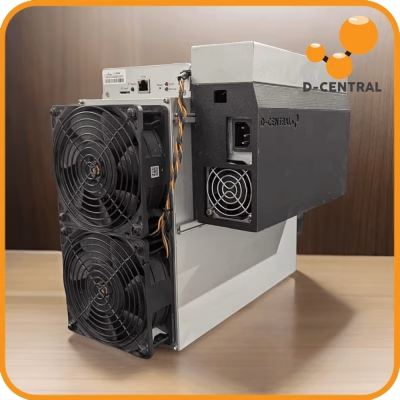
If you found this page through a Bitcoin mining lens, a clarification you have probably already guessed, and that we want to be very precise about: your ASIC miner cannot run AI.
A SHA-256 ASIC — the BM1368 in an S21, the BM1370 in an S21 Pro, any Antminer chip — is fixed-function silicon. It computes double-SHA-256 hashes and nothing else. It has no general-purpose cores and no matrix-multiply units, which is the operation AI inference is built on. No firmware changes that, including ours; firmware reflashes the controller, it does not rewrite the hashing silicon. ASIC is not AI silicon. They are different machines that happen to share a power budget and a tolerance for heat. If you want the long version, we wrote it: Can you actually run AI on a Bitcoin miner? The honest answer.
DCENT_OS is D-Central Technologies’ GPL-3.0 open-source Bitcoin mining firmware for selected Bitmain Antminer ASIC miners. Guarded artifacts exist only for exact S9 XIL and S19j Pro XIL lanes; install evidence is incomplete and neither is production-ready. Check the exact evidence ledger.
Frequently asked questions
What does “sovereign AI” actually mean?
In mainstream usage it has come to mean a nation-state or national champion building its own GPU cluster and frontier model on domestic infrastructure. We argue the more useful definition, for an individual, is the Bitcoiner one: an open-weight model running on hardware you physically own, with code you can inspect, that answers to no external API key, meter, or jurisdiction. National sovereignty over compute and personal sovereignty over your own use of a model are not the same thing.
Can I run AI on my Bitcoin miner?
No. A SHA-256 ASIC is fixed-function hashing silicon with no general-purpose or matrix-multiply hardware, so it cannot perform AI inference, and no firmware can change that. To run AI locally you use a GPU, Apple Silicon, or a workstation. The miner and the AI box are separate machines; what transfers is your operating discipline, not the chip.
Do I need a hyperscaler-sized rig to be sovereign?
No, and that is the whole reframe. Sovereignty is about control, not scale — the same way your Bitcoin node is sovereign without out-hashing a pool. A consumer GPU or an Apple Silicon machine running a quantized open-weight model gives you a capable assistant you fully own. You will not match a frontier lab’s raw capability, and for most private, everyday tasks you do not need to.
Is a local open-weight model as good as ChatGPT or Claude?
Honestly, not across the board. On the hardest reasoning, the longest context, and the absolute frontier of quality, the largest closed models still lead. But for drafting, summarizing, coding assistance, and private research, a good local model is already more than good enough — and it is the only option that cannot be logged, throttled, revoked, or rewritten by someone else. Sovereignty buys you independence, not a higher benchmark score.
Who actually makes the open-weight models I would run?
Not us, and credit where it is due: the open-weight releases come from teams like Meta (Llama), Mistral, Google (Gemma), Alibaba (Qwen), and DeepSeek, with the local-inference layer built by projects such as llama.cpp, Ollama, and LM Studio. D-Central did not build any of that. We run the same stack you can, and we point at it because owning your compute is the same fight as owning your money — one more layer decentralized.