Skip to content

Bitcoin accepted at checkout  |  Ships from Laval, QC, Canada  |  Expert support since 2016

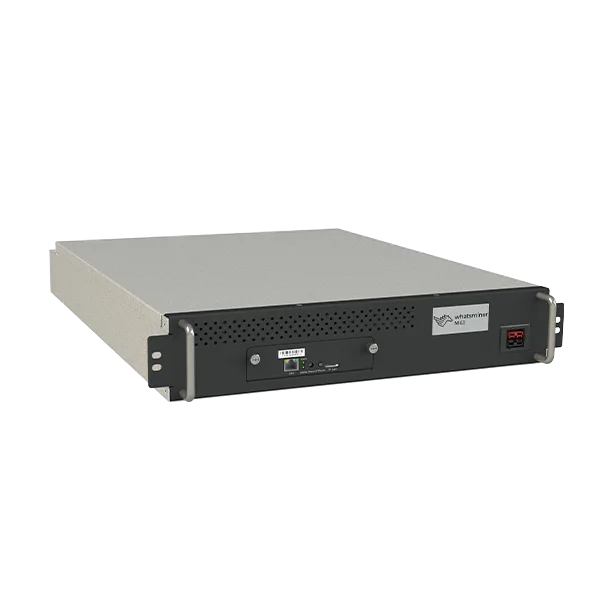
Whatsminer M53S+ ASIC miner specifications and profitability image
Active MicroBT SHA-256 PRO Hydro

Whatsminer M53S+

Top-tier M53 hydro variant pushing 302 TH/s. 4U rack with 3-phase power. Enterprise-grade water cooling required.

Hashrate 302 TH/s
Power 7,248 W
Efficiency 24 J/TH
Noise 50 dB

Quick answer

The Whatsminer M53S+ is a Bitcoin miner rated about 302 TH/s at roughly 7,248 W (about 24 J/TH), built on the WM3610 ASIC. An industrial-class unit — loud and power-hungry, best suited to a dedicated mining space, not living areas.

Hydro-Cooled Miner

This miner uses a closed-loop liquid cooling system (hydro cooling) instead of traditional air cooling. Water or coolant circulates through internal channels to absorb heat from the ASIC chips, then transfers it to an external radiator or facility cooling loop.

Hydro-cooled miners run significantly quieter than air-cooled models since they eliminate or minimize fan noise. They also achieve higher hashrates and better efficiency because the chips can be driven harder while staying within safe thermal limits. The trade-off: hydro miners require compatible water infrastructure — inlet/outlet connections, a cooling distribution unit (CDU), and proper plumbing.

Hydro cooling is ideal for professional mining operations and data centers where water infrastructure already exists, or for home miners building a dedicated water-cooled setup to eliminate noise completely.

Professional-Grade Miner

This miner draws 7,248W and produces 50 dB of noise — it is designed for dedicated mining environments, not living spaces. Professional-grade miners deliver the highest hashrate and revenue per unit but require proper infrastructure: a 240V circuit, adequate ventilation or exhaust ducting, and a space where noise is not a concern (garage, basement, warehouse, or outdoor enclosure).

For home miners looking for a quieter alternative, consider our Bitcoin Space Heater builds or explore open-source miners like the Bitaxe that are purpose-built for residential environments.

Circuit Requirement 240V dedicated circuit

Profitability Calculator

$63,532
Daily BTC Mined --
Breakeven Electricity $0.0499/kWh
Cost to Mine 1 BTC --
Network Hashrate Share --
Break-even Estimate --
Period Revenue Electricity Cost Profit
Daily $8.68 $12.18 $-3.50
Weekly $60.76 $85.24 $-24.48
Monthly $260.41 $365.30 $-104.89
Yearly $3,168.26 $4,444.47 $-1,276.21

Where to Buy the Whatsminer M53S+

Official

D-Central Technologies

Canada

Bitcoin Mining Hackers since 2016. Ships from Laval, Quebec.

Shop all Bitcoin mining products
Partner

ASIC Miner Market

United States

Wide selection of new and used ASIC miners. US-based shipping.

Shop Now
Partner

MinersDeals

United States

Competitive prices on new ASIC miners with coupon codes.

Shop Now

BT-Miners

United States

Large inventory of ASIC miners. US-based.

Shop Now

Coin Mining Central

United Kingdom

UK-based mining hardware retailer. Ships worldwide.

Shop Now

CryptoMinerBros

United States

Established US retailer with repair services.

Shop Now

Full Specifications

Model Whatsminer M53S+
Model Number M53S+
Manufacturer MicroBT
Algorithm SHA-256
Coins Mined Bitcoin (BTC)
Hashrate 302 TH/s
Power Consumption 7,248 W
Efficiency 24 J/TH
Noise Level 50 dB
Chip Model WM3610
Cooling Hydro
Voltage Range 380-480V 3-phase
Operating Temperature 5-45°C
Dimensions 86x483x663
Weight 27.5
Interface Ethernet
BTU Output 24730.2 BTU/hr
Equivalent Heater Equal to a 7,248W space heater
Daily Power Cost $12.18/day
Monthly Power Cost $365.30/mo
Circuit Requirement 240V circuit required
Release Date 2024-01-01
MSRP $10,000.00
Status Active

Home Mining Assessment

32 /100
Poor
Noise 50 dB
Audible - best in a separate room
Heat Output 7,248W / 24730.2 BTU
High heat - requires ventilation or duct system
Power Draw 7,248W (7.2kW)
240V dedicated circuit required

Top-tier M53 hydro variant pushing 302 TH/s. 4U rack with 3-phase power. Enterprise-grade water cooling required.

The Whatsminer M53S+ is MicroBT’s top-bin hydro SHA-256 miner from the 2023–2024 M53 generation, rated at 302 TH/s for 7,248 W (about 24 J/TH). It is a liquid-cooled, 19-inch rack unit built for three-phase hashcenters and immersion-style heat reuse, not for a spare bedroom — and D-Central repairs it board-level.

Chip and hashboard architecture

The M53S+ is driven by MicroBT’s in-house WM3610-class SHA-256 ASIC. Unlike Bitmain, which fabricates its BM-series silicon at TSMC, MicroBT runs its M5-generation chips on a Samsung foundry process in the 5nm class — the same lineage that powers the air-cooled M50S and M50S++. Those hundreds of ASICs are distributed across the unit’s series-wired hashboards and daisy-chained over a UART signal bus, with each chip assigned its own slice of the 32-bit nonce space.

A detail that matters for diagnostics: voltage on a Whatsminer hashboard is regulated per power domain, not per individual chip. A board steps the PSU rail down through boost and regulator stages into a series of domains, and the ASICs in each domain share that domain’s voltage. When a domain sags or a regulator fails, every chip downstream of it drops out together — which is why a “dead board” is usually a domain or signal-chain fault rather than a single bad chip.

The control side is where Whatsminer diverges most sharply from Antminer. There is no Xilinx Zynq FPGA here. MicroBT uses a pure Allwinner ARM Cortex-A53 control board (the H6/H616-class SoC family that carries the M5x and M6x line) running a custom Linux build. The SoC talks to the hashboards directly rather than offloading work to an FPGA midstate engine, and mining is handled by MicroBT’s proprietary btminer daemon — not cgminer or bmminer. That architectural difference is also why Whatsminer hashboards and control boards are not cross-compatible with Antminer hardware: different SoC, different ASIC communication scheme, different EEPROM format, and different power delivery.

Real-world power and efficiency

The 7,248 W nameplate is measured at the unit, before the rest of the loop. In a real hydro deployment you also pay for the dry cooler or CDU pumps that move coolant, so plan your circuit and PDU budget around wall draw, not the spec sheet. At roughly 24 J/TH, the M53S+ sits in the previous-generation efficiency tier: it was excellent for a 2023 hydro unit, but newer 5nm hydro and air models now reach the mid-teens J/TH. That gap is the single most important fact for buyers — the M53S+ earns its keep where power is cheap, where the waste heat is genuinely reused, or where it can be bought well below the cost of current-gen iron.

Liquid cooling does buy tuning headroom. Coolant carries heat away far more aggressively than air, so hydro units tolerate higher sustained board temperatures and can hold higher clocks without throttling. On Whatsminer, however, that headroom is governed by btminer’s autotuner, which calculates frequency and voltage targets at runtime rather than reading fixed presets, and MicroBT keeps the underlying frequency/voltage tables encrypted. You set a power target; the firmware decides how to reach it. For how tuning curves behave across the broader SHA-256 fleet, see our ASIC power profiles database.

Firmware compatibility

Stock, the M53S+ runs MicroBT’s btminer firmware, managed through the Whatsminer web UI on port 80 and the btminer JSON-RPC API on port 4028. The read API (version, summary, pools, hashboard data) is open by default; write operations — pool changes, reboots, power-off, frequency control — require token-based encryption negotiated with the admin password, which is why generic CGMiner tools can read a Whatsminer but cannot reconfigure one.

On third-party firmware, be honest about the reality. Braiins OS does not support any Whatsminer — it is an Antminer-only project, and it is the only firmware that natively speaks Stratum V2; stock btminer and the Whatsminer aftermarket remain on Stratum V1. Some custom firmware and replacement control boards do exist for parts of the M-series, but hydro-unit coverage is inconsistent, the sealed tuning tables limit how far they can push, and flashing carries dev-fee and warranty trade-offs you should weigh before touching a production rack. Our own DCENT_OS is GPL-3.0 and currently in closed beta (public beta targeted for summer 2026); its present focus is open Antminer firmware and cross-vendor monitoring rather than flashing Whatsminer hydro hardware, so we will not over-promise here. When in doubt, keep an enterprise hydro unit on validated firmware.

Common faults and troubleshooting

The M53S+ shares the SHA-256 failure catalog of any high-density miner, plus the failure modes unique to a sealed liquid loop:

  • Chain breaks / low chip count — a dead chip (open) stops enumeration at that position; a cold solder joint on a chip’s signal-forwarding pin breaks the chain while leaving the chip alive. Both show up as a hashboard reporting fewer ASICs than it should.
  • Domain and power faults — a shorted regulator or filter capacitor collapses a domain voltage and takes its whole group of chips offline; a failed boost stage leaves a board with zero detected chips and no domain rails at all. These are measured, not guessed, with a multimeter on the domain test points.
  • Signal and clock faults — a cracked crystal or a cold joint on a clock/CI resistor at a domain boundary causes random enumeration failures or a chain that breaks at a predictable point.
  • Thermal and mechanical faults — BGA solder cracks from thermal cycling cause intermittent dropouts; dried thermal interface or a detached cold plate trips thermal protection.
  • Hydro-specific faults — coolant leaks, restricted or air-locked flow, pump failure, and corrosion or liquid damage where coolant has contacted electronics. A water-cooled board has no fans to fall back on, so a flow fault becomes a thermal shutdown almost immediately.

For a guided symptom-to-cause walkthrough — including how to read stock error and status messages — start with our ASIC fault finder, then cross-reference the specific code your miner reports.

Repair and longevity

A hydro Whatsminer is built to run for years, and the failure modes above are overwhelmingly repairable rather than terminal. D-Central has run an in-house ASIC repair lab in Laval since 2016, and we service the M53S+ at the component level: reflowing or replacing dead ASICs, rebuilding failed voltage domains and regulator stages, repairing signal-chain cold joints, recovering corrupted EEPROMs, and addressing leak and corrosion damage on the cold plate and board. Because Whatsminer voltage is domain-organized, a single failed domain does not mean a scrapped board — it means one targeted repair. If your unit is dropping a hashboard, derating, or shutting down on a flow or thermal fault, send it to D-Central ASIC repair before you write it off.

Who it is for and buying notes

The M53S+ is enterprise hardware. It needs three-phase 380–480 V power, a coolant loop with an external dry cooler or CDU, and a 19-inch rack — it is not a plug-and-play home unit, and its ~50 dB and 27.5 kg, 4U chassis reflect that. It makes the most sense for operators who already run hydro infrastructure, or for heat-reuse projects that can duct or pipe its roughly 24,730 BTU/h of waste heat into a real load. If your goal is quiet home mining or learning the stack, an open-source Bitaxe-class single-chip device is a far better fit; the M53S+ is the opposite end of the spectrum. On the used and refurbished market, value it on efficiency and the price of current-gen alternatives, and budget for the cooling loop, not just the miner. D-Central sources, refurbishes, and supports enterprise ASICs, and full live specs and profitability for this model live in our ASIC miner database.

Generational context

The M53S+ is the high-bin top of MicroBT’s first mainstream hydro family. Within the M53 line, efficiency improved across the bins as clocks and chip counts climbed:

Model Hashrate Power Efficiency Cooling
Whatsminer M53 230 TH/s 6,670 W ~29 J/TH Hydro
Whatsminer M53S 260 TH/s 6,760 W ~26 J/TH Hydro
Whatsminer M53S+ 302 TH/s 7,248 W ~24 J/TH Hydro

Against the wider timeline, the M53 generation slots between MicroBT’s Samsung-built M50 air units and the more efficient M60-series 5nm refresh that followed. In Bitmain terms it is roughly contemporary with the S19 XP Hydro era and sits a full generation behind today’s S21-class hydro efficiency. None of that makes it obsolete — credit to MicroBT for shipping a dense, durable hydro platform — it simply means the M53S+ is now a value play: a heavy-duty, repairable workhorse best deployed where cheap power, existing liquid infrastructure, or heat reuse let its older efficiency still pencil out.

Frequently Asked Questions

What are the current mining economics for the Whatsminer M53S+?

At $0.07/kWh, the Whatsminer M53S+ currently shows an estimated daily net cost of $3.50 before pool fees and hardware cost. Lower electricity rates, network changes, BTC price changes, or useful heat recovery can change the result.

Can I mine Bitcoin at home with the Whatsminer M53S+?

The Whatsminer M53S+ has a home mining score of 32/100. With 50 dB noise and 7,248W power draw, it may require a dedicated space like a garage, basement, or outdoor enclosure. Consider noise insulation and proper ventilation.

Can the Whatsminer M53S+ heat my home?

The Whatsminer M53S+ outputs approximately 24730.2 BTU/hr of heat. For reference, a typical space heater produces 5,000-5,500 BTU/hr. All electrical energy consumed by the miner is converted to heat, making it 100% efficient as a heater. D-Central offers Bitcoin Space Heater builds designed specifically for home heating integration.

Does D-Central repair the Whatsminer M53S+?

Yes, D-Central provides professional repair services for the Whatsminer M53S+. Services include hashboard repair, control board diagnostics, fan replacement, and full refurbishment. Ship your miner to our Laval, Quebec facility for diagnosis and repair.

What power supply does the Whatsminer M53S+ need?

The Whatsminer M53S+ draws 7,248W of power. You need a power supply rated for at least 7,973W with appropriate voltage (380-480V 3-phase). D-Central stocks compatible power supplies in our shop. Always use a quality PSU from a reputable manufacturer to protect the miner and wiring.