Looking for our most up-to-date guide on this topic? Read our comprehensive article: ASIC Noise Reduction Guide: Silence Your Bitcoin Miner
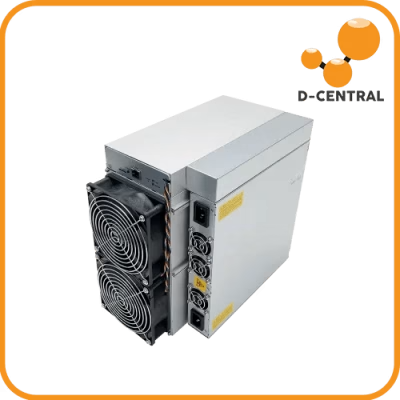
Your miner doesn’t care that it’s 2 a.m. and your partner is trying to sleep. A stock Antminer S19 screams at roughly 75 dB — louder than a vacuum cleaner running permanently in the next room. That’s the single biggest reason home mining rigs end up exiled to a garage, sold at a loss, or never bought at all. The good news: the noise is an engineering problem, and engineering problems have solutions. This guide walks through what actually drops decibels in a residential setup — hardware choice first, then enclosures, isolation, and airflow — without the wishful thinking.
Where Mining Noise Actually Comes From
Before you spend a dollar on acoustic foam, understand what you’re fighting. Noise from a Bitcoin miner has three distinct sources, and they don’t all respond to the same fix:
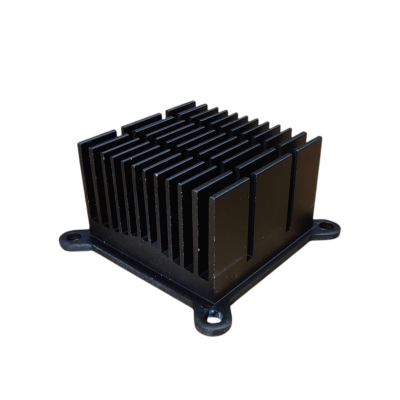
- Cooling fans — by far the dominant source. A full-size ASIC pushes air through dense heatsinks with 6,000+ RPM fans. That’s broadband noise plus a high-pitched whine that carries through walls and ductwork.
- Power supply units — a constant low-frequency hum and, on cheaper PSUs, coil whine. Less aggressive than fan noise but harder to mask because low frequencies travel.
- Structure-borne vibration — the miner’s chassis transmits mechanical buzz into whatever it sits on. A shelf, a desk, or a joist becomes a sounding board and re-radiates the noise as a low drone you feel as much as hear.
Here’s the part most guides skip: fan noise rises with the cube of fan speed. Cut RPM by 20% and you cut airflow modestly but slash acoustic output dramatically. That single relationship is the foundation of every effective noise strategy below.
Decibels: Set a Realistic Target
Decibels are logarithmic. A 10 dB increase is perceived as roughly twice as loud, and a 3 dB increase represents a doubling of sound energy. So “knock 20 dB off” isn’t a tweak — it’s a transformation.
- 30 dB — a quiet bedroom at night. The realistic ceiling for a Bitaxe on a desk.
- 40 dB — a quiet library. Achievable for a single-hashboard ASIC in a well-built enclosure.
- 50 dB — a quiet office; a refrigerator hum. A sensible target for a mining closet behind a closed door.
- 70-75 dB — a stock S19 or S21 with zero treatment. Unlivable indoors.
For a setup that shares a wall with living space, aim for 50 dB or below at the listening position. For a bedroom or office, you need to be near 30-35 dB, which in practice means choosing genuinely quiet hardware rather than trying to silence loud hardware.
Step One: Pick Hardware That Isn’t Loud to Begin With
You cannot soundproof your way out of a bad hardware choice. The most effective noise reduction is buying a miner that doesn’t make much noise. There’s a real spectrum here, and D-Central stocks the full range.
Bitaxe — Effectively Silent
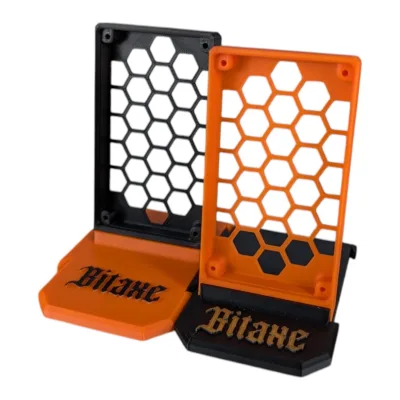
The Bitaxe is an open-source single-board solo miner — not a heater, not a full ASIC, just one mining chip on a board smaller than a paperback. The Bitaxe Gamma (BM1370 chip) runs 1.0–1.2 TH/s, and the Bitaxe Supra (BM1368) runs 625–775 GH/s. Both draw on the order of 15–20W and are cooled by a single small fan over a heatsink. On a desk, a Bitaxe is quieter than most laptops — you can run one in a bedroom and forget it’s there.
If you want even more hashrate while staying near-silent, the Bitaxe GT (Gamma Turbo) packs two BM1370 chips onto a single board for 2.15 TH/s at 35–43W. It’s still a single-board device with a small fan footprint — orders of magnitude quieter than any full-size ASIC. For solo miners who want a real shot at a block without the noise tax, this is the play. Our Bitaxe Hub breaks down every model.
Antminer Slim Edition — Single Hashboard, Custom Silent Cooling
When you want serious terahash but still need to live in the same building, the Antminer Slim Edition is D-Central’s purpose-built answer. We strip a standard Antminer down to a single high-performance hashboard, drop it into a custom 3D-printed chassis, and fit premium silent fans — then run it for 24 hours of stress testing in our Montreal, Quebec workshop before it ships. Four variants span 26–44 TH/s at 860–930W on a standard 120V household outlet. It’s dramatically quieter than a stock Antminer because there’s one hashboard to cool instead of three, and the fan curve is tuned for residential life rather than a data center.
What This Means in Practice
If silence is non-negotiable — bedroom, studio apartment, shared wall — start with a Bitaxe and accept the lower hashrate as the price of zero noise complaints. If you have a closet, basement corner, or utility room you can dedicate, a Slim Edition gives you real mining throughput and is quiet enough to manage with the enclosure and isolation techniques below. Trying to silence a stock three-hashboard S19 in a living space is fighting physics: the fixes work, but you’re starting from 75 dB and clawing back every decibel the hard way.
Step Two: Build or Buy a Sound-Dampening Enclosure
For any full ASIC — including the Slim Edition if you want it in earshot of living space — an acoustic enclosure is the highest-impact treatment after hardware selection. A well-built box can take 15–25 dB off a miner. The principle is mass plus absorption plus a non-direct air path.
Materials That Work
- Mass-loaded vinyl (MLV) — a dense, limp barrier that blocks sound transmission. This is the workhorse layer. Line the inside walls of the box with it.
- Acoustic foam or open-cell absorber — sits on top of the MLV and soaks up reflections inside the box so sound doesn’t build up and leak back out the air vents.
- Weatherstripping — seals the lid and seams. Sound leaks through gaps the same way light does; an unsealed box is a loud box.
The Critical Constraint: Airflow and Fire Safety
An enclosure that traps heat will throttle your miner or kill it. The intake and exhaust must follow a baffled, labyrinth-style path — the air turns corners while sound energy gets absorbed at each bend. Pair the enclosure with a high-static-pressure inline duct fan to keep air moving. And use fire-rated materials only: a sealed box full of an electrically powered device running 24/7 is exactly where you do not cut corners. Choose Class A fire-rated foam and barrier products, keep dust out (dust is both a thermal insulator and a fuel), and never line an enclosure with raw polyurethane packing foam.
If you’d rather not fabricate one, commercial soundproof boxes designed for ASICs exist and typically advertise around 20 dB of reduction. For a deeper build walkthrough, see our guide on building a mining closet with proper ventilation and noise control.
Step Three: Kill the Vibration
Structure-borne noise is cheap to fix and frequently ignored. Decouple the miner from anything rigid:
- Set the miner on dense rubber anti-vibration pads or sorbothane feet — not directly on a shelf or the floor.
- If the miner sits on a shelf, the shelf itself should be heavy and decoupled from the wall studs where possible.
- Inside an enclosure, mount any added fans with rubber grommets rather than hard screws so the fan’s buzz doesn’t transfer into the box panels.
This won’t touch fan noise, but it eliminates the low drone that travels through floors into rooms below — the part of mining noise that survives walls and closed doors.
Step Four: Manage the Air, Not Just the Sound
Quiet and cool are the same problem. A miner that overheats spins its fans faster, which is louder — so good airflow is a noise strategy, not just a thermal one. D-Central’s ASIC shrouds and cooling accessories let you duct exhaust heat away from a full ASIC and pair it with a quiet inline fan such as an AC Infinity Cloudline, moving the same volume of air at far lower RPM than the miner’s stock fans. Duct the hot exhaust outdoors, into a garage, or — in winter — into a room you want heated. Lower miner temps mean the miner’s own fans throttle down, and that’s free decibels.
Maintenance: Quiet Setups Drift Loud
A silent rig doesn’t stay silent on its own. Dust packs into heatsinks and chokes airflow, fans spin up to compensate, and six months later the setup is noticeably louder than the day you built it. Keep it quiet with a short routine:
- Blow out heatsinks and fans every few weeks — more often if you have pets.
- Check and re-tighten chassis screws; a loose panel rattles.
- Watch chip temperatures and adjust your fan curve or undervolt before thermal throttling forces the fans to max.
- Keep firmware current — DCENT OS and other tuned firmware let you set conservative fan curves and undervolt for a quieter, more efficient operating point.
Undervolting deserves a callout: tuned firmware lets you drop voltage and clock slightly, which lowers heat output, which lets fans run slower, which is quieter — all while barely touching hashrate. It’s the closest thing to free silence in mining.
The Honest Bottom Line
Silent home mining is real, but it’s a stack of decisions, not one trick. Choose hardware that matches your space — a Bitaxe for genuine bedroom-quiet operation, an Antminer Slim Edition when you need terahash and have a closet or utility room. Build a fire-rated, properly ventilated enclosure for any full ASIC. Decouple the vibration. Duct the heat with a quiet inline fan so the miner’s own fans never have to scream. Do all four and you can run real SHA-256 hashpower in a normal home without the noise ruining your life — or your neighbour relations. That’s not a compromise on the Mining Hacker ethos. That’s the whole point of it: institutional hardware, hacked to live in your house.
Related Reading
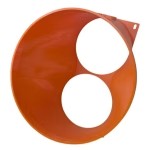
Getting the heat and the noise out of the room
Airflow is the part of a home build people solve last and regret first. Work out where the hot air is actually going before you buy anything: measure the fan face, choose a duct size, then match a shroud to the machine. Fitment is dimensioned from published fan spacing, so confirm your own fan size before ordering.