Skip to content

Bitcoin accepted at checkout  |  Ships from Laval, QC, Canada  |  Expert support since 2016

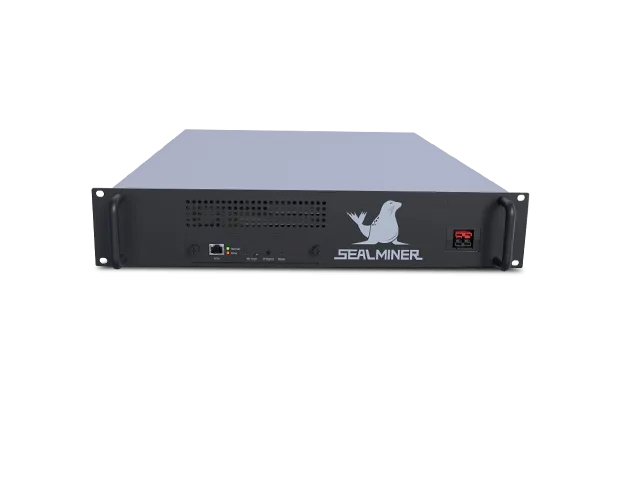
Bitdeer SealMiner A3 Pro Hydro ASIC miner specifications and profitability image
Active Bitdeer SHA-256 PRO Hydro

Bitdeer SealMiner A3 Pro Hydro

Hashrate 660 TH/s
Power 8,250 W
Efficiency 12.5 J/TH
Noise 50 dB

Quick answer

The Bitdeer SealMiner A3 Pro Hydro is a Bitcoin miner rated about 660 TH/s at roughly 8,250 W (about 12.5 J/TH). An industrial-class unit — loud and power-hungry, best suited to a dedicated mining space, not living areas.

Hydro-Cooled Miner

This miner uses a closed-loop liquid cooling system (hydro cooling) instead of traditional air cooling. Water or coolant circulates through internal channels to absorb heat from the ASIC chips, then transfers it to an external radiator or facility cooling loop.

Hydro-cooled miners run significantly quieter than air-cooled models since they eliminate or minimize fan noise. They also achieve higher hashrates and better efficiency because the chips can be driven harder while staying within safe thermal limits. The trade-off: hydro miners require compatible water infrastructure — inlet/outlet connections, a cooling distribution unit (CDU), and proper plumbing.

Hydro cooling is ideal for professional mining operations and data centers where water infrastructure already exists, or for home miners building a dedicated water-cooled setup to eliminate noise completely.

Professional-Grade Miner

This miner draws 8,250W and produces 50 dB of noise — it is designed for dedicated mining environments, not living spaces. Professional-grade miners deliver the highest hashrate and revenue per unit but require proper infrastructure: a 240V circuit, adequate ventilation or exhaust ducting, and a space where noise is not a concern (garage, basement, warehouse, or outdoor enclosure).

For home miners looking for a quieter alternative, consider our Bitcoin Space Heater builds or explore open-source miners like the Bitaxe that are purpose-built for residential environments.

Circuit Requirement 240V dedicated circuit

Profitability Calculator

$62,079
Daily BTC Mined --
Breakeven Electricity $0.1041/kWh
Cost to Mine 1 BTC --
Network Hashrate Share --
Break-even Estimate --
Estimated mining profitability by period at current network conditions.
Period Revenue Electricity Cost Profit
Daily $20.62 $13.86 $6.76
Weekly $144.32 $97.02 $47.30
Monthly $618.50 $415.80 $202.70
Yearly $7,525.04 $5,058.90 $2,466.14

Where to Buy the Bitdeer SealMiner A3 Pro Hydro

Official

D-Central Technologies

Canada

Bitcoin Mining Hackers since 2016. Ships from Laval, Quebec.

Shop all Bitcoin mining products
Partner

ASIC Miner Market

United States

Wide selection of new and used ASIC miners. US-based shipping.

Shop Now
Partner

MinersDeals

United States

Competitive prices on new ASIC miners with coupon codes.

Shop Now

BT-Miners

United States

Large inventory of ASIC miners. US-based.

Shop Now

Coin Mining Central

United Kingdom

UK-based mining hardware retailer. Ships worldwide.

Shop Now

CryptoMinerBros

United States

Established US retailer with repair services.

Shop Now

Full Specifications

Full technical specifications for this miner.
Model Bitdeer SealMiner A3 Pro Hydro
Model Number SealMiner A3 Pro Hydro
Manufacturer Bitdeer
Algorithm SHA-256
Coins Mined Bitcoin (BTC)
Hashrate 660 TH/s
Power Consumption 8,250 W
Efficiency 12.5 J/TH
Noise Level 50 dB
Cooling Hydro
Dimensions 482 x 665 x 86mm
Weight 20.5
BTU Output 28149 BTU/hr
Equivalent Heater Equal to a 8,250W space heater
Daily Power Cost $13.86/day
Monthly Power Cost $415.80/mo
Circuit Requirement 240V circuit required
Release Date 2025-09-01
MSRP $7,995.00
Status Active

Home Mining Assessment

32 /100
Poor
Noise 50 dB
Audible - best in a separate room
Heat Output 8,250W / 28149 BTU
High heat - requires ventilation or duct system
Power Draw 8,250W (8.3kW)
240V dedicated circuit required

The Bitdeer SealMiner A3 Pro Hydro is a water-cooled SHA-256 ASIC built on Bitdeer’s in-house SEAL03 silicon. It is rated at 660 TH/s for roughly 8,250 W at the wall — about 12.5 J/TH — and ships as a hydro chassis meant for dense, low-noise deployment rather than a spare bedroom.

Chip and hashboard architecture

The A3 Pro Hydro is part of Bitdeer’s SealMiner A3 generation, which moves to the company’s third-generation SEAL03 compute chip. Our chip records place SEAL03 on a TSMC 4nm-class process — a genuinely modern node, though a step behind the 3nm silicon Bitmain uses in its newest S23-series parts. Bitdeer is one of the few merchant ASIC vendors that designs its own SHA-256 silicon end to end rather than reselling another foundry’s chip, and the SEAL line is how the company has closed most of the efficiency gap to the established players in a single hardware generation.

Like every modern SHA-256 hashboard, a SEAL03 board is a long series string of compute chips fed by a boost converter, with the chips organized into voltage domains — clusters that share a common regulated rail. This is the single most misunderstood point about contemporary ASICs: voltage is controlled per domain, not per chip. A domain regulator steps the boosted board voltage down to the precise level a group of chips needs, and the firmware trims those domains as a unit. There is no individual per-chip voltage knob on this or any competing miner, which is exactly why a single failed chip pulls its whole domain — and often the entire board’s hashrate — down with it.

Bitdeer does not publish a full chip-count or chains-by-chips breakdown for the A3 Pro Hydro, and we do not guess at numbers we cannot verify. What is verifiable is the topology: a high-current boost stage, domain-level regulation, a control board running Bitdeer’s own firmware stack, and — because this is the Hydro variant — a sealed liquid cold plate in place of the finned heatsink-and-fan tower used on air-cooled SealMiner units.

Real-world power and efficiency

The headline figure operators care about is wall efficiency, and the A3 Pro Hydro’s published number is roughly 12.5 J/TH (660 TH/s at about 8,250 W). That places it firmly in the current efficiency tier. For context, the SEAL03-based A3 Pro Air SKU runs in the neighborhood of 11 J/TH, and the broader market sits between roughly 9.5 and 19 J/TH today. To anchor the generational story with verified data from our chip reference: Bitmain’s BM1368 (Antminer S21/T21) lands near 17.5 J/TH, the BM1370 (S21 Pro/XP) near 15 J/TH, and the newest 3nm parts push toward 9.5–11 J/TH. A 12.5 J/TH SHA-256 machine is a current-generation unit, not a bargain-bin space heater.

A few things are worth being honest about. First, nameplate wattage and wall draw are not the same number — PSU conversion losses, ambient temperature, and the firmware’s chosen power target all move the real figure, so plan your circuit and your hosting contract around measured draw, not the spec sheet. Second, the exact J/TH you see depends on silicon binning and the runtime autotuner: on modern firmware you set a power or hashrate target and the tuner calculates the frequency and voltage to hit it — those values are derived at boot, not pulled from a fixed preset table. Hydro cooling helps here, because holding junction temperatures down with liquid generally lets a board run lower voltage for the same clock, which is where any real-world efficiency headroom comes from. If you want to see how published tuning points trade hashrate against power on hardware like this, our ASIC power profiles tool lays the curves out side by side.

Firmware compatibility

The A3 Pro Hydro runs Bitdeer’s own stock firmware — the SealMiner control stack — and for this hardware that is, realistically, your only option today. The well-known third-party firmwares are written for other silicon: BraiinsOS+, VNish and LuxOS target Bitmain (and in places Whatsminer) control boards and ASICs, not Bitdeer’s SEAL chips. None of them support SealMiner hardware, so the usual “flash a community firmware for better autotuning” advice that applies to an Antminer simply does not transfer here.

That has one concrete protocol consequence worth flagging for pool-side setups: among the common firmwares, only BraiinsOS+ natively speaks Stratum V2, and it does not run on SealMiner. So if you want Stratum V2’s bandwidth and header-template benefits with an A3 Pro Hydro, you will be doing it through a translation proxy in front of the miner, not natively on the box. For a wider map of what each firmware family actually is — and is not — see our ASIC mining firmware types explained guide.

D-Central’s own open firmware and tooling work (DCENT_OS and the DCENT Toolbox) is built around Bitmain-class control boards and is in closed beta under GPL-3.0; Bitdeer’s proprietary SealMiner platform is not a current target. We would rather tell you that plainly than imply a port that doesn’t exist. If Bitdeer hardware reaches the volume where chip-level repair and open tooling make sense, that’s a road we know how to walk — but today, on this machine, plan around stock firmware.

Common faults and troubleshooting

A hydro miner has the same failure modes as any high-density ASIC, plus the failure modes that come with moving liquid. On the electronics side the usual suspects are a dead or degraded hashboard chip or domain (the board reports fewer chips than expected, or a chain drops out), a PSU fault, a control-board or network issue, and temperature or sensor faults. On the cooling side, watch coolant flow and pump status, inlet/outlet temperature deltas, manifold connections and any sign of a leak — a hydro unit starved of flow will throttle or fault almost immediately, because there is no air path to fall back on.

  • Reduced or zero hashrate, missing chips: almost always a domain or chip fault on a specific board — isolate which board and which chain before touching anything.
  • Overheat / temperature-protect shutdowns: on a hydro unit, suspect flow rate, pump, coolant temperature or a blocked manifold before you suspect the silicon.
  • No POST / no network: control board, SD/flash or power-stage issue — start at the LED status codes.

Decode what the machine is trying to tell you with our ASIC fault finder and the status-LED blink-code reference, then work the board-level diagnostics in our ASIC hashboard repair guide. The domain-and-series-string logic above is the key: faults cluster by domain, so reading the chip map is how you turn “the board is down” into “domain 7 is open.”

Repair and longevity

The economics of a current-generation miner reward keeping it alive. D-Central has run an in-house, chip-level ASIC repair bench since 2016 — reflow, component-level board work, PSU and control-board diagnosis — and the same domain-based diagnostic method we use on Antminer and Whatsminer hashboards applies directly to a SEAL03 series-string board. We will be straight with you: SealMiner is newer and Bitdeer-proprietary, so parts availability and documented procedures are thinner than they are for a five-year-old S19, and a hydro chassis adds cold-plate and coolant-loop handling to any board swap. If you have an A3 Pro Hydro down, the right move is a diagnostic assessment rather than assuming either “unfixable” or “trivial” — bring us the symptom and the board-level fault map.

Longevity on a hydro unit lives and dies by its cooling loop. Clean coolant, sound seals, a correctly sized dry cooler or CDU, and stable inlet temperatures do more for the lifespan of these boards than any firmware tweak. Liquid cooling keeps junction temperatures low and steady, which is genuinely kind to the silicon over years of runtime — provided the loop itself is maintained.

Who it is for, and buying

The A3 Pro Hydro is a facility-class machine, not a home heater. With a ~50 dB rating it is far quieter than an air-cooled ASIC, but that number assumes the noise and heat are being carried away by an external water loop — which means you need a hydro-ready setup (manifold, distribution and a dry cooler) before the unit makes sense. For a hashcenter, a hydro container, or a hosting deployment that already runs liquid, it is a strong, efficient, high-density SHA-256 block. For a basement or a garage with a single 240V circuit, an air-cooled miner is the realistic choice.

If you are comparing options, our ASIC miner database puts the A3 Pro Hydro next to its rivals on hashrate, power and efficiency, and most efficient Bitcoin miners ranks where it lands in the current field. Canadian buyers can start at buy ASIC miners in Canada. If your goal is to learn the hardware first — or to run something on a 120V household outlet — a Bitaxe open-source miner is a far better on-ramp than a 8 kW hydro unit; the A3 Pro Hydro is a production tool for people who already mine at scale.

Generational context

The SealMiner A3 line is Bitdeer’s answer to the 2025–2026 efficiency race, and it is a credible one. In a short span the SEAL family has gone from a newcomer’s curiosity to silicon that trades blows with Bitmain’s flagships — the A3 generation’s roughly 11–12.5 J/TH class sits between the BM1368/BM1370 Antminers (15–17.5 J/TH) and the newest 3nm S23-series parts (9.5–11 J/TH). Bitdeer has earned its place in that comparison by doing the hard, expensive work of designing its own chips, and the SEAL04 generation already announced behind the A3 promises to narrow the gap further.

For the deeper picture — how SEAL stacks against the BM13xx lineage and what is coming next — see our ASIC chip reference and upcoming miners coverage. The short version: the A3 Pro Hydro is a real current-generation hydro miner from a manufacturer that has very quickly become one to take seriously.

Bitdeer SealMiner A3 Pro Hydro at a glance

Specification Bitdeer SealMiner A3 Pro Hydro
Algorithm SHA-256 (Bitcoin / BTC)
Compute chip Bitdeer SEAL03 (TSMC 4nm-class)
Hashrate (rated) 660 TH/s
Power (wall) ~8,250 W
Efficiency ~12.5 J/TH
Cooling Hydro (water-cooled, external loop required)
Noise (rated) ~50 dB
Heat output ~28,149 BTU/h
Dimensions 482 x 665 x 86 mm
Weight 20.5 kg
Voltage control Per-domain (not per-chip)
Stock firmware Bitdeer SealMiner stack
Third-party firmware None (BraiinsOS+/VNish/LuxOS do not support SEAL silicon)
Released September 2025

Verified specs are cross-referenced against D-Central’s internal ASIC chip and hashboard records. Where Bitdeer does not publish a figure, we keep it qualitative rather than guess. Real-world power and efficiency vary with firmware power target, silicon binning and coolant temperature.

Broken miner? Get a real quote.

Tell us the symptom and get an instant repair-tier estimate ($95 / $145 / $195 CAD). Mail-in from across Canada, bench in Laval, Quebec.

Send it to D-Central — start a repair →

Frequently Asked Questions

What are the current mining economics for the Bitdeer SealMiner A3 Pro Hydro?

At $0.07/kWh electricity, the Bitdeer SealMiner A3 Pro Hydro currently shows an estimated $6.76 daily net result before pool fees and hardware cost. Results depend on your electricity rate and Bitcoin network conditions. Use the calculator above with your actual electricity rate.

Can I mine Bitcoin at home with the Bitdeer SealMiner A3 Pro Hydro?

The Bitdeer SealMiner A3 Pro Hydro has a home mining score of 32/100. With 50 dB noise and 8,250W power draw, it may require a dedicated space like a garage, basement, or outdoor enclosure. Consider noise insulation and proper ventilation.

Can the Bitdeer SealMiner A3 Pro Hydro heat my home?

The Bitdeer SealMiner A3 Pro Hydro outputs approximately 28149 BTU/hr of heat. For reference, a typical space heater produces 5,000-5,500 BTU/hr. All electrical energy consumed by the miner is converted to heat, making it 100% efficient as a heater. D-Central offers Bitcoin Space Heater builds designed specifically for home heating integration.

What power supply does the Bitdeer SealMiner A3 Pro Hydro need?

The Bitdeer SealMiner A3 Pro Hydro draws 8,250W of power. You need a power supply rated for at least 9,075W with appropriate voltage (200-240V AC). D-Central stocks compatible power supplies in our shop. Always use a quality PSU from a reputable manufacturer to protect the miner and wiring.