On July 22, 2026, Poolin Technology — once the single largest Bitcoin mining pool on Earth, at times commanding more than a fifth of the network’s hashrate — filed for Chapter 11 bankruptcy in the U.S. Bankruptcy Court for the District of New Jersey. The petition lists liabilities in the $100 million to $500 million range, roughly $173 million of it identified debt, against assets of just $1 million to $10 million. The largest single line item is the cruelest: $163.7 million in frozen IOUs owed to about 11,700 wallet customers who are now projected to recover something like 32 cents on the dollar, before administrative and priority costs eat into even that.
This is another earthquake in an industry that has had more than its share. And at D-Central, we did not read about this one from a distance. We watched it coming for four years, from the inside of the repair economy that industrial mining used to feed.
What actually happened to Poolin
Poolin’s collapse did not start in a courtroom. It started in September 2022, when the company froze withdrawals for Poolin Wallet and Pool Account users during the depths of that year’s crypto drawdown. Rather than making customers whole, Poolin handed them IOU tokens — placeholders that stood in for real bitcoin the company no longer had liquid. Those IOUs were never redeemed. They are now the $163.7 million hole at the center of the bankruptcy estate.
The mining and hosting side limped on until July 10, 2026, when Poolin halted all operations and retained a skeleton crew only to secure equipment and shepherd an asset sale. That sale is the tell. A firm called Thor CALAP LLC has placed a $52 million stalking-horse bid for Poolin’s two West Texas sites — Pyote, valued at $15 million, and Tarbush, valued at $37 million for its power rights and equipment. The marketing process reportedly drew 28 NDAs and seven letters of intent, with a court-supervised auction to follow.
Read that bid closely, because it contains the whole lesson. Buyers are not lining up for Poolin’s mining business. They are lining up for its power interconnects, substations, and land. The filing itself notes that “growing demand for artificial intelligence data infrastructure” may attract additional bidders for the facilities’ power capacity. The residual value of one of the largest mining operations in the world turned out to be the electricity — not the hashing. That AI buildout is now heading for a Poolin moment of its own, for precisely the same reasons.
We stood in one of those Texas sites in 2021
In 2021, at the top of the last cycle, D-Central toured a Poolin mining operation in West Texas. It was the picture of the era: rows of machines under a hot sky, megawatts of interconnect, capital pouring in on the assumption that hashprice only went up and that scale was a moat. It was impressive. It was also, in hindsight, a business model with a fuse already lit.
We saw the fuse burn from our own workbench. As the industrial buildout accelerated and then cracked, the enterprise repair demand that used to be D-Central’s bread and butter — pallets of hashboards from operations exactly like Poolin’s — essentially fell off a cliff. Not because the machines stopped breaking, but because the businesses running them stopped making sense. When a fleet operator can no longer service its debt, it does not repair boards. It powers down, sells the copper interconnect to whoever wants the substation, and walks. We have been watching that liquidation in miniature, one repair ticket at a time, for two years.
Bitcoin mining as a standalone business has failed
This is the uncomfortable thesis, and Poolin is only the loudest confirmation of it: Bitcoin mining as a pure, standalone profit center does not work. Not sustainably, and not at scale.
The math is brutal and it is structural. The block subsidy halves every four years. The difficulty adjustment guarantees that any edge you gain is competed away within weeks as everyone else deploys the same silicon. Fiat-funded public miners bid up hardware and power until margins compress toward zero, then paper over the gap with equity dilution and debt — the same capital-markets treadmill that has been quietly centralizing hashrate for years. When the cycle turns, the businesses that were only mining have nothing to fall back on. Poolin had a pool, a wallet, and industrial-scale operations, and in the end the only thing worth $52 million was the power infrastructure.
To be clear about what did not fail: Bitcoin’s security did not fail. The network never noticed Poolin winding down. Hashrate rerouted to other pools in an afternoon. Mining as a function — the immune system that makes Bitcoin censorship-resistant — is healthier than ever. What failed is a specific, extractive interpretation of it: mining as a hyperscale bet on cheap capital and cheaper power, decoupled from any other source of value.
The future is dual-purpose — and that is good for Bitcoin
Here is the part the obituaries miss. The death of mining-as-a-business is not bad news for Bitcoin. It is arguably the best thing that could happen to its decentralization.
When mining only pays as a standalone enterprise, it concentrates wherever capital and power are cheapest — a handful of jurisdictions, a handful of balance sheets. When mining pays as a byproduct of something you were going to do anyway, it disperses to wherever that other activity already lives. That is dual-purpose mining, and it is the model that actually survives a bear market:
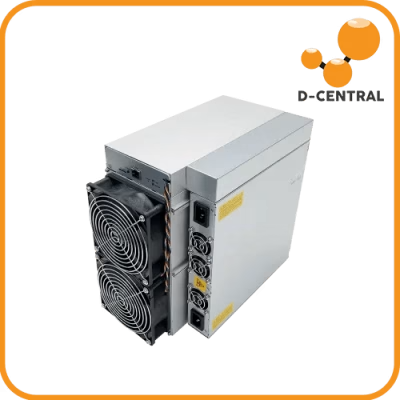
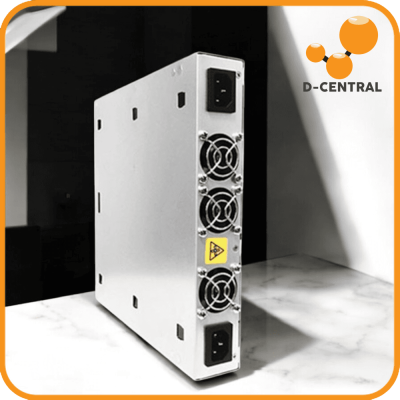
- Heat that does real work. A miner is a 3,000-watt space heater that happens to earn sats. Reusing that heat to warm a home, a workshop, a greenhouse, or a hot-water tank changes the entire equation — you were paying for the heat regardless, so the mining runs at a marginal cost near zero.
- Distributed and home mining. Thousands of small miners in basements and garages will never win the hashprice race against a Texas megasite — but they do not need to, because their electricity is already sunk into living somewhere. Each one is a node of hashrate no lender can foreclose on.
- Co-located value. The very power capacity that made Poolin’s carcass worth bidding on — flexible load, grid balancing, stranded and curtailed energy — is valuable precisely because it does more than one job. The winning operations of the next decade will be the ones where hashing is the second reason the site exists, not the only one.
Every one of these re-decentralizes hashrate instead of concentrating it. Dual-purpose mining is antifragile in exactly the places the Poolin model was brittle. It does not need hashprice to cooperate, because it is subsidized by heat, by sovereignty, by grid economics — by a reason to exist that outlasts any single price cycle.
The other lesson: not your keys
We would be doing the 11,700 Poolin customers a disservice if we let the strategy talk bury the simplest lesson in the filing. Those customers did not lose their money because Bitcoin failed. They lost it because they let a company hold their bitcoin, and that company spent it and handed them an IOU. Frozen in 2022, worthless in 2026.
Self-custody and self-hosted infrastructure are not ideology at D-Central — they are the direct, practical answer to this exact failure mode. A miner pointed at a pool that pays to your own wallet, hashing under your own roof, is a position no bankruptcy court can freeze. That is the whole point of running the stack yourself.
Where D-Central stands
We owe the industrial era its due. Operations like Poolin’s proved out the hardware, drove the efficiency gains, and secured the network through a period when almost nobody else could. We stood in their Texas facility and we learned from it. We are not dancing on anyone’s grave — there are real people on the wrong end of that $163.7 million.
But we have made our bet, and Poolin’s bankruptcy is the clearest evidence yet that it is the right one. D-Central builds, repairs, and tunes machines for the distributed, dual-purpose future — for the home miner heating a workshop, the sovereign individual pointing hashrate at their own node, the small operator turning stranded power into both warmth and sats. Mining as a lonely, extractive business is finished. Mining as a habit woven into how people already live and heat and hold their money is just getting started — and it is exactly the kind of mining Bitcoin needs to stay decentralized.
Figures in this article are drawn from Poolin Technology’s Chapter 11 petition and reporting on the case as of July 2026. Poolin’s operations and creditor recoveries remain subject to the bankruptcy proceedings and a court-supervised auction expected to conclude in September 2026.