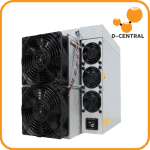
Every Bitcoin bear market produces the same headline panic: used ASIC prices are “crashing,” “worthless,” “below scrap value.” And every cycle, the people who actually understand the machines quietly back up the truck. There is a real floor under a used Antminer’s price, and it is not set by sentiment or by what a desperate seller will accept on a Telegram channel. It is set by physics and arithmetic — efficiency, electricity cost, and the hashprice a miner can earn. Understanding where that floor sits is the difference between catching a falling knife and catching a free machine.
This is a guide to the mechanics of the used ASIC price in 2026: what actually puts a bottom under a secondhand S19 or S21, why a falling floor is structurally bullish for the home miner, and how to buy the dip without getting burned. We will not invent price predictions — anyone quoting you an exact dollar figure for next quarter is guessing. We will instead show you the formula so you can do the math on any machine, in any market.
What actually sets the floor under a used ASIC
An ASIC miner is not a collectible. It has no terminal use beyond turning electricity into hashes (and, increasingly, into heat you can actually use). That makes its value almost purely a function of its productive economics. Three variables set the floor:
- Efficiency (J/TH) — how many joules of electricity the machine burns per terahash. This is the single most important number, because it determines the electricity cost embedded in every hash.
- Your electricity price ($/kWh) — the cost side of the equation. A machine that is unprofitable at $0.12/kWh can be a cash cow at $0.04/kWh or at a $0 marginal cost when it is replacing a baseboard heater.
- Hashprice — the revenue a unit of hashrate earns, a blend of Bitcoin’s price, network difficulty, and transaction fees.
The floor is the price at which a buyer can still earn back the purchase cost from the machine’s net profit (revenue minus power) over its remaining useful life. When a model can no longer cover its electricity bill at a given power price, its value at that power price doesn’t go to a low number — it goes to zero (or to the value of its parts). But that same machine retains real value for anyone with cheaper power or a heating use case. That asymmetry is the whole story.
Efficiency tiers are the real price ladder
Bitmain’s chip generations form a clean efficiency ladder, and that ladder is what stratifies the used market. The numbers below are the verified silicon specs, not marketing claims:
| Model family | Chip | Efficiency (J/TH) | Where it sits on the floor |
|---|---|---|---|
| S9 / T9+ | BM1387 | ~98 J/TH | Heater-only economics; near-scrap as a pure miner |
| S17+ / T17+ | BM1397 | ~36 J/TH | Cheap-power or heat-reuse territory |
| S19 family | BM1398 | ~29.5 J/TH | The workhorse value tier — the deepest discounts |
| S19 XP / S19K Pro | BM1366 | ~21.5 J/TH | Mid-tier efficiency, still profitable on cheap grid power |
| S21 / T21 | BM1368 | ~17.5 J/TH | Current-gen floor; holds value best |
| S21 Pro / S21 XP | BM1370 | ~15 J/TH | Top of the ladder; smallest discounts |
Notice the jump from the S9’s ~98 J/TH to the S19’s ~29.5 J/TH — that is roughly a 3.3x efficiency gain across those generations, and an even larger gap to the S21 Pro’s ~15 J/TH. This is why an S9 is functionally a space heater that happens to mine, while an S19 still does honest work on cheap power. Each rung down the ladder has its own floor, set by the electricity price at which that efficiency becomes unprofitable. As newer chips push the efficiency frontier, the older rungs get cheaper — but they don’t vanish, they just migrate to buyers with lower power costs.
Why a falling floor is bullish for home mining
Industrial miners have to chase the efficiency frontier. When you are running tens of thousands of machines on a thin margin, a 5 J/TH disadvantage compounds into millions of dollars, so the big operators dump older fleets the moment a more efficient generation ships. That fleet has to go somewhere. It goes to the secondhand market, and it goes there at a discount that has nothing to do with whether the machine still works — it works fine. It is being sold because it no longer fits an industrial cost structure, not because it is broken.
For the home miner, the math is completely different, and far more forgiving:
- Your power may already be a sunk cost. If a miner is heating your workshop, garage, or hot water in winter, the electricity isn’t an expense — it is the expense you were already paying for heat. A “barely profitable” S19 becomes a “profitable plus free heat” S19. We cover the heat angle across our home-mining content because it fundamentally changes the floor calculation.
- You have no fleet-replacement pressure. Nobody is forcing you to upgrade. A machine that earns a small monthly profit and runs for years is a perfectly good outcome at a home scale.
- The cheaper the floor, the faster the payback. Lower acquisition cost shrinks the dollar amount you need to recover, which shortens your payback period even when hashprice is soft.
In other words: the conditions that make industrial miners sellers are exactly the conditions that make sovereign home miners buyers. A falling used-ASIC price is the market handing the plebs hardware at a discount that the original buyers paid full retail for. That is the buying thesis, and it is structural, not speculative. For the broader case, our breakdown of why the hardware price crash is the pleb’s buying window walks through the same logic from the cycle-timing angle.
Firmware is the floor’s hidden multiplier
Here is the lever most price discussions miss entirely. The “floor” assumes stock firmware and stock efficiency. But efficiency on these machines is not fixed — the autotuner calculates frequency and voltage at runtime, and a tuned profile can shift the efficiency curve meaningfully. On an S19, underclocking can push efficiency from the low-30s J/TH toward the mid-20s J/TH, trading some raw hashrate for a much lower power bill. (Worth correcting a common myth: voltage on these boards is controlled per power domain — groups of chips sharing a DC-DC converter — not per individual chip, and the tuned values are computed at runtime, not pulled from a fixed preset table.)
DCENT_OS is D-Central Technologies’ GPL-3.0 open-source Bitcoin mining firmware for selected Bitmain Antminer ASIC miners. Guarded artifacts exist only for exact S9 XIL and S19j Pro XIL lanes; install evidence is incomplete and neither is production-ready. Check the exact evidence ledger.
How to buy the dip without getting burned
A low floor only helps you if the machine you buy is actually sound. Used ASICs fail in predictable ways — dead hashboards, degraded chips, water damage on hydro units, fan and PSU wear. Buying the dip intelligently means buying machines that have been verified, or buying with a plan to verify and repair. A few rules:
- Buy on efficiency, not on hashrate alone. A high-TH machine with terrible J/TH is a liability at any price unless your power is free. Price the machine by its J/TH against your electricity rate.
- Compare in your own currency. Most secondhand listings and “market price” indexes quote in USD. D-Central prices in CAD — when you compare a USD listing to a CAD-priced, tested, locally-supported machine, convert honestly before deciding which is the better deal. A cheaper USD sticker that ships from overseas with no recourse is not cheaper after duties, shipping, and risk.
- Prefer tested and refurbished over “as-is” gambles. A refurbished unit that has been diagnosed, repaired, and verified carries real, knowable value. An untested unit carries the price of the gamble. Our deep dive on new vs. refurbished mining equipment lays out exactly what separates a genuine refurb from a polished gamble.
- Know that broken isn’t worthless. A dead hashboard is often a repairable hashboard. If a discounted machine fails, professional ASIC repair can frequently restore it for a fraction of replacement cost — which means a “broken” listing can be the cheapest entry of all if you understand the failure and the fix.
- Match the model to your goal. Pure profit on cheap grid power, or profit-plus-heat at home, point to different machines. Our best Bitcoin miners comparison helps you line up efficiency, hashrate, and price against what you actually want the machine to do.
Doing the floor math yourself
You don’t need a price oracle. You need four numbers and a back-of-envelope calculation:
- The machine’s efficiency in J/TH (from the table above, adjusted for any tuned firmware profile).
- Your electricity price in $/kWh.
- Current hashprice (revenue per TH/day — published widely by mining data sites).
- The asking price.
Daily power cost per TH = efficiency (J/TH) × 24 hours, converted to kWh, times your rate. Subtract that from the daily hashprice revenue to get net profit per TH. Multiply by the machine’s TH and by the months you expect to run it, and compare to the asking price. If the net profit over a conservative holding period exceeds the price — and especially if you are also displacing a heating bill — the machine is below its floor for you. The floor is personal: it moves with your power cost and your use case, which is precisely why the same listing is a bad deal for an industrial operator and a great deal for a basement sovereign.
Frequently asked questions
Will used ASIC prices keep falling in 2026?
Nobody can promise a direction — used ASIC price depends on Bitcoin’s price, network difficulty, and how aggressively industrial fleets upgrade, none of which are predictable. What is predictable is the mechanism: as more efficient chips ship, older generations get cheaper, but they retain real value for anyone with cheap power or a heating use case. Frame your decision around your own floor math, not around a forecast.
Is a cheap used S19 still worth buying?
It depends entirely on your electricity price and whether you can use the heat. At ~29.5 J/TH stock, an S19 is no longer competitive for an industrial operator paying market rates, which is exactly why the secondhand price is low. For a home miner on cheap power, or one displacing a heating bill, it can still be solidly profitable — and tuned firmware can stretch its efficiency further.
What sets the absolute bottom for a used miner’s price?
The bottom is the machine’s value to the buyer with the cheapest power or the best heat-reuse case, because that buyer can profit when no one else can. Below working-miner economics, the residual value becomes the worth of its repairable parts — hashboards, PSU, control board, chassis — which is why “broken” units still trade rather than going to landfill.
Should I buy now or wait for a lower price?
If the floor math already works for your power cost and use case, waiting mostly costs you the hashes (and heat) you could have earned in the meantime. Trying to time the exact bottom of a hardware market is the same losing game as timing the bottom of the Bitcoin price. Buy when the unit economics make sense to you.
The bottom line
The used-ASIC market’s “crash” is a transfer of capacity from operators who must chase efficiency to plebs who simply want to own a piece of the hashrate. The floor is real, it is set by efficiency and electricity cost rather than hype, and it is personal — your power price and your willingness to use the heat decide where the bottom sits for you. Pair a discounted, verified machine with firmware you control, and you have turned someone else’s depreciation into your sovereignty.
When you are ready to buy on the dip, browse our refurbished ASIC miners — tested, repaired, and priced in CAD with local support behind them. Not sure which model fits your power cost and goals? Reach out for a buying consultation and we will run the floor math with you, machine by machine. Quality over speed, for the tech and for the plebs.