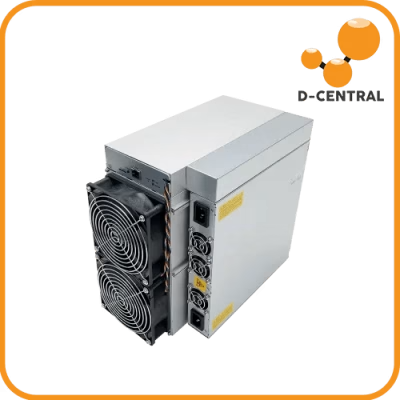
ASIC miners are the backbone of Bitcoin’s security model. Every block mined, every transaction confirmed, every satoshi earned — it all runs through silicon purpose-built for one job: computing SHA-256 hashes faster and more efficiently than anything else on the planet. If you are serious about Bitcoin mining in 2026, understanding ASIC technology is not optional. It is the foundation of everything.
At D-Central Technologies, we have been deep in the ASIC trenches since 2016. We repair them, modify them, resell them, host them, and hack them into Bitcoin space heaters that warm Canadian homes while stacking sats. We are not observers of the ASIC revolution — we are active participants, and this guide reflects that hands-on experience.
What Is an ASIC Miner?
ASIC stands for Application-Specific Integrated Circuit. Unlike a CPU or GPU that can run spreadsheets, games, or machine learning workloads, an ASIC chip does exactly one thing. For Bitcoin mining, that one thing is computing SHA-256 hashes at extraordinary speed.
The concept is simple but powerful: strip away everything a general-purpose processor does and dedicate every transistor to a single cryptographic function. The result is a machine that outperforms a GPU at SHA-256 hashing by orders of magnitude while consuming a fraction of the energy per hash.
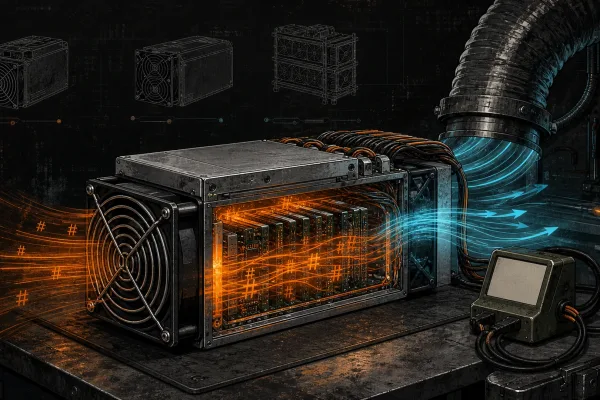
A modern Bitcoin ASIC miner consists of three core components:
- Hashboards — PCBs packed with ASIC chips that perform the actual SHA-256 computation. Most miners run 3-4 hashboards.
- Control board — The brain of the miner. Runs the firmware, communicates with your mining pool, and manages chip configuration.
- Cooling system — Industrial fans that push massive airflow across heatsinks to dissipate the heat generated by billions of hash computations per second.
When a miner finds a valid hash below the network’s target difficulty, it broadcasts the block to the network. If a valid block enters the best-work chain, its coinbase may claim the subsidy permitted at that height plus included fees. From heights 840,000 through 1,049,999 the maximum subsidy is 3.125 BTC; a coinbase may underclaim and its outputs are subject to maturity.
The Evolution of Bitcoin Mining Hardware
Bitcoin mining hardware has gone through four distinct generations, each one making the previous obsolete almost overnight:
| Era | Hardware | Timeframe | Typical Hashrate | Efficiency |
|---|---|---|---|---|
| CPU Mining | Desktop processors | 2009–2010 | 1–20 MH/s | Configuration-dependent; use measured wall power ÷ measured SHA-256 hashrate |
| GPU Mining | Graphics cards | 2010–2013 | 100–800 MH/s | Configuration-dependent; use measured wall power ÷ measured SHA-256 hashrate |
| FPGA Mining | Field-programmable gate arrays | 2012–2013 | 500 MH/s–1 GH/s | Configuration-dependent; use measured wall power ÷ measured SHA-256 hashrate |
| ASIC Mining | Purpose-built chips | 2013–present | Varies by exact model, firmware, settings, cooling, and condition | Use dated manufacturer specifications and measured wall power for the exact configuration |
The first Bitcoin ASIC miners appeared in 2013, and within months they made GPU mining for Bitcoin economically pointless. Since then, ASIC manufacturers have been locked in a relentless arms race, shrinking chip geometries from 130nm down to 5nm and below. Hardware efficiency has changed across generations. Bitcoin Core’s difficulty code retargets every 2,016 blocks toward the target interval under the protocol’s adjustment rules; difficulty responds to observed block timing rather than to a hardware generation automatically.
Network hashrate changes continuously and is inferred rather than directly measured; Bitcoin Core’s getnetworkhashps implementation estimates accumulated proof of work per unit of elapsed block time over a selected window. Specialized SHA-256 ASIC hardware supplies the economically significant share of contemporary Bitcoin mining, although the protocol does not require a particular processor type.
How ASIC Miners Secure the Bitcoin Network
ASIC miners do not just mine Bitcoin for profit — they are Bitcoin’s security system. The Proof of Work consensus mechanism requires miners to expend real-world energy computing hashes. This energy expenditure makes it prohibitively expensive for any attacker to rewrite the blockchain.
A majority-hashpower attacker would need to sustain enough work for the attack being attempted. Feasibility and cost depend on obtainable hardware, efficiency, electricity, infrastructure, duration, propagation, detection, and participant response; a live hashrate estimate is not a hardware inventory or fixed attack-cost quote.
A miner, including a Bitaxe, contributes work to the chain or pool it supports. Security and decentralization also depend on pool and template control, validation, firmware, ownership, connectivity, infrastructure, geographic correlation, confirmation depth, and the attack considered. Device count or raw hashrate alone does not prove resilience.
This is why home mining matters. This is why decentralization of hash power is not just a nice idea — it is critical infrastructure for Bitcoin’s survival as censorship-resistant money.
Major ASIC Miner Manufacturers in 2026
The ASIC mining hardware market is dominated by a handful of manufacturers. Understanding who builds what helps you make informed purchasing decisions:
| Manufacturer | Headquarters | Key Models (2026) | Chip Technology |
|---|---|---|---|
| Bitmain | China/Singapore | Antminer S21, S21+, S21 Pro, T21 | 5nm (BM1370) |
| MicroBT | China | Whatsminer M60, M60S, M50S++ | 5nm |
| Canaan | China | AvalonMiner A15 series | 5nm |
| Open-source | Global community | Bitaxe (all variants), NerdAxe, NerdQAxe | BM1366 / BM1370 |
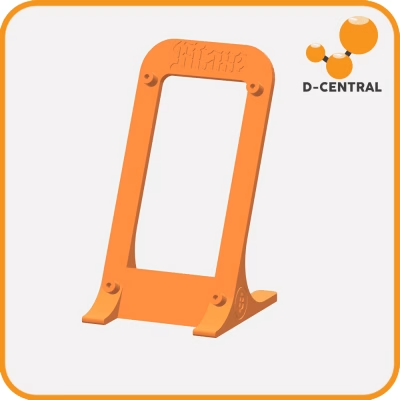
The open-source category deserves special attention. Projects like the Bitaxe take the same ASIC chips found in industrial miners and put them on open-hardware boards accessible to individuals. D-Central has been a pioneer in this space — we were the first to manufacture the Bitaxe Mesh Stand and have developed heatsinks, cases, and accessories that make these open-source miners practical for everyday use.
Choosing the Right ASIC Miner
Selecting an ASIC miner comes down to five critical variables. Get these right and your mining operation will be sustainable. Get them wrong and you are burning money.
1. Efficiency (J/TH)
Joules per terahash is the single most important metric for long-term profitability. At the same accepted hashrate and payout terms, expected gross mining revenue is similar, while measured wall energy per hash affects electricity cost. Nameplate efficiency can differ from wall measurements and varies with firmware, power mode, voltage, cooling, temperature, and unit condition. In a post-halving world where margins are thinner, efficiency is king.
2. Hashrate (TH/s)
Higher hashrate means more lottery tickets per second. But hashrate without efficiency is just an electricity bill. Current-unit hashrate varies by exact model, firmware, power mode, cooling, temperature, and condition; use a dated manufacturer datasheet and measured accepted hashrate for the exact configuration.
3. Power Consumption (Watts)
Your mining rig needs to fit within your electrical infrastructure. Wall power varies by exact model and operating mode. Circuit design must use the unit nameplate and measurements, continuous-load rules, connector ratings, conductor ampacity, breaker capacity, and local electrical code; model-family labels do not establish a single power draw. Home miners need to be realistic about what their electrical panel can handle.
4. Acquisition Cost
The price of the miner itself is a capital expenditure you need to recover before you are profitable. In a rising difficulty environment, cheaper older-gen miners can sometimes offer better ROI than expensive new-gen hardware — if your electricity cost is low enough.
5. Noise and Heat
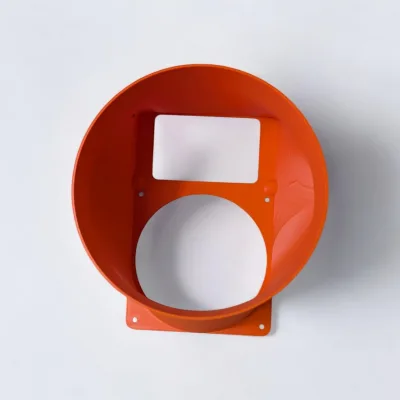
Industrial ASIC miners are loud — 75 dB or more. For home miners, this is often the biggest challenge. Solutions include duct shrouds, dedicated rooms, garage or basement installations, or converting miners into space heaters that channel the heat and noise into useful output.
ASIC Mining at Home: The D-Central Approach
Home mining is not just viable in 2026 — it is a strategic imperative for Bitcoin’s decentralization. The problem with concentrating all hashrate in industrial facilities is that it creates chokepoints: single jurisdictions, single operators, single points of failure and censorship.
At D-Central, we believe every bitcoiner should contribute hashrate from home. That is why we have spent years developing solutions that make ASIC mining practical in residential settings:
Open-Source Solo Miners
The Bitaxe family — Supra, Ultra, Hex, Gamma, GT — represents the most accessible entry point to Bitcoin mining. Compact open-source miners use specialized ASIC chips, but hashrate, input power, connector, acoustics, and cooling vary by model, revision, firmware, settings, and environment. Solo discovery has a nonzero but highly variable probability that should be calculated from measured hashrate and a live network estimate, not described as a practical payout likelihood.
Bitcoin Space Heaters
Our Bitcoin Space Heater line takes retired or mid-gen ASIC miners and converts them into heating appliances. Every watt consumed by a miner becomes heat — that is the first law of thermodynamics. Nearly all miner electrical input ultimately becomes heat in the conditioned space, but useful-heat credit depends on seasonal demand, controls, distribution losses, electricity tariffs, noise, maintenance, and the efficiency and cost of the displaced heater or heat pump. Mining continues to incur electricity and operating costs.
Custom ASIC Modifications
We modify full-scale ASIC miners for home environments. Our Slim Edition, Pivotal Edition, and Loki Edition Antminers are purpose-built for residential deployment — reduced noise profiles, optimized airflow, and configurations tuned for home electrical panels.
ASIC Mining Profitability in 2026
Let us be direct about profitability. At height 840,000 the maximum subsidy changed from 6.25 to 3.125 BTC. Profitability varies with difficulty, fee revenue, bitcoin price, pool terms, uptime, hardware efficiency, electricity, curtailment, cooling, maintenance, financing, taxes, and residual value. Here is what matters for profitability:
| Factor | Impact | Your Control |
|---|---|---|
| Electricity cost | Largest operating expense | High — location, rate negotiation, time-of-use |
| Hardware efficiency | Determines break-even electricity rate | High — purchase decision |
| Network difficulty | Reduces per-TH revenue over time | None |
| Bitcoin price | Determines fiat value of rewards | None |
| Uptime | Lost hours = lost revenue | High — maintenance, monitoring |
| Pool fees | 1-3% of revenue | High — pool selection |
| Heat recapture | Offsets heating costs | High — space heater conversion |
The critical variable you can control is electricity cost. No electricity-price threshold guarantees profitability. Calculate expected revenue and every operating and capital cost for the exact unit and tariff, then test sensitivity to difficulty, fees, bitcoin price, uptime, efficiency, cooling, maintenance, financing, taxes, curtailment, pool terms, and useful-heat demand.
Canada’s advantage here is significant. Hydro-Quebec rates, Alberta’s deregulated market, and British Columbia’s surplus hydro power all offer competitive electricity pricing. Add cold ambient temperatures that reduce cooling costs and provide free heat recapture opportunities, and Canada is one of the best jurisdictions on Earth for home mining.
Mining Pools vs. Solo Mining
Solo discovery probability depends on measured miner hashrate and a live network estimate. Pooling generally lowers payout variance, while fees, reward accounting, thresholds, custody, template control, and counterparty terms vary by pool.
Solo mining is a different game. You are buying lottery tickets. Solo discovery is memoryless and highly variable. The whitepaper’s probability model supports calculating expected interval as 600 seconds multiplied by estimated network hashrate divided by measured miner hashrate. If a valid block enters the best-work chain, its coinbase may claim the subsidy permitted at that height plus included fees, less any service fee, to configured outputs and is subject to maturity.
The choice between pool mining and solo mining depends on your goals:
- Pool mining — Generally lower payout variance, subject to pool fees, accounting method, payout thresholds, custody, uptime, and counterparty risk; income is not guaranteed.
- Solo mining — Highly variable discovery outcomes. Direct solo mining and a solo-pool service differ in template control, fees, payout configuration, and operational dependencies.
From a decentralization perspective, pay attention to which pools you join. Pools that promote transaction censorship or centralized control undermine the very network you are helping to secure. Choose pools that align with Bitcoin’s values.
ASIC Miner Maintenance and Repair
ASIC miners are industrial equipment running 24/7 in demanding thermal conditions. They need maintenance. Neglect it and you will face reduced hashrate, higher power consumption, and eventual failure.
Preventive Maintenance Schedule
- Monthly — Inspect fan operation, check for unusual noise or vibration
- Quarterly — Compressed air cleaning of heatsinks and fan blades, check all cable connections
- Annually — Full teardown, thermal paste replacement on hashboard chips, fan bearing inspection
Common Failure Modes
- Hashboard failure — Individual ASIC chips can fail, reducing board hashrate. Often repairable by replacing the failed chip.
- Fan failure — Causes thermal shutdown. Replace fans immediately when they show signs of bearing wear.
- PSU degradation — Power supplies lose efficiency over time. Monitor input power vs. hashrate output for early detection.
- Control board issues — Firmware corruption, network interface failures, or SD card degradation.
D-Central operates one of the most comprehensive ASIC repair services in North America. We have 60+ model-specific repair pages covering Bitmain, MicroBT, Innosilicon, Canaan, and Halong Mining hardware. From hashboard-level BGA rework to firmware recovery, our technicians handle repairs that other shops cannot or will not touch.
The Environmental Reality of ASIC Mining
The energy consumption narrative around Bitcoin mining deserves a more nuanced treatment than it typically receives. Yes, ASIC miners consume electricity. But context matters enormously.
First, miners are energy buyers of last resort. They are uniquely positioned to consume stranded, curtailed, or surplus energy that would otherwise be wasted. Flared natural gas, curtailed wind and solar, and stranded hydro power all represent opportunities where mining adds economic value to energy that has no other buyer.
Second, all energy consumed by a miner becomes heat. In cold climates like Canada, that heat is not waste — it is a product. A miner can displace some resistance-heating demand when its heat is useful, but equivalence depends on placement, controls, distribution, and runtime. A heat pump may deliver more useful heat per unit of electricity, and neither economic nor environmental incremental cost is automatically zero.
Third, the security Bitcoin provides to a global, censorship-resistant monetary network is a legitimate use of energy. The question is not “does Bitcoin use energy?” but “is the service Bitcoin provides worth the energy?” For those who understand the importance of sovereign, decentralized money, the answer is unequivocally yes.
The Future of ASIC Mining Technology
ASIC technology is approaching physical limits. As chip geometries shrink below 5nm, the gains in efficiency per generation are getting smaller. We are entering an era where optimization happens at the system level — better cooling, better power delivery, better firmware — rather than through dramatic chip improvements.
Key trends to watch in 2026 and beyond:
- Immersion cooling — Submerging ASICs in dielectric fluid enables higher clock speeds, longer hardware life, and zero fan noise. Still expensive but costs are dropping.
- Water-cooled models — Manufacturers now offer hydro-cooled variants (Antminer S21 Hydro) that are quieter and more efficient than air-cooled models.
- Open-source hardware — The Bitaxe project proves that ASIC mining hardware can be open, transparent, and community-driven. Expect this movement to grow.
- Firmware customization — Third-party firmware like Braiins OS and VNish unlock overclocking, undervolting, and auto-tuning capabilities that squeeze more efficiency from existing hardware.
- Integration with renewable energy — Solar+battery+miner setups are becoming increasingly practical for off-grid and home mining operations.
Getting Started with ASIC Mining
Ready to plug in? Here is the path from zero to hashing:
- Assess your electrical capacity — Check your panel for available amperage on 240V circuits. A single S21 needs a dedicated 20A/240V circuit.
- Calculate your electricity cost — Get your exact $/kWh from your utility bill, including delivery charges and taxes.
- Choose your hardware — Browse our shop for options from open-source Bitaxe solo miners to full-scale industrial ASICs.
- Plan for noise and heat — Dedicated space, duct shrouds, or space heater conversion. Do not skip this step.
- Select a mining pool — Research pool fees, payout methods (FPPS, PPLNS), and reputation. Or go solo with a Bitaxe.
- Set up monitoring — Use your pool’s dashboard and the miner’s web interface to track hashrate, temperature, and uptime.
- Maintain your equipment — Regular cleaning, monitoring, and preventive maintenance keep your operation running at peak efficiency.
If you are in Canada, D-Central also offers mining hosting in Quebec for those who want to mine at scale without the noise and electrical constraints of home deployment.
Frequently Asked Questions
What is an ASIC miner and how does it differ from GPU mining?
A SHA-256 ASIC is specialized mining hardware, while a GPU is general-purpose. Hashrate and wall efficiency vary by exact device, firmware, settings, cooling, temperature, and condition, so compare dated manufacturer specifications and measured wall power for named configurations. Specialized ASIC hardware supplies the economically significant contemporary Bitcoin hashrate, although the protocol does not require it.
How much does it cost to run an ASIC miner per month?
Operating cost equals measured wall kilowatts multiplied by runtime and the all-in tariff. An illustrative 3.5 kW constant load uses 2,520 kWh in a 30-day month, costing $176.40 at $0.07/kWh or $302.40 at $0.12/kWh, before demand charges, cooling, maintenance, taxes, or downtime. Verify the exact unit and local tariff.
Can I mine Bitcoin at home with an ASIC miner?
Residential mining feasibility depends on the exact model and hardware revision, measured wall power, nameplate and measured noise and heat, voltage, phase, connectors, ventilation, and the site. Electrical design requires an appropriate load calculation and compliance with continuous-load rules and local code; use qualified electrical guidance where required. Noise and heat controls must be evaluated for the actual installation, and purpose-built Bitcoin space heaters remain subject to those constraints. Home mining can diversify some dimensions, but its decentralization effect depends on independent control of pools, templates, nodes, firmware, ownership, connectivity, and infrastructure.
What is the current Bitcoin block reward and network hashrate?
From heights 840,000 through 1,049,999, the maximum subsidy is 3.125 BTC. Under current rules it changes to 1.5625 BTC at height 1,050,000; calendar timing is approximate. Hashrate and difficulty change over time and should come from a live, timestamped methodology rather than static telemetry.
How long does an ASIC miner last?
With proper maintenance — regular dust cleaning, thermal paste replacement, and fan servicing — a well-built ASIC miner can operate for 5-7 years or more. The hardware does not stop working; it becomes economically obsolete as more efficient models raise network difficulty. However, in low-electricity-cost environments or when used as space heaters where heat is the primary product, older miners can remain productive far longer than their “competitive” lifespan suggests.
Is solo mining worth it in 2026?
Solo mining is a high-variance, memoryless process for every device. Performance, input power, and price vary by model and revision. Expected interval equals 600 seconds multiplied by estimated network hashrate divided by measured miner hashrate; actual discovery can occur sooner, later, or never. If a valid block enters the best-work chain, coinbase value and maturity follow the consensus rules.
What should I do if my ASIC miner stops hashing or loses performance?
Start with basic troubleshooting: check network connectivity, power connections, and fan operation. Access the miner’s web interface to look for error codes or offline hashboards. Common issues include failed ASIC chips on hashboards, overheating due to dust buildup, PSU degradation, or firmware corruption. For issues beyond basic troubleshooting, D-Central offers professional ASIC repair services covering all major manufacturers with 60+ model-specific repair capabilities.