Here’s the fact that makes this whole comparison work, and almost every article gets it backwards: an electric space heater and a Bitcoin miner convert electricity into heat with essentially the same efficiency — close to 100%. The laws of thermodynamics don’t give your baseboard heater a discount. So if you’re already paying for electric heat, a properly chosen miner produces the same warmth for the same power bill — and pays you in Bitcoin on the side. That’s the real comparison. Not “mining vs. heating.” It’s “heat that costs you money vs. heat that earns some back.” Let’s run the actual numbers.
Last updated: May 2026.
The physics nobody explains properly
Every watt of electricity that enters a resistive electric heater leaves as heat. That’s why electric heaters are rated “100% efficient” — there’s nowhere else for the energy to go. A Bitcoin miner does the exact same thing. The chips perform computation, but computation isn’t free energy storage — every joule the miner draws becomes heat in your room. A 1,000-watt miner and a 1,000-watt space heater warm a room identically.
The difference is what happens during that conversion. The space heater’s electricity does one job: heat. The miner’s electricity does two jobs at once: heat, and a chance at Bitcoin. You don’t pay extra for the second job. The heat was going to cost you that money anyway.
The one honest caveat: this logic holds when you’re displacing electric heat you’d run regardless. It does not mean a miner is free heat, and it does not beat a high-efficiency natural gas furnace or a heat pump on raw cost-per-unit-of-heat — those move or burn energy more cheaply than resistive electric in most regions. The miner-as-heater case is specifically strong against electric resistive heating: baseboards, portable space heaters, electric furnaces. If that’s what’s warming your space, keep reading. If you heat with gas or a heat pump, the math is different and you should know that going in.
Traditional heating methods, honestly compared
| Method | Roughly how it costs | Honest notes |
|---|---|---|
| Natural gas furnace | Often cheapest per unit of heat where gas is available | Hard to beat on raw cost. A miner won’t out-economize gas — but it can offset a portion of your gas bill if it heats a space you’d otherwise heat. |
| Heat pump | Very efficient — moves heat rather than generating it | The efficiency champion in moderate climates. A miner doesn’t beat a heat pump on cost-per-BTU. |
| Electric baseboard / space heater | ~100% efficient, but every watt is billed at full electric rate | This is the miner’s competition. Same efficiency, same bill — but the heater earns nothing back. |
| Electric furnace | ~100% efficient resistive heat | Same story as baseboards — directly replaceable, zone by zone, with a mining heater. |
| Oil / propane | Varies widely with fuel prices | Common in rural and older homes; volatile costs make planning hard. |
The takeaway: a Bitcoin miner is not a universal heating upgrade. It’s a specific, smart swap for electric resistive heat — the most expensive common way to heat per watt, and the one where “the heat earns Bitcoin back” actually changes the equation.
Running the numbers: a space heater vs. a mining heater
Take a concrete case. You’ve got a room you currently keep warm with a 1,000-watt electric space heater, running it heavily through a cold Canadian winter. That heater costs you electricity and returns nothing.
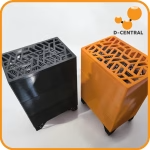
Now swap in a Bitcoin Space Heater S9 Edition — a real D-Central product. From our miner database, it runs at about 1,100 watts, produces roughly 12 TH/s, and is built down to about 50 dB of noise for living-space use. At ~1,100 W it heats that room just like the space heater did — same power class, same warmth. But it’s also hashing 12 TH/s the entire time, earning some Bitcoin against that electricity you were already spending on heat.
The mining revenue from 12 TH/s isn’t going to make you rich — at modern network difficulty, a 12 TH/s machine earns modestly. But it’s not zero, and it’s revenue against a cost you had no way to recover before. Over a full heating season, that offset adds up. The bigger Bitcoin Space Heater S19 Edition (~2,400 W, ~80 TH/s, ~55 dB) scales the same logic up for a larger space and a larger heat load.
The actual offset depends on three moving numbers — your electricity rate, the Bitcoin price, and network difficulty — so don’t take a blog’s word for it. Model your own situation in D-Central’s mining profitability calculator and check your local rate against the electricity cost breakdown by province and state. The honest expectation: a mining heater meaningfully reduces the net cost of electric heat. Whether it goes all the way to “free heat” or even “net positive” depends entirely on your numbers.
What “mining heater” actually means at D-Central — and what a Bitaxe is not
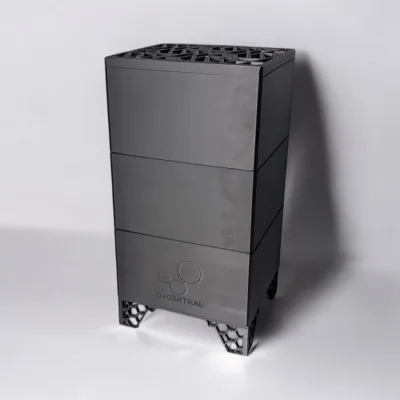
This needs to be precise, because it’s the single most confused point in home-mining content. D-Central’s heating products are full-ASIC builds — the Bitcoin Space Heater Editions (S9 and S19 cores, re-engineered for quiet living-space operation) and the BitChimney. Those draw 1,000–2,400+ watts. That wattage is the point — it’s what produces room-warming heat.
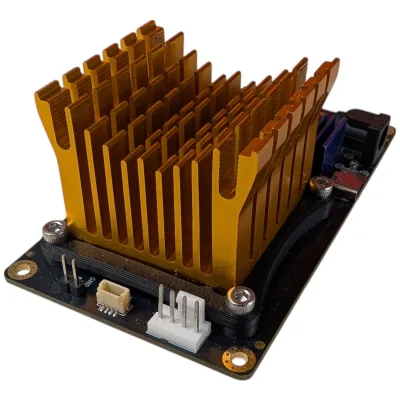
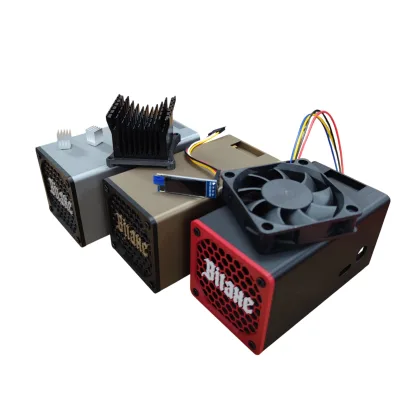
A Bitaxe is not a space heater. It’s an open-source single-board solo miner that draws about 15 watts — less than a lightbulb. It produces a trivial amount of heat. If anyone tells you a Bitaxe will warm your room, they’re wrong about the hardware. The Bitaxe is for solo lottery mining, not heating — different machine, different job. Don’t buy one expecting it to replace a heater, and don’t dismiss the real Space Heater Editions because you confused them with a 15-watt board.
Before you swap your heat for a miner — the honest checklist
- Are you actually replacing electric resistive heat? If yes, the math is favorable. If you heat with gas or a heat pump, a miner is an addition to your energy use, not a smart swap — go in with eyes open.
- Noise. Even a quiet-built mining heater (~50 dB) is not silent like a baseboard. It’s a livable hum, not a vacuum cleaner — but it’s there. See the ASIC noise reduction guide.
- Heat timing. A miner heats whenever it’s on, not on a thermostat’s schedule. In a cold climate that’s mostly a feature. In shoulder season you may not want the heat — which means parking the miner or venting it.
- Electrical capacity. A 2,400 W heater-class miner needs a circuit that can take it, same as any large electric heater.
- Upfront cost. A mining heater costs more than a space heater. You’re buying a heater that earns — the payback comes over heating seasons, not on day one.
Frequently asked questions
Is a Bitcoin miner really as efficient as a space heater?
For producing heat, yes — both convert essentially 100% of the electricity they draw into heat. A 1,000 W miner and a 1,000 W space heater warm a room the same way. The miner’s advantage is that the same electricity also earns Bitcoin; the heater’s electricity does only one job.
Will a mining heater save me money over a gas furnace?
Not on raw cost per unit of heat — natural gas and heat pumps are generally cheaper ways to deliver heat than any resistive electric source, miner included. The mining-heater case is strong specifically against electric resistive heating (baseboards, space heaters, electric furnaces), where it delivers the same heat for the same bill plus mining revenue.
Can a Bitaxe heat my home?
No. A Bitaxe draws about 15 watts — it’s a solo lottery miner, not a heater, and it produces a negligible amount of heat. D-Central’s actual heating products are the full-ASIC Bitcoin Space Heater Editions and the BitChimney, which draw 1,000–2,400+ watts. Don’t confuse the two.
How much Bitcoin will a mining heater actually earn?
It depends on the model’s hashrate, your electricity rate, the Bitcoin price, and network difficulty — all of which move. A 12 TH/s Space Heater S9 Edition earns modestly; an 80 TH/s S19 Edition earns more. Neither makes you rich. The point is that it’s revenue offsetting heating costs you’d pay anyway. Model your specific case in the mining profitability calculator.
Heat that earns its keep
If you heat with electric resistive heat, you’re already paying for warmth and getting nothing back. A Bitcoin mining heater changes that — same heat, same bill, plus a slice of Bitcoin. It’s not magic and it’s not free heat, but for the right setup it’s a genuinely smart swap. Start at the Bitcoin Space Heaters page, compare the long-run numbers in our 5-year cost comparison, and run your own situation through the calculator before deciding. Or just ask the team straight through the contact page.