Quick answer
Sovereign AI has two meanings: a data centre with a flag — which gives the state, not you, sovereign access — and individual sovereignty, where you hold the final say over your own model, run it offline, and nobody can revoke your weights. Canada rents money rails, cloud data, and AI silicon from the US; the Bitcoin template ports to AI.
Canada does not own its compute. It rents it—financially, in data, and in silicon—almost entirely from one neighbour. And on June 12, 2026, that neighbour demonstrated, in a single afternoon, how fast a rented thing can be taken back. The details are still developing as of mid-June 2026, but the lesson landed before the dust did: access you do not control is access someone else can withdraw.
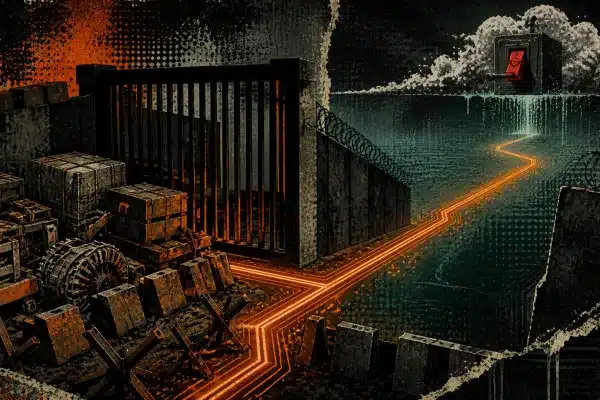
Meanwhile, “sovereign AI” has been quietly redefined. In most headlines it now means a government or a hyperscaler owning the data centre. That sovereignty is the state’s. It is not yours. You are still a tenant. The landlord just changed flags.
This is the case for the other definition—the one where you hold the final say over your own model. It is the same argument Bitcoiners have made about money for years, ported one layer up the stack. National AI sovereignty and individual AI sovereignty are not two problems. They are the same problem at two scales, and they are solved the same way: by holding your own keys, your own node, your own model—not by lobbying for a bigger landlord.
Key takeaways
- “Sovereign AI” has two meanings. The popular one—a data centre with a flag on it—gives the state sovereign access. It gives you nothing.
- Canada rents three things from the United States: money rails, cloud data, and AI silicon. Each one is revocable by the party that owns it.
- This is structural, not partisan. Canada’s own 2022 Emergencies Act episode showed financial access can be switched off by executive order, not a court—and self-custodied Bitcoin was largely beyond reach.
- A Canadian hyperscaler is still tenancy. If you can’t unplug it, and it runs on someone else’s chips under someone else’s regulator, that is sovereign access, not a sovereign supply chain.
- The Bitcoin template ports cleanly to AI: node = local model, keys = your weights and data, verify = run it yourself.
- Own enough layers and a bad actor has nothing left to switch off.
Define the term honestly
There are two completely different things wearing the same words.
The first is state and corporate sovereignty: a national AI strategy, a “sovereign” cloud region, a hyperscaler’s data centre that happens to sit on Canadian soil. This is the version in the press releases. It is real, and it is not worthless—it can keep certain workloads inside a jurisdiction and create domestic capacity. But the sovereignty it delivers belongs to whoever can issue an order to the operator. A government. A regulator. A foreign parent company. The sovereign in “sovereign AI,” in this reading, is the Crown or the corporation. You are downstream of it, exactly as you were before.
The second is individual sovereignty: you have the final say over your own copy of the model. You can run it offline. You can fork it. Nobody can revoke your weights, throttle your context window, log your prompts, or change the terms after you’ve built your business on them. This is the version we mean.
The reason the first does not protect you is simple. A bigger landlord is still a landlord. Moving your dependence from a hyperscaler in Virginia to a hyperscaler in Quebec changes the address on the lease. It does not give you the deed. If the thing you depend on can be turned off by someone who is not you, you have a continuity risk dressed up as a sovereignty win.
The three rentals
To see how complete the dependence is, look at what Canada actually rents. Not metaphorically—structurally, across the three layers that any modern AI business sits on: the money it moves, the data it stores, and the chips it runs.
Rental one: financial
Start with money, because everything else is denominated in it. The US dollar makes up roughly 57% of global foreign-exchange reserves (IMF COFER, Q4 2025)—the unit the rest of the world settles in, including us. One level down, the card rails are just as concentrated: Visa and Mastercard together run on the order of 90% of card payments outside China (Nilson/industry estimate). Interac is domestic-only. So every Canadian credit card, and effectively every cross-border purchase a Canadian makes, rides US-owned rails.
That is not a complaint about service quality. It is a statement about a switch. The party that owns a payment network can decline a transaction, a merchant category, or a jurisdiction. Rented access is revocable access, and June 12 was a reminder that “revocable” is not theoretical—it is an operational capability somebody else holds.
Rental two: data
Now the data. US firms hold roughly 85% of Canada’s public cloud market (Canadian Anti-Monopoly Project report, June 2026). When the overwhelming majority of a country’s data lives on infrastructure owned by companies incorporated in another country, the law of that other country reaches in. The 2018 US CLOUD Act lets US authorities compel a US provider to produce data even if it is physically stored in a Canadian data centre. The flag on the building is not the controlling fact. The flag on the company is.
This is why “we keep your data in-region” is a weaker promise than it sounds. Region is geography. Jurisdiction is who can compel the operator. For sensitive workloads—client records, legal files, health data, model fine-tunes built on proprietary information—the relevant question is not “where does this sit?” but “who can be ordered to hand it over, and can they do it without telling me?”
Rental three: compute
Finally, the silicon underneath the AI itself. NVIDIA supplies something north of 80% of the world’s AI accelerators, and CUDA—its software layer—locks workloads to that hardware, so switching vendors means rewriting the stack. On top of that sits the harder lever: US export controls. Through the Bureau of Industry and Security, Washington decides which countries are permitted to buy the most advanced chips. Allies included. Canada’s access to frontier compute exists at US discretion, the same way a sub-tenant’s access exists at the landlord’s discretion.
Three rentals, one landlord, one off-switch per layer. The pattern is the point. And once you see the pattern, you see that the alternative is not “find a friendlier landlord.” It is to own the layer outright.
| Layer | Who controls it now | The sovereign alternative |
|---|---|---|
| Financial (money & rails) | USD as ~57% of reserves; Visa/Mastercard ~90% of card rails outside China; Interac domestic-only | Self-custodied Bitcoin—keys you hold, settlement no card network can decline |
| Data (where it lives, who can compel it) | US firms ~85% of Canada’s public cloud; CLOUD Act reaches data stored on Canadian soil | On-premise / self-hosted storage and inference—data that never leaves your jurisdiction or your control |
| Compute (the chips & the model) | NVIDIA ~80%+ of AI silicon, CUDA lock-in; US export controls gate who may buy frontier chips | Local open-weight models you can run, fork, and keep—on hardware you own |
The domestic precedent
If this only ever pointed south, it would be easy to dismiss as anti-American. It is not. The cleanest proof that financial access is a switch—and that the hand on the switch need not be a court—comes from within Canada’s own borders.
During the 2022 Emergencies Act invocation, banks were directed to freeze accounts associated with the convoy protests without a court order. Roughly 200 to 280 accounts were affected, holding on the order of $7.8 to $8 million, and around 170 Bitcoin addresses were circulated to exchanges. Access was turned off by executive direction, not adjudication.
Be precise about what happened next, because it matters. A federal court (2024 FC 42) and later the Federal Court of Appeal (2026 FCA 6) found the invocation unreasonable and ultra vires, and held the asset freeze to be an unreasonable seizure under section 8 of the Charter. The government has sought leave to appeal to the Supreme Court of Canada, and as of mid-June 2026 that is still pending. This is not finally settled, and we are not going to pretend it is.
The lesson, though, is structural and survives any outcome at the SCC. Financial access was switched off first and litigated after. The courts are a remedy that arrives years later; the freeze arrives the same afternoon. And one detail is worth sitting with: self-custodied Bitcoin was largely beyond the reach of that order, while custodial crypto held on exchanges was not. The asset whose keys were held by the individual could not be frozen by directive. The asset whose keys were held by a third party could.
Don’t trust, verify was never about raw capacity. It was about who holds the final say over your own copy of the truth.
Why a Canadian hyperscaler is still tenancy
So why won’t a national “sovereign AI” build solve this? Because most of what is sold under that banner is sovereign access, not a sovereign supply chain.
Take Canada’s own roughly C$2-billion Sovereign AI Compute Strategy (ISED). It is a serious, well-intentioned program—and it still runs on US NVIDIA chips and CUDA. The data centre may fly a maple leaf, but the silicon ships under US export-control discretion and the software stack belongs to a US vendor. You have relocated the dependency; you have not removed it. If Washington can gate the chips and the vendor can change the licence, the “sovereign” cloud has two off-switches it does not own.
The test is brutally simple. Can you unplug it and keep working? If the answer is no—if the thing answers to a regulator you don’t control, or a US parent, or an export regime—then it is sovereignty theatre. A flag on the building is set dressing. The deed is the supply chain.
We’ve made this argument about money since 2016. A “sovereign” custodian is still a custodian. The same logic that says not your keys, not your coins says not your weights, not your model. The flag changes nothing if the keys are someone else’s.
The Bitcoin template, ported to AI
Bitcoiners already solved the sovereignty problem at the money layer, and the solution is a template, not a coincidence. Three primitives carry over directly.
- Node → local model. Running your own Bitcoin node means you don’t ask anyone whether your transaction is valid; you check. Running your own model means you don’t ask anyone’s API whether you’re allowed to think; you infer locally. The node is the model. Both turn “trust the provider” into “run the software.”
- Keys → your weights and your data. In Bitcoin, the keys are ownership. In AI, ownership is the weights file you possess and the data you never hand over. Open-weight models you can download, store, and fork are the AI equivalent of a private key: something nobody can revoke remotely.
- Verify → run it yourself. “Don’t trust, verify” becomes “don’t rent, run.” You verify by executing your own copy, offline if you choose, with no telemetry leaving the building.
This is why the Bitcoin community is, structurally, the right community to lead on AI sovereignty. The plebs who already self-custody money have the exact mental model for self-custodying compute. It is the same instinct—hold your own keys—applied one layer up. (We’ve written the long version of this mapping in our guide to the bitcoiner’s self-sovereign local AI stack.)
The five-layer sovereign stack
Money and compute are two layers. A genuinely sovereign setup has five, and each one removes a different off-switch from someone else’s hands.
- AI — local, open-weight models. Your reasoning and your prompts never leave your hardware.
- Bitcoin — self-custodied money. Settlement that no card network or executive order can decline.
- Mesh — radio and mesh networking. Communication that survives when the ISP layer is down or filtered.
- Nostr — keypair-based identity and social. A profile and reputation that no platform can deplatform, because it isn’t on a platform.
- Solar — energy you generate. The last off-switch—power—moved into your own hands.
Read top to bottom, that is an individual’s resilience plan. Read it as policy, and it is the same plan at national scale: a country that holds its own money, compute, comms, identity, and energy is a country no single foreign lever can switch off. Same architecture, two scales. We’ve mapped how these layers fit together—down to the renewable energy that powers them—in the full sovereign-stack map, and made the case that the real unit of AI sovereignty is your basement, not a national GPU strategy.
Each layer you own is one fewer off-switch in someone else’s hands. Own enough of those and a bad actor has nothing left to switch off.
What owning your AI realistically looks like—and what it costs
Now the honest part, because sovereignty sold without trade-offs is just marketing.
The open-weight ecosystem—Qwen, Mistral, Llama, DeepSeek, Gemma, gpt-oss, and the tooling around them like llama.cpp and Ollama—is what makes individual AI sovereignty possible at all today, and it is the work of a global community releasing models and runtimes that anyone can hold. We owe that community everything here and claim superiority over no one. The hosted frontier labs are doing extraordinary work too; this is not a quality dunk on them.
Here is the trade-off, stated plainly: local and open models trade frontier-peak capability for control and continuity. On the hardest tasks—the gnarliest reasoning, the longest context, the bleeding edge—the very best hosted models are still ahead of what you can run on your own hardware today. You will feel that gap on the difficult 5% of work. But two things are true at once. First, that gap is roughly a few months wide and closing—today’s open weights routinely match last season’s frontier. Second, for the overwhelming majority of real business work—drafting, extraction, classification, summarization, coding assistance, internal Q&A over your own documents—a well-chosen local model is already more than good enough, and it is yours.
What you buy with that trade-off is the part no hosted model can sell you: a system that doesn’t change its terms, doesn’t log your prompts, doesn’t get deprecated out from under your workflow, and doesn’t stop working because a licence changed or an export rule did. For anyone whose continuity matters more than topping a benchmark, that is the better deal. We lay out the head-to-head honestly in local AI vs. cloud AI, and the practical migration in how to replace cloud AI with a local LLM. If you want the cautionary tale that makes the case—what it feels like when the model you depend on is yanked—see why a single model ban is the argument for owning your AI.
The path by reader type
Where you start depends on what you’re protecting.
If you’re an individual pleb, start small and self-directed. A capable laptop or a modest GPU box runs a useful local model today. Stand it up, point it at your own notes and files, and feel the difference between asking permission and running software. The on-ramp is the local-LLM walkthrough—built for hardware-fluent people who are new to running models.
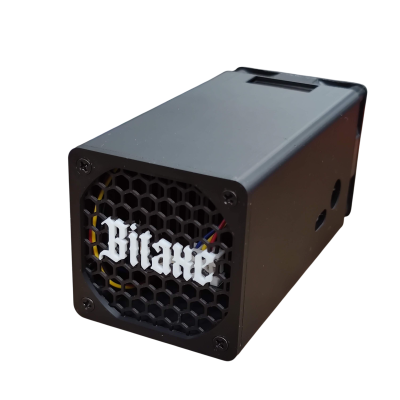
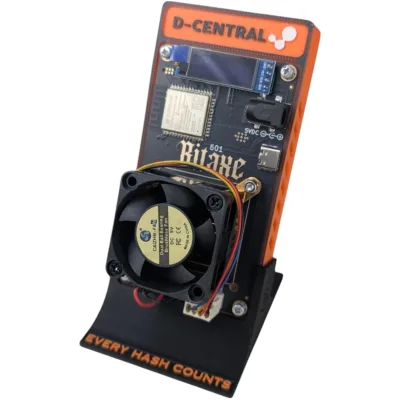
If you run a small business, the question is continuity: which workflows would hurt if an API changed its terms or its price tomorrow? Move those on-prem first. The same hardware story that made Bitcoin mining decentralize is now making compute decentralize—we’ve covered how miners are becoming AI compute and why decentralization keeps winning even as corporations rotate between the two.
If you’re a regulated organization—legal, health, finance, public sector—your driver is jurisdiction and compliance, and the answer is on-premise inference where the data never crosses a border or a corporate boundary. This is where the CLOUD Act problem and the off-switch problem converge, and where outside help usually pays for itself. That’s what our AI sovereignty consulting exists to do. And because owning the hardware means understanding it, our work on who actually owns your miner is the same ownership question asked of silicon you already run.
Quebec gravity: Law 25 and on-premise
For Quebec organizations there’s a sharper, closer-to-home reason this isn’t abstract. Quebec’s Law 25 puts real obligations around personal information—including how it’s handled when sent outside the province. Every cloud AI call that ships personal data to a US-owned provider is a transfer you have to account for, and the CLOUD Act sits underneath that transfer regardless of which region you selected.
On-premise AI is the cleanest answer to that, because the simplest way to satisfy a rule about data leaving is for the data not to leave. When inference runs on hardware you own, inside your own walls, the compliance question gets a lot shorter. We give Law 25 the full treatment it deserves in our guide to Law 25 and on-premise LLMs. (None of this is legal advice—talk to counsel about your specifics.)
Frequently asked questions
What is sovereign AI?
It depends who’s using the term. In most coverage, “sovereign AI” means a government or hyperscaler owning a data centre—sovereign access for the state, not for you. The version that protects an individual or a business is the second one: holding your own model, weights, and data so you have the final say and nobody can revoke it remotely. It’s the AI equivalent of self-custodying your Bitcoin. Explore the whole idea in our AI hub and sovereignty hub.
Is Canada’s national AI strategy enough?
It helps, but it doesn’t make you sovereign. Canada’s roughly C$2-billion Sovereign AI Compute Strategy (ISED) still runs on US NVIDIA chips and CUDA, gated by US export controls. That’s sovereign access, not a sovereign supply chain. A flag on the building doesn’t matter if the chips, the software, and the off-switch belong to someone else. The test is whether you can unplug it and keep working.
Can I really run useful AI myself?
Yes—for most real work, comfortably. Open-weight models like Qwen, Mistral, Llama, DeepSeek, Gemma, and gpt-oss, run through tools like llama.cpp and Ollama, handle drafting, summarizing, extraction, classification, coding help, and Q&A over your own documents very well. You’ll trade some frontier-peak capability on the hardest tasks, and that gap—roughly a few months and closing—is real but narrowing. What you gain is control and continuity nobody can revoke. See the honest comparison.
Where do I start?
Individuals: stand up a local model and point it at your own files—begin with the local-LLM guide. Businesses and regulated organizations: identify the workflows you can’t afford to have switched off, and move those on-prem first. If you’d rather not build it alone, we do this for a living.
Own your AI before someone else owns it for you
You’ve seen the off-switches. Take them out of someone else’s hands.
Plebs: start with the hands-on path—replace cloud AI with a local LLM and run your first sovereign model this week.
Businesses & regulated organizations: get an on-premise stack built to your jurisdiction and your continuity needs—talk to D-Central about AI sovereignty consulting.
You are still a tenant. The landlord just changed flags. The fix isn’t a better landlord—it’s the deed.
Own your AI: the sovereign path
Move from understanding the risk to owning your compute: read the pillar, compare local against cloud, check the Quebec Law 25 angle, then have D-Central build or guide your on-premise setup.