An ASIC miner is, thermodynamically speaking, a space heater that occasionally finds a block. Every watt you feed a Bitaxe, a NerdQAxe, or an Antminer comes back out as heat — there is no efficiency loophole, no “cool-running” model. The only question that matters for a home setup is where that heat goes and how fast. Get the airflow path wrong and your hardware throttles, your hashrate sags, your fans scream, and the dust you never see starts cooking onto the heatsinks. Get it right and the same machine runs quieter, faster, and for years longer. Ventilation is not an accessory category. It is the difference between a mining room and a fire-code problem.
Why airflow — not “cooling” — is the real problem
New miners fixate on the wrong word. They want “cooling,” picture an air conditioner, and stop thinking. But an AC unit in a sealed room just moves heat from one corner to another while burning more electricity than the miner does. What you actually need is airflow: a defined path that pulls cool ambient air across the hashboards and dumps the hot exhaust somewhere it can’t be re-ingested. A miner that re-breathes its own exhaust will climb in temperature until the firmware steps in — and on most modern firmware, that means automatic frequency reduction. Your machine is still drawing power; it’s just hashing less for it.
Heat is also only half the threat. The other half is particulate. An Antminer-class unit moves a serious volume of air through itself every minute, and every cubic foot of it carries household dust, pet dander, and lint straight onto the heatsink fins and PCB. Dust is an insulator. A fin pack caked in grey felt cannot shed heat, so the chip runs hotter, the fan spins harder to compensate, and the cycle accelerates. A large share of the boards that land on our ASIC repair bench didn’t fail from a manufacturing defect — they cooked slowly under a dust blanket nobody cleaned. Air quality control isn’t about your lungs (though it matters there too); it’s preventive maintenance you do with a filter instead of a soldering iron.
The four variables that decide your setup
1. Heat load — do the math before you buy a fan
Your heat load equals your total wall draw. A single Bitaxe Gamma sips roughly 15–20W — genuinely a non-event you can run on a desk with no special ventilation at all. A NerdQAxe++ pulls more but is still in lamp territory. The moment you scale to full ASICs, the picture changes hard: an Antminer S19-class machine pulls 3,000–3,400W, and that entire figure converts to heat. Three of them in a spare bedroom is a 10 kW heater running 24/7. Before you spec any ventilation, add up the wattage of everything you plan to run. That number, in watts, is also your heating output in watts — there is no separate “heat” spec to look up.
2. Room volume and the exhaust destination
A small sealed closet with a 3 kW miner in it will reach uncomfortable — then unsafe — temperatures within an hour. The fix is rarely “make the room bigger.” It’s giving the hot air a one-way exit: ducting exhaust into an attic, a garage, a crawlspace, or outdoors, while a separate intake feeds the room cool replacement air. The principle is a push-pull path, not a swirling pile of fans. Cold air in one defined point, hot air out another, miner in between.
3. Equipment spacing
Miners stacked face-to-back so that one unit’s exhaust is another’s intake is the single most common self-inflicted wound in home setups. Every machine needs unobstructed access to cool air at its intake face and clear room for exhaust to leave. If you’re running more than one or two units, commit to a cold-aisle/hot-aisle layout: all intakes facing a shared cool side, all exhausts dumping into a shared hot side that gets ducted away.
4. Climate — your free advantage, or your summer tax
This is where Canadian and northern-US miners hold a structural edge. For a good chunk of the year, the cheapest, quietest cooling system available is an open window. We cover the year-round implications of this in depth in our guide on seasonal changes and home mining efficiency — the short version is that your ventilation plan should be built for your worst week of summer, not your average day, because that’s the week it either holds or fails.
Building the airflow path: shrouds, ducting, and fans
Shrouds — directing exhaust instead of letting it spray
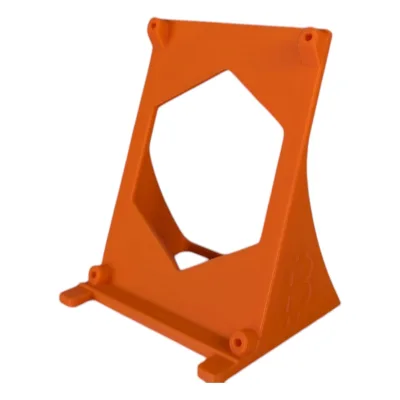
A bare ASIC blows hot air in a wide, turbulent cone. A shroud collars that exhaust and channels it into a duct so you can actually send it somewhere. D-Central manufactures shrouds built for this exact job — universal designs that step dual fans down to 6-inch or 8-inch duct collars, plus model-specific shrouds for the Antminer S19 and S21 series. We also make internal airflow parts that most miners never think about: hashboard airflow dividers and deflectors for single- and dual-hashboard Antminers, which stop air from short-circuiting around the boards inside the chassis. PETG construction, designed by people who actually repair these machines, not generic plastic.
Ducting and inline fans
Insulated flex duct connects the shroud collar to wherever the heat is going. For pulling air through that duct, inline fans like the AC Infinity Cloudline S6 and S8 are the workshop standard — they’re quiet, they move real volume, and they pair directly with our shroud collars. The reason to use a dedicated inline duct fan instead of leaning on the miner’s stock fans is noise: a miner’s fans are loud because they’re fighting back-pressure. Give the exhaust a clear, fan-assisted path and the stock fans don’t have to work as hard, which drops the whole system’s noise floor. If noise is your main constraint — apartment, shared wall, partner who values silence — that interaction is worth understanding fully, and our complete guide to quiet home mining goes deeper than this article can.
Filtration
Put the filter on the intake, not the exhaust. The goal is to clean the air before it ever touches your hardware. A simple furnace-style pleated filter (MERV 8 to 11 is the sweet spot — high enough to catch household dust, low enough not to choke airflow) over your intake point will keep the bulk of particulate off your heatsinks. It’s a few dollars and five minutes a month versus a board cook-off. If you’re building a dedicated mining space, our walkthrough on building a mining closet lays out intake filtering, duct routing, and noise control as one integrated build.
Don’t fight the heat — use it
Here’s the reframe that separates a miner from a Mining Hacker: in a cold climate, the heat your ventilation system is moving is not waste. It’s a product. For roughly half the Canadian year, you’re paying to heat your home anyway — so route the miner’s exhaust into the living space instead of out the window and the “cost” of cooling becomes free heating. That’s the entire thesis behind D-Central’s Antminer S9 Space Heater Edition and S19 Space Heater Edition — full ASICs rebuilt and tuned to function as deliberate, controllable home heaters, and the BitChimney DIY heater box that turns the concept into a piece of furniture.
This is dual-purpose ventilation thinking. In winter, the duct points in. In summer, the same duct points out. You build the path once and re-aim it seasonally. To size the heating side properly, run your planned wattage through our Space Heater BTU Calculator — it converts miner draw into the BTU figure you’d actually compare against a conventional heater. Our broader take on the strategy lives in the Bitcoin mining heat recovery guide.
Monitoring and maintenance
A ventilation system is not “install and forget.” It’s a system with a maintenance cadence:
- Watch chip temps, not room temps. Every miner’s web interface reports per-board or per-chip temperature. That number is your real telemetry. If chip temps creep up over weeks at a constant ambient, your airflow path is degrading — usually dust.
- Replace intake filters monthly. Cheap, fast, and the highest-leverage maintenance task you have.
- Blow out heatsinks quarterly. Power down, pull the unit, and clear the fin packs with compressed air. This is also when you catch a fan that’s developing bearing noise before it seizes.
- Track humidity. Keep the mining space in the 30–50% RH band. Condensation on cold-start hardware and static discharge in bone-dry winter air are both real failure modes.
- Re-spec when you scale. Adding a third miner to a path sized for two doesn’t “mostly work” — it overloads the path. Recalculate the heat load every time the fleet changes.
What ventilation looks like at each scale
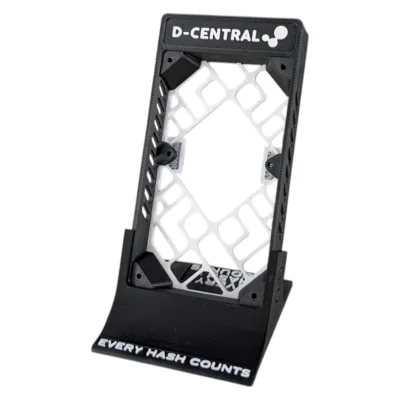
Single Bitaxe or NerdQAxe: Effectively nothing. A Bitaxe Mesh Stand for open airflow and a clean heatsink — like our Bitaxe Hex heatsink for the larger boards — is the whole ventilation story. These are ~15–40W devices; a desk with air around it is sufficient.
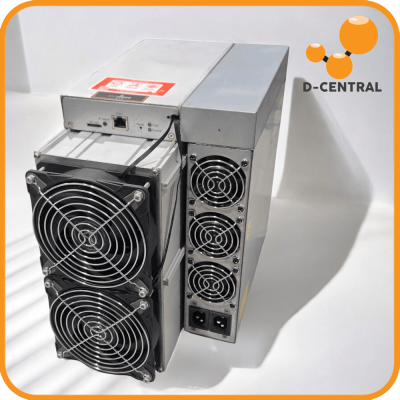
One or two full ASICs: Now it’s real. Shroud each unit, run insulated duct to an exhaust destination, add an inline fan, filter the intake. This is also where D-Central’s Antminer Slim Edition and Loki Edition earn their place — they’re full ASICs rebuilt specifically to be tolerable in a home, so your ventilation system has less noise and heat to fight in the first place.
A small home fleet: Cold-aisle/hot-aisle layout, ducted hot side, filtered cold side, monitored chip temps across every unit. At this point you’re running a miniature data center, and the ventilation design is the project — the miners are the easy part.
For the hardware side of that airflow path, the D-Central Shroud System supplies the missing pieces: shrouds that capture the exhaust fans, duct fittings to route it, and window ports to get it out of the house cleanly. All open source, all made to order.
Frequently asked questions
Does my Bitaxe need a ventilation system?
No. A Bitaxe is a ~15–20W open-board solo miner. A decent heatsink and an open stand so air can move around it is the entire requirement. Ventilation planning becomes necessary when you move to full ASICs that pull thousands of watts.
What temperature should my mining room be?
Stop watching room temperature and watch chip temperature instead — it’s the number your firmware actually acts on. A well-ducted setup keeps chips comfortably in spec even when the room feels warm, because the heat is leaving as fast as it’s made. If chip temps are fine, the room temperature is cosmetic.
Can poor ventilation actually damage my miner?
Yes — and it’s one of the most common causes of failure we see on the repair bench. Sustained high temperatures degrade solder joints and shorten chip life, and dust-blanketed heatsinks accelerate the whole process. Most of it is preventable with a filter and a quarterly cleaning. If a board has already cooked, that’s what our ASIC repair service exists for — but ventilation is the version of that you do for the price of a furnace filter.
Should I duct the heat outside or into my house?
Both — seasonally. In winter, duct it into your living space and let the miner offset your heating bill. In summer, re-aim the same duct outdoors. Build the path once, point it where the season demands. Use the Space Heater BTU Calculator to see how much heating you’re actually capturing.
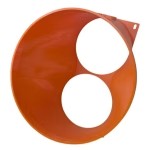
Getting the heat and the noise out of the room
Airflow is the part of a home build people solve last and regret first. Work out where the hot air is actually going before you buy anything: measure the fan face, choose a duct size, then match a shroud to the machine. Fitment is dimensioned from published fan spacing, so confirm your own fan size before ordering.