You’ve got an old gaming PC in the closet, maybe a GPU or two, possibly a dusty Antminer S9 someone gave you. The question is honest and worth answering straight: can you point that hardware at Bitcoin and earn anything? The short answer is that for Bitcoin specifically, your CPU and GPU are non-starters — not “inefficient,” but mathematically irrelevant. The slightly longer answer is that an old ASIC is a different story entirely, and there’s a real, defensible case for putting one back to work. Let’s separate the myth from the move.
Why your CPU and GPU cannot mine Bitcoin (and that’s not an opinion)
Bitcoin mining is the repeated computation of the SHA-256 hash function, billions of times per second, racing the rest of the network. A modern ASIC is a chip that does only SHA-256 and nothing else — no operating system, no graphics, no general logic — which is why it’s thousands of times faster and more power-efficient at that one job than any general-purpose processor.
Put numbers on it. A high-end gaming GPU produces something on the order of a few hundred megahashes per second of SHA-256. A current-generation ASIC produces hundreds of terahashes per second. That’s roughly a million-to-one gap in raw output — and the GPU burns 300W to lose that race while the ASIC burns its power productively. You wouldn’t lose a little money mining Bitcoin on a GPU; you’d burn electricity for a statistically zero chance of a reward. CPUs are worse still. This isn’t a tuning problem you can software your way out of. The hardware is the wrong shape.
So when someone says “repurpose old hardware for Bitcoin mining” and means a PC, GPU, or FPGA — the answer is no, full stop, and anyone telling you otherwise is selling something. Those devices can mine other proof-of-work coins with different algorithms, but that’s altcoin mining, a different game with different economics, and not what D-Central does or recommends. We’re Bitcoin-only here, and on Bitcoin, the only “old hardware” worth a second look is an old ASIC.
The actually interesting question: is an old ASIC worth running?
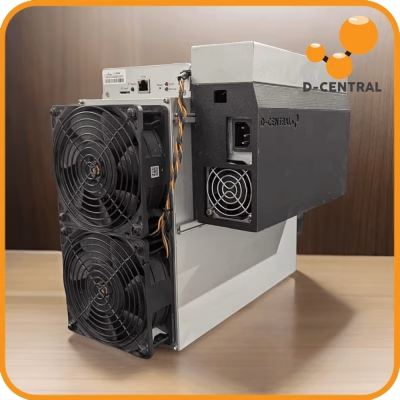
This is where it gets genuinely worth thinking about. An Antminer S9 — released in 2016, the workhorse of an entire era — is the canonical “old ASIC.” It still exists by the tens of thousands. It still hashes. And here’s the part most “is it profitable?” articles get wrong: profit is the wrong yardstick for an S9.
On pure pool economics, an S9 at standard residential electricity rates is a net loss. The chip efficiency — joules burned per terahash — is far behind a modern S21, so for the same hashrate you’re paying multiples more in power. If your only goal is “make the meter run backwards,” an old S9 won’t do it at typical North American rates. But “make money on hashprice” was never the only reason to run one.
Reason 1: Heat you were going to pay for anyway
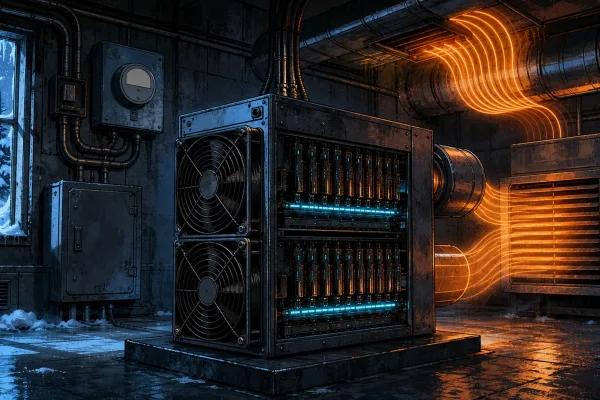
Every watt an S9 draws comes back out as heat. If it’s winter in Canada and you were going to run a baseboard heater or a furnace anyway, that electricity isn’t a mining cost — it’s a heating cost you’d have paid regardless, and the hashing is a free byproduct. This is the entire premise behind D-Central’s Antminer S9 Space Heater Edition: take exactly that “obsolete” hardware, rebuild it for quiet, controllable indoor use, and reframe it as what it physically is — a space heater that also earns sats. The same logic scales up to the S19 Space Heater Edition and the DIY BitChimney heater box. Repurposing old ASICs as heat sources is, frankly, one of the smartest uses of legacy hardware that exists — and it’s a category D-Central pioneered rather than discovered.
Reason 2: Lottery mining a full block
Point an old S9 at a solo pool and you are buying a lottery ticket for the entire block reward. The odds for a single S9 are long — genuinely long — but they are not zero, and blocks have been won by tiny hashrate. For a few dollars a month in power, some miners happily run an old machine purely for the non-zero shot at a full block, treating it as the most entertaining lottery ticket in existence. If that’s your angle, run the real numbers first with our Solo Mining Calculator so you go in with clear eyes, and read why every hash counts in solo mining.
Reason 3: Learning on hardware you can’t kill
An old S9 is the best teaching tool in mining because the stakes are zero. Flash custom firmware, learn pool configuration, practice a teardown, mess up a fan swap and recover from it — all without risking a four-figure machine. The skills transfer directly to whatever you run next. That’s real value, even though it never shows up on a profitability calculator.
The honest costs of running legacy ASICs
Going in clear-eyed means counting the downsides too:
- Power efficiency is the killer. An S9’s joules-per-terahash figure is multiples worse than current hardware. If you’re not capturing the heat or treating it as a lottery ticket, that inefficiency is just a loss.
- Noise. A stock S9 is loud — jet-engine-adjacent. Running one indoors without acoustic treatment is a fast way to start a household argument. This is exactly why D-Central’s heater conversions exist, and why our guide to quiet home mining is worth reading before you plug anything in.
- Wear and parts. Hardware that’s been running since 2016 has tired fans, aging PSUs, and solder joints that have been thermally cycled thousands of times. Failures happen. The upside: these are repairable machines, and parts exist.
- Heat management. The same heat that’s an asset in January is a liability in July. Plan ventilation for both seasons.
When repurposing makes sense — and when to just buy modern
Repurpose an old ASIC if: you want winter heat you’re paying for anyway, you want a cheap solo-lottery ticket, you want a no-stakes machine to learn on, or you simply like keeping working hardware out of a landfill. Those are all legitimate, and D-Central actively supports them — it’s the whole reason our Space Heater Editions exist.
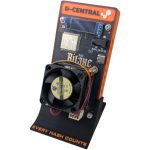
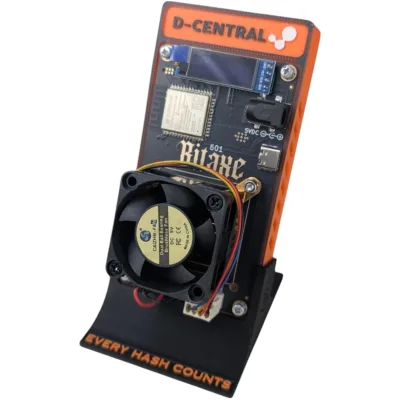
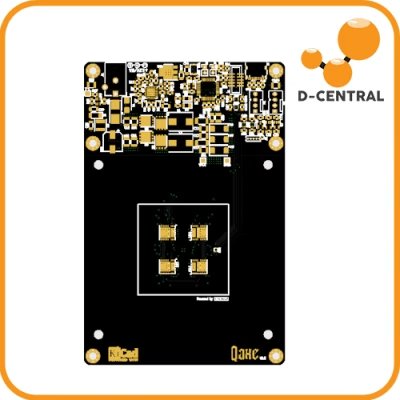
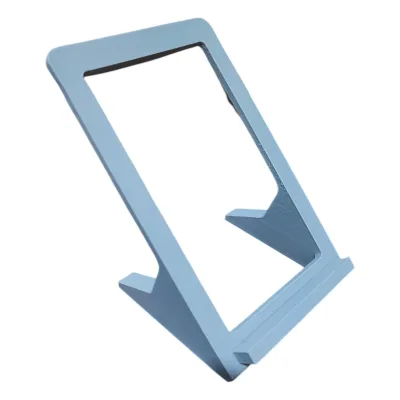
Buy modern instead if your actual goal is hashprice profitability or maximum efficiency per watt. For that, you want either a current-generation full ASIC or a purpose-built efficient miner. And if you want the cleanest possible entry point into Bitcoin mining — low power, low noise, no closet-full-of-noise commitment — the Bitaxe is the answer. The Bitaxe is an open-source, single-board solo miner that draws only around 15–20W. It is not a heater and it won’t warm a room — its appeal is the opposite: it’s a quiet desktop device that lets you solo-mine for a real block with a tiny footprint and a tiny power bill. The Bitaxe line runs through board generations — Max, then Ultra, then Supra, then Gamma — each a step forward in efficiency, and D-Central has been a pioneer manufacturer in that ecosystem from the start, including the original Bitaxe Mesh Stand. For bigger open-source boards, the NerdQAxe+ pushes more hashrate while keeping the same low-footprint philosophy.
If you’re weighing an old machine against a new one, don’t guess — model it. Drop both options into the Mining Profitability Calculator with your real electricity rate, and use the ASIC Miner Comparison Tool to put the efficiency numbers side by side. The math will tell you plainly whether “repurpose” or “replace” is your move.
Frequently asked questions
Can I mine Bitcoin with my old gaming PC or GPU?
No. A GPU produces roughly a million times less SHA-256 hashrate than a modern ASIC while burning hundreds of watts. For Bitcoin specifically, your PC and GPU have no realistic path to a reward. Only ASICs are viable, because they’re chips built to do nothing but SHA-256.
Is an old Antminer S9 still worth running in 2026?
Not for hashprice profit at standard residential rates — its efficiency is far behind modern hardware. But it’s absolutely worth running as a winter heat source (where the power cost is heating you’d pay anyway), as a cheap solo-mining lottery ticket, or as a no-risk machine to learn on. D-Central’s S9 Space Heater Edition is built around exactly that use case.
What’s the difference between repurposing an old ASIC and buying a Bitaxe?
An old ASIC like an S9 is loud, power-hungry, and best used for its heat. A Bitaxe is a brand-new, quiet, ~15–20W open-source single-board miner — it produces almost no usable heat and exists for low-footprint solo mining. Different tools: the S9 for heat-plus-lottery, the Bitaxe for clean, quiet desktop solo mining.
Will repurposed hardware help decentralize Bitcoin?
Yes — every independent miner, on any hardware, is one more node of hashrate not controlled by an industrial pool. That’s the D-Central thesis: decentralization of every layer of Bitcoin mining. An old S9 in a Canadian basement, pointed at a solo pool, is a small but real act of that.