Every home mining setup thread shows the same picture: a beautiful exhaust job — shroud, insulated duct, sealed window port — bolted to a miner sucking raw room air through an open intake grille. Everybody engineers the exhaust — that is where the noise and heat go. Almost nobody engineers the intake, and the intake is where the machine’s lifespan is decided. This post covers the unglamorous half of miner airflow: dust filtration, 120/140 mm fan adapter plates, what they do and what they cost in restriction, and how the thinking scales from one S9 to a filtered intake wall on a farm.
Why the intake side gets ignored — and why dust wins if you let it
An ASIC miner is, functionally, a high-powered vacuum cleaner with no bag. It ingests whatever the air carries: drywall dust, insulation fibres, lint, pet hair, pollen, and in a garage or barn, everything the season throws at you. The damage is predictable. A dust layer is an insulator — fin efficiency drops, chip temperatures creep up, fans spin harder, raising noise and power draw and accelerating fan wear. Dust loads bearings, unbalances rotors, and packs into narrow fin channels no compressed-air blast fully reaches; in humid environments it holds moisture against boards and starts corrosion.
We run a repair bench, and we will keep this at an order of magnitude rather than a statistic: a large share of the boards and fans that cross it show dust as a contributing factor — machines from clean, filtered rooms simply come back less. That is why we tooled an intake line. Filtration is the cheapest maintenance-interval extension you can buy for a miner — a foam ring is not glamorous, but neither is a dead hashboard.
Filter rings: a frame, a grille, and foam you supply
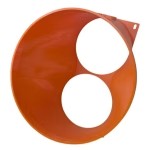
Our filter rings are deliberately simple: a one-piece printed frame that bolts over an intake fan and holds a foam pre-filter in the airstream. No proprietary cartridge, no consumable subscription — foam is not supplied; buy standard open-cell filter foam anywhere and cut it to the rim. The designs are open source at /3d-models/, so you can also print the frames yourself. Two single-fan sizes ship today:
- 120 mm filter ring — for a single 120 mm intake fan on the common 105 mm screw pattern (Antminer S9 class). The flange is deliberately asymmetric at 132 × 140 mm: align the 132 mm axis with the panel’s narrow dimension and it sits inside an S9’s 135 mm fan panel with about 1.5 mm per side to spare. The integral grille blocks a measured 18.4% of the frontal area before any foam is fitted.
- 140 mm filter ring — for single 140 mm intake fans, Whatsminer-class machines. Its slots span both the 124.5 mm and 125.0 mm screw pitches that coexist in the wild, and its 160 × 160 mm flange is deliberately oversized so the frame lands with a full bearing surface on a Whatsminer face reported at around 155 mm; on some machines it will overhang the fan panel. The grille blocks a measured 16.5% before media.
Those grille numbers are measured off the frames themselves. Every filter frame on the market has structure holding its media in the airstream, blocking flow before the media adds its own resistance; we print the figure so you can hold ours next to anything else you are considering. Full interface dimensions for both rings — flange size, screw pitch, bore — are on their product pages in the shroud line.
Cleaning cadence: let the foam tell you
The right service interval is set by your air, not by a chart — a sealed basement is not a barn in harvest season. Inspect weekly for the first month, watch how fast the foam loads, and let that observed rate set your schedule. When it looks loaded: rinse, dry fully, refit — open-cell foam tolerates many wash cycles, and a cut spare means zero downtime. Rising chip temperatures or fan speeds at a constant power setting are your tripwire; if they trend upward, service the filter before troubleshooting anything else.
Coming for S19/S21: the dual-fan filter ring
The obvious question: where is the S19/S21 version? Geometry — dual-120 intake faces put fans on a 120.0 mm pitch, and our single-fan rings are 132 mm and wider, so two cannot sit side by side. The fix is a dedicated dual-fan frame: one stadium-shaped rim around both fans, one rectangular foam pad, eight screw holes matching the dual-120 shroud family’s bolt pattern, slotted to hedge the same screw-pattern dispute the shrouds hedge. Its grille blocks a measured 18.6% before media. It hits the store once pricing is set; if you need it sooner, the file is already open source at /3d-models/.
Fan swap plates: 120 ↔ 140 mm
The other intake-side family answers a different question: what if you want a different fan than the mount accepts? Two plates cover both directions:
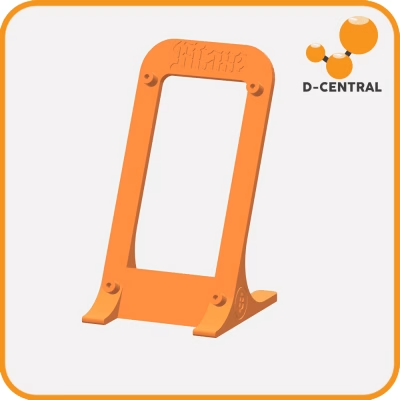
- 120 → 140 mm plate — mounts a 140 mm fan (124.5 mm screw pattern) on a single 120 mm fan location (105 mm pattern). The classic motivation: a larger fan can move similar air at lower RPM, and fan speed is the dominant driver of fan noise — see the miner noise levels comparison. The plate itself is geometry; what you gain depends on the fan you choose and how your firmware drives it.
- 140 → 120 mm plate — the reverse: fit a common, cheap, or higher-static-pressure 120 mm fan on a machine built for 140 mm, when a 140 mm replacement is unobtainable or you want a pressure-optimised 120 to fight duct restriction.
Both plates carry captive M4 hex-nut pockets so the fan bolts through with a real nut instead of a self-tapper, plus printed driver corridors over the miner-side screws, so a bit reaches every fastener with the plate in place. One limit is worth stating up front: single-fan locations only — the 143.8 mm body cannot pack at a dual-fan pitch, so these are S9-class parts, not S19 parts. The 120→140 plate’s feet are chamfered just above the mounting plane so the plate sits down over a panel’s rolled edge and rivet heads rather than perching on them.
The fan-error angle: your miner has opinions about its fans
Here is the part most fan-swap writeups skip. Firmware does not just power fans — it watches them, reading each tachometer and expecting RPM inside the range chosen for the stock fan. Swap in a larger fan that tops out at lower speed, or one with different tach behaviour, and the firmware may conclude a fan has failed: logged errors, forced full-speed fans, throttling, or a refusal to hash. Know how your firmware responds to non-stock fans before buying any plate — some aftermarket firmware exposes fan-curve and minimum-RPM settings stock firmware hides. If your machine already throws fan faults, work through our fan error guide first; a swap on top of an undiagnosed error just stacks unknowns.
Static pressure: everything you add, the fan must overcome
General HVAC truth: axial fans deliver rated flow at zero resistance, and delivered flow falls as resistance rises. Every element here — grille, foam, adapter transition — adds intake-side resistance, stacking with what your exhaust side already imposes from ducts, elbows, and shrouds. Miner fans are high-static-pressure designs with headroom, but headroom is finite.
So instrument instead of guessing: your miner logs chip temperatures and fan RPM continuously — a free test bench. Record both at steady state, fit the part, and compare at the same power setting and room temperature. A small rise with clean media is the expected price of filtration; a large one says you had less headroom than you thought — service the media, reduce other restrictions with the ventilation guide, or drop the power target. Firmware tuning remains the biggest lever on both temperature and noise, as we argue in the noise reduction guide; the quiet home hashcenter build shows a full intake-to-exhaust system, the miner noise planner covers the acoustic side, and our measurement methodology lives at /bench-measurements/.
The farm angle: filter the room, not the machine
Per-unit filter rings make sense up to a handful of machines. Past that, dozens of foam rings mean dozens of service points, and the labour becomes the cost. Farms solve intake at the room boundary instead — a filtered intake wall, where outside air passes through large-area media banks before it reaches the racks. The physics favours this heavily: filter area scales with the wall, so face velocity through the media drops, cutting pressure loss and stretching service intervals; the machines then run bare intakes in clean air. For small farms and hashcenters a hybrid is often right: room-level coarse filtration for the bulk work, per-unit rings on machines in dirty corners or near doors. The principle is the same at every scale — decide where the dust stops before it decides for you, inside the machines.
FAQ
What foam should I use in the filter rings?
Standard open-cell polyurethane filter foam sold as HVAC or electronics pre-filter media, cut to the rim. Coarser grades load slower and restrict less; finer grades catch more and need more frequent service. We do not bundle foam — it is a commodity, and your environment should pick the grade.
How often do I need to clean the filter?
Whatever your air dictates. Inspect weekly at first, learn the loading rate, then set your own interval — and treat rising chip temperatures or fan speeds at constant settings as the signal. Rinse, dry fully, refit.
Will a filter or adapter make my miner run hot?
Everything in the intake path adds restriction — we publish the measured grille blockage (18.4% on the 120 mm ring, 16.5% on the 140 mm, 18.6% on the coming dual ring) so you can see exactly what the frame costs before any media goes in. Whether it matters depends on your total system restriction and power target — log chip temps before and after and let your own machine answer.
Can I put a 140 mm fan on my S19?
Not with these plates. The dual-120 face spaces fans at 120.0 mm pitch and the 143.8 mm adapter body cannot pack that tightly — the plates are for single-fan locations like the S9 class. Machines that ship with 140 mm fans are served on the exhaust side by the dual-140 members of the shroud line.
Do fan swaps trip the miner’s fan monitoring?
They can — the firmware keeps watching, which is exactly the risk. A non-stock fan whose RPM or tach signal falls outside expectations can trigger fan errors, throttling, or a no-start. Check your firmware’s tolerance before you order, and see the fan error guide if you are already seeing faults.