Bitaxe vs FutureBit Apollo: Which Open-Source Bitcoin Miner Should You Buy?
For a complete overview of all Bitaxe models and resources, visit our Bitaxe Hub.
Comprehensive coverage of ASIC mining hardware: chip architecture, miner teardowns, performance benchmarks, and buyer guides. Know your hardware inside and out.
For a complete overview of all Bitaxe models and resources, visit our Bitaxe Hub.
The home mining space has never had more options. Two of the most popular choices sitting on desks and shelves right now are Canaan’s Avalon Nano 3 and the Bitaxe open-source miner family.
When Bitmain announced the Antminer S21, the Bitcoin mining world took notice. After years of incremental improvements across the S19 lineup, the S21 represents a genuine generational leap…
On July 24, 2024, something happened that the probability calculators said should take thousands of years. A single Bitaxe Ultra — a hand-sized, open-source Bitcoin miner producing…
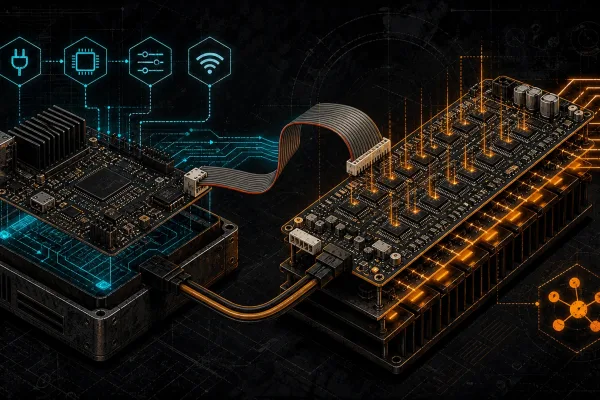
Every ASIC miner — whether it is an Antminer S21, a Whatsminer M60, or an old S9 running as a space heater — is fundamentally built from two types of boards: the control board and the…
Every ASIC chip is a furnace in miniature. The BM1366 and BM1370 chips inside your Bitaxe are computing trillions of SHA-256 hashes per second, and every single hash generates heat.
So your ASIC miner is down. Maybe a hashboard stopped hashing, a fan died, or the whole unit refuses to boot. You have done the troubleshooting, tried the firmware flash, reseated every…
The Antminer S21 represents Bitmain’s latest generation of SHA-256 mining hardware, delivering up to 200 TH/s at a remarkable 17.5 J/TH efficiency.
Complete guide to ASIC miner repair costs in 2026. Covers pricing for hashboard repair, control board repair, chip-level micro-soldering, PSU repair, and full system rebuilds. Includes repair vs replace decision framework and cost breakdown by miner model.
AxeOS is the open-source firmware that powers every Bitaxe device. It is the brain of your solo miner — the software running on the ESP32-S3 microcontroller that controls the ASIC chip…
If you are buying a Bitcoin ASIC miner in 2026, your decision almost certainly comes down to two brands: Bitmain’s Antminer series and MicroBT’s Whatsminer series.
Choosing the right firmware for your Antminer is one of the highest-impact decisions you can make as a miner. Stock firmware from Bitmain gets the job done, but it leaves serious…
You have decided to mine Bitcoin. Maybe you want to contribute to network decentralization. Maybe you want to heat your home with a miner.
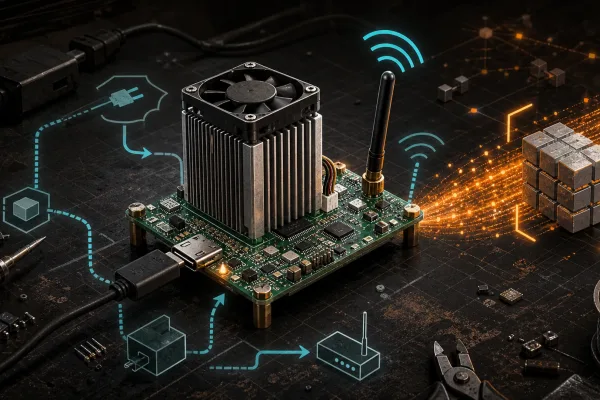
The Bitaxe is the world’s first fully open-source Bitcoin ASIC miner — and it has already changed the game. Born from the cypherpunk conviction that Bitcoin mining should not be locked…
For a complete overview of all Bitaxe models and resources, visit our Bitaxe Hub.
Every electric space heater on the market does exactly one thing: it converts electricity into heat. A 1,500W ceramic heater pulls 1,500 watts from your outlet and produces 1,500 watts of heat.
You are heating your home anyway. Every Canadian winter, every Quebec hydro bill, every baseboard heater running at full tilt is electricity converted to heat with zero other output.
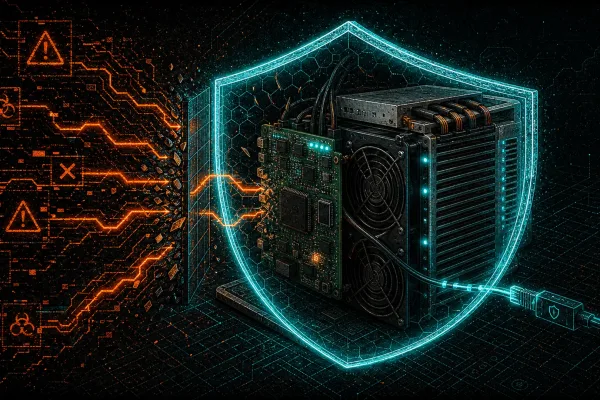
Your ASIC miner is a computer. It runs Linux, connects to the internet, has an SSH server, and often ships with default credentials.
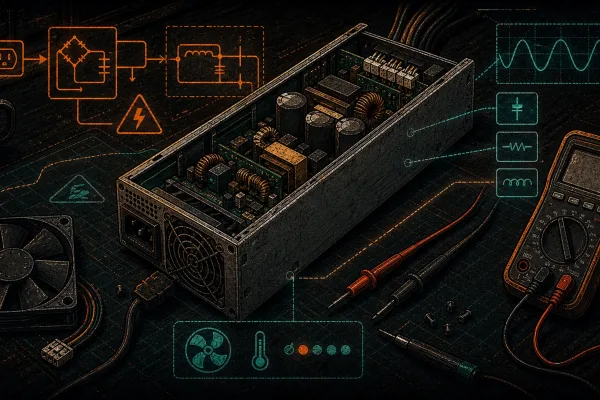
The Bitmain APW9 and APW9+ are the power supply units that powered the entire S17/T17 generation of Bitcoin miners — arguably the most temperamental and repair-intensive generation…
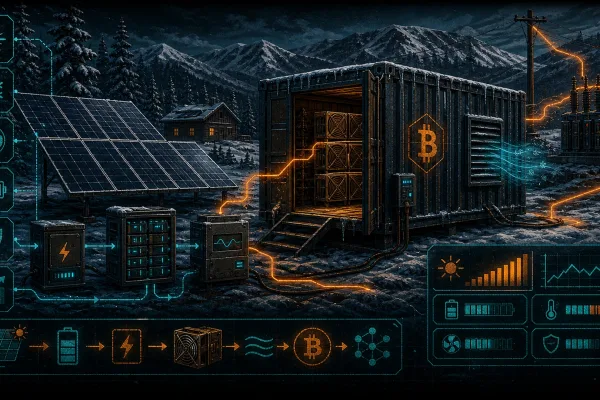
Your roof is producing electricity. Your utility is buying it back at a fraction of its value. Meanwhile, somewhere on the Bitcoin network, a miner is converting that same electricity into…
The Bitaxe Ultra is an open-source, standalone Bitcoin solo miner built around the BM1366 ASIC chip — the same silicon that powers Bitmain’s industrial-grade Antminer S19 XP.
There is a moment every ASIC miner operator dreads. You power on your machine and nothing responds. No web interface. No hashrate.
Compare exact air-cooled Antminer S19 and S21 revisions, power systems, airflow, noise boundaries, and live upgrade economics without static ROI claims.
You bought an ASIC miner to stack sats. You plugged it in. And now your family is staging an intervention because your basement sounds like a leaf blower factory running overtime.
A document-first checklist for collecting equipment nameplate evidence and handing circuit, permit, load, and installation decisions to the local authority and a Licensed Electrical Contractor.
Stock Bitmain firmware treats your ASIC miner like a sealed appliance — see our Antminer firmware update guide for a general firmware overview. Fixed frequencies. Fixed voltages.
Your Antminer shipped with Bitmain’s stock firmware. It runs at a fixed frequency, pulls a fixed wattage, and requires a 240V circuit that most North American homes do not have.
This is the definitive Whatsminer error code reference. Whether you are staring at a blinking status LED on your M30S at 3 AM or trying to decode a five-digit error code in WhatsMinerTool…
Your ASIC miner stopped hashing. The pool dashboard shows zero. The web interface is throwing errors — or worse, the miner will not even power on. Your stomach drops.
Every ASIC miner ships with the same cooling strategy: move massive volumes of air across heatsinks using fans that sound like a jet turbine at close range. It works.
Last reviewed August 29, 2026.