
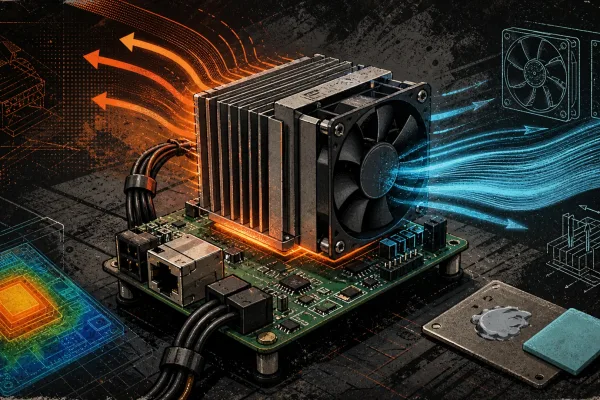
Bitaxe Cooling Solutions: Complete Thermal Management Guide
Every ASIC chip is a furnace in miniature. The BM1366 and BM1370 chips inside your Bitaxe are computing trillions of SHA-256 hashes per second, and every single hash generates heat.
$20.99 CAD
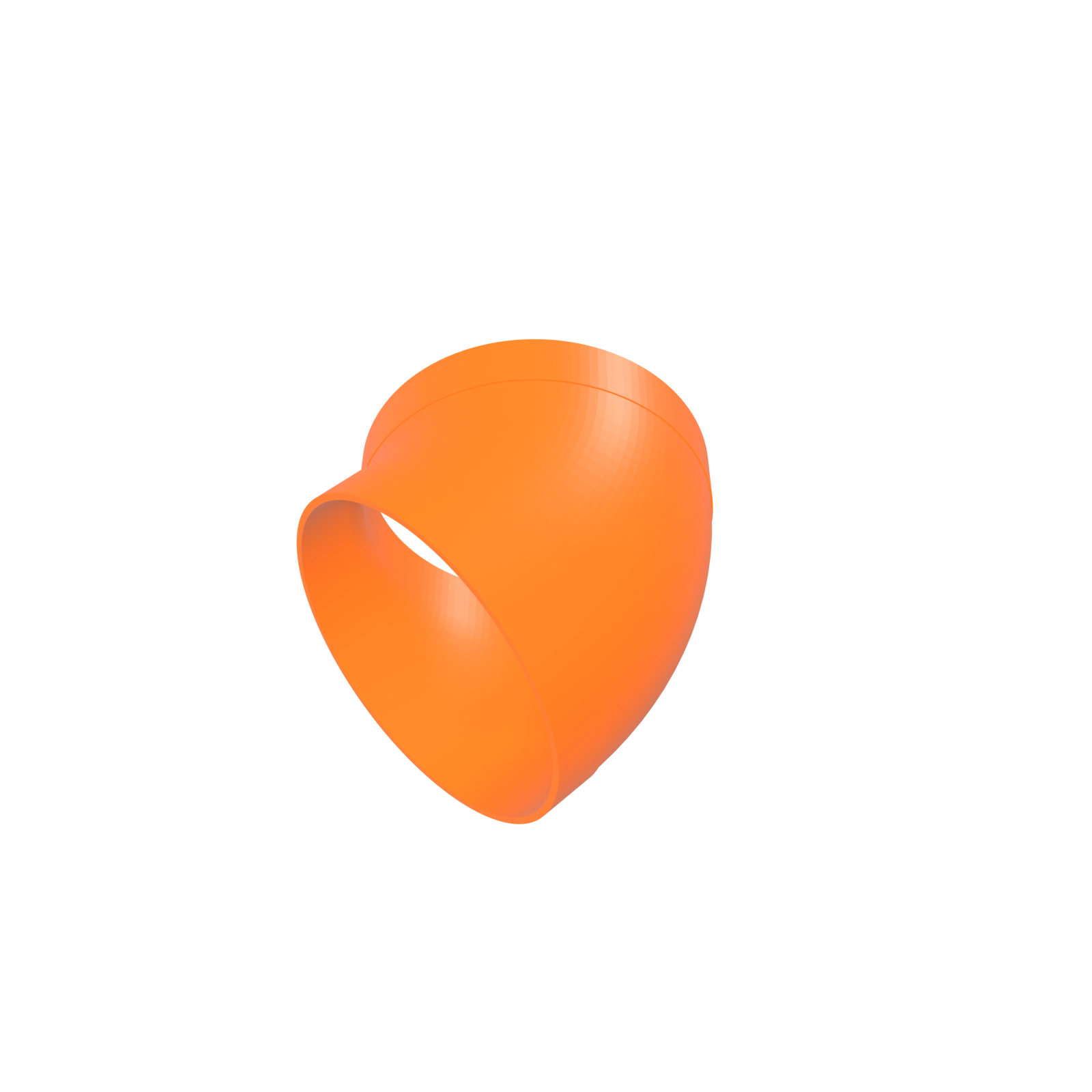
A 6 inch 45 degree duct elbow for miner exhaust runs. Two of them turn a corner more gently than one hard 90, which is the cheapest airflow you can buy in a duct system. PETG, made to order in Montreal, Quebec.
High Demand — Pre-order Now, Ships in 5-10 Business Days
Purchase details
Save 3% when you pay in Bitcoin.
A 6 inch 45 degree duct elbow is the fitting you reach for first whenever the run has to change direction. Bends are where a duct system spends its pressure budget, and the cost of a bend climbs steeply as the turn tightens. Splitting a right angle into two gentle turns instead of one sharp one is the least expensive improvement available anywhere in an exhaust run: one extra fitting, a few centimetres of space, and the fan gets back pressure you already paid for at the wall socket.
The bore holds full 6-inch cross-section through the turn, so the elbow changes the direction of the air without also changing its speed. Both ends carry the standard 6-inch collar used across the whole D-Central line.
Drawn in-house, printed as one continuous body. There is no seam on the inside of the bend for the flow to trip over.
Standard 6-inch duct on both ends, rigid or flexible, and any 6-inch fitting in the line directly. If the corner you have to turn is a full right angle and you have the room, use two of these with a short straight between them — a 6″ Duct Coupler and an offcut is the usual way to make that straight. If you do not have the room, the answer is the 6″ 90° Duct Elbow (Compact). The same 45 exists for larger trunks as the 8″ 45° Duct Elbow.
Chain two or three of them to step a run around a beam, a doorway or a rack upright instead of forcing it into a series of hard corners.
When air turns, the stream on the inside of the bend has to accelerate and then slow again, and past a certain tightness it separates from the wall and leaves a recirculating pocket that the rest of the flow has to squeeze past. The gentler the turn, the less of that happens. Published duct-loss relationships put a sharp turn well above a gentle one, and two 45s separated by a short straight let the flow reattach between them. It is a real difference on a run with several bends in it.
| Fits | Standard 6″ duct, both ends |
|---|---|
| Intake | 6″ duct |
| Outlet | 6″ duct at 45° |
| Footprint | 182.9 × 169.1 × 159.6 mm |
| Material | PETG |
| Colour | Black or orange PETG |
| Construction | Single continuous body — no assembly, no fasteners, no glued joints |
| Design files | Open source — free to download, use, modify and redistribute |
| Download | elbow_45_6.zip — STL, CC BY-SA 4.0 licence, installation and safety guide |
| SKU | DC-DUCT-E45-6 |
D-Central Technologies drew this elbow — the sweep, the collars, the wall sections — and released it open source under CC BY-SA 4.0 through the 3D models download center. Our geometry, published because nothing about a duct bend deserves to be proprietary. Go straight to the 6″ 45° elbow model card, then change the angle, scale the bore, use it in your own product, sell what you print.
The file is elbow_45_6.zip: STL, CC BY-SA 4.0 licence, installation and safety guide. The listing you are on is the finished elbow instead, made to order in PETG, black or orange, and shipped from Montreal, Quebec, with the collars sized to mate the rest of the line on the first try. That is the trade — the drawing is free and stays free, and buying the part or backing D-Central’s fund page pays for the next design.
Shroud, elbow, coupler, port, all cut to one collar standard: see the D-Central shroud and ducting system.
Two 45s with a short straight between them, whenever the space exists. Bend loss rises steeply as the radius tightens, so two gentle turns cost less than one sharp one, and the straight between them gives the flow a chance to reattach. Where space wins the argument, take the compact 90 and stop worrying about it.
Longer is better, and even a short offcut helps. The point is to let the flow settle before it is asked to turn again; two elbows bolted directly together behave more like one awkward 90 than like two clean 45s. A 6″ coupler plus a stub of duct is the usual way to build that gap.
That is its best use. Two 45s offset the run sideways by a fixed amount and put it back on its original heading, which is exactly what you need to clear an obstacle without a full change of direction. Chain more of them for a longer, shallower dogleg.
The elbow itself is rigid, but it should not be the thing carrying the duct. Strap or hang the run on both sides of the bend so the clamps are sealing a joint rather than holding weight. This matters more on flex duct, which will happily hang its own mass off the nearest solid object.
Yes, the 8″ 45° elbow, same geometry at trunk scale. If your run changes size somewhere near the bend, turn first and reduce afterwards with the 8″ to 6″ reducer, so the turn happens in the larger cross-section.
| Weight | 218 g |
|---|---|
| Dimensions | 18.29 × 16.91 × 15.96 cm |
| Colour | Black, Orange |
Only logged in customers who have purchased this product may leave a review.
Every ASIC chip is a furnace in miniature. The BM1366 and BM1370 chips inside your Bitaxe are computing trillions of SHA-256 hashes per second, and every single hash generates heat.
Every ASIC miner ships with the same cooling strategy: move massive volumes of air across heatsinks using fans that sound like a jet turbine at close range. It works.
Most Bitcoin merchandise is mass-produced overseas with no connection to the culture. D-Central Technologies 3D prints every collectible in Montreal, Quebec — made by actual Bitcoin miners since 2016. Discover our Bitcoin Chess Set, Honeybadger figurine series, 3D filament paintings, and 140+ unique items you cannot find anywhere else.
Last reviewed August 19, 2026.

Reviews
There are no reviews yet.